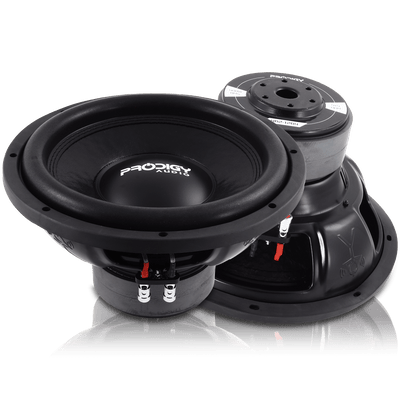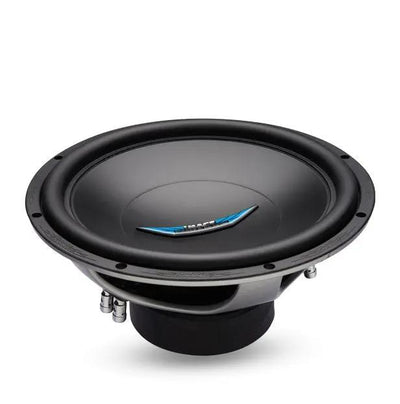
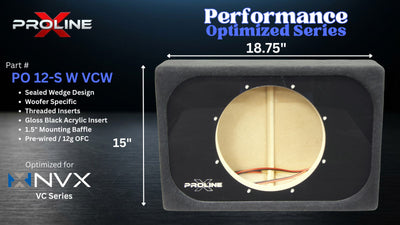
Performance Optimized Wedge Sealed 12" Enclosure | NVX VCW12v3
$ 259.99
In stock and ready to ship!
DetailsSealed wedges cut for NVX VC-Series v3 subwoofers, CNC-machined in Tullahoma, Tennessee.

Sealed, Driver-Matched, 12 and 15 Inch
Sealed NVX wedge cabinets in twelve and fifteen inch, both Performance Optimized rear firing, both built to the net volume NVX publishes for the driver.
All products loaded
Both cabinets share the alignment, the orientation and the build standard, so this comes down to driver diameter and the space you have. Both are cut for the NVX VC-Series v3 in either coil version.
| 12 inch | 15 inch | |
|---|---|---|
| Fits | VCW122v3, VCW124v3 | VCW152v3, VCW154v3 |
| Net volume | 0.85 cu ft | 2.00 cu ft |
| Alignment | Qtc 0.67, Fc 41.8 Hz | Qtc 0.76 |
| Cutout | 11.25 in | 14.25 in |
| Mounting depth needed | 7.02 in | 8.19 in |
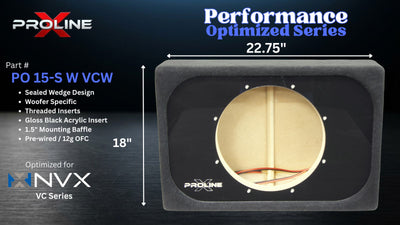
| External size | 18.75 in W x 15 in H x 9 to 14.5 in D | 22.75 in W x 18 in H x 8.75 to 15.3 in D |
| Power target | 850 to 1200 W RMS | 1050 to 1500 W RMS |
| Shipping weight | 44 lb | 59 lb |
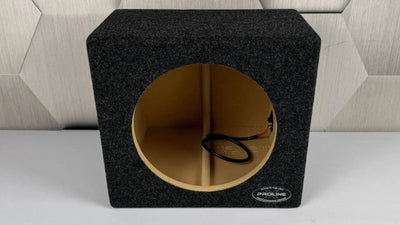
Shared across both: Langboard Elite MDF, 1.5 inch double baffle, rear firing wedge, single driver, sealed with polyfill pre-installed, one terminal cup, Performance Optimized Series.
NVX specifies 0.85 cubic feet for the twelve and 2 cubic feet for the fifteen. Both cabinets deliver that figure net, after driver displacement is subtracted, not gross before it. On the fifteen that is the difference between 2.0 net at Qtc 0.76 and 1.85 net at 0.78. It is a small number on paper and an audible one in the car.
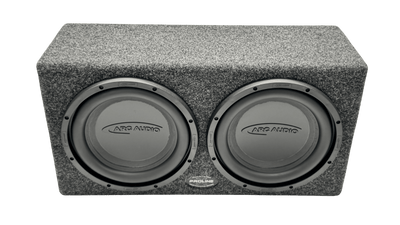
We do not stock NVX drivers. Both cabinets are built to the figures NVX publishes for the VC-Series v3, for a subwoofer you already own or buy elsewhere. Nothing about the fit depends on where the driver came from.
Every cabinet on this page is Performance Optimized Series. Each product page states its own net volume, the alignment it lands at, and the cutout it is machined for.
Both cabinets are cut for the NVX VC-Series v3. The 12 inch takes the VCW122v3 or VCW124v3 and the 15 inch takes the VCW152v3 or VCW154v3. Within a diameter the dual 2 ohm and dual 4 ohm share the same frame, cone and motor, so either coil version drops into the same cabinet. Match the model rather than the diameter alone.
No. We build the enclosure and you source the driver. Both cabinets are cut to the figures NVX publishes for the VC-Series v3, so they suit a subwoofer you already own or buy elsewhere.
Because net is what the driver actually sees. NVX specifies 0.85 cubic feet for the twelve and 2 cubic feet for the fifteen, and both cabinets deliver that after driver displacement is subtracted. A box built to 2.0 gross hands a fifteen 1.85 net and a different alignment than the one on the label.
The twelve sits at a system Qtc of 0.67 with resonance at 41.8 Hz, which is near-Butterworth: flat through the passband with no peak at the corner. The fifteen sits at 0.76, slightly weightier than maximally flat, which keeps a fifteen sounding like a fifteen rather than an oversized twelve.
On the dual 4 ohm versions, parallel gives a 2 ohm load and that is where most monoblocks make rated power. On the dual 2 ohm versions, parallel gives 1 ohm, so run those coils in series for 4 ohms unless your amplifier is genuinely rated 1 ohm stable. An unstable amplifier into 1 ohm clips into the coil and kills drivers.
Yes. Both cabinets ship with polyfill already installed. Do not add more and do not remove it. The net volume is a finished figure and stuffing the box further makes it read acoustically larger, which walks Qtc below where the alignment was set.
The anechoic F3 works out around 44 Hz on the twelve and between 46 and 50 Hz on the fifteen depending on coil version. Those are anechoic figures and not what you will hear. In a sealed trunk-load install, cabin gain typically adds usable output an octave below the anechoic corner, so expect solid, articulate output into the low 30s in most sedans.
Drivers Built to Match
The drivers below are matched to the enclosures above by Thiele-Small parameters. Buying together guarantees the alignment, port tuning, and damping work the way the engineering intended.
Related Collections
Browse curated picks that work with the products above.
Proline X
$ 159.99 $ 179.99
Proline X
$ 169.99 $ 179.99
Proline X
$ 229.99
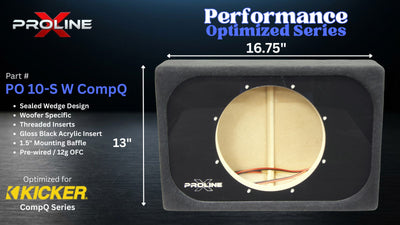
Proline X
$ 229.99
Amplifiers for the System
Monoblock amplifiers matched to the power requirements of the drivers these enclosures are built for. Buy the enclosure, match the driver, pick the right amplifier.
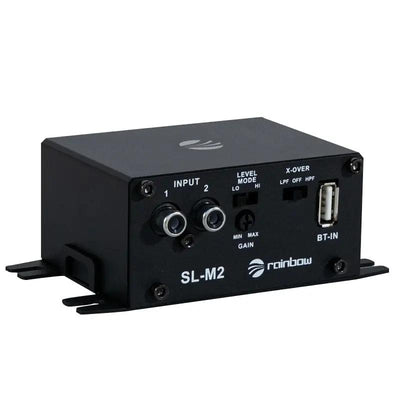
Rainbow
$ 89.99 $ 549.99
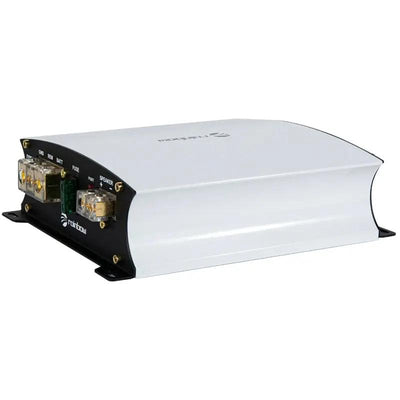
Rainbow
$ 89.99 $ 399.99
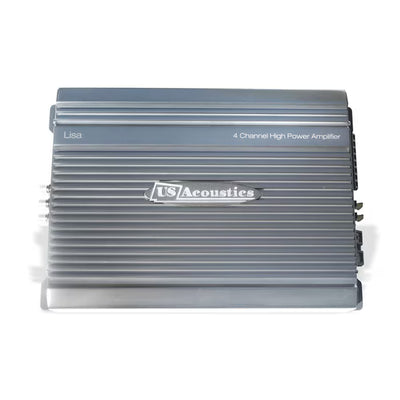
US Acoustics
$ 159.99
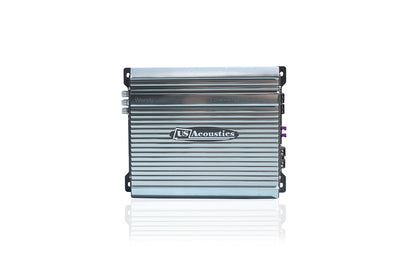
US Acoustics
$ 159.99
Last updated August 30, 2026