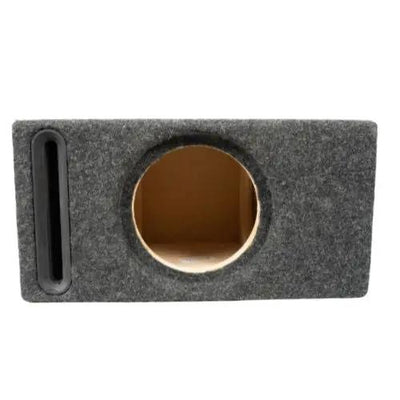
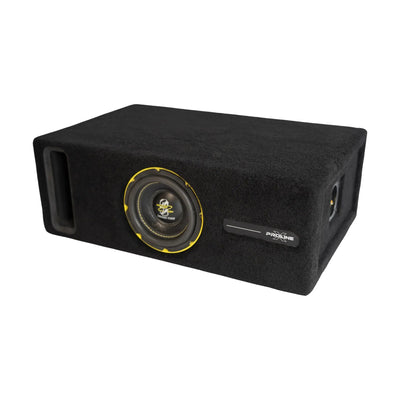
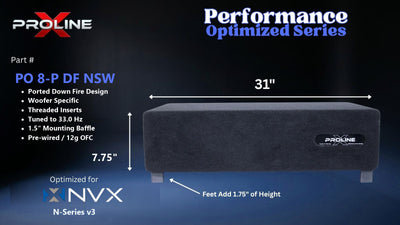
Proline X P6-P | Single 6.5" Ported Subwoofer Enclosure | V3
$ 149.99
In stock and ready to ship!
DetailsPorted enclosures tuned as part of the design, CNC-cut in Tullahoma, Tennessee.

Tuned Ports, Driver-Matched & Universal Fit
Ported enclosures from 6.5 to 18 inch, single and dual, in standard, wedge and down-fire orientations, across Professional, Performance and Performance Optimized Series.
Decision Shortcut
Curated picks matched to common build goals
Best Ported for Output
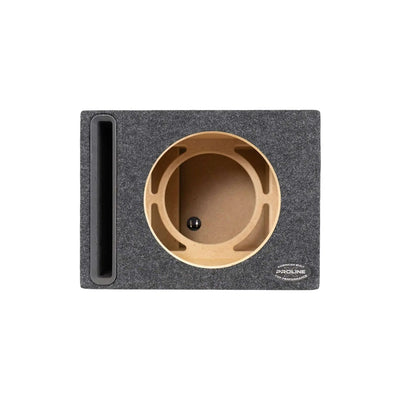
Proline X
Single 12 inch ported enclosure, the most popular ported configuration. Performance Series universal fit, ready for any 12 inch driver in the standard Qts range.
$ 219.99
View DetailsBest 10 Inch Ported
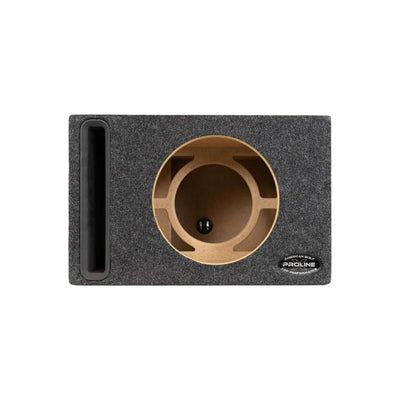
Proline X
Performance Series single 10 inch ported enclosure. Calculated tuning for the standard 10 inch driver class with calibrated port for laminar airflow.
$ 199.99
View DetailsBest Dual Ported
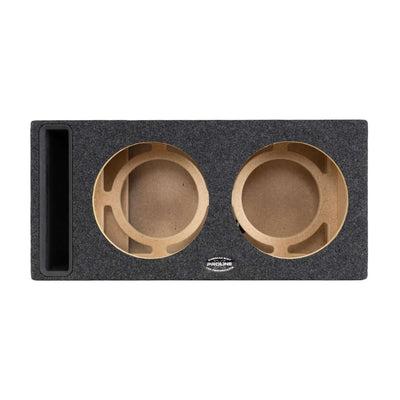
Proline X
Dual 12 inch ported enclosure for output-priority builds running paired drivers. Performance Series construction with calculated port for two-driver airflow.
$ 269.99
View DetailsBest Compact Ported
Proline X
Single 6.5 inch ported enclosure for compact builds. Performance Series, the smallest ported configuration in the lineup.
$ 149.99
View Details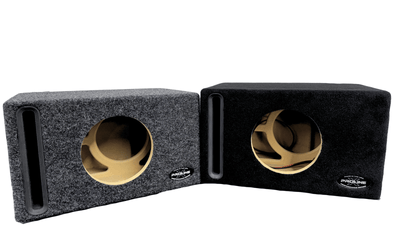
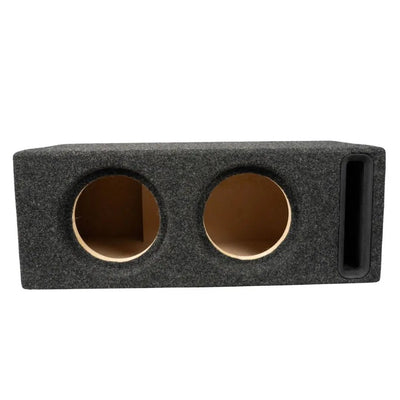
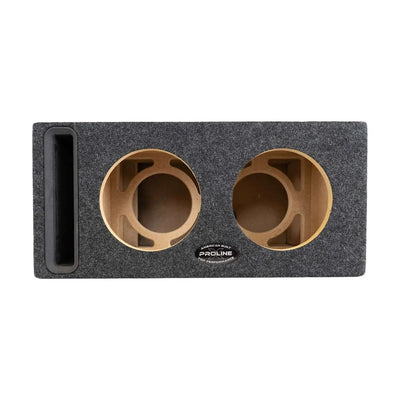





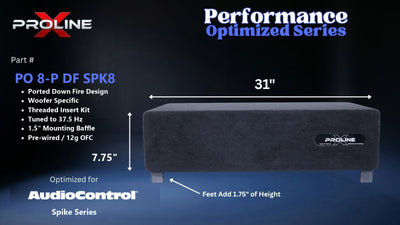
The two alignments are not better and worse, they are different trades. This is the comparison worth reading before you choose, because the airspace you have available usually settles it.
| Sealed | Ported | |
|---|---|---|
| Output around tuning | Lower | Higher, often markedly |
| Roll-off | Gentle, about 12 dB per octave | Steep below tuning, about 24 dB per octave |
| Cabinet size | Smaller for the same driver | Larger: the port and the alignment both need volume |
| Character | Tight and damped | Loud and extended around tuning |
| Forgiving of a driver mismatch | More | Less |
| Best when | Space is tight, or accuracy is the point | You have the space and you want output |
Every cabinet on this page is ported and its tuning frequency is set as part of the design. If the comparison above points you the other way, our sealed enclosures run from 8 to 18 inch.
A port that is too small for the excursion you are asking of the driver will make noise, and no amount of tuning afterwards removes it. Our ports are sized for the excursion the driver is rated to, which is why they look large next to a generic box. If you want to check the maths for your own driver, the port area calculator is linked below.
Several cabinets here are cut for Kicker drivers. We build the enclosure to the manufacturer's published parameters, and we do not sell those drivers or represent the brand. Source the driver wherever you like; the enclosure is ours.
Universal-cutout ported cabinets at the lowest entry point. Takes any driver of the right size and mounting depth, which suits a build where the driver is not settled.
Universal cutout
Cut to one driver's published parameters, with the port tuned for that driver rather than to a generic figure. Every ported wedge and every ported down-fire cabinet lives here.
Cut to one driver
Heavier baffle and bracing work, which a ported alignment rewards more than a sealed one does. The reference end of the range.
Cut to one driver
Port length and area are cut to a specific tuning for a specific driver. Construction method varies by series, and each product page states how that cabinet is built.
Supporting guides to help you design, build, and tune your system.
 Application
Work out what tuning frequency suits your driver and your music before you pick a cabinet.
Read the guide Application
Check the port area a driver needs at its rated excursion, and see why undersized ports make noise.
Read the guide Explainer
How port length, area and net volume interact to set the tuning frequency.
Read the guide Decision
The single number that tells you whether a driver wants a sealed or a ported alignment.
Read the guide Decision
Measured comparison rather than opinion, for anyone still choosing between the two.
Read the guide Decision
The same decision framed for cab space, where the airspace constraint bites hardest.
Read the guideYes, and a large one. At the port tuning frequency a ported cabinet is roughly 3 to 6 dB louder than a sealed cabinet of the same driver and power, which is close to double the acoustic output. It also lets the driver run cooler near tuning because the port is doing part of the work. The trade is size and a steeper roll-off below tuning.
Yes, both. The ported down-fire cabinets carry an L-wrap slot port, one folded wall with a single bend, and sit on feet that set the floor clearance. The ported wedges put the slot in the bottom rear corner so the front baffle stays vertical. Both are cut to one driver, state their tuning frequency on the listing, and ship dry, because damping material would move the tuning. The orientation filter splits them from the standard front-firing cabinets.
Around the tuning frequency, yes. A ported box gives more output for the same amplifier power, so bass notes in that band hit noticeably harder. It is not louder everywhere. Above tuning the two alignments converge, and below tuning a ported box rolls off faster and offers the cone less control.
About 3 to 6 dB at the tuning frequency compared with a sealed cabinet using the same driver and the same power. 3 dB is double the power delivered acoustically, so the difference is clearly audible rather than marginal. Away from tuning the gap narrows.
For daily music in most vehicles, 30 to 35 Hz is the usual range. Lower tuning near 28 Hz favours deep sustained bass and SPL work. Higher tuning near 38 to 40 Hz favours punch and upper bass on kick drums. Every cabinet in this collection states its tuning, so you are choosing it rather than guessing at it.
Because the port itself takes up internal volume, and the alignment needs more net airspace to work. A ported cabinet for a given driver is typically half again to twice the size of the sealed version. If space is the binding constraint, sealed is usually the better answer.
Not on these cabinets, and we do not recommend trying. The port is cut and braced as part of the enclosure, and the stated tuning depends on its exact length and area. If you need a different tuning, tell us the driver and the target and we will point you at the right cabinet.
Every box is cut to one driver's published specs. Pick the brand your subwoofer comes from.
Drivers Built to Match
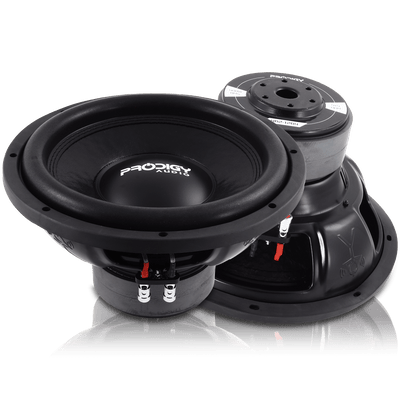
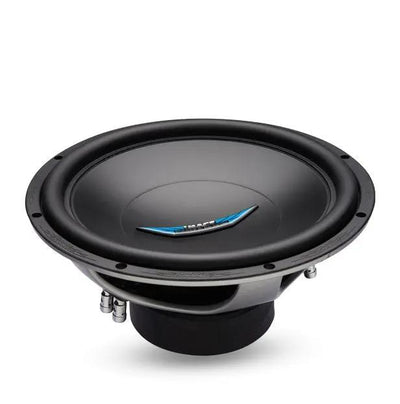
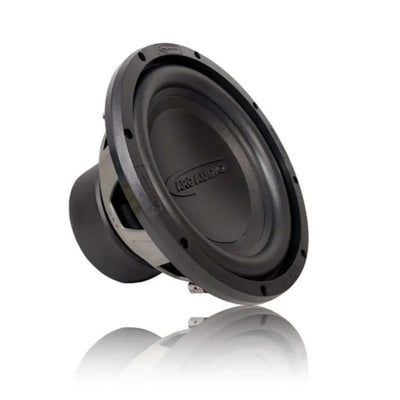
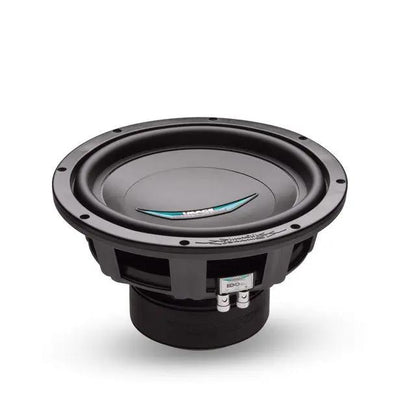
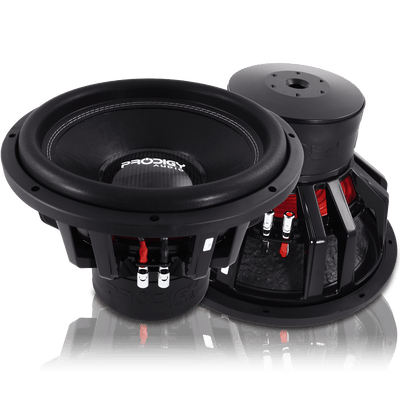
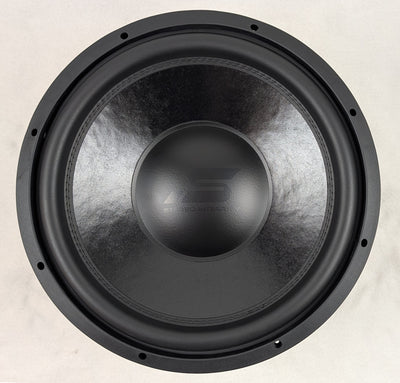
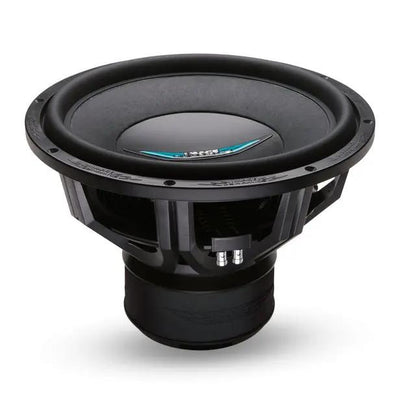
The drivers below are matched to the enclosures above by Thiele-Small parameters. Buying together guarantees the alignment, port tuning, and damping work the way the engineering intended.

Prodigy Audio
$ 138.99 $ 145.99

Image Dynamics
$ 139.99

Prodigy Audio
$ 148.99 $ 165.99
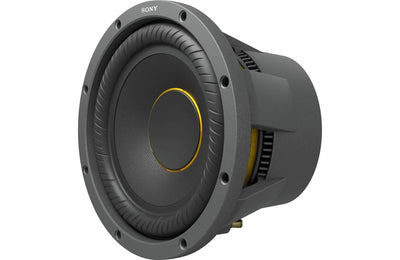
Sony
$ 198.00 $ 299.99
Drivers Built to Match
The drivers below are matched to the enclosures above by Thiele-Small parameters. Buying together guarantees the alignment, port tuning, and damping work the way the engineering intended.
Drivers Built to Match
The drivers below are matched to the enclosures above by Thiele-Small parameters. Buying together guarantees the alignment, port tuning, and damping work the way the engineering intended.
Amplifiers for the System
Monoblock amplifiers matched to the power requirements of the drivers these enclosures are built for. Buy the enclosure, match the driver, pick the right amplifier.
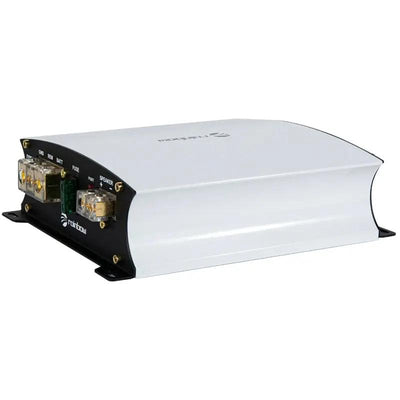
Rainbow
$ 89.99 $ 399.99
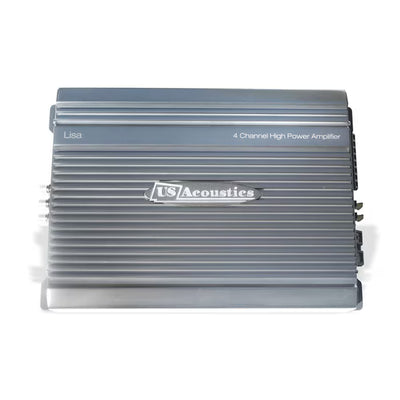
US Acoustics
$ 159.99
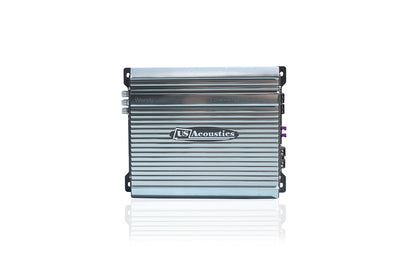
US Acoustics
$ 159.99
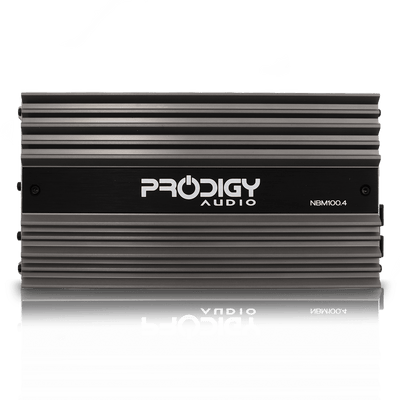
Prodigy Audio
$ 225.99 $ 270.99
Last updated September 4, 2026