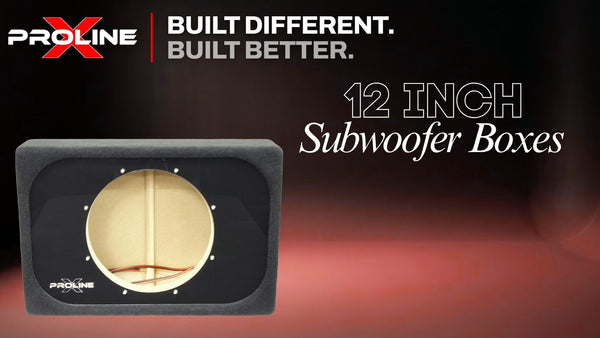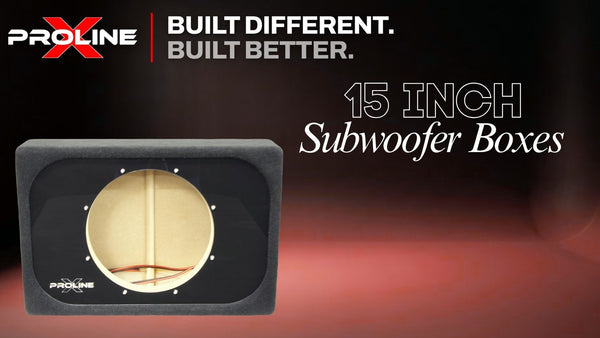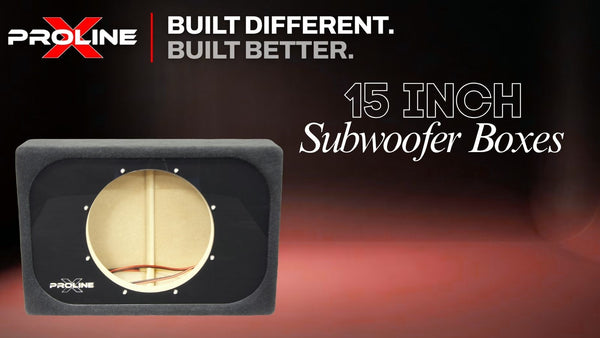
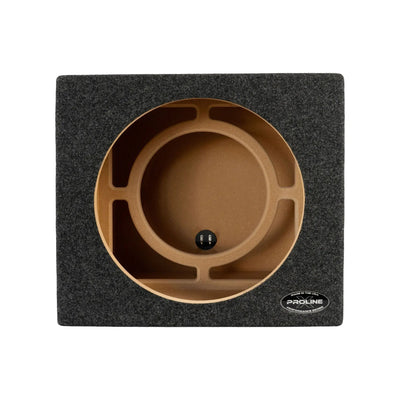
Proline X P15-S | Single 15" Sealed Subwoofer Enclosure | V3
$ 219.99
Last One
DetailsFifteen inch cabinets, mostly wedge, CNC-cut in Tullahoma, Tennessee.

The output end of the range
15 inch cabinets in stock | sealed and ported | wedge leads the range | single and dual | driver-matched and direct fit | cut in Tullahoma
Decision Shortcut
Curated picks matched to common build goals
Best 15 Inch Sealed
Proline X
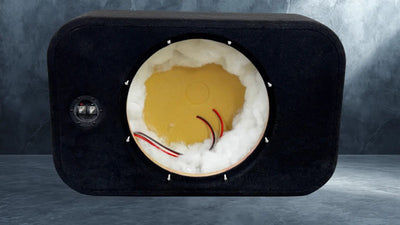
Performance Series single 15 inch sealed V3. Universal fit for any standard 15 inch driver, the most accessible 15 inch option.
$ 219.99
View DetailsBest 15 Inch for ResoNix Owners
Proline X
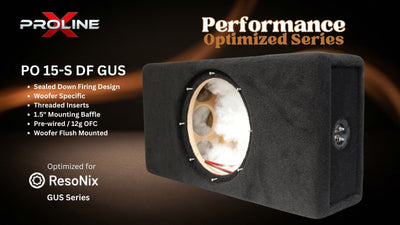
Built for the ResoNix GUS 15. We build for drivers we don't sell, no questions asked. Stack-fab construction, GUS 15 matched.
$ 349.99
View Details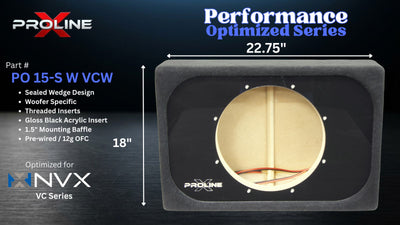


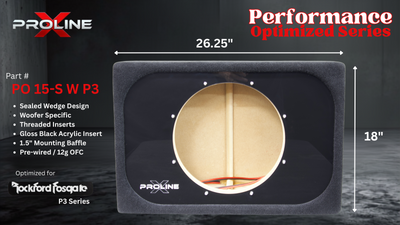
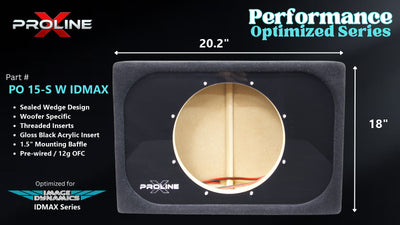
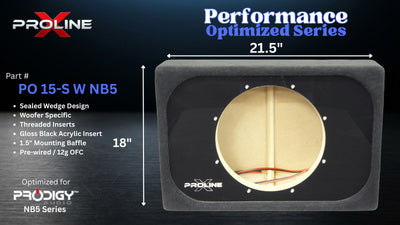
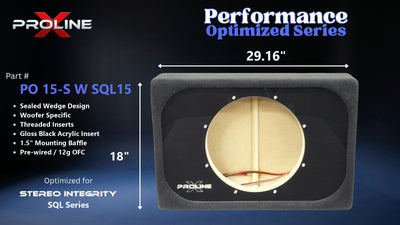
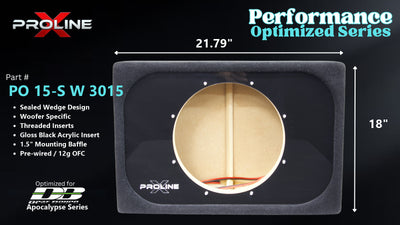
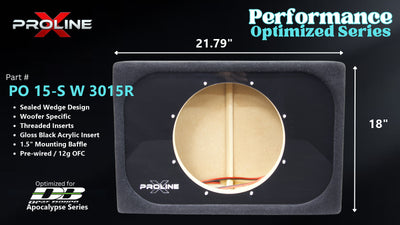
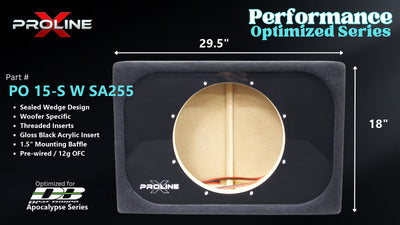
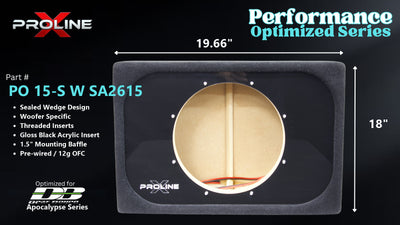
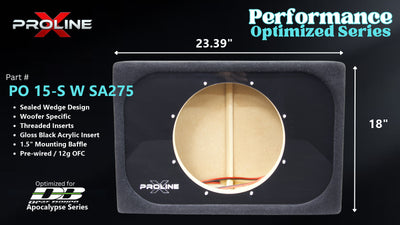
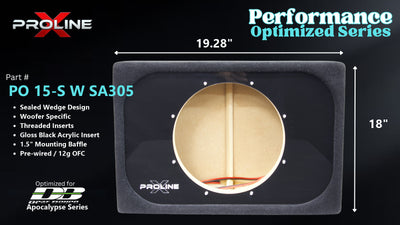
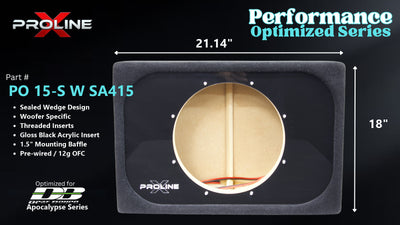
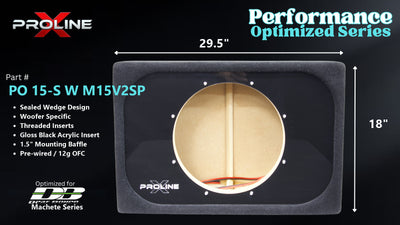
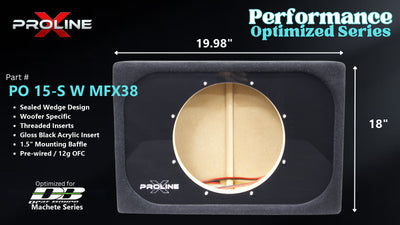
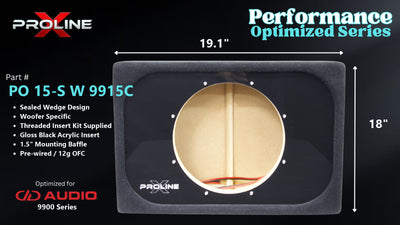

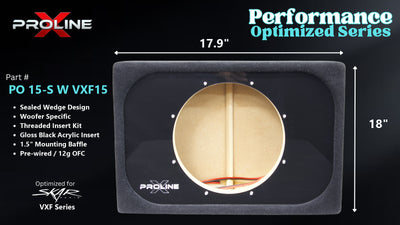

The series decides how the cabinet is built and how much bracing it carries. At this size the bracing is doing real work, because the panel areas are large and the pressures are high.
| Series | Front baffle | Cutout | Best for |
|---|---|---|---|
| Performance Optimized | 1.5 in double | Cut to one driver | You know the driver and want the box matched to it |
| Professional | Double or triple | Cut to one driver | Reference builds where the cabinet is the point |
| Micro Series | 1.5 in | Cut to one driver | The rare shallow-mount fifteen, where depth is fixed by the vehicle |
| Performance | 0.75 in single | Universal | A universal cutout when the driver is not decided |
| Vehicle Specific | Varies by platform | Cut to one driver | Direct fit in a named vehicle and year range |
Shared across every row: Langboard Elite MDF cut on ShopSabre routers in Tullahoma, Tennessee. Plush black carpet. A Proline X ABS and carbon fibre composite terminal cup with stainless hardware, pre-wired in 12-gauge OFC. Construction method varies by series and is stated on each product page.
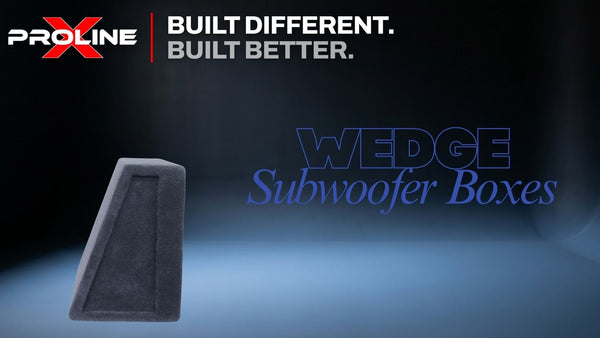
A cabinet this tall usually has to lean on something, and a taper on the rear panel turns dead space behind a seat back into usable volume. The baffle stays vertical so the driver still fires forward. That is why the shape that is a minority at every other size is the majority at this one.
Net volumes at this size run to figures that will not fit a sedan trunk without planning, and a ported fifteen needs room for the port on top of its net volume. Measure the whole opening rather than the face, and settle the cabinet before you settle the driver.
The bulk of the fifteen inch range. Each cabinet is cut to one driver published parameters on a 1.5 inch double baffle, mostly as a wedge.
Cut to one driver
Heavier baffle and internal bracing, which does real work at this size because the panel areas are large and the pressures are high.
Cut to one driver
The rare shallow-mount fifteen, stack-fabricated with dowel reinforcement for a space whose depth the vehicle decides.
Cut to one driver
Baffle thickness and construction method vary by series. Each product page states how that cabinet is built and, where it is driver-matched, which model it was cut for.
Supporting guides to help you design, build, and tune your system.
 Application
Match the amplifier to a fifteen honestly, from RMS at your final wired impedance.
Read the guide Application
Every wiring configuration and the load each one presents, which matters on a dual fifteen.
Read the guide Decision
How ported cabinets compare, including the largest ones we cut.
Read the guide Decision
Where a fifteen realistically fits, which is usually a truck rather than a car.
Read the guide Explainer
Why net volume decides how a sealed fifteen sounds, and why the margin for error is smaller here.
Read the guide Explainer
What a bandpass alignment does differently, if you are weighing it against a large sealed or ported box.
Read the guideIf you have the volume for it. A fifteen moves substantially more air for the same excursion, so it reaches its output with less cone travel and less distortion. What it asks for is cabinet volume, and a fifteen in a box too small for it will be beaten by a twelve in the right one.
Geometry. A cabinet this tall usually has to lean on something, and a taper on the rear panel turns dead space behind a seat back into usable volume while keeping the baffle vertical so the driver still fires forward. At smaller sizes the wedge is a minority shape; at fifteen inches it is the common one.
More than most vehicles have without planning for it, and a ported fifteen needs room for the port on top of its net volume. Published external dimensions are on every listing. This is the size where the space decides whether the build is possible at all.
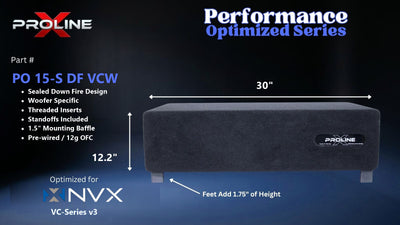
In specific trucks, with a shallow-mount driver and a cabinet cut for that exact cab, yes. There is a direct-fit under-seat build in this range. Do not assume the same is possible with a conventional fifteen inch driver, because the geometry only works when the driver is shallow enough.
Work from the driver's RMS at your final wired impedance rather than from peak figures. A fifteen reaches its output with less cone travel than a twelve, which makes it easy to underestimate what it wants. A monoblock rated at the driver RMS at that impedance is the standard approach.
Mostly sealed, with a ported group for the drivers built to take that loading. Every sealed cabinet ships with polyfill already installed. Ported cabinets need more airspace again for the same driver, which is a real consideration at this size.
Every box is cut to one driver's published specs. Pick the brand your subwoofer comes from.
Related Collections
Browse curated picks that work with the products above.
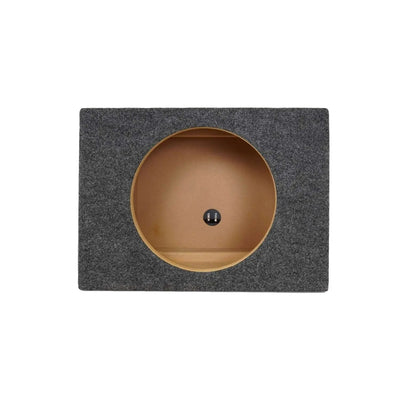
Proline X
$ 129.99 $ 159.99
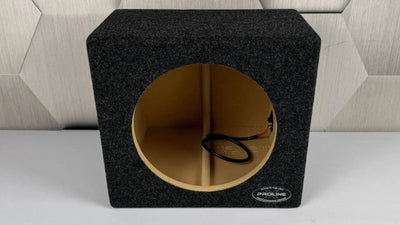
Proline X
$ 169.99 $ 179.99
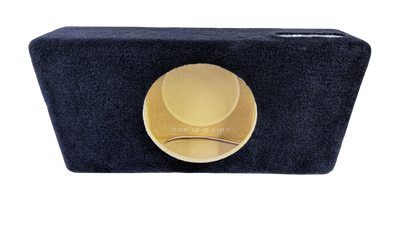
Proline X
$ 179.99
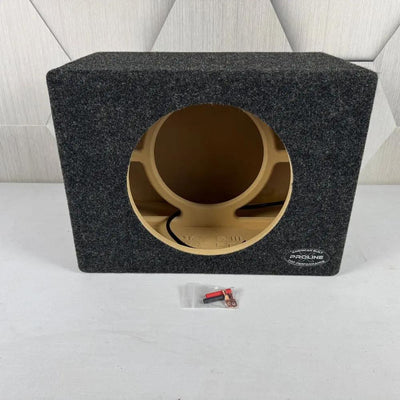
Proline X
$ 179.99
Related Collections
Browse curated picks that work with the products above.
Proline X
$ 159.99 $ 179.99
Proline X
$ 169.99 $ 179.99
Proline X
$ 229.99
Proline X
$ 249.99
Related Collections
Browse curated picks that work with the products above.
Proline X
$ 266.99 $ 279.99
Proline X
$ 275.99
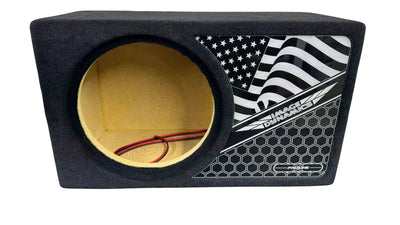
Proline X
$ 293.99
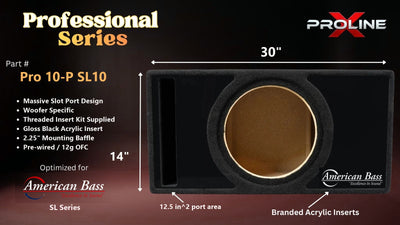
Proline X
$ 309.99
Last updated August 29, 2026