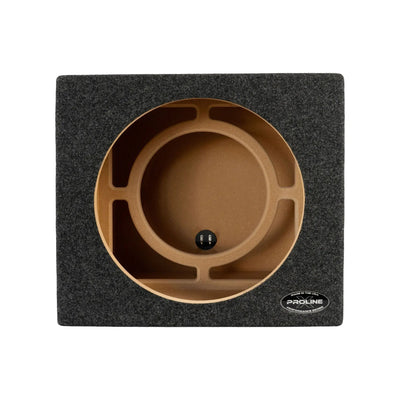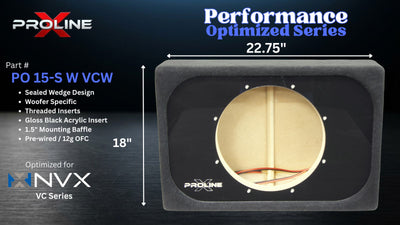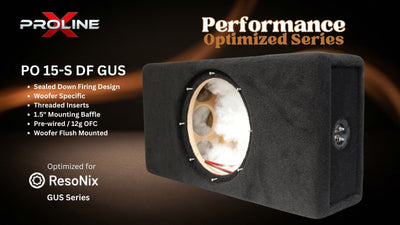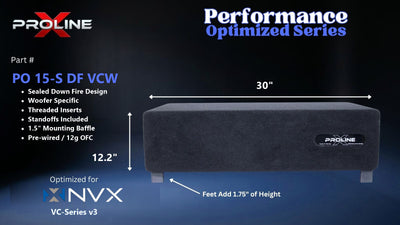
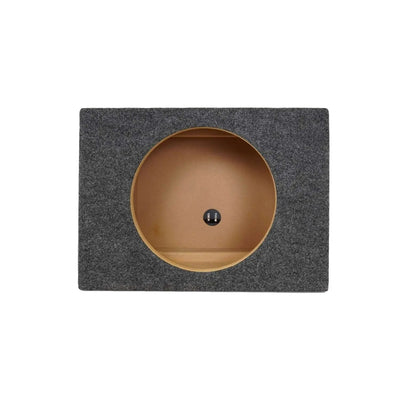
Proline X E12-S Sealed Enclosure
$ 129.99
$ 159.99
18% OFF
In stock and ready to ship!
DetailsTwelve inch cabinets in standard, down-fire and wedge, CNC-cut in Tullahoma, Tennessee.

Sealed and ported, all three shapes
12 inch cabinets in stock | sealed and ported | standard, down-fire and wedge in near-equal measure | single and dual | cut in Tullahoma
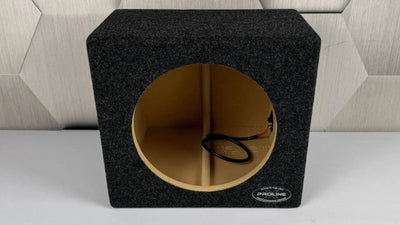

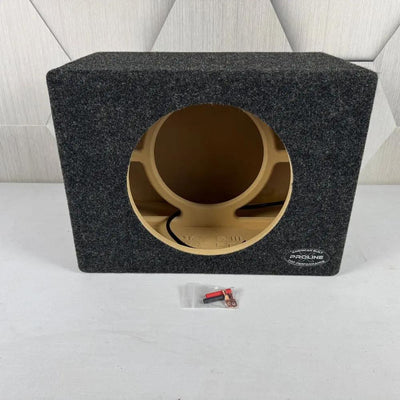
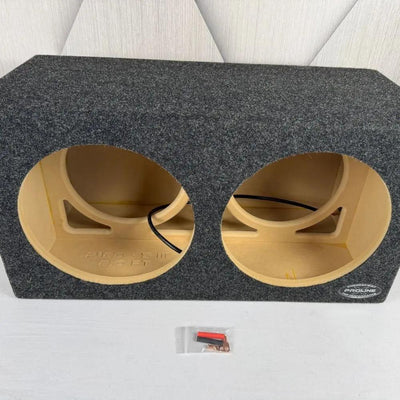
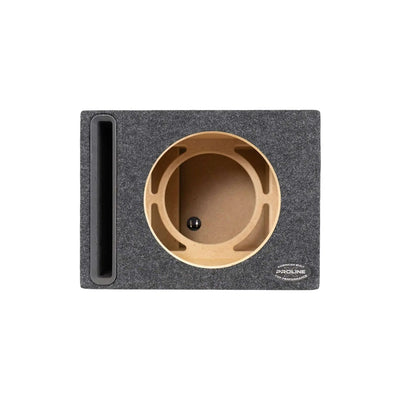
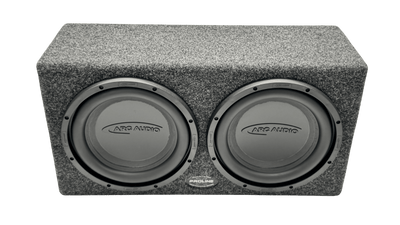
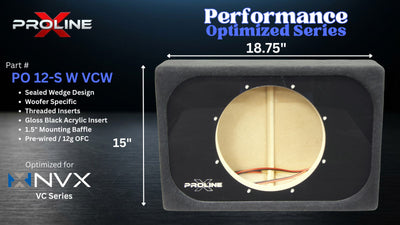
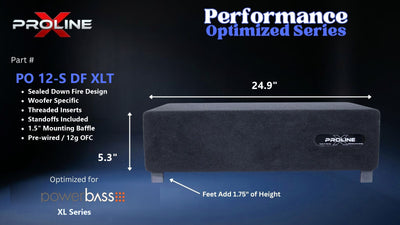
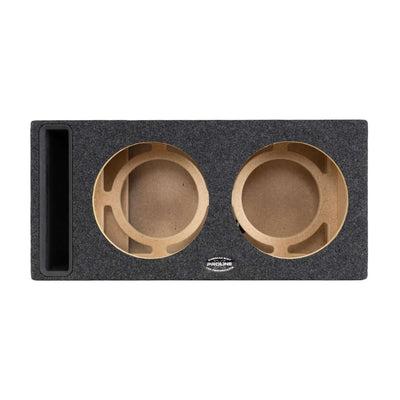

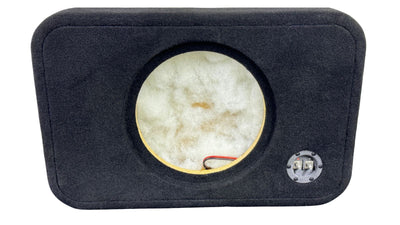
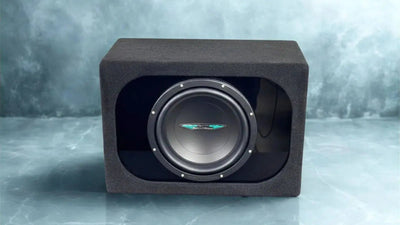
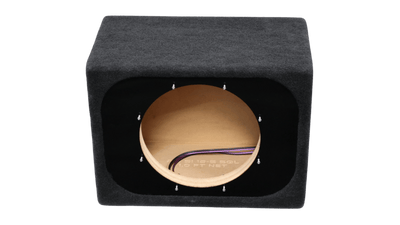
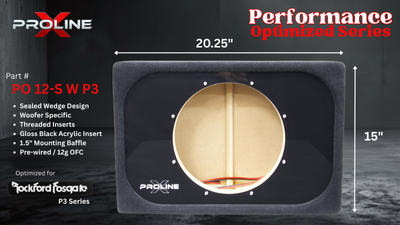
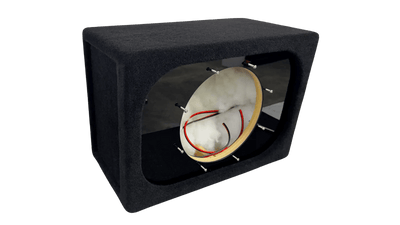
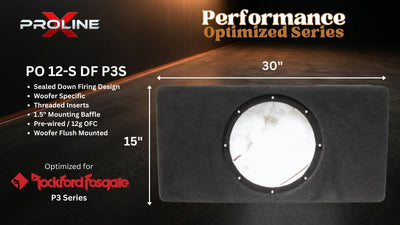
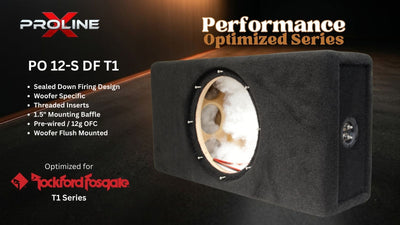
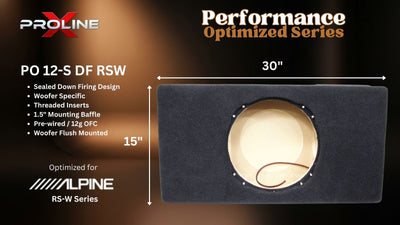
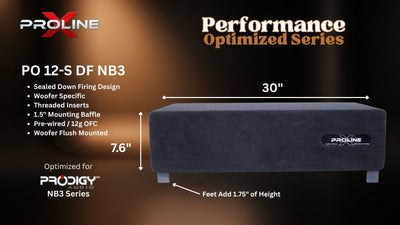
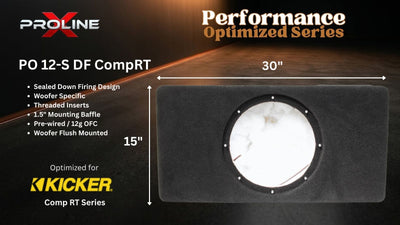
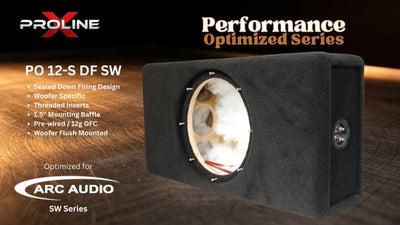
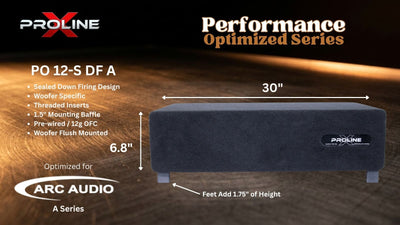
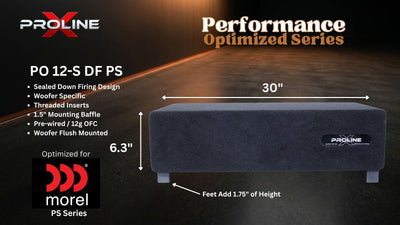
The series decides how the cabinet is built and how settled your driver choice needs to be. It does not decide how the box sounds, which is set by the volume and the alignment.
| Series | Front baffle | Cutout | Best for |
|---|---|---|---|
| Performance Optimized | 1.5 in double | Cut to one driver | You know the driver and want the box matched to it |
| Micro Series | 1.5 in | Cut to one driver | Shallow spaces where a standard cabinet will not fit |
| Performance | 0.75 in single | Universal | A universal cutout when the driver is not decided |
| Professional | Double or triple | Cut to one driver | Reference builds where the cabinet is the point |
| Vehicle Specific | Varies by platform | Cut to one driver | Direct fit in a named vehicle and year range |
| Economy | Single | Universal | A straightforward twelve at the entry point |
Shared across every row: Langboard Elite MDF cut on ShopSabre routers in Tullahoma, Tennessee. Plush black carpet. A Proline X ABS and carbon fibre composite terminal cup with stainless hardware, pre-wired in 12-gauge OFC. Construction method varies by series and is stated on each product page.
Standard front-firing, down-fire and wedge are split almost evenly at this size and at no other. All three are solved to the same alignment for a given driver, so the decision is purely about the surface you have to work with: a flat floor, something angled to sit against, or neither.
A straightforward universal-cutout twelve at the bottom of the range. It is a properly built box rather than a thinner one, and it is the right answer when the driver is not decided and the budget is what is binding. The Performance twelves are universal too; everything else here is cut to a named driver.
The bulk of the twelve inch range. Each cabinet is cut to one driver published parameters on a 1.5 inch double baffle, in all three orientations.
Cut to one driver
Stack-fabricated with dowel reinforcement and cut shallower, for openings a standard twelve will not fit. Every Micro ships with feet.
Cut to one driver
A straightforward universal-cutout twelve at the bottom of the range, built on the same MDF and the same routers as everything above it.
Universal cutout
Baffle thickness and construction method vary by series. Each product page states how that cabinet is built and, where it is driver-matched, which model it was cut for.
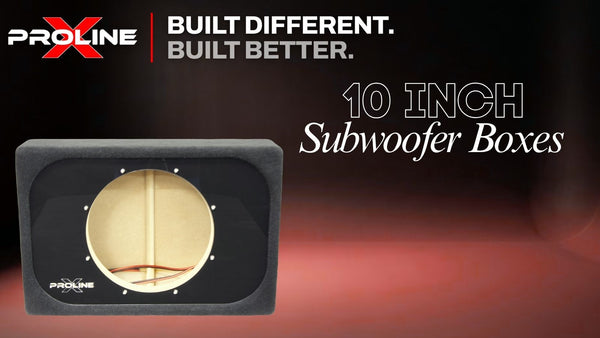 10 Inch Subwoofer Box
Shop
10 Inch Subwoofer Box
Shop
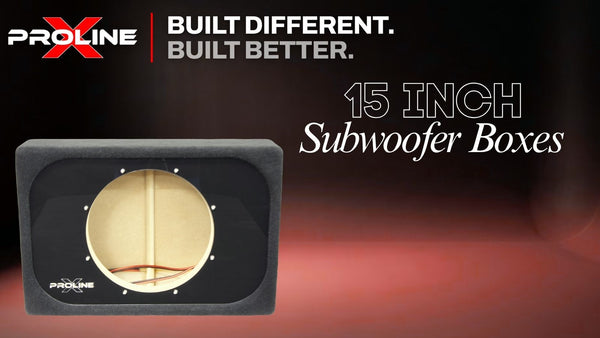 15 Inch Subwoofer Boxes
Shop
15 Inch Subwoofer Boxes
Shop
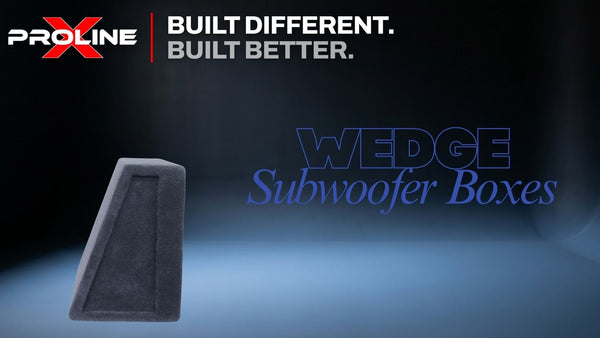 Wedge Subwoofer Boxes and Enclosures
Shop
Wedge Subwoofer Boxes and Enclosures
Shop
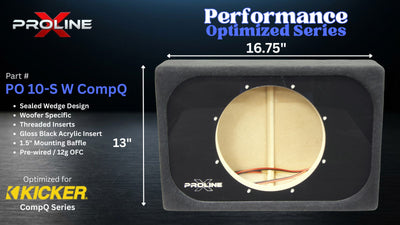
 Proline X Performance Optimized Series Enclosures
Shop
Proline X Performance Optimized Series Enclosures
Shop
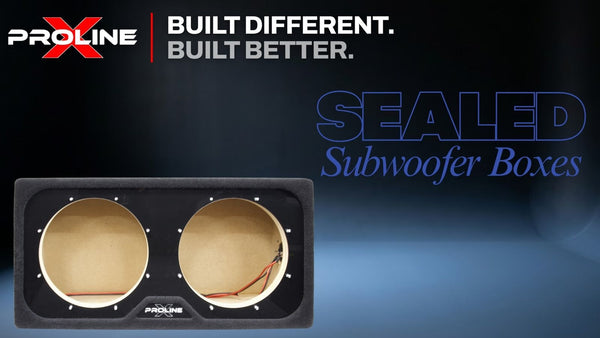 Sealed Subwoofer Boxes
Shop
Sealed Subwoofer Boxes
Shop
 Proline X Economy Series Subwoofer Enclosures
Shop
Proline X Economy Series Subwoofer Enclosures
Shop
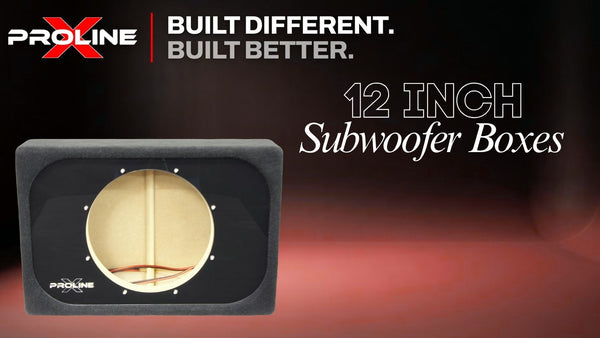 Ported 12 Inch Subwoofer Boxes
Shop
Ported 12 Inch Subwoofer Boxes
Shop
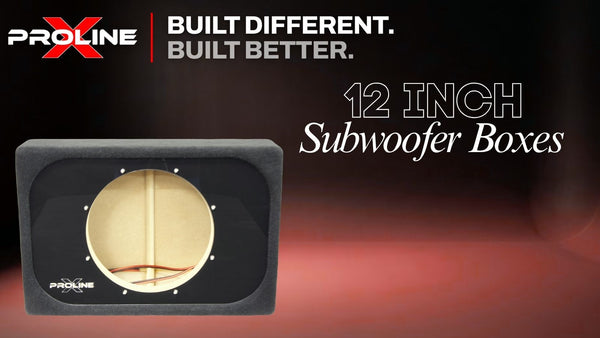 Dual 12 Inch Subwoofer Boxes
Shop
Dual 12 Inch Subwoofer Boxes
Shop
Supporting guides to help you design, build, and tune your system.
 Decision
Which twelve inch drivers suit a small sealed cabinet, if accuracy is the priority.
Read the guide Application
How much sealed airspace a twelve inch driver actually wants, and what happens either side of it.
Read the guide Explainer
Down-fire against front-firing at the one size where the split is genuinely even.
Read the guide Explainer
What a dual twelve buys you over a single, and what it costs in space.
Read the guide Explainer
What the fill does and why every sealed twelve here already has it.
Read the guide Explainer
What separates Economy, Performance Optimized, Micro and Professional at this size.
Read the guideLower, not better. A twelve reaches deeper for the same power and moves more air for the same excursion, which shows up on content with sustained low bass. What it costs you is cabinet volume, and a twelve in a box too small for it will be beaten by a ten in the right one.
The one the space suits, because all three are solved to the same alignment for a given driver and none is acoustically superior. Down-fire needs a flat, solid floor and counts its feet into total height. Wedge needs an angled surface to sit against. Standard front-firing needs neither.
More than most people plan for, and a ported twelve more again, because the port has to fit inside the cabinet alongside the net volume. Published external dimensions are on every listing. Measure the opening with trim in place and at its tightest point.
Because the volume is set by the driver rather than the cone diameter, and because a dual cabinet is constrained by the same opening a single is. Each chamber in a dual is cut tighter than the same driver would get on its own. That is deliberate rather than a data error.
The Economy cabinet is the entry point at this size, a straightforward universal-cutout twelve. It is a properly built box on the same MDF and the same routers rather than a thinner one. Everything above it is cut to a named driver, which is what you are paying for.
Every sealed cabinet we build ships with polyfill already installed, and the quoted volume accounts for it. You do not need to add any and you should not remove it. Ported cabinets do not use polyfill, because it would move the port tuning.
Every box is cut to one driver's published specs. Pick the brand your subwoofer comes from.
Related Collections
Browse curated picks that work with the products above.
Proline X
$ 159.99 $ 179.99
Proline X
$ 169.99
Proline X
$ 169.99
Proline X
$ 199.99
Related Collections
Browse curated picks that work with the products above.
Related Collections
Browse curated picks that work with the products above.
Proline X
$ 159.99 $ 179.99
Proline X
$ 169.99 $ 179.99
Proline X
$ 229.99
Proline X
$ 249.99
Last updated September 5, 2026