


What Does 1 Ohm Stable Mean? Amp Ratings Explained
A 1 ohm stable amp is rated to drive a 1 ohm load continuously at its published power. Here's why...
Read Article →

4-channel amplifiers for front + rear builds or 3-channel mode (front stereo plus bridged subwoofer). Class AB and Class D options.
Authorized Dealer
Every amplifier is brand new with the full manufacturer warranty.
Power Matching
Send us your subwoofer or speaker specs. We'll recommend the right amplifier at the right impedance before you buy.
Hands-On Expertise
Direct support from staff who designs, builds, and competes with these systems. Honest recommendations, not upsells.
Fast Shipping from TN
In-stock orders ship within 1-2 business days from our Tullahoma, Tennessee warehouse.
Decision Shortcut
Curated picks matched to common build goals
Best Entry 4-Channel
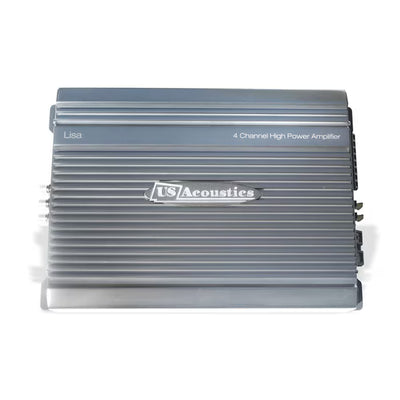
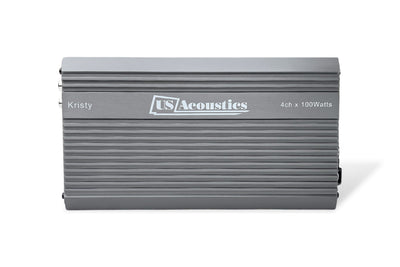
US Acoustics
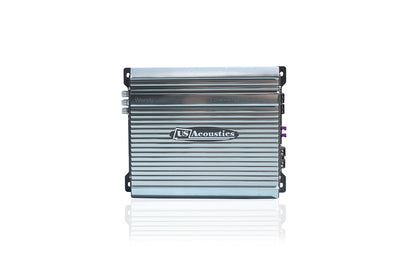
Class AB 4x50W at $159.99. The accessible entry into proper 4-channel amplification.
$ 159.99
View DetailsBest Value 4-Channel
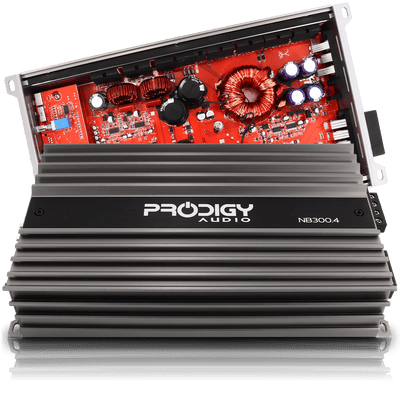
Prodigy Audio
Class D 1200W (4x300W) at $416.99 on sale. Strong power-to-price for high-power 4-channel builds.
$ 416.99 $ 500.99
View DetailsBest Compact 4-Channel
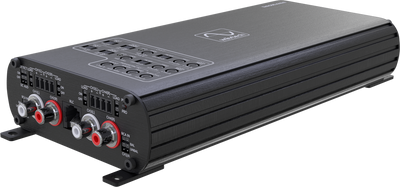
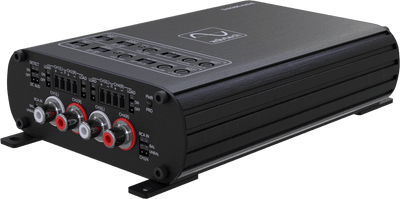
Wavtech
Class D 4-channel in compact chassis at $449.99 on sale. For space-constrained installs.
$ 449.99 $ 499.99
View DetailsBest SQ Class D
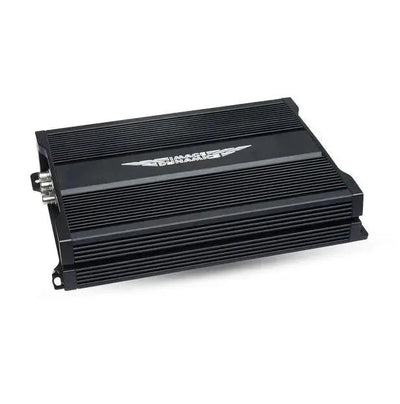
Image Dynamics
800W Class D engineered for SQ-focused builds at $469.99. Matched to Image Dynamics components.
$ 469.99
View DetailsBest Mid-Tier SQ
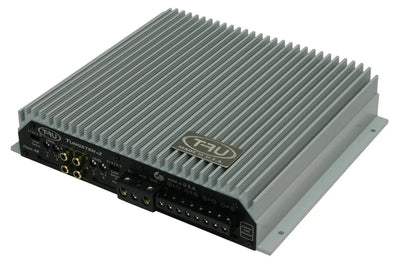
Tru Technology
US-built Class AB 4-channel at $1,399.99. Reference circuit topology at the SQ-focused tier.
$ 1,399.99
View DetailsBest Reference Class AB
Tru Technology
Reference Class AB 4-channel at $2,399.99. The audiophile flagship for full-range speaker amplification.
$ 1,399.99
View Details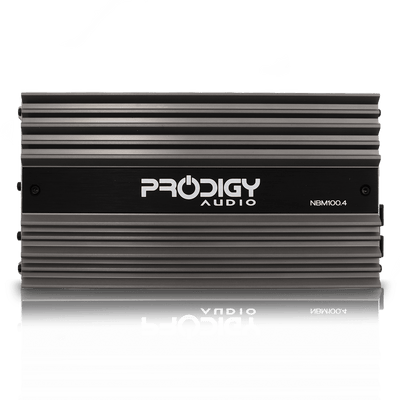
All products loaded
There are more 4-channel amps on the market than any other type, and the spec sheets are written to sell rather than to inform. Peak power figures, inflated channel counts, and efficiency claims with no test conditions attached make cross-brand comparison genuinely hard. Three things actually decide the buy.
Ignore peak. It is a marketing number with no relationship to what the amp does in your car. RMS is what it delivers continuously without distorting or going into thermal shutdown, and RMS is what you match to the speaker's rating.
The 4-channel amps here run 50W to 150W RMS per channel at 4 ohms. Most aftermarket component sets are rated 75W to 150W RMS, so that range covers the majority of front stages. Underpowering is what kills speakers, because an amp pushed into clipping hands the voice coil a distorted signal it cannot dissipate. Overpowering with the gain set properly is fine. Match the numbers; don't chase the biggest one on the box. See what you are driving in component sets.
This is the real decision. One chassis can run a front stage and a bridged sub. Two chassis do each job properly. Neither is wrong; they cost different things.
| One 4-Channel | 2-Channel Plus Monoblock | |
|---|---|---|
| Chassis in the build | 1 | 2 |
| What the front stage gets | 2 channels, sharing the supply with the sub or rear | Its own amp, supply and ground |
| Subwoofer | A bridged pair, 4 ohm typical | A monoblock rated to 1 ohm |
| Rear fill | Only if you skip the sub | Needs a third amp |
| Tuning | One set of crossovers across all four channels | Independent per amp |
| Pick it when | Space, budget or a single-chassis install decides it | The front stage and the sub each deserve their own amp |
If you are splitting the job, see 2-channel amps and monoblocks. If you are running an active three-way, you need more channels than this page has: go to 6-channel, or browse the full amplifier lineup.
Nearly every 4-channel here bridges. The usual layout is the front pair in stereo and the rear pair bridged to mono for a subwoofer, which gets you a whole system out of one chassis.
On a subwoofer, Class D is settled: a sub reproduces a narrow band where the differences between topologies are hard to hear. A 4-channel amp is running full range, from 80Hz up through the midrange and treble where the ear is most sensitive, so the choice matters more here than it does on a monoblock.
Class D. Efficient, cool, small, and easy on the alternator. Prodigy NBM100.4 and NB300.4, Wavtech link300.4mini and link500.4mini, Image Dynamics SQ800.4. Modern Class D at this level is transparent full range and the practical answer for most builds. Full range in Class D amplifiers.
Class AB. Less efficient, hotter, bigger, and the bias current eliminates crossover distortion outright. US Acoustics Lisa and Barbara Ann, the whole Crescendo Revolution 4-channel line, Tru Technology Tungsten and Tungsten Grande. This is where the SQ builds land. Full range in Class AB amplifiers.
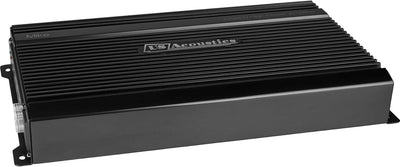
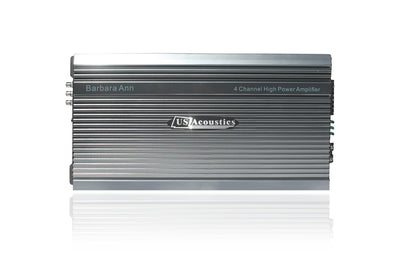
US Acoustics. Lisa at 4 x 50W ($159.99) and Barbara Ann at 4 x 100W ($399.99). Class AB at the accessible end, and the right starting point for a factory-replacement front stage that still has to sound like something. See the full US Acoustics lineup.
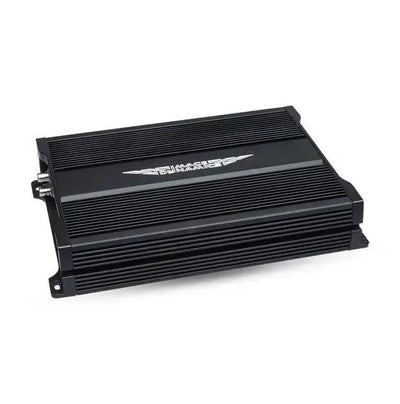
Prodigy Audio. NBM100.4 at 600W ($225.99) and NB300.4 at 1200W ($416.99). Class D, and the strongest power-per-dollar on the page. See Prodigy amplifiers.
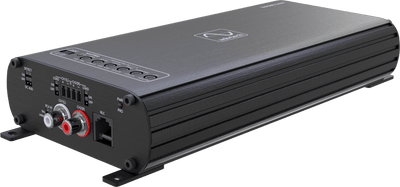
Wavtech. link300.4mini ($329.99) and link500.4mini ($449.99). Compact-chassis Class D for builds where the amp has to fit somewhere it really does not want to. See Wavtech.
Image Dynamics. SQ800.4, 800W full-range Class D ($469.99). Tuned around the brand's own driver lineup, which is why we reach for it on an Image Dynamics front stage. See Image Dynamics amplifiers.
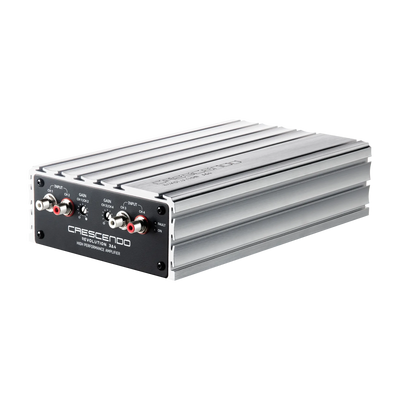
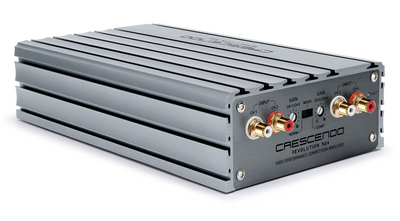
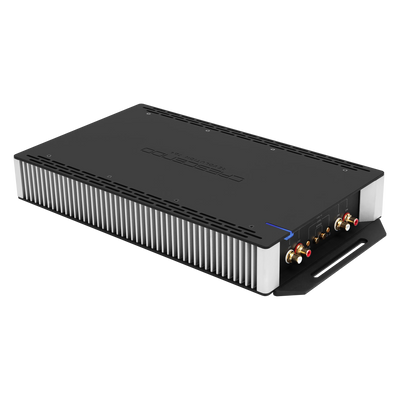
Crescendo. Revolution 3A4 ($499.00), 5A4 ($779.99), and 7A4 ($1,699.99). All three are Class AB, which is the point of the line: bias-current refinement at prices where most of the market has moved to Class D. The 7A4 is the SQ pick. See Crescendo amplifiers.
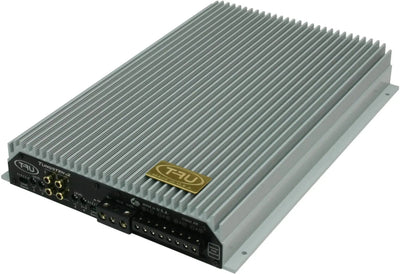
Tru Technology. Tungsten 4 Channel ($1,399.99) and Tungsten Grande Class AB 4 Channel ($2,399.99). US-built Class AB with nothing cut on the output stage. The reference tier here. See Tru Technology.
A 4-channel is the middle of the system, not the end of it. The drivers are in component sets, the bass is in car subwoofers, and if you are going active the DSP lineup does the crossover work these amps otherwise have to guess at. Setting gain correctly protects all of it: how we set amplifier gain.
The two common layouts are front plus rear (a stereo pair each), or 3-channel mode, which is a front stereo pair plus the rear channels bridged to drive a subwoofer. Some builds run a 4-channel in active bi-amp with a DSP, one pair on tweeters and one on midrange. That flexibility is why the 4-channel is the most common single-amp upgrade in car audio.
Yes, almost all of them bridge. The usual setup is the front two channels in stereo for the speakers and the rear two bridged to mono for the sub, which gets you a full system from one chassis. Bridging halves the load each channel sees, so an amp stable at 2 ohms per channel is stable at 4 ohms bridged. Confirm the bridged minimum impedance and wire the subwoofer to match it.
Class D is the most efficient, generating less heat and drawing less current, which suits compact installs and high-power builds. Class AB runs less efficiently and hotter, but its bias current eliminates crossover distortion outright. Because a 4-channel amp is running full range rather than just bass, that difference is more audible here than on a subwoofer amp. Most SQ-focused builds land on Class AB. Modern Class D from a good manufacturer is transparent full range and is the practical choice for most daily drivers.
Match the amplifier's RMS per channel to your speakers' RMS rating, ideally 75% to 150% of it. Components rated 75W to 100W RMS are well matched by 75 to 100 watts per channel. Higher-power components want 100 to 150 watts per channel. Underpowering causes clipping at volume, and clipping is what damages speakers.
On the channels driving speakers, engage the high-pass filter at around 80 Hz so deep bass never reaches them. On bridged channels driving a subwoofer, engage the low-pass filter at around 80 Hz so it only sees bass. Setting both to the same point creates a clean handoff. If a DSP is doing the crossover work, set the amplifier's filters to off or full range and let the processor handle it.
Yes. Every amplifier in this collection is brand new, sold by an authorized dealer, and carries the full manufacturer warranty. We handle warranty claims directly with the brand. Demo and previous-display units are labeled as such on the product page.
Yes. Send us your speaker specs (RMS power, impedance) and your layout (front and rear, front plus bridged sub, or active bi-amp) and we will recommend the right 4-channel for the build. Pre-purchase consultation is free. We would rather spend 15 minutes confirming the match than have you return a mismatched amplifier.
Related Collections
Browse curated picks that work with the products above.
Rainbow
$ 89.99 $ 399.99
Rainbow
$ 98.99 $ 549.99
US Acoustics
$ 159.99
US Acoustics
$ 159.99
Related Collections
Browse curated picks that work with the products above.
Rainbow
$ 98.99 $ 549.99
US Acoustics
$ 159.99
US Acoustics
$ 289.99
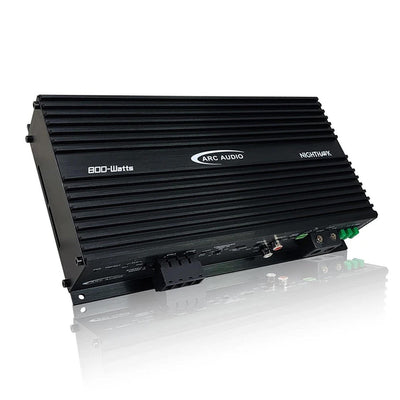
Arc Audio
$ 699.99 $ 749.99
Related Collections
Browse curated picks that work with the products above.


