
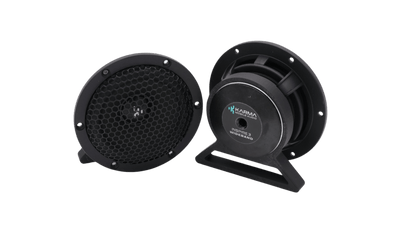
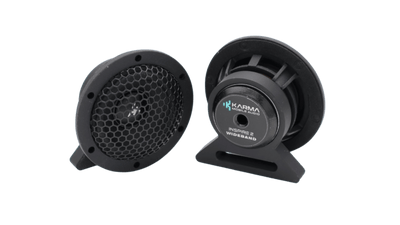
Karma Mobile Audio Inspire 3 | 3" Wideband
$ 500.00
Out of stock


Single-driver clarity. Perfect phase. Pure midrange.
Full Manufacturer Warranty
Covered by the manufacturer's warranty, and we handle any claim directly with the brand.
Authorized Dealer
Every set ships new from an authorized dealer, never gray-market, with full brand support.
SQ-Judge Support
Talk to a competing sound-quality judge who installs this gear and matches it to your vehicle.
Tullahoma, TN
Packed and shipped fast from our Tennessee shop, with tracking on every order.
All products loaded
A full range or wideband speaker reproduces most of the audio band from one cone, with no passive crossover dividing the signal between a woofer and a tweeter. Everything you hear leaves a single point source, so phase and arrival timing stay consistent across the midrange and highs. That is the trait sound-quality builders are after: a center image that locks in place and instruments that hold their true tone.
Multi-driver speakers split the signal, and every crossover point adds a small phase shift between drivers. A wideband cone removes those splits inside its operating range, which keeps transients sharp and vocals natural. Lightweight cone materials, whizzer cones, and phase plugs let one driver stretch from the low midrange up into the top octaves without breaking up.
One driver cannot do everything. Wideband drivers trade deep bass output and high maximum SPL for midrange purity and wide dispersion. Plan to cross them to a subwoofer for low frequencies, and do not expect them to carry loud bass on their own. Used inside their strengths, they are some of the most coherent drivers you can put in a vehicle.
These drivers are flexible. The right approach depends on whether you want simplicity or a fully tuned active stage.
Run one wideband driver per side, add a subwoofer for the bottom end, and you have a clean two-way system with almost no crossover complexity. This is the fastest path to coherent sound in a daily driver.
In a competition-style build, use the wideband as the midrange on its own amplifier channel, set crossover points and time alignment in a DSP, and blend it with dedicated tweeters and subs. You get pinpoint staging with full control of the tune. Browse the full car speakers lineup to compare wideband drivers against component sets.
Wide dispersion is what makes these drivers forgiving off-axis, so dash corners, A-pillars, and kick panels all work well. Aim for similar path length to both ears, then correct the rest with DSP.
Wideband drivers are efficient and do not need big wattage, but they reward clean power. A low-noise amplifier with high damping factor keeps the cone under tight control for accurate detail. Match the channel to the driver's RMS rating and set gains conservatively. Pair them with a DSP for time alignment and EQ and a quality amplifier to drive them, and the active two-way or three-way comes together with real staging.
It is a single driver built to reproduce most of the audio band on its own, without splitting the signal through a crossover to a separate tweeter. The result is one point source with consistent phase and timing, which is why sound-quality builders use them for imaging and staging.
No. The point of a wideband driver is to cover the midrange and highs from one cone, so a passive crossover and dedicated tweeter are not required. In an active system you still set a high-pass and a gentle low-pass in the DSP to protect the driver and blend it with your subwoofer.
Yes, and it is one of the most common uses. Run it actively off its own amplifier channel with DSP time alignment, cross it to a subwoofer for low bass, and you get a coherent center image without the phase issues of a passive two-way.
For full-scale bass, yes. Wideband drivers trade deep low-end output for midrange purity and wide dispersion, so most builds pair them with a subwoofer to handle the bottom octaves. The wideband carries vocals and detail while the sub handles the low frequencies.
They are efficient and do not need large wattage, but they respond well to clean power. A low-noise amplifier with good damping factor gives the most accurate control. Match the amplifier channel to the driver's RMS rating and use the gains conservatively.
Dash corners, A-pillars, and kick panels are the usual locations because the wide dispersion fills the cabin from off-axis positions. Aim for path-length symmetry to both ears, then fine-tune staging with DSP time alignment.
Related Collections
Browse curated picks that work with the products above.
Amplifiers Built for These Speakers
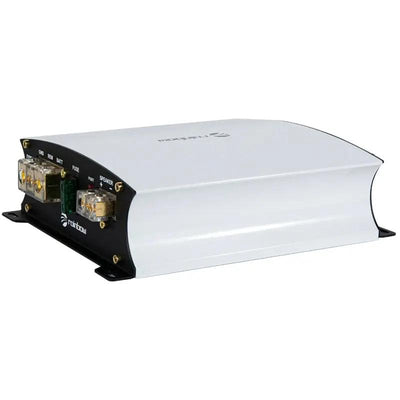
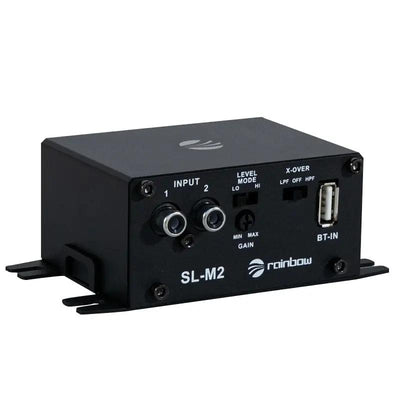
Multi-channel amplifiers spec'd for the power and impedance requirements of the components in this collection. Clean signal, proper damping, and the headroom to drive your speakers without clipping.
Rainbow
$ 89.99 $ 399.99
Rainbow
$ 98.99 $ 549.99
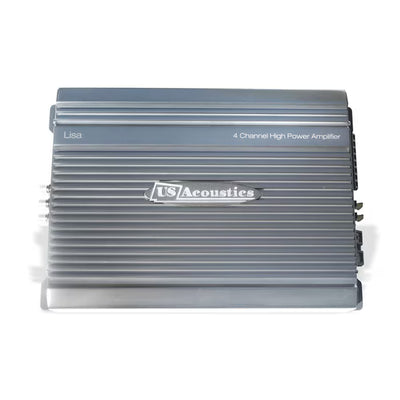
US Acoustics
$ 159.99
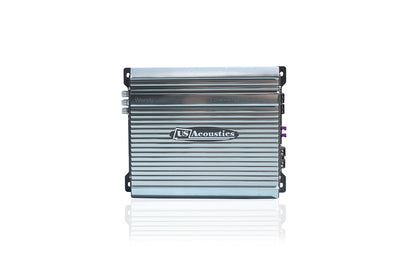
US Acoustics
$ 159.99


