Closeout
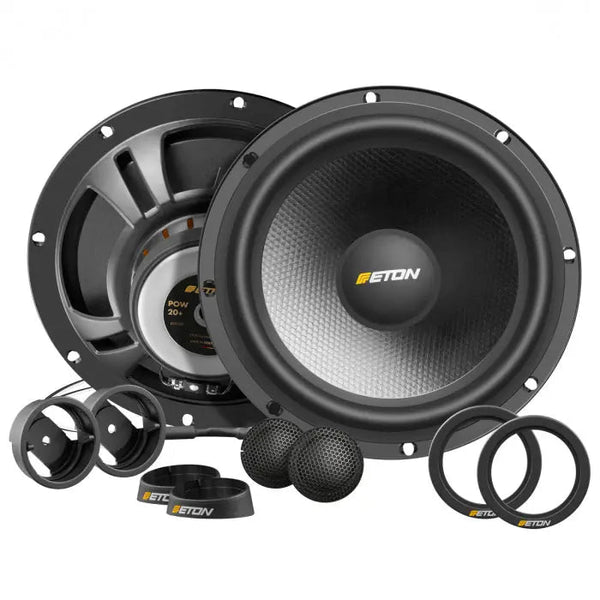
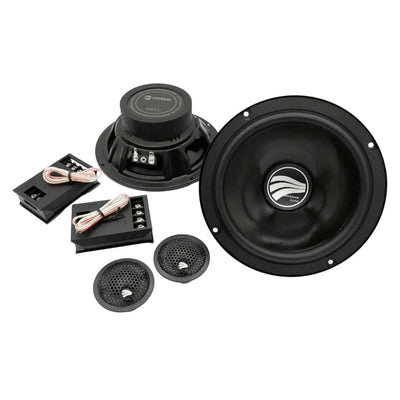
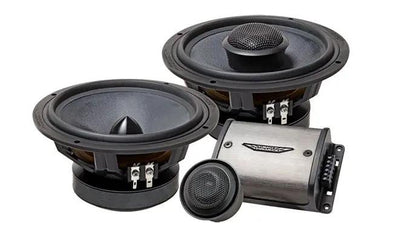
Rainbow Audio EL-C260S 6.5" 2-Way Component Speakers Set
$ 69.99
$ 189.99
63% OFF
In stock and ready to ship!
DetailsTwo-way passive through fully active three-way, in 5.25 and 6.5 inch. Picked by an IASCA Finals judge and shipped from Tullahoma, Tennessee.

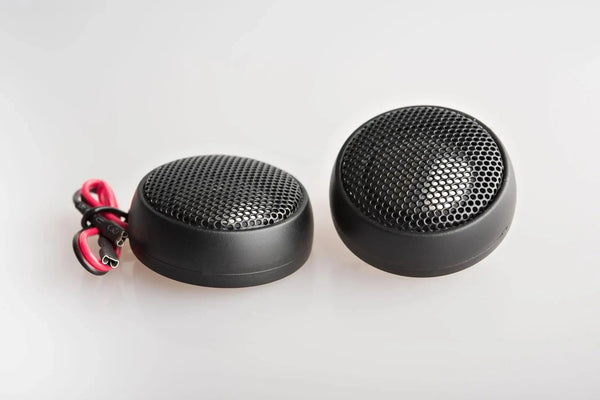
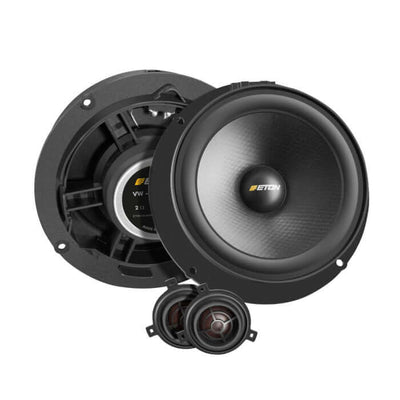
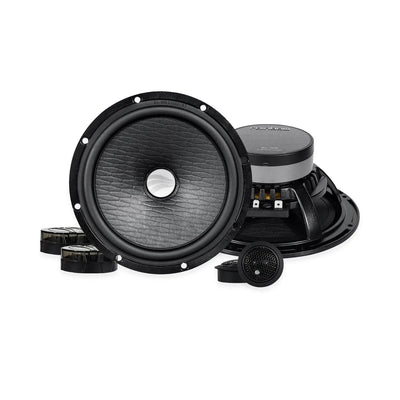
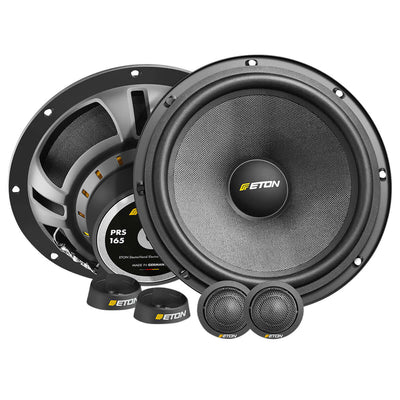
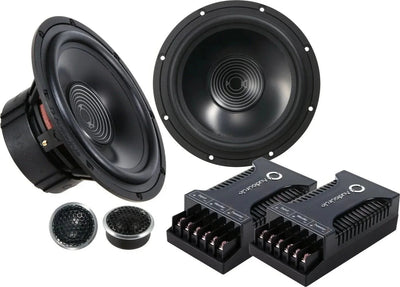
Separate Woofer, Tweeter & Crossover
Component sets in stock today · 5.25 and 6.5 inch · $69.99 to $3,499.99 · two-way passive and fully active three-way
Decision Shortcut
Curated picks matched to common build goals
Best for Active Builds
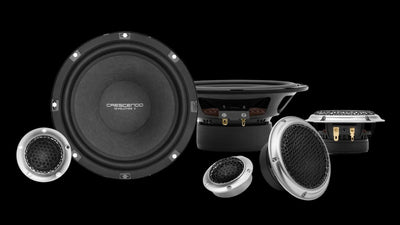
Crescendo
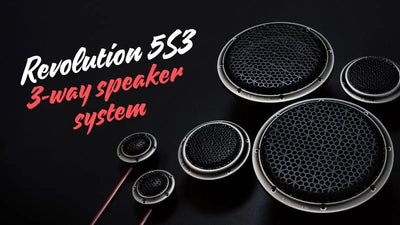
Three-way active with no passive crossover, so each driver takes its own amplifier channel and DSP filter. 6.5 inch, 4 inch and 28 mm drivers, all 4 ohm, 50 to 75 W per driver. The least expensive of the three Revolution systems we stock.
$ 769.99
View DetailsBest for SQ Speaker
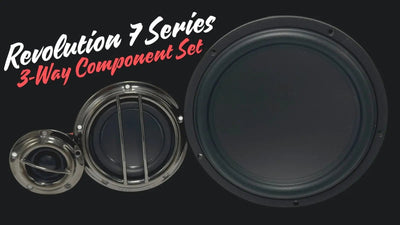
Crescendo
Three-way active with no passive crossover, so every driver gets its own amplifier channel and DSP filter. 6.5 inch, 4 inch and 24 mm drivers, all 4 ohm. 50 to 100 W per driver, with the 4 inch midrange capped at 75 W. The top of the Revolution line and the most expensive of the three we stock.
$ 3,499.99
View DetailsBest Component Speaker
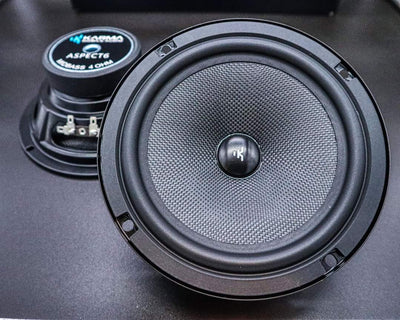
Karma Mobile Audio
Kevlar-cone SQ component set built for tuned front stages and accurate staging.
$ 300.00
View DetailsBest Value Speaker
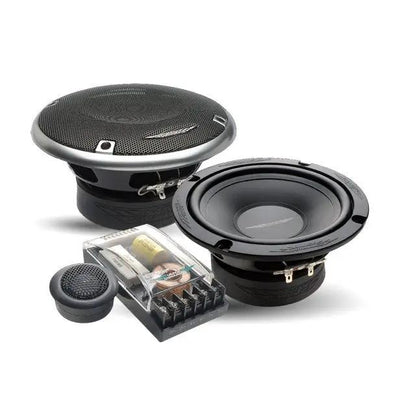
Image Dynamics
Affordable component set with a separate tweeter and crossover. A real step up from factory at an entry price.
$ 159.99
View Details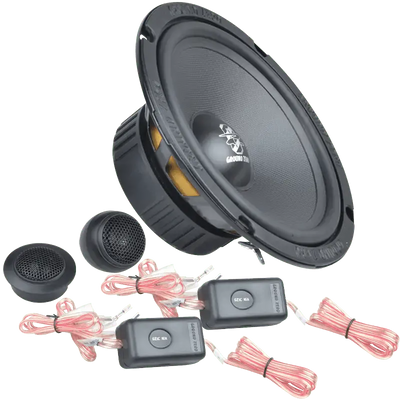
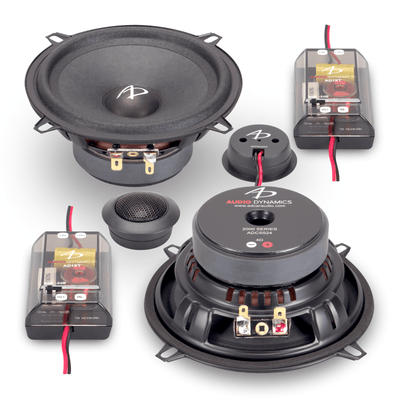
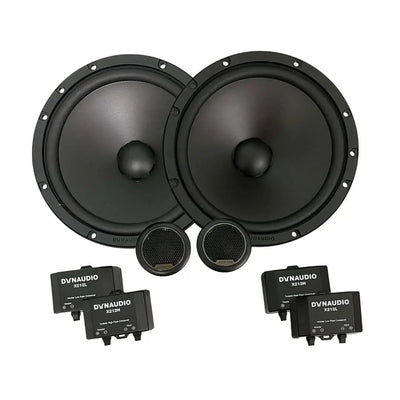
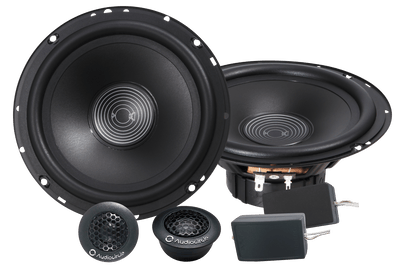
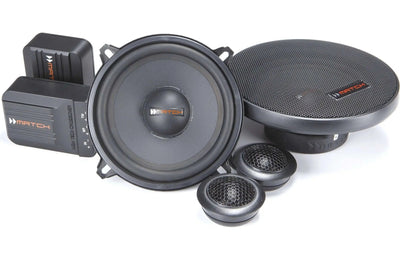
All products loaded
Every figure below comes from the manufacturer spec sheet on that product's own page. Where a maker does not publish a figure the cell says so rather than carrying an estimate.
| Component Set | Size | Topology | RMS | Sensitivity | Impedance | Mounting depth | Price |
|---|---|---|---|---|---|---|---|
| Audiocircle Stuttgart Line 6.5 in | 6.5 in | 2-way passive | 60 W (120 W max) | 89 dB | 3.2 ohm | 62 mm (2.44 in) | $199.99 |
| Karma Mobile Audio Aspect 6.1 | 144 mm cutout | 2-way passive | 100 W with 80 Hz high-pass | 85.5 dB midbass, 91 dB tweeter | 4 ohm (3.6 ohm DCR) | 66.5 mm (2.62 in) | $300.00 |
| Image Dynamics CXS64 V2 | 6.5 in | 2-way passive, convertible to coaxial | 125 W (250 W max) | 90 dB at 1W/1m | 4 ohm | 76.2 mm (3.0 in) | $304.99 |
| Audiocircle Hamburg Line 6.5 in | 6.5 in | 2-way passive | 80 W (150 W max) | 88 dB at 1W/1m | 4 ohm | 67 mm (2.64 in) | $399.99 |
| Crescendo Revolution 3S3 | 6.5 in, 4 in, 28 mm | 3-way active, no passive crossover | 50 to 75 W per driver | Not published | 4 ohm, all drivers | Not published | $769.99 |
| Crescendo Revolution 5S3 | 6.5 in, 4 in, 28 mm | 3-way active, no passive crossover | 50 to 100 W per driver | Not published | 4 ohm, all drivers | Not published | $1,599.99 |
| Crescendo Revolution 7S3 | 6.5 in, 4 in, 24 mm | 3-way active, no passive crossover | 50 to 100 W per driver, 75 W midrange | Not published | 4 ohm, all drivers | Not published | $3,499.99 |
Manufacturers do not all measure sensitivity the same way, so treat a 1 dB gap between two brands as noise and a 4 dB gap as real. Four decibels is roughly the difference between a set that plays cleanly off a head unit and one that needs an amplifier to wake up.
The Tier 1 sets are rated at or below 60 W RMS, with published sensitivity at 87 dB or better where the maker states one. Tier 1 plays cleanly on factory or aftermarket head unit power and still puts the tweeter at ear level, which is the whole point of buying components.
The Tier 2 sets carry a passive crossover in its own housing and a 70 to 100 W RMS rating, which is the power they need per channel to reach rated output. Tier 2 is the largest group in this collection and the right landing spot for most SQ builds that are not chasing a trophy. A Tier 2 set can cost less than a Tier 1 set.
The Crescendo Revolution systems, all three-way, all with the passive crossover removed entirely. Crossover points are set in software, which is what lets a competition car time-align each driver independently.
Six amplifier channels and a DSP are part of the system, not optional accessories.
A small number of sets are placed in a tier on the manufacturer's own description rather than a published RMS figure, because those makers do not publish one. Each is noted on its product page.
Supporting guides to help you design, build, and tune your system.
 Explainer
How dB at 1W/1m and RMS ratings decide which amplifier a set needs.
Read the guide Decision
Head unit power against amplifier power, and where the line actually falls.
Read the guide Explainer
Passive crossovers, active crossovers, and what each one costs you.
Read the guide Application
Where the tweeter goes and why crossing the pair fixes an off-centre seat.
Read the guide Decision
Scoring a 3-way set against IASCA and USACi rules, from sensitivity and THD to crossover points.
Read the guide Decision
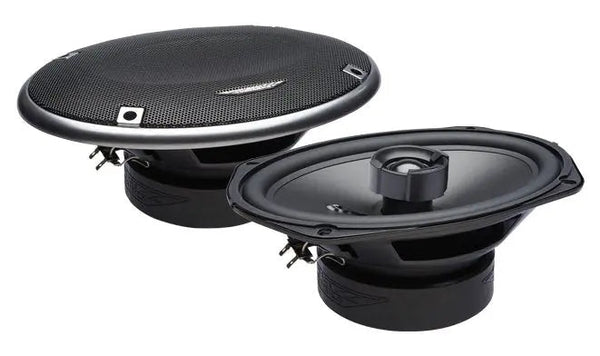
When a coaxial is the right answer, mostly rear fill and doors with no tweeter spot.
Read the guideA component speaker set is a car speaker system sold as separate pieces: a woofer, a matching tweeter, and an external crossover, one of each per side. A coaxial speaker combines the same drivers into a single frame with the tweeter mounted on a post over the woofer cone. The separation is the definition. It is what lets the tweeter mount somewhere the woofer cannot go.
In the front stage, yes, and the reason is placement rather than driver quality. A door-mounted coaxial fires its tweeter at the carpet from below knee height, and high frequencies are directional enough that the whole image follows them down there. A component set puts the tweeter near ear level in the sail panel or A-pillar, which raises the vocal image to the windshield. For rear fill, where you want the sound to stay quiet and diffuse, a coaxial is the better choice.
There is no single best brand, because the right set is decided by the amplifier behind it, not the badge. A set rated 50 W RMS at 89 dB sensitivity is the better speaker if you are running head unit power, and it will beat a 100 W RMS set at 85.5 dB in that system every time. Match RMS rating and sensitivity to your amplifier first, then compare brands inside that tier.
The sets Audio Intensity stocks cover 5.25 inch and 6.5 inch openings. Size alone does not decide fitment. Mounting depth does, and published depths here run from 54 mm (2.13 in) to 67 mm (2.64 in). Measure from the door mounting surface to the window glass at full down travel. Also check cutout against bolt circle: the Karma Mobile Audio Aspect 6.1 needs a 144 mm cutout but a 157 mm bolt circle across six holes, so a four bolt factory opening needs an adapter ring.
A 2-way set uses one woofer and one tweeter per side, with the woofer covering midbass and vocals. A 3-way adds a dedicated midrange driver so the woofer never has to reproduce voices. Most of the sets on this page are 2-way. The three 3-way systems are the Crescendo Revolution 3S3, 5S3, and 7S3, and all three are fully active, meaning each of the six drivers per pair takes its own amplifier channel with the crossover set in a DSP.
The woofer swap is the same job as a coaxial swap: pull the door card, unbolt the factory speaker, bolt in the new one. The extra work is the tweeter and the crossover. The tweeter needs a mounting location and a wire run to the door, and the crossover box needs somewhere dry inside the door or behind the kick panel. Budget an afternoon per side the first time. Send fitment questions through the contact page before you start, not after the panel is off.
Amplifiers Built for These Speakers
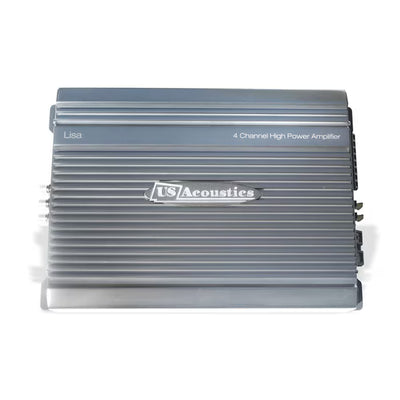
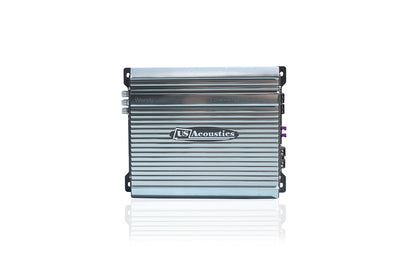
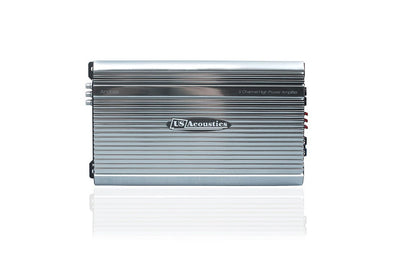
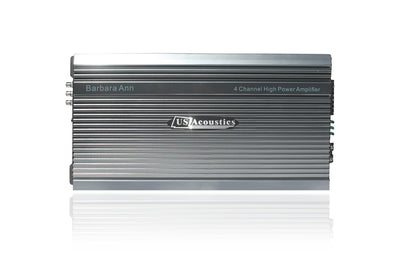
Multi-channel amplifiers spec'd for the power and impedance requirements of the components in this collection. Clean signal, proper damping, and the headroom to drive your speakers without clipping.
US Acoustics
$ 159.99
US Acoustics
$ 159.99
US Acoustics
$ 289.99
US Acoustics
$ 399.99
Last updated August 22, 2026