Closeout
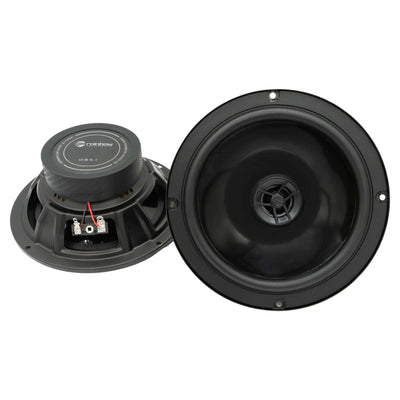
Rainbow Audio EL-X165S 2-Way 6.5-inch (165mm) Coaxial Speakers
$ 59.99
$ 149.99
60% OFF
In stock and ready to ship!


Coaxial sets, component sets, midbass, and midrange drivers from daily-driver upgrades to reference SQ builds. Shipped from Tullahoma, Tennessee.
Full Manufacturer Warranty
Covered by the manufacturer's warranty, and we handle any claim directly with the brand.
Authorized Dealer
Every set ships new from an authorized dealer, never gray-market, with full brand support.
SQ-Judge Support
Talk to a competing sound-quality judge who installs this gear and matches it to your vehicle.
Tullahoma, TN
Packed and shipped fast from our Tennessee shop, with tracking on every order.
Decision Shortcut
Curated picks matched to common build goals
Best for SQ
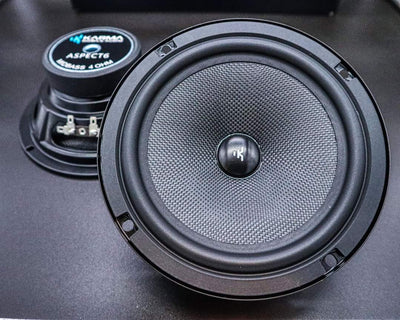
Karma Mobile Audio
Kevlar-cone SQ component set with a textile dome tweeter. A refined step up for sound-quality builds.
$ 300.00
View DetailsBest Value
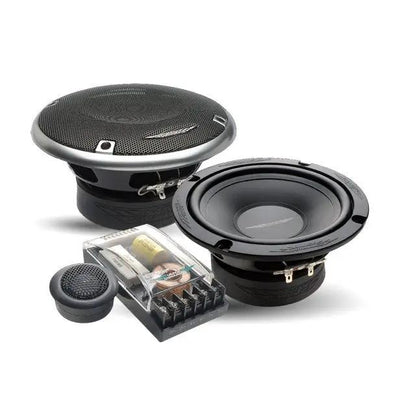
Image Dynamics
Proven ID Series component system at an entry price. A strong clarity upgrade over factory for a daily driver.
$ 159.99
View DetailsBest Component
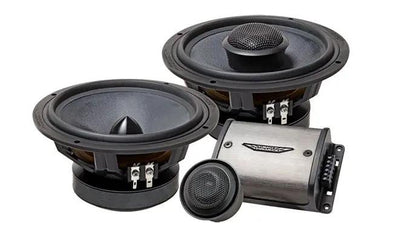
Image Dynamics
Higher-tier ID component set with a more refined tweeter and crossover for buyers chasing real sound quality.
$ 304.99
View DetailsBest Reference
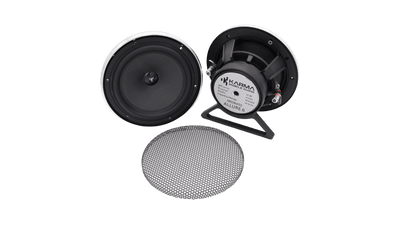
Karma Mobile Audio
Reference 6.5 inch SQ midbass pair from Karma's Allure line, for a front stage run on the Allure crossover or fully active.
$ 500.00
View Details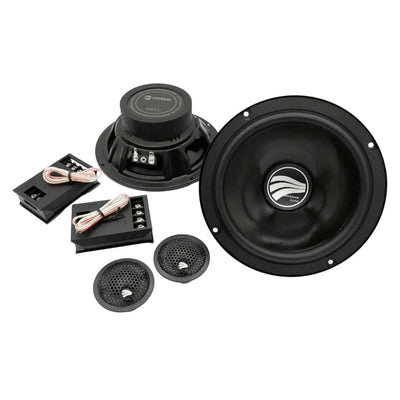
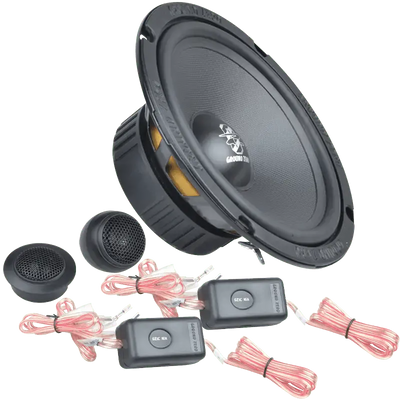
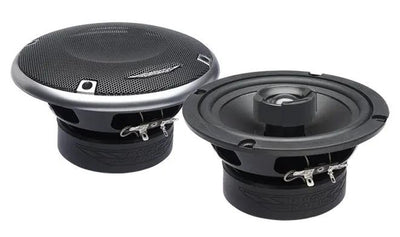
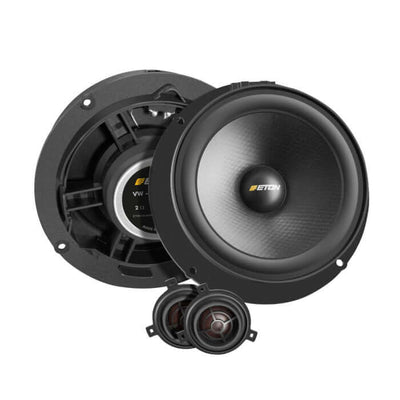
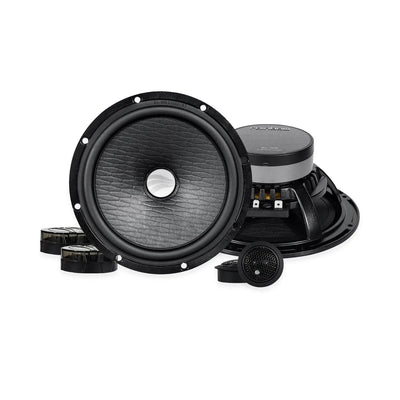
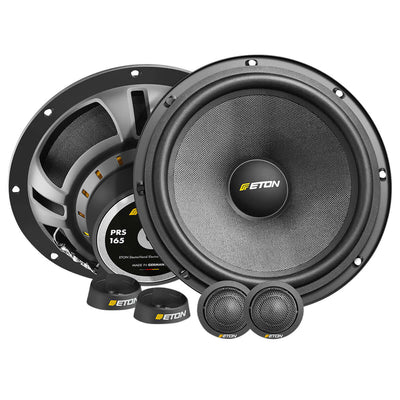
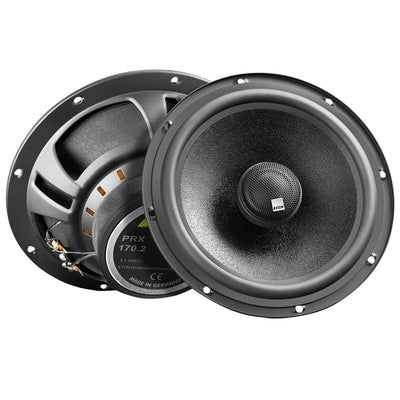
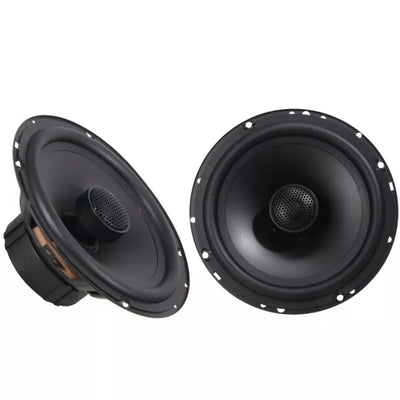
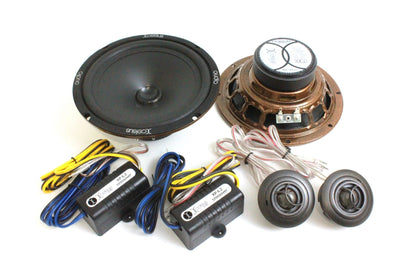
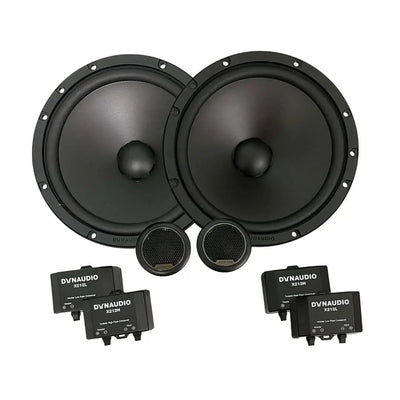
This is the only decision that really matters at 6.5 inch, and it comes down to where the tweeter ends up. A coaxial keeps everything in the factory hole. A component set lets you put the tweeter where your ears actually are. We cover it in depth in component vs coaxial: which 6.5 to buy.
| Factor | Coaxial | Component |
|---|---|---|
| Install | Drops into the factory location | Tweeter needs its own mounting spot |
| Soundstage | Stays low, down at knee level | Lifts to ear level, vocals in front of you |
| Crossover | Built into the basket | External, filters each driver more precisely |
| Best for | Fast upgrades, rear fill, tight budgets | Front stage, imaging, sound quality builds |
 CoaxialWoofer and tweeter in one basket. The simplest drop-in upgrade over factory speakers.Shop coaxial →
 Component SetsSeparate woofer, tweeter, and crossover. Mount the tweeter high for a real soundstage.Shop components →
 MidbassDedicated door drivers for punch and body in active three-way front stages.Shop midbass →
 MidrangeCovers the vocal band directly. The detail driver in a three-way build.Shop midrange →
 TweetersHigh-frequency detail and air. Mount on the sail panel or A-pillar near ear level.Shop tweeters →
The 6.5 inch lineup runs from about $100 for a coaxial to past $1,000 for a complete Karma Allure front stage, and the jump is not marketing. It shows up in three places: the cone material, the tweeter, and the crossover.
Paper or poly cones, mylar or basic silk tweeters, and a simple two-element crossover. The Image Dynamics ID65 coaxial and ID65CS component set sit here. Against a factory paper speaker with no crossover at all, this tier is a large, obvious improvement in clarity and output, and it is the right call if the budget goes to the amplifier first.
Woven or composite cones that stay stiff at higher excursion, silk or textile dome tweeters that soften the top end without dulling it, and crossovers with tweeter attenuation so you can tame a dash-mounted tweeter. The Image Dynamics CXS64 V2 and the Karma Aspect 6.1 land in this range. This is where most sound-quality builds should start.
Kevlar or exotic composite cones, low-distortion motors, and three-way systems that add a dedicated midrange so the vocal band gets its own driver instead of being split between a woofer and a tweeter. The Karma Allure 6 midbass and Allure 1 tweeter pairs sit at this level, and a 3 inch midrange such as the Karma Aspect 3 turns them into a three-way. This tier assumes an amplifier per driver pair, a DSP, and time spent tuning.
6.5 inch speakers will play off a factory head unit, but that is not where they perform. A head unit puts out roughly 15 to 20 watts RMS per channel, while most component sets are built for 50 to 100. Underpowering is also what kills tweeters: a small amplifier driven into clipping sends distorted signal that cooks voice coils faster than clean power ever will.
Match the amplifier's RMS output to the speaker's RMS rating and you get the dynamics the set was designed for. A 4-channel amplifier covers a front stage plus rear fill. If you want to run the set active, skip the passive crossovers and give each driver its own channel with crossover points set in a DSP.
Three numbers on every spec sheet decide whether a speaker suits your build. Most listings show them without explaining which one matters for you.
RMS is the continuous power a speaker handles all day. Peak is a short burst figure that exists mostly for the box. Match your amplifier's RMS output per channel to the speaker's RMS rating and ignore peak entirely. A 60-watt RMS set on a clean 60 to 75 watt channel is a healthy pairing.
Sensitivity is how much volume a speaker produces from one watt, measured in dB. Every 3 dB of sensitivity is worth double the amplifier power. A 92 dB speaker on 50 watts plays about as loud as an 89 dB speaker on 100 watts. If you are running modest power or a factory head unit, higher sensitivity buys you more than a bigger power rating does.
Most car speakers are 4 ohm, which is what nearly every amplifier expects. A 2 ohm speaker pulls more current and makes an amplifier work harder, so check that your amp is rated for the load before wiring it. Impedance also changes when you run multiple drivers off one channel, which is worth confirming before you buy. For the full breakdown, see our 2 ohm vs 4 ohm speaker guide.
A speaker is only as good as the hole it sits in, and this is where most upgrades leave performance behind.
Check depth before you order. Window mechanisms and door structure sit closer than people expect, and a deep-basket set that fouls the glass is a returned set. Many vehicles also need a spacer or bracket to seat a 6.5 inch driver in a factory opening, and some need a harness so you are not cutting factory wiring.
This is the highest-return dollar in a door build. A factory door skin flexes and leaks, so midbass cancels itself before it reaches you. Treating the outer skin and sealing the inner panel turns the door into something closer to a real enclosure. A $150 set in a deadened door outperforms a $400 set in a bare one, and it is the single change installers recommend most often.
Seal the speaker to the mounting surface with foam or a gasket so front and rear waves stop meeting at the edge of the basket. If you are running components, aim the tweeters across the car rather than straight at the near ear. It evens out the stage and stops the near side from pulling the image into the door.
A good 6.5 inch speaker matches your power and your goal. If you are running a factory head unit, prioritize sensitivity above 90 dB so the speaker plays loud on low power. If you are running an amplifier, prioritize build quality: a woven or composite cone, a silk or textile dome tweeter, and a crossover with tweeter attenuation. We carry sets from entry coaxials to three way reference systems and pick every one by ear.
Component sets sound better in the front stage. Separating the tweeter lets you mount it near ear level, which lifts the soundstage from your knees to the dash and sharpens imaging, and the external crossover filters each driver more precisely. Coaxials are the better choice for rear fill, tight budgets, or any install where you cannot mount a separate tweeter.
No. A 6x9 has roughly twice the cone area of a 6.5 inch driver, so it moves more air and plays louder, with noticeably more midbass. A 6.5 inch speaker is the better front-stage choice because it fits factory door locations and images better. Many builds use 6.5 inch up front and 6x9 for rear fill or for bass without a subwoofer.
Loudness comes from sensitivity and power handling together, not from the size. Sensitivity is measured in dB at one watt, and every 3 dB is worth double the amplifier power, so a 92 dB speaker on 50 watts plays about as loud as an 89 dB speaker on 100 watts. Pro-audio style midranges have the highest sensitivity, while SQ-focused sets trade some output for accuracy.
Very little in practice. The 6.75 inch, also written 6-3/4, usually shares the same bolt pattern and mounting depth class as a 6.5 inch, so the two are commonly interchangeable and many manufacturers list one speaker for both. Confirm the cutout diameter and mounting depth for your vehicle before ordering, and use an adapter bracket if the factory opening needs one.
They will play off a factory head unit, but that is not where they perform. A head unit puts out roughly 15 to 20 watts RMS per channel while most component sets are built for 50 to 100. Match the amplifier's RMS output to the speaker's RMS rating. Underpowering is what kills tweeters, because a small amp driven into clipping sends distorted signal that cooks voice coils.
6.5 inch is the most common factory speaker size, so it fits the door or dash locations in most cars, trucks, and SUVs, often with no modification. Check mounting depth before ordering, since window mechanisms sit closer than people expect, and many vehicles need a spacer or bracket. Send us your make and model and we will confirm fitment.
Amplifiers Built for These Speakers
Multi-channel amplifiers spec'd for the power and impedance requirements of the components in this collection. Clean signal, proper damping, and the headroom to drive your speakers without clipping.
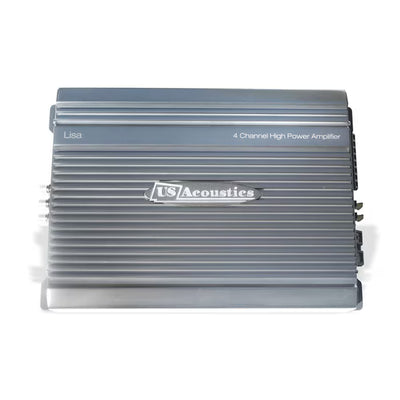
US Acoustics
$ 159.99
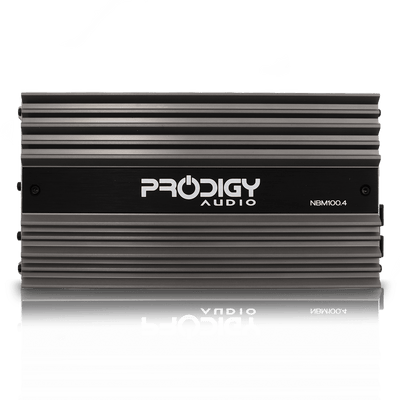
Prodigy Audio
$ 225.99 $ 270.99
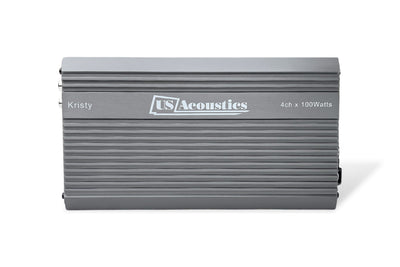
US Acoustics
$ 299.99
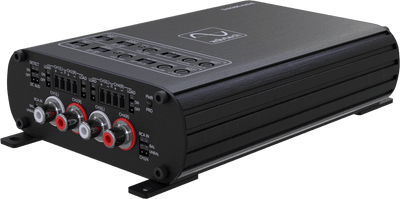
Wavtech
$ 329.99
DSP for Tuning Control
A DSP gives you crossovers, EQ, time alignment, and signal routing in a single unit. The components above set the foundation; the DSP makes them sound right.