

Rainbow
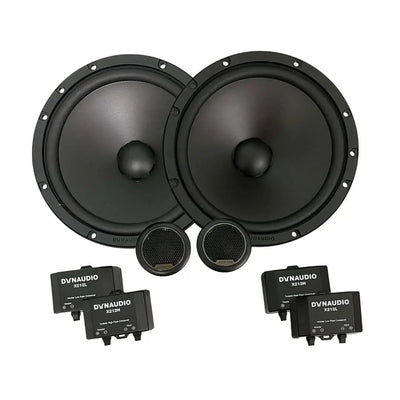
Rainbow Audio EL-C260S 6.5" 2-Way Component Speakers Set
SKU: EL-C260S


Rainbow Audio EL-C260S 6.5" 2-Way Component Speakers Set
Factory-sealed new old stock
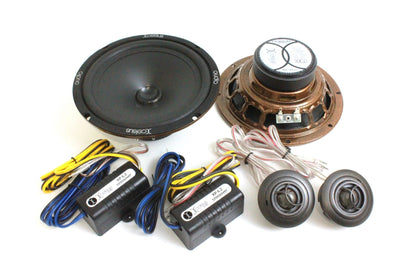
Rainbow EL-C260S Experience Line 2-Way 6.5 Inch Component Set
German-engineered entry component system. Injection-molded polypropylene woofers, 20mm silk dome tweeters, external passive crossovers. Discontinued line, remaining stock only.
- New old stock
- Discontinued
- Factory sealed
- Final sale
What You Are Buying
This is a discontinued Rainbow Experience Line component set, sealed in its original factory packaging and never installed. Two conditions apply at once, and they mean different things.
New old stock is about the individual box. It left the factory, sat in distribution, and never went to a customer. The drivers are unused. The crossovers have never carried signal. What ages in storage is not the cone or the dome, it is the surround compliance and, on some designs, the crossover capacitors. Polypropylene and rubber both hold up well in a sealed box, which is why this particular design survives storage better than a foam-surround driver of the same age would.
Discontinued is about the product line. Rainbow no longer builds the Experience Line, and we are not restocking it. When these are gone the listing comes down. That also means no warranty replacement pipeline: a failed driver cannot be swapped for a matching one, because there is no production to draw from.
Read this before you buy
Final sale. No returns, no exchanges, no manufacturer warranty. We inspect and pack, but once a discontinued sealed unit leaves here we have no replacement to send you. If you need warranty coverage, buy a current production speaker instead.
Rainbow and the Experience Line
Rainbow Audio is a German manufacturer that has been building car speakers since 1989. Their reputation rests on the upper series, where the material science gets expensive. The Experience Line sat at the bottom of that range: the entry tier, built to bring the house voicing to a price a first upgrade could reach.
That positioning matters when you are deciding whether this belongs in your car. The Experience Line does not use the exotic cone materials or multi-stage crossover networks of the higher Rainbow series. What it does carry is the tuning philosophy, a silk dome rather than a metal one, and a real external crossover instead of an inline capacitor.
What the model number tells you
- EL is Experience Line, the entry component series.
- C is component, meaning separate woofer and tweeter rather than a coaxial.
- 260 is the nominal driver size in the European convention, 165mm, sold here as 6.5 inch.
- S is the set: two woofers, two tweeters, two crossovers.
Component or Coaxial
A coaxial puts the tweeter in the middle of the woofer and ships as one unit. A component set separates them so you can mount the tweeter at ear height and the woofer wherever the door will take it. The crossover then splits the signal and sends each driver only the band it was built for.
The practical difference is imaging. With the tweeter up on the sail panel or the A-pillar, high frequencies arrive from roughly the height of your ears rather than from your shin. That is the whole argument for components, and it is worth real installation effort.
What it costs you
- Time. Budget two to four hours per pair rather than the thirty minutes a coaxial drop-in takes. You are running separate tweeter wire, finding a crossover location, and mounting three pieces per side instead of one.
- Tweeter mounting. If your car has no factory tweeter location, you are drilling a sail panel or buying surface-mount pods. Neither is included.
- Crossover placement. The passive crossovers need somewhere dry and accessible inside the door cavity or behind the kick panel.
Straight answer
If your doors already have a factory tweeter location and you are willing to spend an afternoon, a component set is the better speaker. If you want a drop-in that takes half an hour, buy a coaxial and spend the difference on amplification.
Technical Specifications
Full published specifications, including the two differing Rainbow spec sheets and what is in the box, are in the Specifications tab below.
Materials, and Why They Were Chosen
Polypropylene cone
Injection-molded polypropylene is the workhorse cone material of the entry tier, and it is there for a reason that matters more in a car than in a living room. It does not absorb moisture. A door cavity goes through condensation cycles every day the weather changes, and paper cones in that environment sag and lose their tuning. Polypropylene comes out the other side unchanged.
What you give up is a little detail. Paper and treated composites have a faster transient response, so a well-built paper mid will resolve fine texture that polypropylene rounds off. In a car, with road noise and reflections, that gap is smaller than it is on a bench.
Silk dome tweeter
A silk dome rolls off gently and forgives a harsh source. That is the point. Aluminium and titanium domes extend further and image more sharply, but they also break up in a way you hear as brightness, and a car interior is already a hard, reflective environment. On a factory head unit playing compressed audio, silk is the more listenable choice.
External crossover
Each side gets a real passive network in an ABS housing rather than a capacitor spliced into the tweeter lead. That means the woofer is protected from high frequencies and the tweeter from everything below its range, which is what keeps a 20mm dome alive at volume. Sealed storage is kind to these: the housing keeps the components dry, and there is no signal to age the capacitors.
Installation
- Woofers mount to the standard 165mm DIN pattern. Most European cars take them directly. Most Japanese and American cars need an adapter plate.
- Tweeters go as high and as far forward as the interior allows. Sail panel, A-pillar, or the factory tweeter location if there is one.
- Crossovers mount inside the door or behind the kick panel. Keep them dry and keep them reachable.
- Wiring runs amplifier to crossover, then crossover to woofer and crossover to tweeter. Do not run the tweeter directly from the amplifier.
Everything needed to mount the drivers is in the box: woofer screws, tweeter mounts, speed clips and adapters, plus the Rainbow installation guide. Tweeter pods, adapter plates and speaker wire are not.
Sizing the amplifier
Aim for 50 to 60W per channel at 4 Ohm. That sits inside the published RMS rating on either spec sheet and leaves headroom for peaks. Underpowering is the more common way these die: an amplifier driven into clipping sends a distorted signal that cooks a 20mm dome far faster than clean power ever will.
Who This Suits
Buy these if
- You want the imaging a separate tweeter gives and have somewhere to mount one.
- You are running 50 to 60W per channel from an amplifier, not head unit power.
- You are comfortable with a two to four hour install, or paying for one.
- You accept a final sale on a discontinued product with no warranty path.
Look elsewhere if
- You need a drop-in replacement and do not want to modify the interior.
- You are running head unit power only. These want an amplifier.
- You want warranty coverage or the option to return.
- You are building a system you intend to expand with matching Rainbow parts later. This line is discontinued, so there is nothing to match to.
How It Compares
Against a budget coaxial, this is a genuine step up in imaging and in tweeter quality, at the cost of the install. Against a current mid-tier component set, you are trading warranty coverage and the ability to buy a matching second pair for a German-voiced set that is no longer made.
| Format | Imaging | Install effort | Warranty |
|---|---|---|---|
| EL-C260S component set | Strong, tweeter at ear height | 2 to 4 hours | None, final sale |
| Budget coaxial | Limited, sound from the door | 30 minutes | Typically 1 year |
| Current mid-tier component set | Strong | 2 to 4 hours | Manufacturer warranty |
Where These Work Best
Front stage on a modest amplified system
This is the job the Experience Line was built for. A four-channel amplifier running 50 to 60W per channel, these on the front doors, factory or aftermarket coaxials left in the rear. You get the imaging lift from the separate tweeter without asking a small ferrite motor to do more than it can.
European cars with a factory tweeter location
The 165mm DIN mounting pattern is the European standard, and a great many VW, Audi, BMW and Mercedes doors take a 165mm woofer with no adapter at all. Those cars also tend to have a factory sail panel or dash tweeter position already wired. That combination turns a component install from an afternoon of fabrication into a straightforward swap.
A first step past the factory system
If the car still has its original paper-cone speakers, the change here is not subtle. Factory drivers are built to a cost that assumes nobody will ever measure them, and they lose compliance with age and heat. Replacing them with a sealed set that has never been powered is close to the largest single improvement available for the effort involved.
Where they do not belong
- Rear fill. Components on the rear deck defeat the point. The imaging advantage comes from getting the tweeter forward and high; behind your head it does nothing but pull the stage backwards.
- High-output builds. A 60W RMS driver on a ferrite motor is not a competition midbass. If you are running a sealed or ported sub and want the doors to keep up at high volume, this is not the driver for that.
- Head unit power only. Most factory and aftermarket head units make 15 to 22W RMS per channel honestly. These will play on that, but you will be listening to a fraction of what they do.
Installation in Detail
Before you start
Check three things: the mounting diameter in your door, the depth available behind the trim, and whether there is a factory tweeter position. Woofer depth here is roughly 60 to 70mm, which is our estimate rather than a Rainbow figure, so measure before you commit. Window glass drops into the door cavity and a driver that fouls it will destroy itself the first time the window comes down.
Sequence that works
- Pull the door card and the factory speaker. Keep the clips; they break.
- Test-fit the woofer dry, with the window down and then up, before any wiring.
- Mount the crossover somewhere dry and reachable. Inside the door is fine if it is above the drain line; behind the kick panel is better.
- Run tweeter wire from the crossover to the tweeter position through the existing loom path. Do not pinch it in the door hinge boot.
- Wire amplifier to crossover input, then crossover outputs to woofer and tweeter. Check polarity on both before you close anything up.
- Seal the door card and any large service holes. A door that leaks bass out the back of the driver will sound thin no matter what you mounted in it.
Mistakes we see
- Tweeter wired straight to the amplifier. The crossover exists to keep bass out of a 20mm dome. Bypass it and the tweeter will not last the week.
- Polarity reversed on one side. Easy to do with separate drivers and hard to hear as a fault. It shows up as a vague centre image and thin midbass rather than as an obvious problem.
- Crossover left loose in the door. It will rattle, and eventually it will sit in water.
- No sound deadening on the outer skin. The single cheapest improvement to any door speaker, and the one most often skipped.
What to expect for the first few hours
Rubber surrounds that have sat sealed for years are stiffer than they will be once they have moved. Expect the midbass to come up and the bottom end to loosen slightly over the first several hours of normal listening. Do not judge the tuning, or set an equaliser, straight out of the box.
Condition and sale terms
Factory-sealed new old stock from a discontinued line. Never installed, never powered. Sold as a final sale with no returns, no exchanges and no manufacturer warranty. Packaging may show shelf wear from storage; the contents are unused. Specifications are as published by Rainbow, including the two differing spec sheets noted above, and figures marked estimated are our own and not manufacturer data. Once remaining stock is gone this listing will be removed.
Questions on fitment before you buy: contact us.
| Type | 2-way component system |
|---|---|
| Woofer size | 6.5 inch / 165mm, DIN standard |
| Tweeter size | 20mm / 0.79 inch silk dome |
| Impedance | 3.4 Ohm or 4 Ohm depending on spec sheet |
| Series | Experience Line, entry component |
| Condition | Factory-sealed new old stock, discontinued line |
| RMS power | 60W official, 50W on the alternate sheet |
|---|---|
| Peak power | 150W official, 100W on the alternate sheet |
| Minimum amplifier power | 25 to 35W per channel |
| Maximum amplifier power | 60 to 75W per channel at 4 Ohm |
| System response | 58Hz to 20kHz official, 60 to 65Hz to 20kHz alternate |
|---|---|
| Sensitivity | 87 dB/W/m official, 86 to 90 dB across sheets |
| Crossover point | Approximately 3000 to 3500Hz (estimated) |
| Crossover slope | 12dB per octave (estimated) |
| Cone material | Injection-molded polypropylene |
|---|---|
| Surround | Lightweight rubber |
| Voice coil | High-temperature copper |
| Magnet | Ferrite |
| Basket | Vented iron |
| Mounting diameter | 165mm DIN |
| Mounting depth | Approximately 60 to 70mm (estimated) |
| Dome material | Black silk, natural fabric |
|---|---|
| Voice coil | High-temperature copper |
| Surround | Fabric cloth |
| Mounting | Surface or flush, hardware included |
| Woofers | Two, left and right pair |
|---|---|
| Tweeters | Two 20mm silk dome, left and right pair |
| Crossovers | Two external passive networks, ABS housing |
| Hardware | Woofer screws, tweeter mounts, speed clips, adapters |
| Documentation | Rainbow Experience Line installation guide |
| Not included | Speaker wire, tweeter pods, adapter plates |
Rainbow published two differing spec sheets for this model. Where they disagree both figures are shown rather than one being chosen. Figures marked estimated are ours, not manufacturer data.