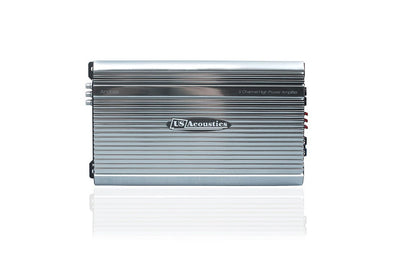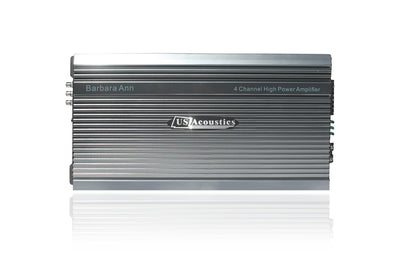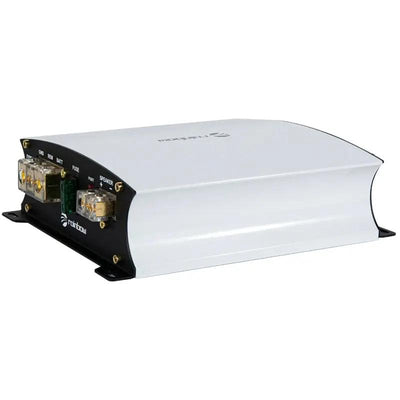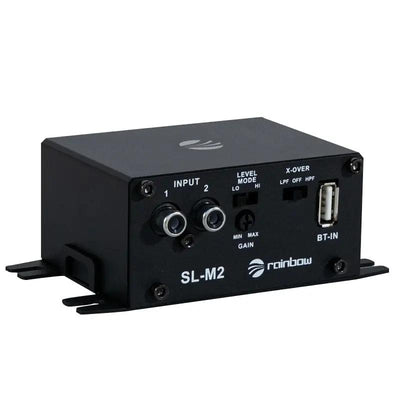
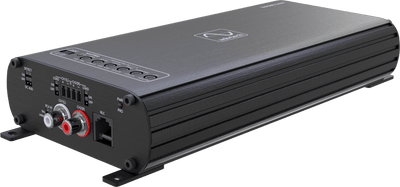
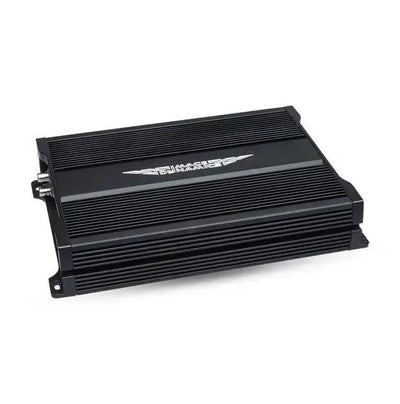
car amplifier banner
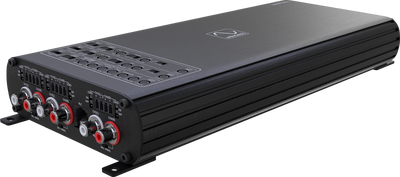
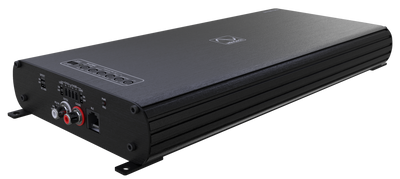
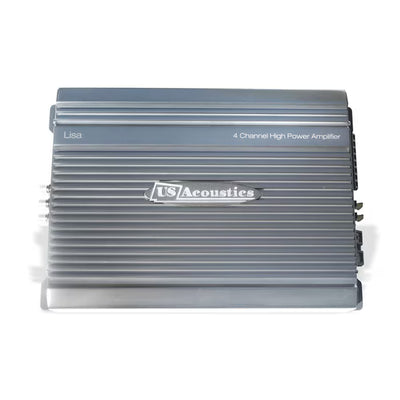
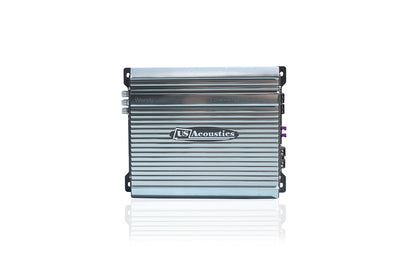
Collection of car amplifiers on a gray textured background with 'Car Amplifiers' text.
Compact High-Output Amplification

Class D Car Amplifiers

Class D amplifiers covering monoblock subwoofer duty and multi-channel full-range builds in compact, high-efficiency chassis designs.

Class D is the dominant topology in car audio for one reason: it makes serious power in a fraction of the space and electrical draw an equivalent Class AB design needs. Running at roughly 80% to 90% efficiency, a Class D amp turns most of its draw into output rather than heat, which means smaller heatsinks, smaller chassis, and less strain on the charging system.

That efficiency is what buys install flexibility. A 1000W RMS Class D monoblock fits under a seat where the Class AB equivalent physically will not. In modern vehicles with shrinking mounting space and loaded factory electrical systems, the compact footprint is not a compromise, it is what makes the build possible.

Audio Intensity stocks Class D across every channel count, from compact monoblocks for subwoofer duty out to an 8-channel for a full active build. Catalog brands include US Acoustics, Wavtech, Prodigy, Image Dynamics, Arc Audio, Triton, and Crescendo.

Need help matching a Class D amp to your speakers or subwoofer? Send us your build specs and we will confirm the fit before you buy.

Authorized Dealer

Every amplifier is brand new with the full manufacturer warranty.

Power Matching

Send us your subwoofer or speaker specs. We'll recommend the right amplifier at the right impedance before you buy.

Hands-On Expertise

Direct support from staff who designs, builds, and competes with these systems. Honest recommendations, not upsells.

Fast Shipping from TN

In-stock orders ship within 1-2 business days from our Tullahoma, Tennessee warehouse.

Shop the Lineup

←
β†’

All products loaded

}

How Class D Actually Works

A Class D amplifier does not amplify the way Class A or Class AB does. Instead of holding output transistors partially conducting through the signal, it switches them hard between fully on and fully off, far above the audible range, and encodes the audio in the width of those pulses. A low-pass filter on the output strips the switching carrier back off and what reaches the speaker is the audio.

The efficiency comes straight out of that. A transistor that is fully on or fully off dissipates almost nothing. Dissipation happens in the partially conducting state, which is exactly where a Class AB output stage lives. Remove that state and you remove most of the heat, which is not a tuning trick a Class AB design can engineer its way around.

In a car that means the amp makes its rated power while pulling less current and shedding less heat than a Class AB amp of the same output. A 500W RMS Class D monoblock draws roughly 50 amps at full tilt. The Class AB equivalent is closer to 80 or 90, and needs the heatsink to match.

Class D or Class AB

Not a good-versus-bad question. Different trades, and plenty of good systems run both: Class D on the sub, Class AB on the front stage.

Class D Class AB
Efficiency Roughly 80% to 90% Roughly 50% to 65%
Heat Low Real. Plan ventilation and chassis space
Size at equal power Smaller Larger
Alternator draw Lower Higher
Where it earns its keep Subwoofer duty and installs with no room Full range, front stage, critical listening
Pick it when Space, heat or alternator headroom decides it The front stage is the point of the build

On a subwoofer, Class D is settled. Modern Class D from a good manufacturer is transparent full range too, which is why it is the practical answer for most builds. Where Class AB still gets reached for is the reference front stage: see Class AB amplifiers, Class A amplifiers, or the full amplifier lineup.

What to Check Before You Buy

Two things decide whether a Class D amp does what the box says: the impedance you wire it to, and whether the car can feed it.

Reading the Spec Sheet

Class D power ratings are among the most abused numbers in consumer electronics. They get quoted at impedances nobody wires to, under test conditions nobody drives in, and as burst figures rather than sustained output. Two numbers actually matter, and they are not the same number.

If you are running a dual voice coil subwoofer wired in parallel, confirm the minimum stable impedance before you buy. Two 2-ohm coils in parallel present 1 ohm. Two 4-ohm coils in parallel present 2 ohms. Check the driver first in car subwoofers.

Electrical System, Because Efficiency Is Not Magic

Class D efficiency shrinks the electrical problem. It does not delete it. A 2000W RMS Class D monoblock at 90% still pulls roughly 185 amps at full output, which is past what essentially any factory alternator sustains.

Over about 1000W RMS total system power, the Big 3 upgrade is the baseline: heavier gauge on both grounds and the alternator positive, to cut resistance and voltage drop under load. Past 2000W you are into high-output alternator and supplemental battery territory.

Voltage drop is what actually costs you output. Most Class D amps regulate power against supply voltage, so an amp rated at 12V makes proportionally less at 11V and may drop into protection. Building the electrical side properly is what lets the amp deliver what it says on the box.

Catalog by Tier

Compact and Multichannel, $225 to $470

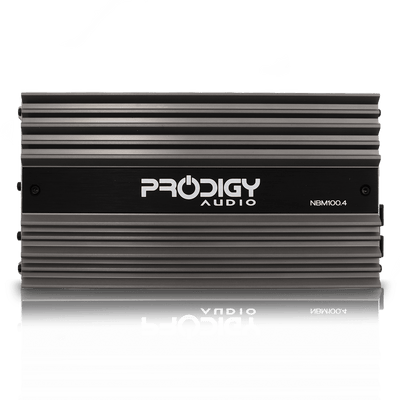
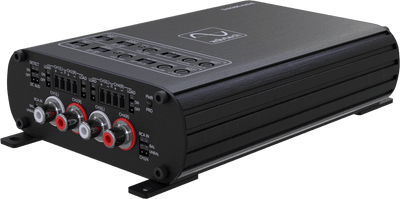
Prodigy NBM100.4, 600W 4-channel ($225.99, from $270.99). Prodigy NBM1200.1, 1200W monoblock ($272.99, from $326.99). Wavtech link300.4mini, 4-channel ($329.99), and link500.4mini ($449.99, from $499.99), both compact-chassis for installs with no room. Prodigy NB300.4, 1200W 4-channel ($416.99, from $500.99, last one). Image Dynamics SQ800.4, 800W full-range 4-channel ($469.99), tuned around the brand's own drivers. See 4-channel amps.

Monoblocks, $329 to $1,249

The deepest part of this catalog, and where Class D is least arguable. US Acoustics Mike at 1500W ($329.99), Big Ben at 3500W ($599.99), Tony at 6000W ($999.99), and Phil at 8000W ($1,249.99) run the high-output line end to end. Image Dynamics SQ600.1D ($399.99) and SQ1200.1D ($504.99) are the SQ-tuned pair. Wavtech link1000.1mini ($399.99) and Link1500.1plus ($699.99) are the compact answers. Prodigy NB2800.1 at 2800W ($527.99, from $635.99, last one). Arc Audio X2 650.1 ($568.00). Crescendo Revolution 3A1 ($569.99) is 1000W RMS at 1 ohm on the IRS2092S chipset, and the only Class D in Crescendo's otherwise Class AB Revolution line. See monoblock amplifiers.

5-Channel and 8-Channel, $387 to $999

Prodigy NBM1000.5, 1000W 5-channel ($387.99, from $464.99), and Wavtech link1000.5plus ($649.99, from $749.99): a whole system on one chassis, front stage plus sub. Wavtech link1400.8plus, 1400W across 8 channels ($999.99), is the one to look at for a full active build where every driver wants its own channel. See 6-channel amps for the active three-way options.

2-Channel

Arc Audio Nighthawk, 800W ($699.99). The Class D option for a front stage where alternator headroom or mounting space rules out a Class AB chassis. See 2-channel amps and Arc Audio.

Brand lineups in full: US Acoustics, Wavtech, Prodigy, Image Dynamics, Crescendo. If you are tuning an active system, the DSP lineup is the other half of the chain, and gain is what protects all of it: how we set amplifier gain.

Frequently Asked Class D Amplifier Questions

What is a Class D amplifier?

A Class D amplifier switches its output transistors fully on or fully off at a frequency well above the audible range, encoding the audio in the width of those pulses, then reconstructs the signal with a low-pass output filter. Because a fully on or fully off transistor dissipates almost nothing, the result is roughly 80% to 90% efficiency, far less heat, and a much smaller chassis than a linear topology at the same rated power.

Is Class D good enough for an SQ build?

For most builds, yes. Modern Class D from a good manufacturer is transparent, and on subwoofer duty it is simply the right answer: a sub works a narrow band where topology differences are hard to hear, and Class D handles the current demand better. On a full-range front stage it is appropriate for demanding systems too. Where Class AB still gets reached for is the reference front stage, which is why we carry Tru Technology and Audio Wave alongside these.

What is the difference between Class D and Class AB?

Class D switches, reaching roughly 80% to 90% efficiency with a small chassis and low heat. Class AB is linear, running roughly 50% to 65% with a bias current that eliminates crossover distortion, in a bigger chassis that runs hotter and pulls more from the alternator. On a subwoofer, Class D. On a reference front stage, Class AB. Most good systems use both.

How much power do I need from a Class D amp?

For a subwoofer, match the monoblock's RMS output to the driver's RMS rating at the impedance you are actually wiring, ideally 100% to 150% of it. For speakers, match per-channel RMS to the speaker's RMS at 75% to 150%. Underpowering is what kills drivers, because an amp pushed into clipping hands the voice coil a distorted signal it cannot dissipate.

Will I need electrical system upgrades for a high-power Class D amp?

Over about 1000W RMS total system power, the Big 3 is the baseline: heavier gauge on both ground cables and the alternator positive. Past 2000W you want a high-output alternator and supplemental battery capacity. Class D's efficiency reduces the demand compared to Class AB but does not remove it. A 2000W RMS Class D monoblock still pulls roughly 185 amps at full output.

What is minimum stable impedance and why does it matter?

It is the lowest load the amplifier can drive without tripping protection or damaging the output stage, and it is not the same as the impedance it is rated at. An amp stable at 1 ohm can take a dual voice coil sub wired in parallel; a 2-ohm-stable design cannot. Two 2-ohm coils in parallel present 1 ohm. Two 4-ohm coils in parallel present 2 ohms. Confirm the amp's minimum stable impedance against your wiring before you buy.

Are these new with manufacturer warranty?

Yes. Every amplifier in this collection is brand new, sold by an authorized dealer, and carries the full manufacturer warranty. We handle warranty claims directly with the brand. Demo and previous-display units are labeled as such on the product page.

Car Amplifier Articles

Class A Car Amplifiers: The Gold Standard in Sound Quality - Audio Intensity

Class A Car Amplifiers: The Gold Standard in Sound Quality

Class A amplifiers are known for excellent sound quality, providing clear and detailed audio. The...

Read Article →
Ultimate Multi-Amp System Configuration Guide - Audio Intensity

Ultimate Multi-Amp System Configuration Guide

When setting up a car audio system, using more than one amplifier can seriously improve your soun...

Read Article →
Do You Need an Amplifier for Car Speakers? Expert Advice - Audio Intensity

Do You Need an Amplifier for Car Speakers? Expert Advice

By swapping out your car speakers and hooking up an amplifier, you can improve the sound of your ...

Read Article →
How to Test an Amplifier Without a Car: Step-by-Step Guide - Audio Intensity

How to Test an Amplifier Without a Car: Step-by-Step Guide

A complete DIY guide to testing a car amplifier without a car: the equipment you need, safety ste...

Read Article →