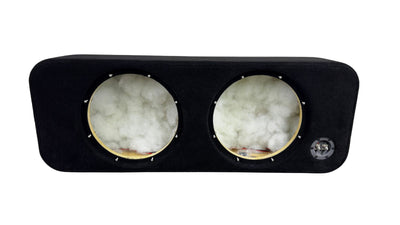
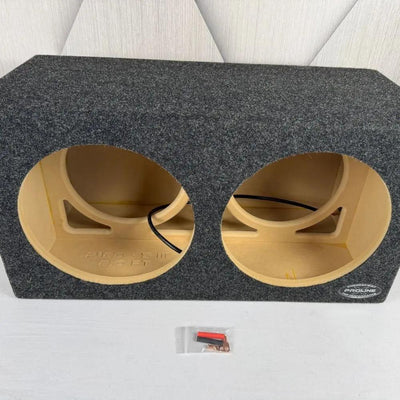
Car with open trunk displaying audio system in a dark indoor setting with two other cars.

Subwoofer Boxes

The enclosure determines how a subwoofer actually performs in your vehicle. A driver installed in the wrong box — wrong volume, wrong tuning, wrong baffle cutout — won't perform the way it was designed to. This is the problem Proline X exists to solve.

Every Proline X enclosure is CNC-manufactured on a ShopSabre router in Tullahoma, Tennessee. Internal volume, port tuning, and baffle dimensions are calculated from each driver's Thiele-Small parameters — not adapted from a generic template. When you buy a Proline X enclosure for a specific driver, the box is built for that driver. No other retailer manufactures enclosures this way for the brands we carry.

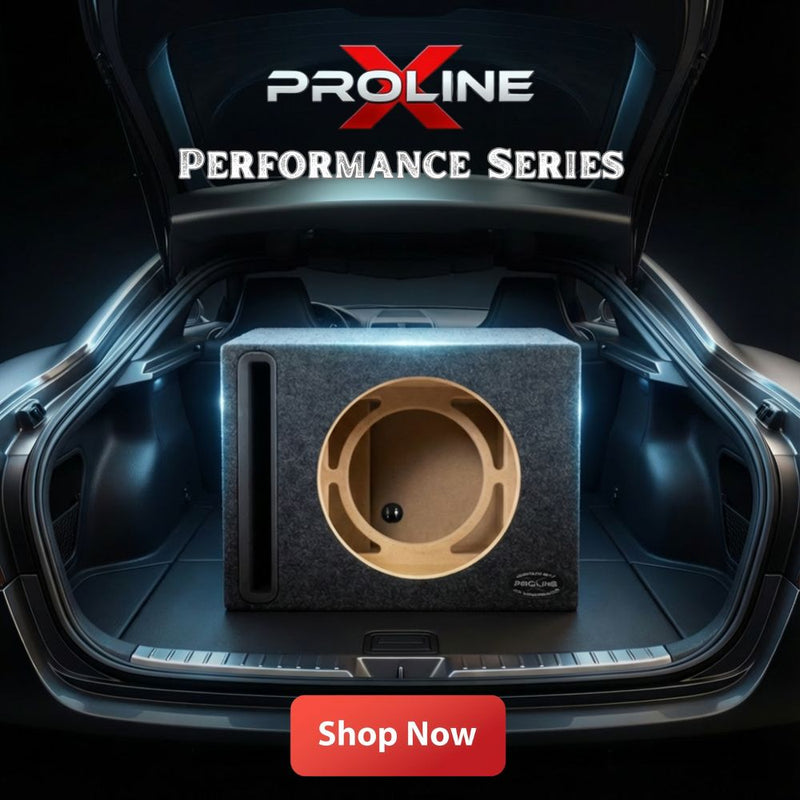
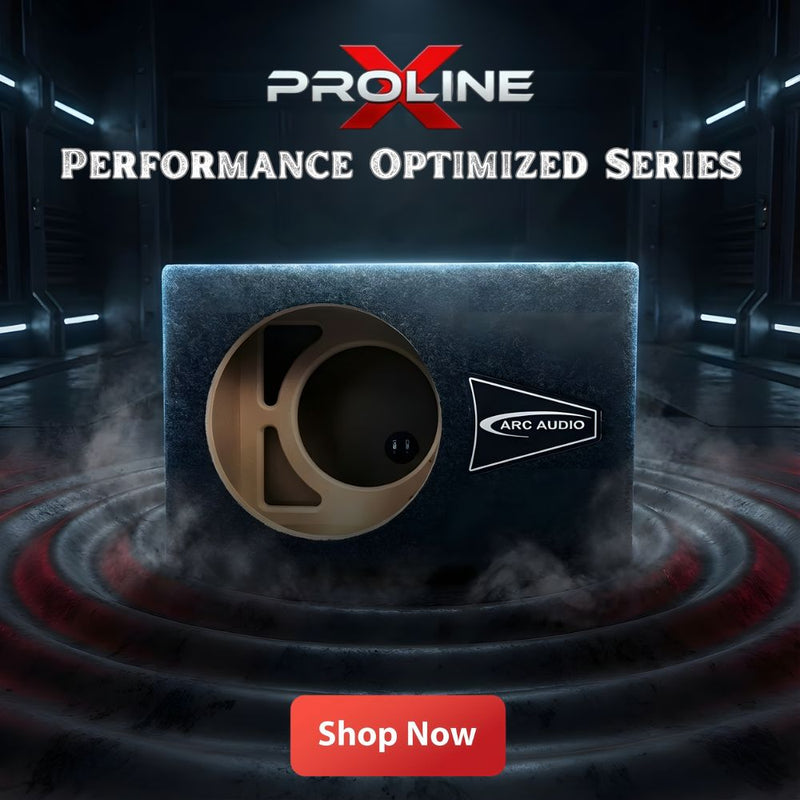
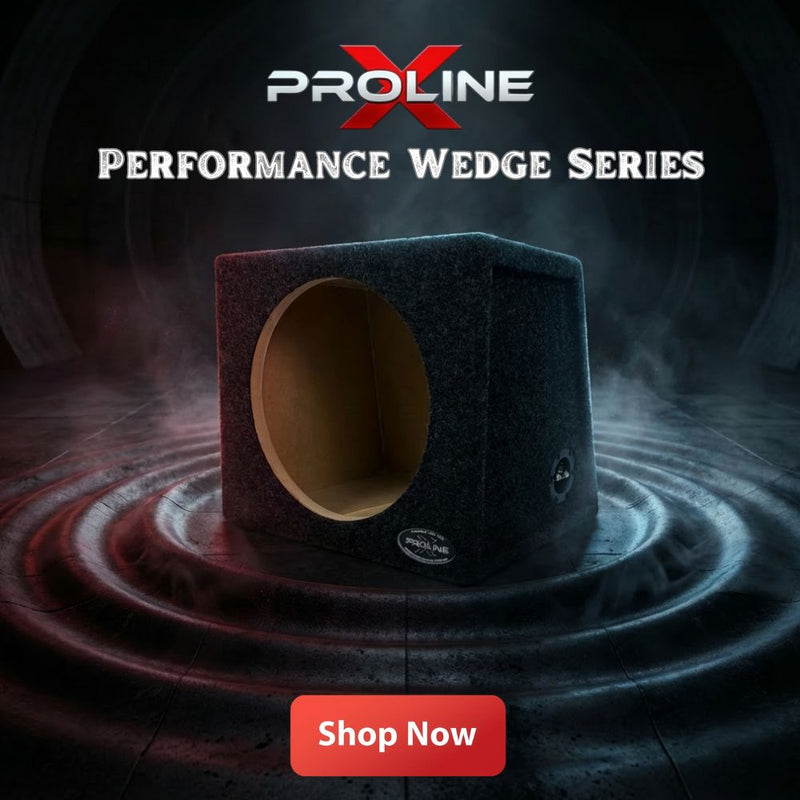
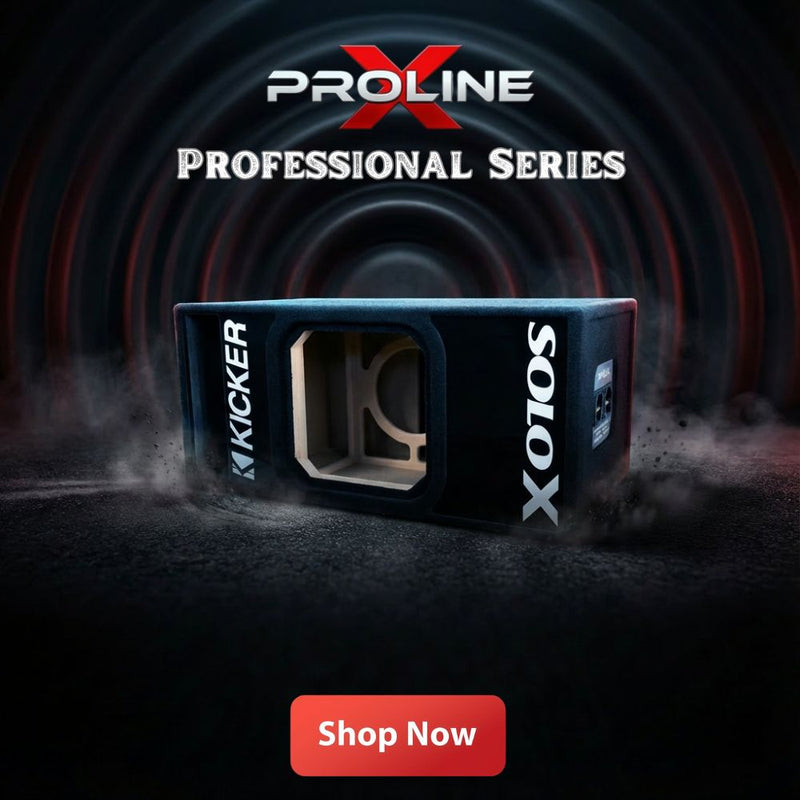
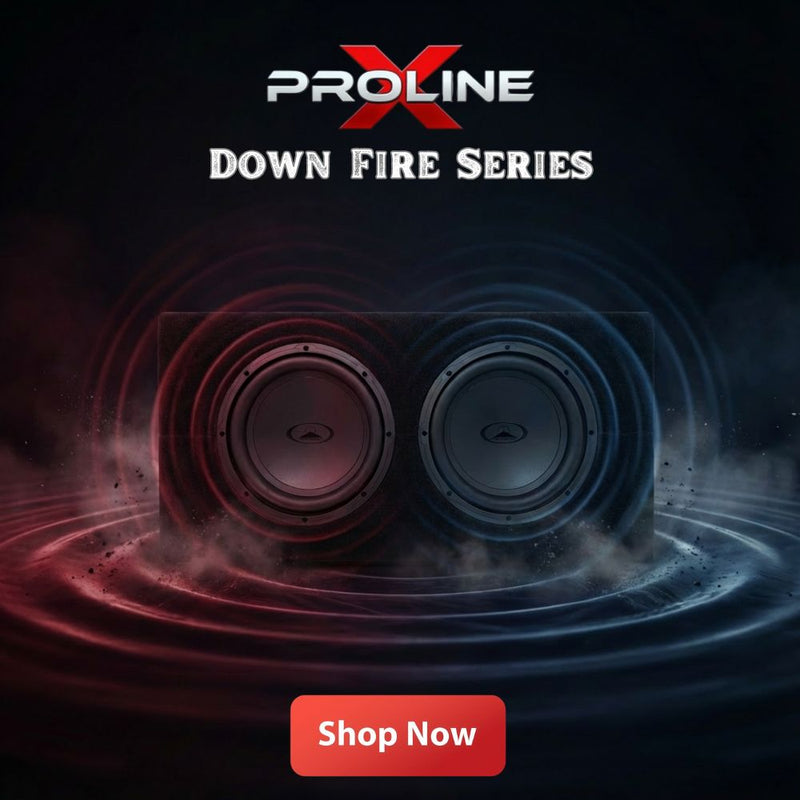
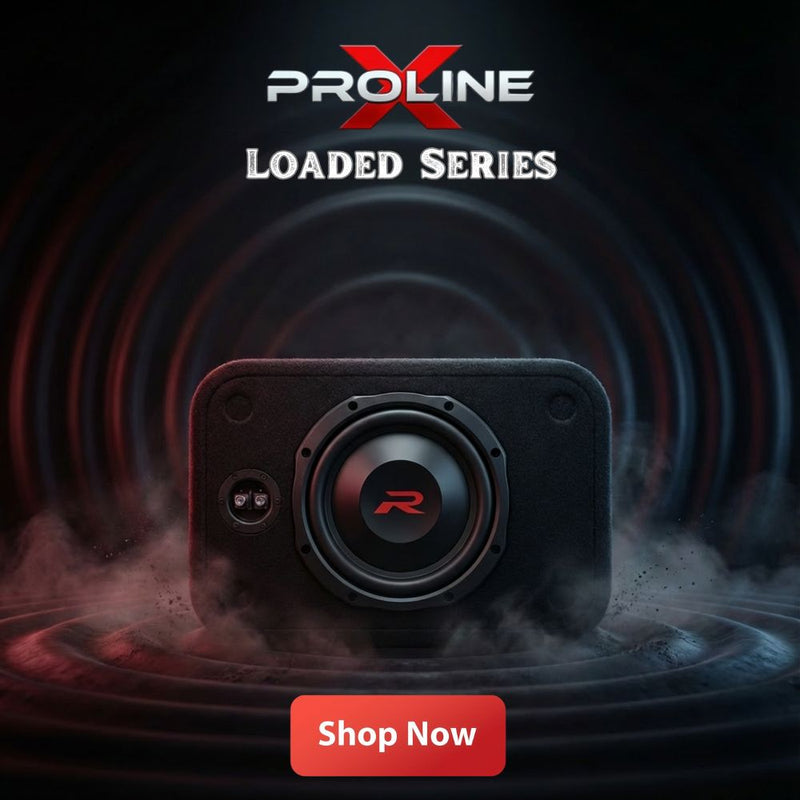
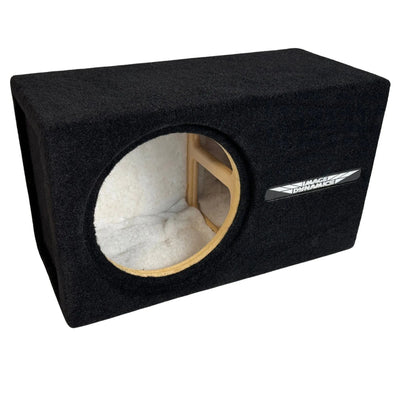
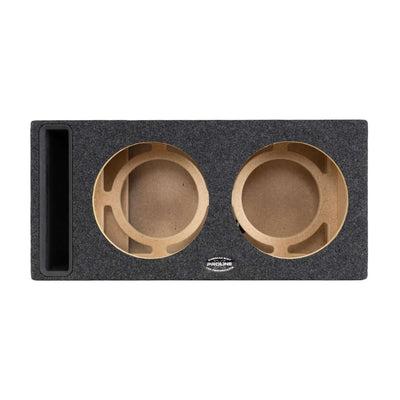
The collection includes sealed, ported, passive radiator, and down-fire designs across universal and vehicle-specific fitments. Direct-fit enclosures are available for the Ford F-150 (2015–2023 and 2024–2025) and Ford Maverick. Loaded systems ship with the driver pre-installed and tested.

Need help matching an enclosure to your driver and vehicle? Contact us before you buy.

All products loaded

}


The Enclosure Is the System

Most subwoofer problems aren't driver problems. They're box problems. Wrong volume, wrong tuning, wrong geometry — and even a great driver will underperform. Understanding how enclosures work is the fastest way to get more out of your setup.

🔬

The Science of Enclosure Design

Why internal volume and construction quality determine your bass response

The enclosure isn't a box your subwoofer sits in — it's the other half of the acoustic system. Internal volume, panel rigidity, and construction method all directly affect how the driver behaves at frequency.

Learn More →
📐

Sealed vs. Ported

Choosing the right alignment for your driver and goals

Sealed enclosures deliver tight, accurate bass with a predictable roll-off. Ported designs extend low-frequency output and increase efficiency at the tuning point. Neither is universally better — the right choice depends on your driver's parameters and what you're building toward.

Learn More →

Advanced Enclosure Types

Passive radiator, bandpass, and down-fire configurations explained

Some applications call for something beyond sealed or ported. Passive radiators extend low-frequency response without port noise. Down-fire designs redirect output for under-seat and cargo-area installs. Bandpass configurations are purpose-built for high-output competition applications.

Learn More →
🎯

Enclosure Tuning

Port dimensions, box volume, and why generic specs fall short

A ported enclosure tuned to the wrong frequency for your driver will peak in the wrong place and roll off too early. Volume and port dimensions have to be calculated against your driver's Thiele-Small parameters — not pulled from a generic spec sheet.

Learn More →
🛠️

Installation

Placement, wiring, and the variables that affect real-world performance

Where an enclosure sits in the vehicle changes how it loads the cabin. Trunk vs. cabin, forward-facing vs. rearward, sealed cargo area vs. open pass-through — all of it affects output and frequency response. Getting installation right closes the gap between measured performance and what you actually hear.

Learn More →
📊

Measuring Performance

SPL, frequency response, and how to evaluate what your system is actually doing

Listening impressions are useful. Measurements tell you what's real. Understanding how to read a frequency response plot or interpret an SPL result gives you an objective baseline to build from and troubleshoot against.

Learn More →
Free Tool

Sealed Enclosure Designer

Most sealed enclosure calculators give you a number. Ours tells you what that number means for your specific driver.

The Audio Intensity Sealed Box Calculator is built around Thiele-Small parameter inputs — not generic volume recommendations. Enter your driver's Vas, Qts, and Fs, and the tool calculates the optimal net internal volume for your target alignment. You can model a maximally flat Butterworth response, a Qt-optimized alignment for extended low-frequency output, or a custom volume target to evaluate how deviation from optimal affects the system's -3dB point and rolloff slope.

The calculator outputs net internal volume, estimated f3, system Q, and a predicted frequency response curve so you can evaluate tradeoffs before you cut a single panel. It accounts for driver displacement, port or brace volume offsets, and material thickness — the variables that generic online tools ignore entirely.

Whether you're building a daily driver sealed system, optimizing a shallow-mount install for a behind-seat application, or verifying that a Proline X enclosure is the right fit for your driver, this tool gives you the data to make that call with confidence.

Open the Sealed Box Calculator →

Related Products

Complete Your Car Audio System

Car subwoofer system with green lighting inside a vehicle.

System Upgrades

Premium Loaded Enclosures
Skip the guesswork with a professionally matched subwoofer and enclosure combination — built to spec, not assembled from parts.


Image Dynamics IDMAX Loaded Systems - Audiophile-grade SQ performance
Audiomobile Loaded Enclosures - Competition-tested daily driver builds
Wavtech thinPRO Loaded Systems - Shallow-mount solution, full output

Ford F150 Audio Wiring Kits and Harnesses / Installation Essentials

Installation Essentials

Professional Wiring Kits
Clean power starts with proper wire gauge, quality connectors, and protected runs from battery to amplifier.

Complete Amplifier Wiring Kits - Power, ground, and signal cables included
OFC Copper Construction - Maximum power transfer and minimal resistance
Fuse Protection - Professional-grade safety at the battery terminal

Ford F150 Truck-Specific Amplifiers Subwoofer Power Solutions

Power Your Setup

High-Performance Amplifiers
The right amplifier delivers clean power matched to your enclosure's thermal and impedance load.

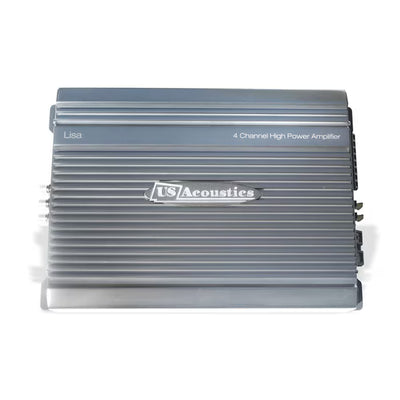
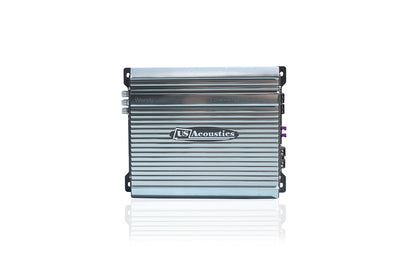
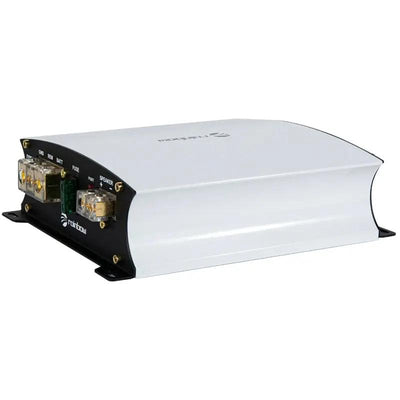
Monoblock Amplifiers - Dedicated subwoofer power for maximum bass output
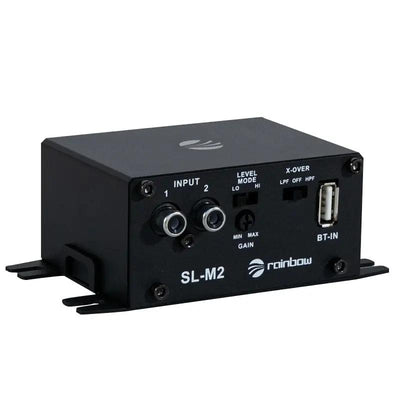
Multi-Channel Amplifiers - Full system solutions for subs and speakers

Frequently Asked Questions

Get Answers to Your Subwoofer Enclosure Questions

How do I know which enclosure type is right for my setup?

Will your vehicle-specific enclosures fit my exact year and model?

Can I use any subwoofer brand with your enclosures?

What's the difference between your Performance and Professional Series?

How do I determine the correct internal volume for my subwoofer?

What does "tuned to 36Hz" mean for ported enclosures?

Do your enclosures come pre-wired?

How difficult is installation? Can I do it myself?

How long does it take to receive my enclosure?

What if my enclosure arrives damaged?

Related Articles

Bandpass Subwoofer Box Design: 4th Order vs 6th Order Explained - Audio Intensity

Bandpass Subwoofer Box Design: 4th Order vs 6th Order Explained

  Key Takeaways A bandpass box mounts the driver between two chambers and fires all...
Read more
How to Spot a Poorly Built Subwoofer Box: 8 Red Flags - Audio Intensity

How to Spot a Poorly Built Subwoofer Box: 8 Red Flags

The eight red flags that separate a price-point subwoofer box from a quality one, what...
Read more
Polyfill in a Sealed Subwoofer Box: What It Does and How Much - Audio Intensity

Polyfill in a Sealed Subwoofer Box: What It Does and How Much

Polyfill makes a sealed box behave like it is 10 to 25% larger. The acoustic...
Read more
Subwoofer Cutout vs Bolt Circle: Getting the Mounting Hole Right - Audio Intensity

Subwoofer Cutout vs Bolt Circle: Getting the Mounting Hole Right

Subwoofer Enclosures Mounting Fitment Build Guide Proline X A subwoofer's cutout diameter is the hole...
Read more