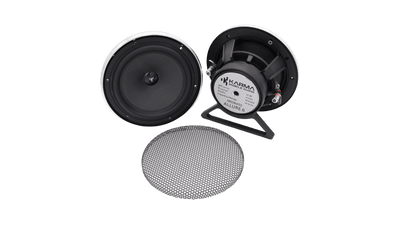
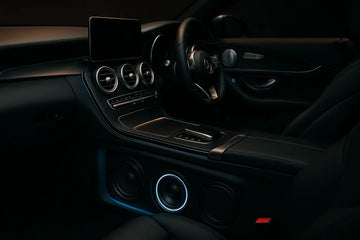
2-way, 3-way, and active sets from 4 to 8 inches. Picked by an SQ judge and shipped from Tullahoma, Tennessee.
Component speaker sets separate the woofer, tweeter, and crossover into discrete pieces, so you can mount the tweeter up at ear level where it builds a real, centered soundstage instead of firing up from the door. That separation, plus a dedicated crossover feeding each driver only the frequencies it should reproduce, is what gives component sets their clarity and imaging advantage over coaxials. This collection spans 2-way, 3-way, and active sets, from entry-level upgrades to reference competition systems, in sizes from 4 to 8 inches.
Authorized dealer. Full manufacturer warranty. Expert SQ-judge support. Shipped from Tullahoma, TN.
Full Manufacturer Warranty
Covered by the manufacturer's warranty, and we handle any claim directly with the brand.
Authorized Dealer
Every set ships new from an authorized dealer, never gray-market, with full brand support.
SQ-Judge Support
Talk to a competing sound-quality judge who installs this gear and matches it to your vehicle.
Tullahoma, TN
Packed and shipped fast from our Tennessee shop, with tracking on every order.
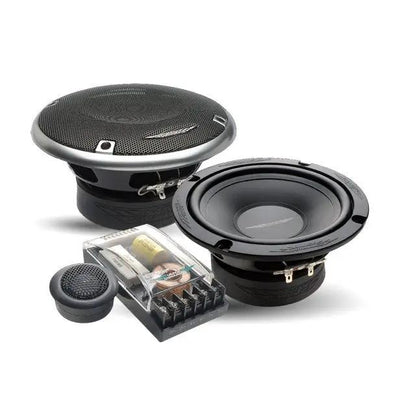
A coaxial speaker stacks the tweeter on the woofer in one basket, which keeps the whole image down low in the door. A component set splits the woofer, tweeter, and crossover into separate pieces. That lets you mount the tweeter high in the door, the sail panel, or the A-pillar, close to ear level, which raises the soundstage and sharpens imaging so vocals sit in front of you rather than at your knees. The external crossover also filters cleaner than the simple network inside a coaxial, sending each driver only the band it handles. The result is more detail, a wider stage, and less distortion at volume.
2-Way, 3-Way, and Active Sets
2-Way Sets
A 2-way set pairs a midbass woofer with a tweeter and a passive crossover. It is the most common configuration and the right starting point for most builds: a large jump in clarity and staging over factory speakers with a straightforward install.
3-Way Sets
A 3-way set adds a dedicated midrange driver between the woofer and tweeter. That midrange covers the vocal and instrument band directly, which improves accuracy and detail. 3-way sets need more mounting space and more careful tuning, and they reward an active setup.
Passive vs Active
A passive set runs off the included crossover, so one amplifier channel pair drives each side. An active set skips the passive crossover and feeds each driver from its own amplifier channel, with crossover points and levels set in a DSP. Active takes more channels and tuning time, but it gives you full control of the stage and is the path serious SQ builds take.
Match the woofer size to your vehicle's speaker location, give the set clean amplifier power, and pick the tier that fits your goal. Component sets effectively need amplification to perform as designed, so plan on multi-channel amplification and match the amplifier's RMS output to the set's RMS rating.
Component sets here run from roughly $160 to $3,500. The money goes into three things: the cone, the tweeter, and the crossover.
Entry: roughly $150 to $250
Poly or treated paper cones, mylar or basic silk tweeters, and a simple crossover. The Image Dynamics ID65CS sits here. Against a factory coaxial with no real crossover, this tier is already a large step up in clarity and staging, and it is the right choice when the amplifier is the next purchase.
Mid: roughly $250 to $500
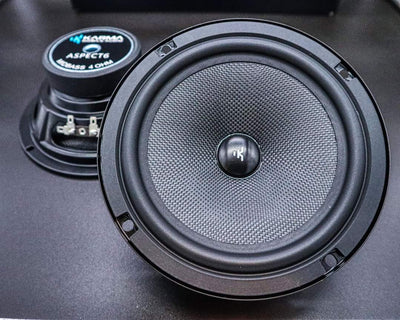
Woven or composite cones that hold their shape at higher excursion, silk or textile dome tweeters, and crossovers with tweeter attenuation so a dash or pillar tweeter can be dialed back. The Karma Aspect 6.1 and Image Dynamics CXS64 V2 land here. Most sound-quality builds should start in this range.
Reference: $700 and up
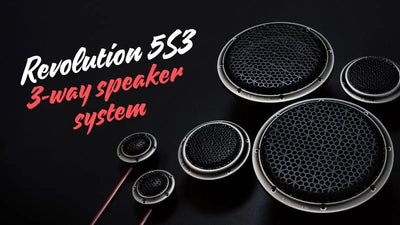
Three-way systems that hand the vocal band to a dedicated midrange instead of splitting it between a woofer and tweeter, with low-distortion motors and exotic cone materials. The Crescendo Revolution 3S3, 5S3, and 7S3 sit at this level. This tier assumes an amplifier channel per driver, a DSP, and real tuning time.
Mounting and Aiming the Tweeter
The tweeter location is the whole reason to buy components, and it is where most installs leave performance on the table.
Where to mount
Higher is better, and closer to on-axis with your ears is better still. The sail panel and A-pillar are the two locations that consistently produce a stage on the dash rather than in the doors. A factory dash location works, but it often fires into the windshield and reflects, which smears the image.
How to aim
Aim tweeters across the car rather than straight at the near ear. Firing the left tweeter toward the right seat and the right tweeter toward the left evens out path length and stops the near side from dragging the image into the door. Small changes in angle move the stage more than most people expect, so tack them in place and listen before committing.
Set the attenuation
Most passive crossovers include a tweeter level switch, usually 0 dB, -3 dB, and sometimes -6 dB. A pillar-mounted tweeter close to your ears often needs the cut. Start at 0 dB, and if the top end sounds bright or the image pulls toward the tweeter, step it down before reaching for equalization.
Frequently Asked Component Speaker Questions
What is a component speaker?
A component speaker set splits the woofer, tweeter, and crossover into separate pieces instead of combining them in one basket like a coaxial. That lets you mount the tweeter high in the door, sail panel, or A-pillar near ear level, and it lets an external crossover send each driver only the frequencies it should reproduce.
Do component speakers sound better?
Yes, in the front stage. The gain comes from tweeter placement and crossover quality rather than the drivers alone. Mounting the tweeter near ear level raises the soundstage to the dash and sharpens imaging, and an external crossover filters more precisely than the simple network inside a coaxial, which lowers distortion at volume.
What sounds better, coaxial or component speakers?
Components, for a front stage. A coaxial keeps the tweeter down in the door where the image stays low, while a component set puts it near ear level. Coaxials still win on install simplicity and value, and they are the right call for rear fill or any location where a separate tweeter cannot be mounted.
Do I need an amplifier for component speakers?
Effectively yes. Component sets are built to handle real power and only reach their potential on a clean external amplifier. A factory head unit puts out roughly 15 to 20 watts RMS per channel while most sets are rated for 50 to 100. Match the amplifier's RMS output to the set's RMS rating, and avoid underpowering, since clipping from a weak amp is what damages tweeters.
What is the best component speaker brand?
There is no single best brand, because the right set depends on your power, your mounting locations, and your budget. We carry Image Dynamics, Karma Mobile Audio, and Crescendo across entry, mid, and reference tiers, and we pick each one by listening rather than by spec sheet. Tell us your vehicle and amplifier and we will match a set to it.
What is the difference between 2-way and 3-way component sets?
A 2-way set uses a woofer and a tweeter. A 3-way set adds a dedicated midrange driver between them, so the vocal band gets its own driver instead of being split at the crossover point. 3-way sets are more accurate and detailed but need more mounting space, more amplifier channels if run active, and more tuning time.
Amplifiers Built for These Speakers
Multi-Channel Power for Your Front Stage
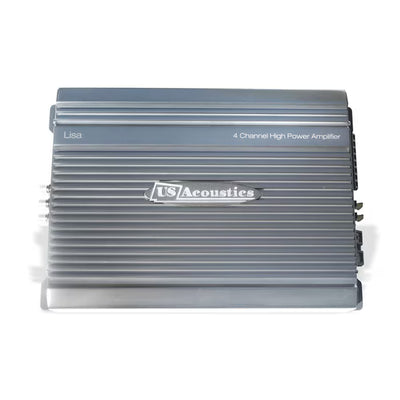
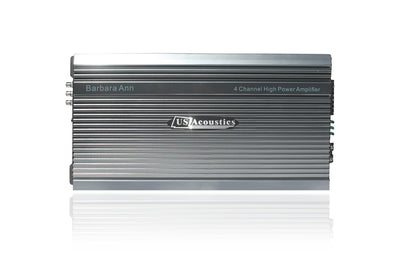
Multi-channel amplifiers spec'd for the power and impedance requirements of the components in this collection. Clean signal, proper damping, and the headroom to drive your speakers without clipping.