car amplifier banner
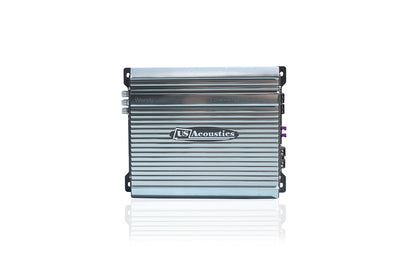
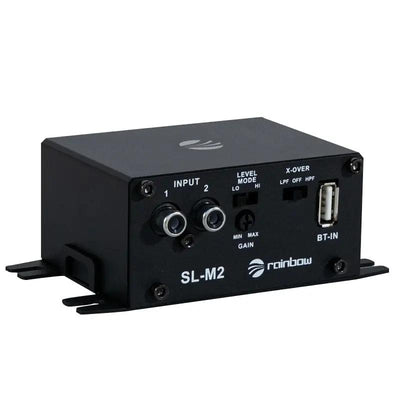
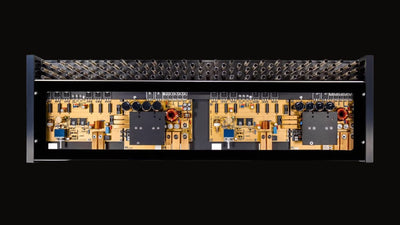
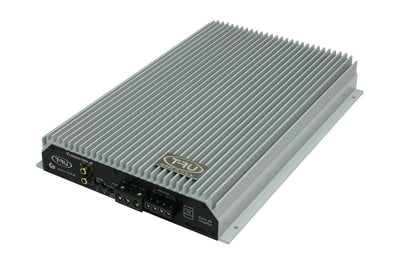
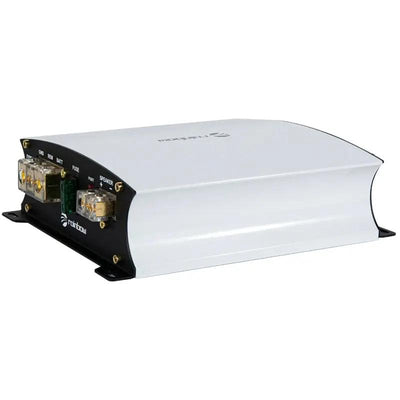
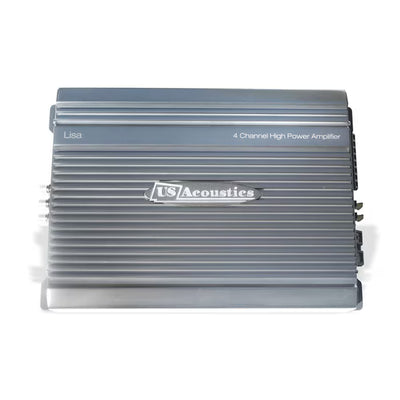
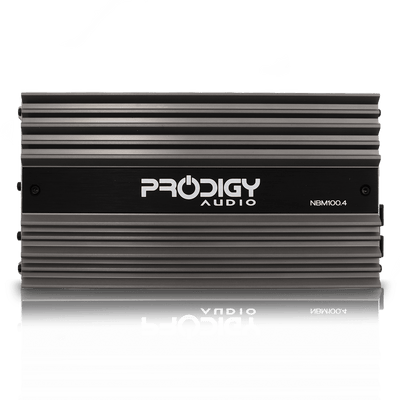
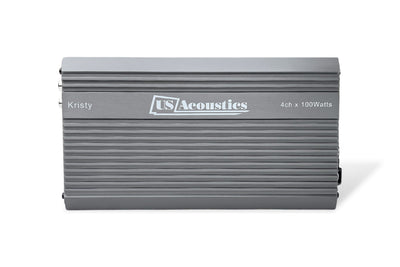
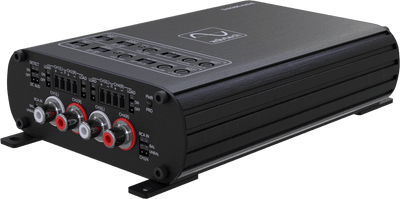
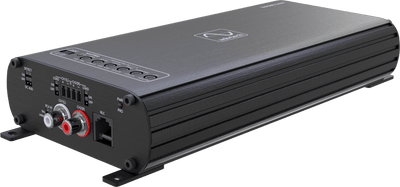
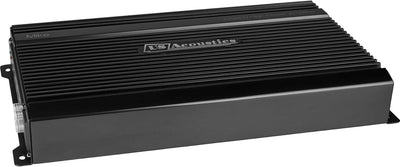
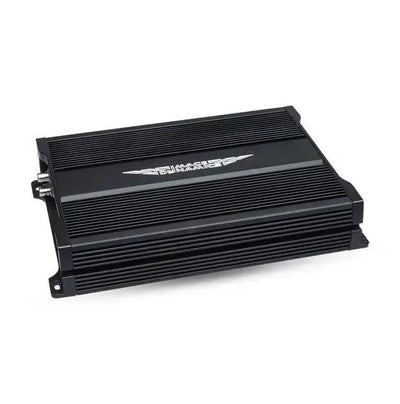
Collection of car amplifiers on a gray textured background with 'Car Amplifiers' text.
Front Stage Amplification

2 Channel Amplifiers

2-channel amplifiers for component speaker pairs and reference front-stage builds. Class D efficiency to Class A audiophile reference.

A 2-channel amplifier drives the most important pair of speakers in the car: the front-stage left and right that create the stereo image and set the tone for everything else. Dedicating a stereo amp to that pair isolates the front-stage signal path from rear fill, sub duty, and every other load, which is why it is the architecture serious SQ builds start from.

This collection spans $159.99 to $39,999.99. The accessible end is US Acoustics (Wendy at $159.99, Andrea at $289.99). Arc Audio's Nighthawk is the Class D option. Above that sit the Class AB and Class A references: Tru Technology Tungsten and Tungsten Grande, the Audio Wave Excel and Aspire Pro line, and at the top the Audio Wave CR 401 Dual Mono at $39,999.99.

Need help matching a 2-channel to your front components? Send us your speaker specs (RMS power, impedance) and we will recommend the right amp before you buy.

Authorized Dealer

Every amplifier is brand new with the full manufacturer warranty.

Power Matching

Send us your subwoofer or speaker specs. We'll recommend the right amplifier at the right impedance before you buy.

Hands-On Expertise

Direct support from staff who designs, builds, and competes with these systems. Honest recommendations, not upsells.

Fast Shipping from TN

In-stock orders ship within 1-2 business days from our Tullahoma, Tennessee warehouse.

Shop the Lineup

All products loaded

}

What a 2-Channel Amplifier Is Built For

A 2-channel amplifier produces two independent channels of output, normally a stereo pair. In car audio that means the front stage: the left and right components or coaxials doing the imaging and the tonal balance work that every other tuning decision sits on top of.

The reason to dedicate an amp to that pair is isolation. Give the front stage its own chassis and the rear fill and the subwoofer are no longer sharing its power supply, its grounds, or its thermal load. On an SQ build that is worth more than the watts.

2-Channel or 4-Channel

This is the decision most people land on this page with. Both can run a front stage. They diverge on what else you are asking the amp to do.

2-Channel 4-Channel
Channels 2 4
Typical job Front stage only Front plus rear, or front plus a bridged sub
Front stage isolation Own supply, ground and thermal load Shared across all four channels
Bridging Bridge both channels for one sub, front stage gone Bridge a pair for a sub, two channels still on the front
In an active 2-way Two of them, full power to tweeters and mids separately One of them covers the same job with less per driver
Pick it when The front stage is the priority and the sub has its own amp One chassis has to cover more than the front pair

If the sub already has a monoblock, a dedicated 2-channel on the front is the cleaner topology. If one amp has to do everything, go to 4-channel, or see the full amplifier lineup.

Matching a 2-Channel Amp to Your Front Components

Power Matching

Match the amplifier's RMS output per channel to the speaker's continuous RMS rating. Most component sets want 75 to 150 watts RMS a side. Underpowering is what kills speakers, because an amp pushed into clipping hands the voice coil a distorted signal it cannot dissipate. Overpowering with the gain set properly is fine; the driver takes what it needs.

From this catalog: the US Acoustics Wendy at 2 x 75W suits coaxials and entry component sets. The US Acoustics Andrea at 2 x 150W drives higher-power components without strain. Pair either with the sets in component speakers or 6.5 inch component sets.

Class Topology

This catalog spans three classes.

Class AB. Bias current removes crossover distortion, at the cost of efficiency and chassis size. US Acoustics Wendy and Andrea at the accessible end, Tru Technology Tungsten and Tungsten Grande, Audio Wave Excel, Audio Wave Aspire Pro USA, and the CR 401 Dual Mono at the top. Full range in Class AB amplifiers.

Class A. The output devices conduct continuously. Lowest distortion, highest heat, hardest on the electrical system. Audio Wave Excel CA, Audio Wave Aspire Pro V2, TRU Technology Billet B22-A v2.5. This is the ceiling for front-stage amplification in a car. Full range in Class A amplifiers.

Class D. The efficient one: less heat, smaller chassis, less current pulled from the alternator. The Arc Audio Nighthawk is the Class D entry here. Full range in Class D amplifiers.

Brands in This Collection

US Acoustics. Wendy at 2 x 75W ($159.99) and Andrea at 2 x 150W ($289.99). Class AB with the strongest power-per-dollar here, and the right starting point for a daily driver or a factory-replacement front stage. See the full US Acoustics lineup.

Arc Audio. Nighthawk, 800W Class D ($699.99). The efficient option on this page, for builds where alternator headroom or mounting space rules out a Class AB chassis. See Arc Audio.

Tru Technology. Tungsten Class AB ($1,399.99), Tungsten Grande Class AB ($2,399.99), and Billet B22-A v2.5 Class A ($8,500). Reference circuit topology with nothing cut on the output stage, across three price points. See Tru Technology.

Audio Wave. The deep end, and the widest spread in the collection: Excel Class AB ($2,600), Excel CA Class A ($3,499.99), Aspire Pro USA Class AB ($7,999.99), Aspire Pro V2 Class A ($10,999.99, with a previous-display unit at $6,999.99), and the CR 401 Dual Mono Class AB ($39,999.99). The CR 401 is the top of 2-channel car audio amplification, full stop. See Audio Wave amplifiers.

A front stage is only as good as what it is driving and how it is tuned. The drivers live in component sets and midbass, and if you are going active, the DSP lineup is the other half of the chain. Setting gain correctly is what protects all of it: how we set amplifier gain.

Frequently Asked 2-Channel Amplifier Questions

What is a 2-channel amplifier used for?

Most often it drives the front-stage pair, the left and right components or coaxials, with dedicated amplification. That isolates the front-stage signal path from rear fill and sub duty, which matters on an SQ build because the front stage does the imaging and tonal balance work. Beyond that, 2-channel amps run active bi-amp setups (one amp on tweeters, one on midrange), reference front stages, and bridged mono for a subwoofer.

What is the difference between Class A, Class AB, and Class D 2-channel amps?

Class A runs its output devices continuously, which produces the lowest distortion at the highest heat and current draw. It is the reference tier. Class AB uses bias current to eliminate crossover distortion, costing efficiency and chassis size but suiting critical listening. Class D is the most efficient, with the smallest chassis and the lowest draw on the alternator. For front-stage work most SQ builds land on Class AB or Class A. The Audio Wave Excel CA, Aspire Pro V2, and TRU Billet B22-A v2.5 are the Class A tier here.

Can I bridge a 2-channel amp for a subwoofer?

Yes, and it costs you the front stage, because both channels are now driving the sub. A bridged 2-channel also usually makes less than the sum of its stereo rating and most are not 1-ohm stable bridged, so you cannot wire the low-impedance loads a sub amp is built for. For a permanent sub, a purpose-built monoblock at the same rated power is the better choice.

How much power do I need for my component speakers?

Match the amplifier's RMS output per channel to your speakers' continuous RMS rating, ideally 75% to 150% of it. A component set rated 100W RMS is well matched by 100 to 150 watts per channel. Underpowering causes clipping at volume, and clipping is what damages speakers. Overpowering with the gain set properly is fine, because the driver takes only what it needs.

What is the difference between a 2-channel amp and a 4-channel amp?

A 2-channel produces two output channels for a stereo pair. A 4-channel produces four, normally front plus rear, or front plus a bridged pair for a sub. If the front stage is the priority and the sub already has its own amp, the dedicated 2-channel is the cleaner topology. If one chassis has to cover front, rear or sub, the 4-channel is the efficient answer. Many builds run a 2-channel on the front, a second amp on the rear, and a monoblock on the sub.

Are these new with manufacturer warranty?

Yes. Every amplifier in this collection is brand new, sold by an authorized dealer, and carries the full manufacturer warranty. We handle warranty claims directly with the brand. Demo and previous-display units are labeled as such on the product page.

Do you offer power-matching consultation before purchase?

Yes. Send us your component specs (RMS power, impedance) and we will recommend the right 2-channel for your build. Pre-purchase consultation is free. We would rather spend 15 minutes confirming the match than have you return a mismatched amplifier.

Car Amplifier Articles

Class A Car Amplifiers: The Gold Standard in Sound Quality - Audio Intensity

Class A Car Amplifiers: The Gold Standard in Sound Quality

Class A amplifiers are known for excellent sound quality, providing clear and detailed audio. The...

Read Article →
Ultimate Multi-Amp System Configuration Guide - Audio Intensity

Ultimate Multi-Amp System Configuration Guide

When setting up a car audio system, using more than one amplifier can seriously improve your soun...

Read Article →
Do You Need an Amplifier for Car Speakers? Expert Advice - Audio Intensity

Do You Need an Amplifier for Car Speakers? Expert Advice

By swapping out your car speakers and hooking up an amplifier, you can improve the sound of your ...

Read Article →
How to Test an Amplifier Without a Car: Step-by-Step Guide - Audio Intensity

How to Test an Amplifier Without a Car: Step-by-Step Guide

A complete DIY guide to testing a car amplifier without a car: the equipment you need, safety ste...

Read Article →