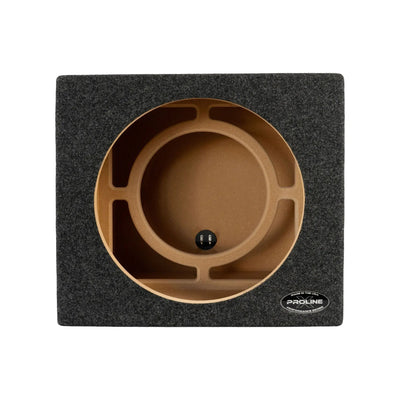
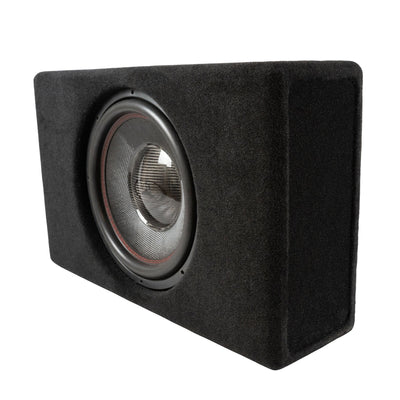
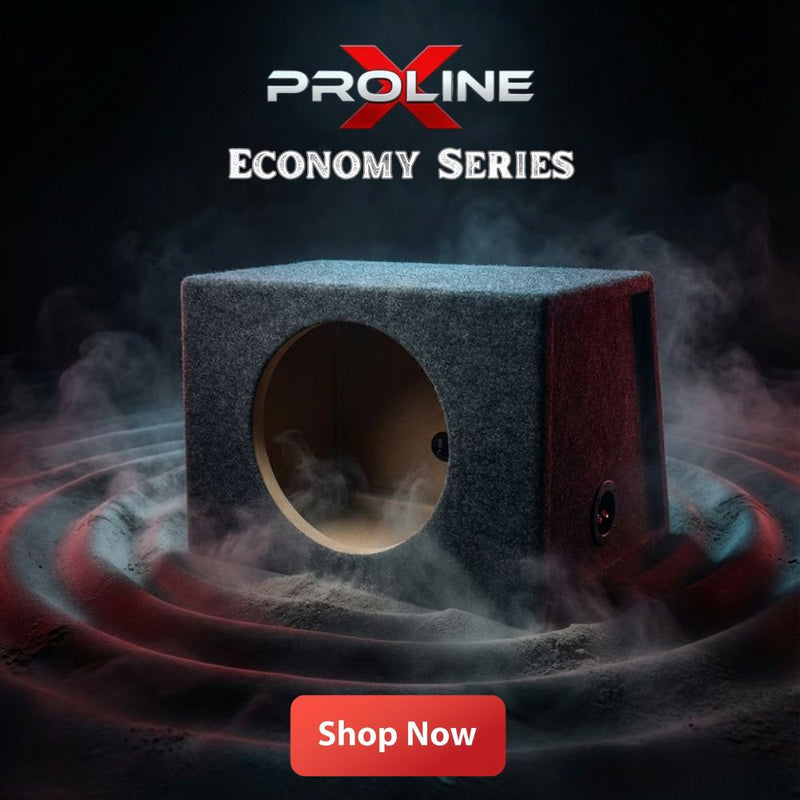
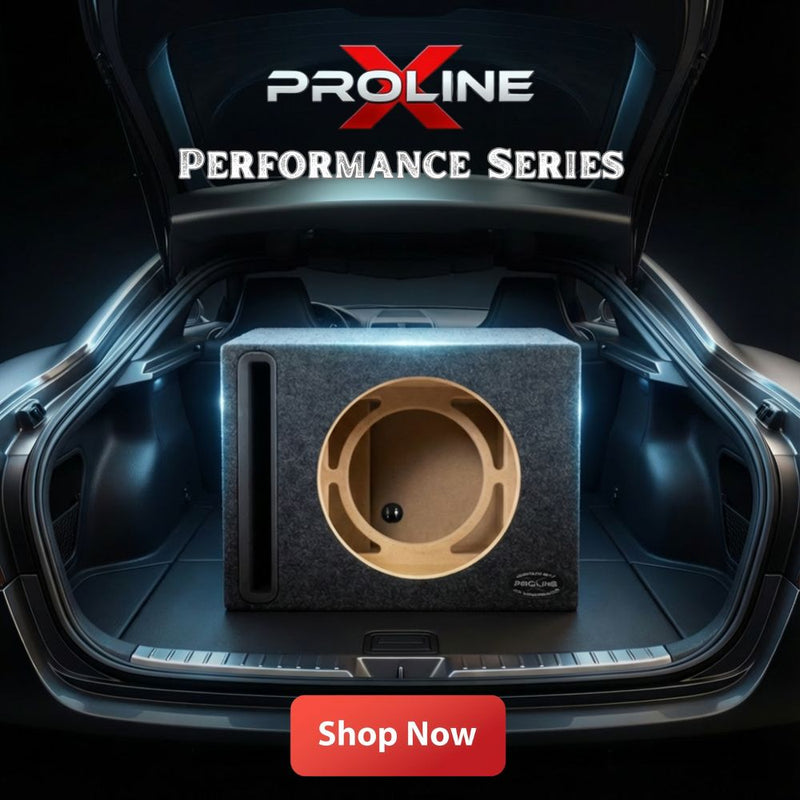
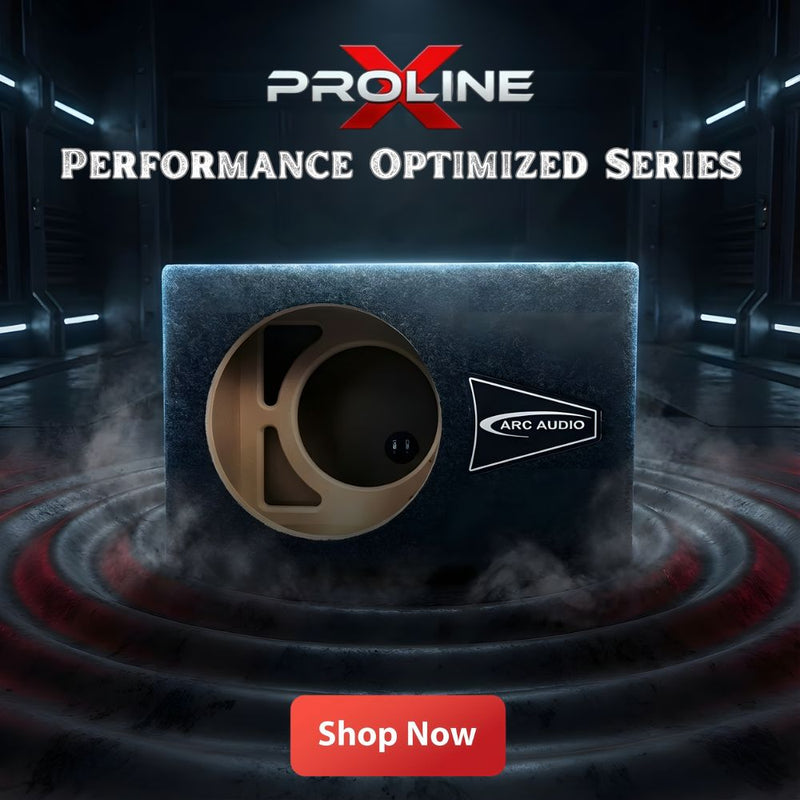
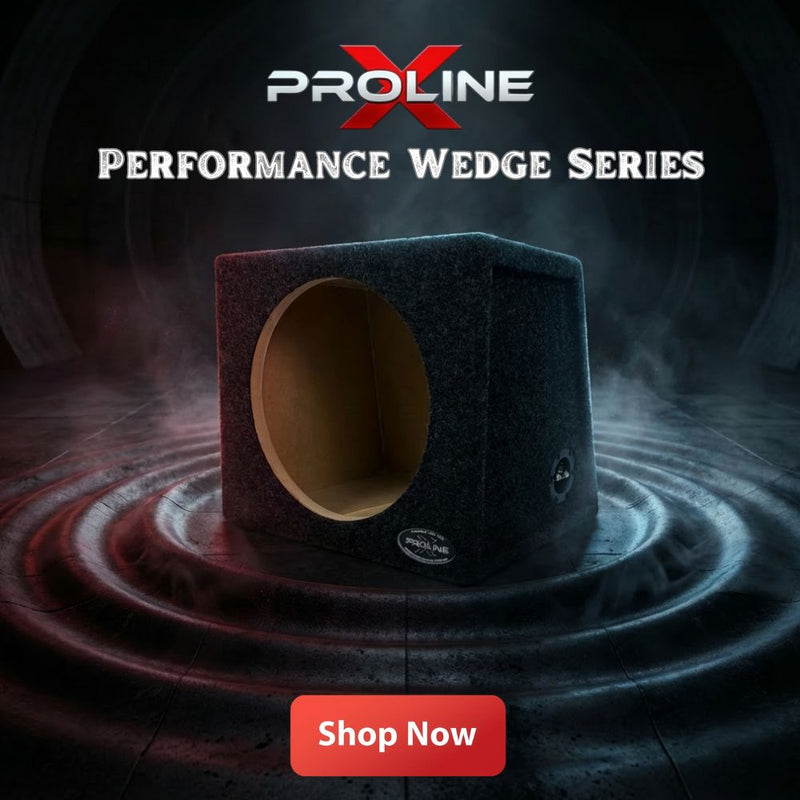
The 15 inch subwoofer box is the size class for buyers who chose 15 over 12 because they need more cone area, deeper extension, and the SPL output that 12 inch can't deliver. Audio Intensity 15 inch enclosures are CNC-cut from Langboard Elite MDF in our Tullahoma, Tennessee facility. Available in Performance Series universal-fit, Professional Series competition-grade for Kicker Solo X 15, Micro Series for ResoNix GUS 15, and Vehicle Specific fitments for Ford F-150 and F-250 with the Audiomobile Encore 15. Single and dual configurations.
Every Proline X enclosure is manufactured in our Tullahoma, Tennessee facility using materials and construction methods that most enclosure brands don't touch.
Langboard Elite MDF
48.5 lb/ft³ density and 200 psi internal bond strength, the highest-grade MDF available for enclosure construction.
1-Year Warranty
Full coverage on materials and construction defects. We stand behind every enclosure we build.
Driver-Matched Tuning
Internal volume, port tuning, and cabinet dimensions are spec'd to each driver diameter, not a universal fit applied across sizes.
Made in Tullahoma, TN
CNC-manufactured in our Tennessee facility on ShopSabre routers. Not imported. Not outsourced.
Why Choose 15 Inch
The 15 inch subwoofer is a deliberate choice. Most buyers stop at 12 inch because the size and price work for typical builds. The buyer who chooses 15 inch knows what they're after: more cone area (176 square inches versus 113 square inches for a 12), deeper low-frequency extension (typically usable to 25-30Hz versus 30-35Hz for a 12), and the SPL output that justifies the larger cabinet footprint and amplifier requirements. For competition SPL builds, dedicated bass-only systems, and serious enthusiasts who want the lowest reach and the highest output, 15 inch is the right answer.
The tradeoff is space and power. A 15 inch enclosure is significantly larger than a 12 inch (typical sealed cabinet 2.0 to 2.5 cubic feet, ported 3.0 to 5.0 cubic feet). The driver typically requires 750 to 2000W RMS depending on the model, which means a high-current monoblock amplifier and a healthy electrical system. If you're committed to those tradeoffs, the 15 inch produces deep bass that smaller drivers physically cannot match.
Best 15 Inch Subwoofer Box Design for Deep Bass
For deep bass output, the design factors that matter are internal volume, port tuning frequency (in ported alignments), and cabinet rigidity. The 15 inch driver moves significantly more air than smaller drivers, which means the cabinet has to handle more internal pressure without flexing or losing structural integrity over time.
Internal volume: Calculated from the driver's published Thiele-Small parameters. Most 15 inch sealed enclosures fall in the 2.0 to 2.5 cubic feet range. Most 15 inch ported enclosures fall in the 3.0 to 5.0 cubic feet range plus port volume. The driver manufacturer publishes recommended sealed and ported volumes; matching the enclosure to that recommendation is the most important sizing decision.
Port tuning frequency (ported alignments): For maximum deep bass, port tuning between 28 and 32Hz extends low-frequency reach further than higher tuning frequencies. The tradeoff is upper bass output, which decreases at lower tunings. For balanced musical use, 32-38Hz is the standard range. For SPL competition where the score is at specific frequencies, the tuning shifts toward the scoring range.
Cabinet rigidity: A 15 inch driver at full output generates significant internal pressure cycles. Cabinet construction that flexes under those pressures wastes acoustic energy and produces inconsistent output over time. Audio Intensity 15 inch enclosures use Langboard Elite MDF construction with internal bracing and Dado/V-Groove panel joinery (or stack fabrication for the Micro Series 15) calculated to maintain dimensional stability under sustained competition-level output.
Sealed vs Ported 15 Inch
The sealed-vs-ported choice matters more at 15 inch than at smaller sizes because the output gain from porting is more significant in absolute terms.
Sealed 15 inch enclosures (P15-S III-G, Pro AM 15-S, M15-S Gus): Tight, accurate bass with smooth roll-off below resonance. The right pick for SQ-focused builds, music with detailed bass content, and any system where the 15 inch sub needs to integrate cleanly with front speakers. Sealed 15 inch enclosures are the most compact 15 inch option, fitting in install locations where ported won't.
Ported 15 inch enclosures (Pro KIK 15 X, Pro KIK 15D): Significantly more output, deeper extension below sealed roll-off, and higher efficiency from amplifier power. The right pick for output-priority builds, SPL competition systems, and dedicated bass-only setups. Ported 15 inch enclosures need more cabinet volume than sealed but produce the meaningful deep bass output that justifies running a 15 inch driver in the first place.
Custom and Driver-Matched 15 Inch Enclosures
The 15 inch lineup includes both universal-fit and driver-matched enclosures across multiple series.
Performance Series universal-fit (P15-S III-G): Single 15 inch sealed enclosure with internal volume calculated for the typical 15 inch driver in the standard Qts range. The right pick when running a mainstream 15 inch driver and when you want the most accessible price point.
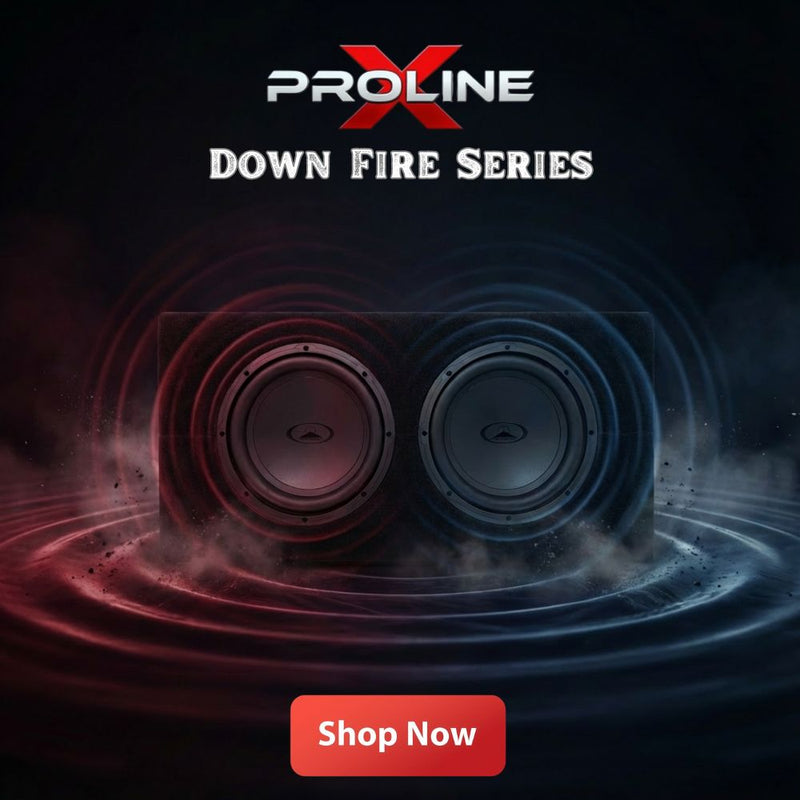
Performance Optimized for Audiomobile Encore (Pro AM 15-S): Sealed down-firing 15 inch enclosure built specifically for the Audiomobile Encore 15. Driver-matched volume tuning with cabinet geometry calculated for cargo-bay floor placement.
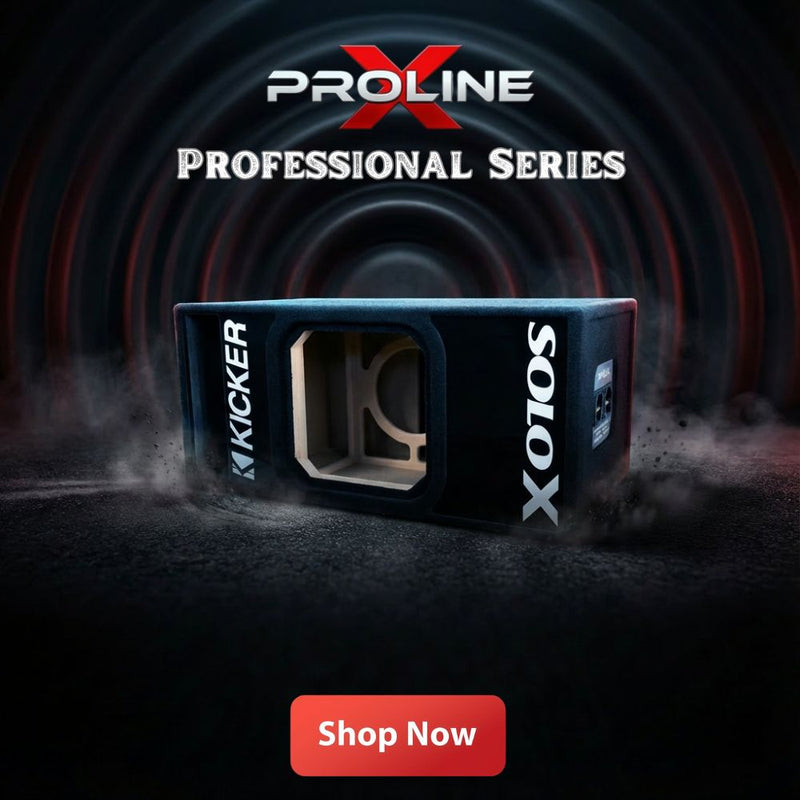
Professional Series for Kicker Solo X 15 (Pro KIK 15 X, Pro KIK 15D): Competition-grade ported enclosures for the Kicker Solo X 15 driver, single and dual configurations. Double-baffle minimum construction with threaded inserts matched to the Solo X bolt pattern. The Solo X is a serious high-output competition driver and the Professional Series is the right enclosure pairing for it.
Micro Series for ResoNix GUS 15 (M15-S Gus): Stack-fabrication 15 inch sealed enclosure built specifically for the ResoNix GUS 15 driver. Driver not carried by Audio Intensity, but we build the enclosure as a fitment service for buyers who already own the GUS 15 or are buying it elsewhere.
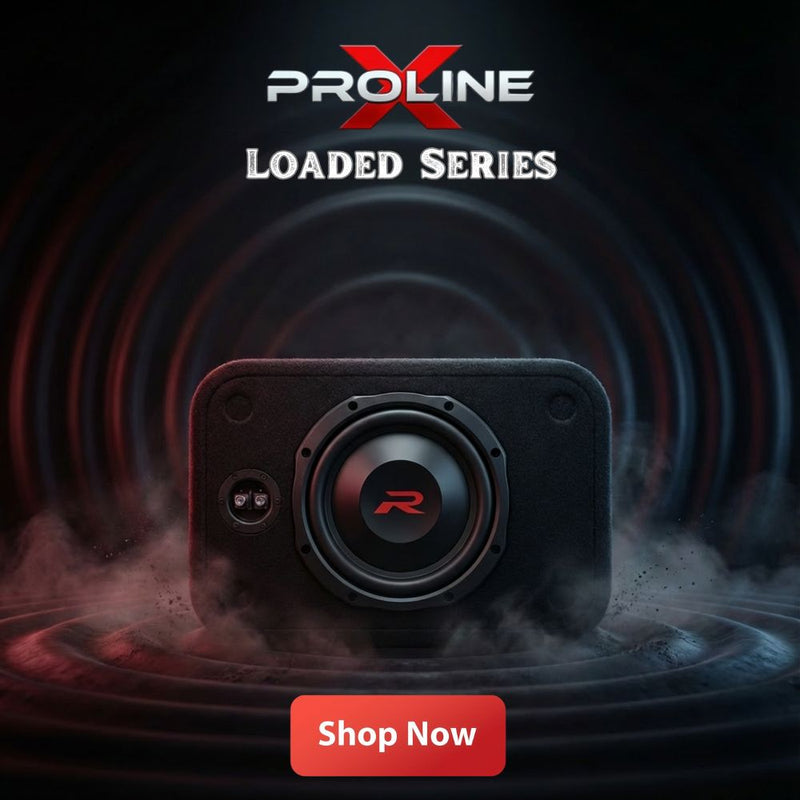
Vehicle Specific F-150/F-250 loaded (VS FD1-1): Direct-fit Audiomobile Encore 15 loaded enclosure for the 2015-2023 Ford F-150 and 2017-2023 F-250. Sub pre-installed and pre-wired in a vehicle-specific cabinet. Closeout pricing.
Construction
Every Audio Intensity 15 inch enclosure is built from Langboard Elite MDF (48.5 lb/ft³ density, 200 psi internal bond strength), the highest-grade MDF available for enclosure construction. Cabinet panels are joined using Dado and V-Groove cuts (or stack fabrication for the Micro Series 15) that mechanically interlock at each panel intersection before bonding. Every enclosure is CNC-cut on ShopSabre routers in our Tullahoma, Tennessee facility.
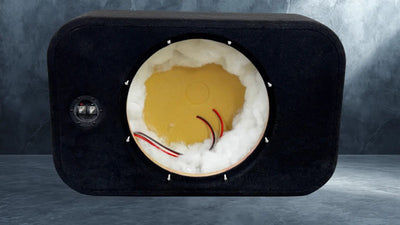
For ported configurations, port dimensions are calculated from the target tuning frequency and the driver's Xmax to produce laminar airflow at maximum excursion. For Professional Series 15 inch enclosures, double-baffle construction holds dimensional stability under sustained competition-level output. Internal bracing is placed at intervals calculated to prevent panel resonance at the frequencies the enclosure operates in.
Frequently Asked 15 Inch Subwoofer Box Questions
Is a 15 inch subwoofer box worth it over a 12 inch?
For buyers who specifically want more cone area, deeper extension, and higher SPL output, yes. The 15 inch produces usable bass to 25-30Hz versus 30-35Hz for a 12 inch, with 50% more cone area. The tradeoffs are cabinet size (significantly larger) and amplifier requirements (typically 750-2000W RMS). For SQ builds, daily commute use, and most music genres, a 12 inch is sufficient and easier to integrate. For competition SPL, dedicated bass-only systems, and buyers who want the deepest possible reach, 15 inch is the right answer.
What's the ideal size for a 15 inch subwoofer box?
Most 15 inch sealed enclosures run 2.0 to 2.5 cubic feet net (after displacement). Most 15 inch ported enclosures run 3.0 to 5.0 cubic feet net plus port volume. The driver manufacturer publishes recommended sealed and ported volumes; matching the enclosure to that recommendation is the most important sizing decision. Each Audio Intensity 15 inch enclosure product page lists the specific internal volume for that model.
Sealed or ported for a 15 inch?
Sealed produces tight, accurate bass with smaller cabinet footprint and the SQ-focused character that integrates cleanly with front speakers. Ported produces 3 dB more output on average, deeper extension below sealed roll-off, and higher efficiency from amplifier power. For output-priority and SPL builds, ported is the standard. For SQ-focused builds and tighter install spaces, sealed is the right pick. The 15 inch lineup includes both alignments.
What's the best 15 inch subwoofer box for deep bass?
The Pro KIK 15 X is the Professional Series ported enclosure for the Kicker Solo X 15, which produces the deepest sustained bass output in the lineup. The Pro AM 15-S is sealed down-firing for the Audiomobile Encore 15, which delivers cleaner deep bass for SQ-focused builds. For universal fit, the P15-S III-G is the right pick for any standard 15 inch driver. The right choice depends on the driver and your build priorities.
Can I run dual 15 inch subs in one enclosure?
Yes. The Pro KIK 15D is the Professional Series dual 15 inch enclosure for the Kicker Solo X 15, in a competition-grade construction with paired drivers. Dual 15 inch builds produce extreme output (typically 6 dB more than a single 15) but require correspondingly more amplifier power, cabinet space, and a healthy electrical system. Confirm your amplifier's stable impedance specification before wiring two drivers in parallel.
What amplifier do I need for a 15 inch sub?
Match the amplifier's RMS output at your wired impedance to the driver's RMS rating. Most 15 inch subs run 750-2000W RMS depending on the model. The Kicker Solo X 15 runs up to 2500W RMS and benefits from a high-current monoblock at the appropriate impedance. The Audiomobile Encore 15 runs 1000W RMS. The 15 inch class typically requires more amplifier power and a more robust electrical system (high-output alternator, dedicated battery, large gauge power wire) than 12 inch builds.
Drivers Built to Match
Subwoofers Spec'd for These Enclosures
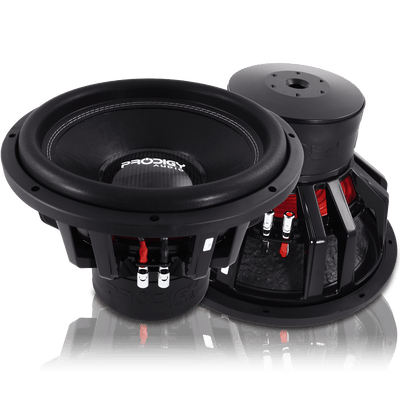
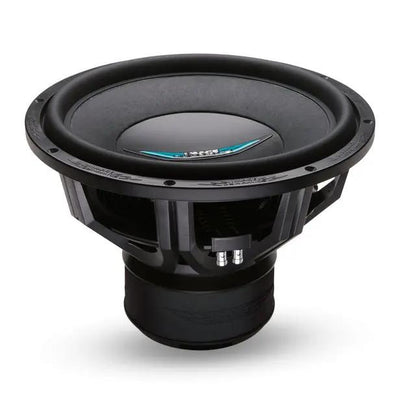
The drivers below are matched to the enclosures above by Thiele-Small parameters. Buying together guarantees the alignment, port tuning, and damping work the way the engineering intended.
Monoblock amplifiers matched to the power requirements of the drivers these enclosures are built for. Buy the enclosure, match the driver, pick the right amplifier.