
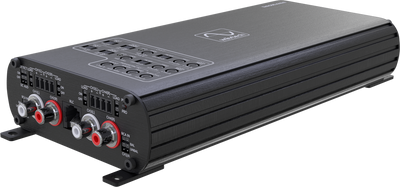
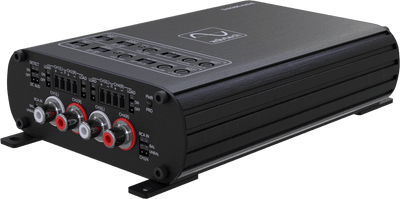

Wavtech link1000.1mini 1000w monoblock amplifier
Extraordinary Bass Performance in a Space-Saving Design
📦 Free Shipping, Fast Delivery
Every order includes:
- ✅ Free lifetime tech support
- ✅ 30-day price-drop protection
- ✅ 30-day returns
Brand: Wavtech
Availability: ✅ In Stock
Wāvtech Link 1000.1 Mini Monoblock Amplifier
The Kilowatt Amplifier That Fits Anywhere
The Wāvtech Link 1000.1 Mini represents engineering optimization pursued to its logical conclusion: delivering genuine 1000W RMS continuous power in a chassis measuring just 12.2 inches long, 4.5 inches wide, and 1.65 inches tall. This dimension-to-power ratio—approximately 91 cubic inches producing 1000W—establishes the Link 1000.1 Mini among the most power-dense car audio amplifiers available today. Where conventional 1000W monoblock amplifiers measure 15-20 inches long and 8-10 inches wide (occupying 200-330 cubic inches), the Link 1000.1 Mini delivers equivalent power in less than half the volume, enabling subwoofer system installations in vehicles where space constraints would otherwise prevent kilowatt-level amplification.
Understanding the Link 1000.1 Mini requires context about what "1000W RMS" actually means and why compact packaging matters for this power level. A genuine 1000W continuous amplifier (not peak, not maximum, but sustained RMS power) can drive subwoofers to output levels exceeding 120dB in typical vehicle enclosures—sufficient for any application outside dedicated sound pressure level competition. This power level represents the threshold where single-subwoofer systems transition from "adequate bass" to "commanding bass presence," where dual-subwoofer configurations achieve reference-level output capability, and where bass becomes a visceral physical experience rather than merely audible frequency content.
But delivering this power traditionally required substantial amplifier chassis with extensive heatsinking to dissipate the 150-250W of heat generated during operation (assuming 75-85% Class D efficiency). The Link 1000.1 Mini achieves its compact dimensions through careful thermal management design: maximized heatsink surface area within dimensional constraints, active thermal management that adjusts power output based on temperature, and Class D amplification topology that minimizes heat generation compared to Class AB alternatives. The result: full 1000W capability in a package that fits under most vehicle seats, behind kick panels, or in trunk panel cavities where conventional kilowatt amplifiers cannot physically mount.
The compact size particularly matters for modern vehicle installations where aftermarket equipment must remain completely hidden. Premium vehicles increasingly integrate factory audio systems into vehicle architecture such that visible aftermarket components compromise aesthetics and potentially affect resale value. The Link 1000.1 Mini's dimensions enable mounting locations that maintain factory appearance: under seats without requiring seat track modification, behind factory trim panels without visible installations, or in factory-designed equipment compartments originally intended for OEM components. This invisibility advantage extends to theft prevention—equipment that cannot be seen from vehicle exterior attracts substantially less attention than obvious aftermarket installations.
Power Architecture: Real 1000W Continuous Output
The Link 1000.1 Mini's power specifications deserve careful examination because the car audio industry has historically conflated various power measurement methods—creating confusion between genuine continuous (RMS) power and inflated marketing specifications. The Link 1000.1 Mini's ratings represent actual sustained power output that the amplifier can maintain indefinitely without thermal limiting or protection activation.
Power Output @ 4Ω
600W RMS continuous
Single 4Ω subwoofer
Dual 8Ω subwoofers parallel
Power Output @ 2Ω
1000W RMS continuous
Single 2Ω subwoofer
Dual 4Ω subwoofers parallel
Power Output @ 1Ω
1000W RMS (1Ω stable)
Dual 2Ω subwoofers parallel
Maximum power extraction
Efficiency and Current Draw
Class D topology: ~75-85%
Max current: ~110-120A @ 2Ω
4-gauge power cable minimum
Thermal Management
Active power adjustment
Prevents shutdown during operation
Maintains music without interruption
Protection Circuits
Thermal, short circuit, DC offset
Reverse polarity protection
Comprehensive fault prevention
The 1000W @ 2Ω specification represents the amplifier's optimal operating point for most installations. This power level suits single 12-inch or 15-inch subwoofers rated 800-1200W RMS (providing appropriate headroom above continuous power handling), dual 10-inch or 12-inch subwoofers wired for 2Ω total load, or high-efficiency subwoofers that achieve reference-level output with moderate power input. In typical vehicle enclosures, 1000W drives quality subwoofers to 118-122dB maximum output—exceeding what most users can tolerate for extended periods and approaching the threshold where cabin pressure variations become physically uncomfortable.
The 600W @ 4Ω rating provides substantial power for installations where 4Ω loading is preferred or required. Some subwoofers offer only 4Ω voice coil configurations (or dual 2Ω configurations that wire to 4Ω for series connection). The Link 1000.1 Mini maintains healthy output at 4Ω rather than forcing users to sacrifice half the amplifier's capability by operating at higher impedances. The 600W also suffices for single 10-inch or 12-inch subwoofers where 1000W would exceed their thermal or mechanical capabilities, allowing proper impedance matching without wasted amplifier potential.
The 1Ω stability extends compatibility to dual subwoofer configurations using 2Ω voice coils. Two subwoofers with dual 2Ω voice coils can wire multiple ways, but the most power-efficient configuration parallels all four voice coils for 1Ω total impedance. Many amplifiers specify 2Ω minimum, forcing series-parallel wiring that results in 2Ω but sacrifices half the total voice coil surface area (reducing power handling and increasing thermal stress on the utilized coils). The Link 1000.1 Mini's 1Ω capability allows utilizing all voice coils in parallel, distributing power across maximum cone area while extracting full amplifier output.
The active thermal management system addresses the reality that compact amplifiers in confined mounting locations face thermal challenges that larger amplifiers with better airflow don't encounter. Rather than shutting down when temperature approaches limits (causing audible interruption that annoys users), the Link 1000.1 Mini gradually reduces output power to maintain safe operating temperature. During extended high-power operation in hot environments (summer temperatures, vehicles parked in sun, inadequate ventilation), the amplifier might reduce from 1000W to perhaps 700-800W rather than shutting down entirely. The user perceives slightly reduced maximum loudness rather than complete silence—a significant practical advantage for real-world installations.
BassFREQ Processing: Reference-Grade Subwoofer Control
The Link 1000.1 Mini incorporates Wāvtech's complete bassFREQ processor suite, providing the same comprehensive bass management found in the company's larger plus-series amplifiers. These features address the real-world acoustic and mechanical challenges that affect every subwoofer installation, enabling optimization that transforms adequate bass performance into reference-quality low-frequency reproduction.
24dB/Octave Low-Pass Crossover
The variable low-pass filter operates across the typical bass frequency range (50-250Hz) with aggressive 24dB per octave slope—twice as steep as the 12dB/octave crossovers found on most amplifiers. This steep filtering matters because it determines how effectively the crossover prevents midrange frequencies from reaching the subwoofer. Subwoofers are optimized for low-frequency reproduction; when forced to reproduce midrange content (150-500Hz), they exhibit increased distortion, reduced efficiency, and compromised sound quality as their mechanical designs cannot handle frequencies outside their intended range.
A 12dB/octave low-pass at 80Hz reduces signal level by only 12dB at 160Hz (one octave above the crossover point), allowing substantial midrange content to reach the subwoofer. The Link 1000.1 Mini's 24dB/octave slope reduces signal by 24dB at 160Hz, 48dB at 320Hz, and 72dB at 640Hz—providing dramatically better rejection of frequencies the subwoofer shouldn't reproduce. This steeper filtering prevents the muddy, indistinct bass quality that results from subwoofers attempting to reproduce upper bass and lower midrange content, and ensures cleaner integration with main speakers that handle these frequencies more effectively.
The variable crossover frequency (typically adjustable from 50Hz to 250Hz) accommodates different system architectures and main speaker capabilities. For installations with larger component speakers (6.75-inch or 8-inch woofers) capable of substantial bass reproduction, lower crossover settings (60-70Hz) allow main speakers to handle more bass content while reserving deep bass for the subwoofer. For installations with smaller speakers (5.25-inch or smaller) that cannot reproduce deep bass effectively, higher crossover settings (100-120Hz) direct more bass content to the subwoofer, preventing over-excursion and distortion in speakers mechanically incapable of deep bass reproduction.
24dB/Octave Subsonic Filter
The adjustable subsonic filter (also called infrasonic filter or high-pass filter on the subwoofer channel) removes content below the subwoofer's useful operating range, preventing wasted amplifier power and dangerous driver excursion on frequencies the subwoofer/enclosure combination cannot reproduce effectively. Every subwoofer installation has a low-frequency limit determined by its enclosure design; below this frequency, the driver loses mechanical control, distortion increases dramatically, and the risk of mechanical damage from over-excursion becomes substantial.
For sealed enclosures (which exhibit gradual bass rolloff below system resonance), the subsonic filter typically sets at 25-30Hz, protecting the driver from infrasonic content while preserving the deepest bass the system can reproduce. For ported enclosures (which are tuned to specific frequencies), the subsonic filter should be set 5-10Hz below the port tuning frequency—for example, a 35Hz tuned enclosure should use a 30Hz subsonic setting. This prevents operation below port tuning where driver excursion increases dramatically (potentially causing mechanical damage during high-power operation) while allowing full output within the enclosure's designed operating range.
The 24dB/octave subsonic slope provides the aggressive protection necessary for subwoofer installations. Below the enclosure's tuning or resonance frequency, driver excursion increases rapidly—approximately doubling for each halving of frequency. A 12dB/octave subsonic filter provides insufficient protection, allowing significant infrasonic content to reach the driver and potentially causing over-excursion damage during high-power bass content. The Link 1000.1 Mini's 24dB/octave subsonic filter aggressively attenuates infrasonic content (24dB per octave, 48dB two octaves below crossover, 72dB three octaves below) without affecting bass frequencies within the subwoofer's designed operating range.
Parametric Equalizer: Precision Acoustic Correction
The one-band parametric EQ provides three independently adjustable parameters: center frequency (which frequency to affect), Q factor or bandwidth (how narrow or wide the affected range), and boost/cut amount (how much to increase or decrease level). This combination enables precision correction of acoustic problems that affect every vehicle installation but manifest differently depending on specific vehicle dimensions, seating positions, and interior materials.
Vehicle cabins exhibit acoustic characteristics that create frequency response irregularities in bass reproduction. These manifest as peaks (excessive output at specific frequencies, creating boom or resonance) and nulls (reduced output at specific frequencies, creating holes or missing bass). The parametric EQ allows targeting these problems surgically. For a vehicle with boom at 55Hz (a common cabin resonance in many sedans), the installer sets center frequency to 55Hz, narrows the Q to affect primarily 50-60Hz, and applies 3-6dB of cut to reduce the boom without affecting adjacent bass frequencies. For a vehicle with bass cancellation at 75Hz (caused by standing wave patterns), boost at 75Hz with appropriate Q compensates for the acoustic null.
The Q control determines the precision of frequency targeting. Wide Q settings (0.5-1.0) create broad adjustments affecting large frequency ranges—suitable for general tonal shaping or compensating for gradual bass rolloff. Narrow Q settings (3.0-5.0) create surgical corrections targeting specific frequencies—ideal for eliminating particular resonances or compensating for sharp acoustic nulls. This flexibility makes parametric EQ far more useful than graphic equalizers with fixed frequencies and bandwidths that often cannot target actual problem frequencies in specific vehicles.
Beyond correcting problems, the parametric EQ enables bass character customization for personal preference or competition applications. Enthusiasts preferring emphasized punch in the 40-60Hz region can boost this range with appropriate Q. Those preferring deeper sub-bass extension (25-35Hz) can emphasize lower frequencies instead. And for vehicles where enclosure location or design causes specific frequency emphasis (common with trunk-mounted installations where certain frequencies couple more effectively with vehicle structure), the parametric EQ restores flat response and natural bass character.
Integrated OEM Technology: 40V Input and Factory System Compatibility
The Link 1000.1 Mini integrates comprehensive OEM interface capability that distinguishes it from conventional monoblock amplifiers requiring external line output converters for factory integration. This integration eliminates additional components, simplifies installations, reduces potential failure points, and enables subwoofer system upgrades in vehicles where factory source units must be retained.
The 40V input capability addresses premium factory audio systems that output signal voltages far exceeding conventional aftermarket amplifier specifications. Standard factory head units output 2-4V to speakers; premium factory systems from Bose, Harman Kardon, Mark Levinson, Bang & Olufsen, Burmester, and similar OEM audio brands output 15-40V to achieve the higher sound pressure levels their systems produce. Conventional aftermarket amplifiers specify maximum input of 4-8V; connecting them directly to high-voltage factory outputs causes severe input clipping, distortion, and potential amplifier damage. The Link 1000.1 Mini's input circuitry handles up to 40V directly without external attenuation, maintaining signal integrity across the full voltage range of factory audio systems.
The adaptive OEM loading technology employs active impedance control that continuously adjusts based on the factory system's output characteristics. Different factory amplifiers present different source impedances and signal behaviors; static loading (fixed resistive loads typical of basic line output converters) works acceptably with some vehicles but causes problems with others—frequency response irregularities, noise issues, or factory amplifier protection activation. The Link 1000.1 Mini's adaptive circuit dynamically matches input impedance to the factory system's characteristics, maintaining optimal signal transfer while preventing the impedance-related problems that plague installations using conventional fixed-load interface devices.
The differential balanced inputs provide common-mode noise rejection valuable for installations where signal cables run substantial distances from factory amplifier locations to aftermarket amplifier mounting points. In vehicles with factory amplifiers located in trunk areas or under rear seats, speaker-level signal cables may run 10-15 feet to reach front-mounted aftermarket amplifiers. These long runs act as antennas, picking up electromagnetic interference from vehicle electrical systems, alternator whine, and other noise sources. Differential balanced inputs reject this common-mode noise (interference that affects both conductors equally) while preserving the actual audio signal (which appears as differential voltage between conductors), resulting in cleaner signal transfer than single-ended connections.
Together, these OEM integration features eliminate components that would otherwise be required: a quality line output converter with high-voltage capability typically costs $100-150, requires separate mounting location, demands its own power and ground connections, and introduces additional connection points where problems can occur. The Link 1000.1 Mini integrates these functions directly, simplifying installations while reducing total component cost and improving reliability through reduced component count. For installations adding subwoofers to vehicles with factory source units—representing a substantial percentage of monoblock amplifier applications—these integrated capabilities provide significant practical and economic advantages.
Mini-Series Design Philosophy: Power Density Optimization
The Link 1000.1 Mini belongs to Wāvtech's mini-series amplifier lineup, defined by their 4.5-inch width—half the width of conventional car audio amplifiers. This dimension represents deliberate design optimization for installations where mounting space is the primary constraint, not coincidental byproduct of feature reduction or cost-cutting. Understanding what enables this compactness while maintaining full 1000W output reveals the engineering decisions that define the mini-series approach.
Class D amplification forms the foundation of compact high-power design through substantially higher efficiency than Class AB alternatives. Where Class AB amplifiers operate at 50-65% efficiency (meaning 35-50% of input power dissipates as heat requiring extensive heatsinking), quality Class D implementations achieve 75-85% efficiency. At 1000W output, the Link 1000.1 Mini dissipates perhaps 150-200W as heat—manageable with the heatsink area available in the compact chassis. A Class AB amplifier producing equivalent power would dissipate 400-500W, requiring substantially larger heatsink and preventing the compact dimensions that define the mini-series design.
The 4.5-inch width specifically enables installation locations unavailable to wider amplifiers. Standard monoblock amplifiers measure 8-12 inches wide, requiring mounting surfaces with corresponding clearance. The Link 1000.1 Mini's narrow profile fits between obstructions that prevent conventional amplifier mounting: between seat rails and center consoles, in narrow spaces alongside factory equipment, behind door panels in large vehicles, or in trunk panel cavities where width constraint is the limiting factor. Combined with detachable mounting tabs allowing multiple orientation options, this narrow design transforms otherwise unusable spaces into viable amplifier mounting locations.
The 12.2-inch length and 1.65-inch height complete the dimensional optimization for under-seat mounting—the most common installation location for compact amplifiers in daily driver vehicles. Most front seats provide 13-15 inches of available length and 2-3 inches of vertical clearance; the Link 1000.1 Mini fits comfortably within these constraints while leaving margin for wiring connections and airflow. This under-seat compatibility matters because it provides proximity to both the battery (minimizing power cable length) and trunk/rear cargo areas where subwoofers typically mount (minimizing speaker wire runs).
The active thermal management system addresses challenges inherent in compact high-power designs: limited heatsink area combined with potentially restricted airflow in confined mounting locations. Rather than shutting down when temperature approaches limits (the conventional protection approach), the Link 1000.1 Mini gradually reduces power output to maintain safe operating temperature while keeping music playing. In practical terms: during sustained high-power operation in hot environments with limited ventilation, the amplifier might reduce from 1000W to 750-850W rather than shutting down completely. The user perceives slightly reduced maximum loudness rather than complete silence—far preferable for actual listening enjoyment.
The panel-mount RCA connectors, locking detachable speaker-level input terminals, and compact power terminal blocks all reflect design optimization for space-constrained installations. Panel-mount RCAs provide reliable mechanical connection and strain relief in tight spaces where chassis-mount connectors would position cables too close to vehicle structures. Locking detachable speaker-level terminals allow the input harness to disconnect completely for amplifier removal without requiring terminal access (valuable when the amplifier mounts in confined spaces where loosening screws is difficult). The 4-gauge power terminals accommodate sufficient cable for 1000W operation while maintaining compact dimensions necessary for the small chassis.
Start/Stop Compatibility and Modern Vehicle Electrical Systems
The Link 1000.1 Mini's start/stop compatibility addresses electrical challenges created by modern vehicle efficiency systems that automatically shut down engines during traffic stops. Understanding these systems and how the amplifier accommodates them prevents installation problems and ensures reliable operation in the majority of vehicles manufactured since 2015.
Start/stop systems shut down the engine when vehicles come to complete stops (traffic lights, stop signs, congested traffic), then automatically restart when the driver releases the brake pedal. This provides measurable fuel economy benefits (5-10% in city driving), which is why it has become nearly universal in modern vehicles. However, start/stop creates electrical conditions that conventional car audio equipment finds challenging, particularly high-power amplifiers drawing substantial current.
During engine shutdown, battery voltage remains relatively stable initially (12.5-13V) but gradually decreases as vehicle electrical loads draw current without alternator replenishment. When the engine restarts, starter motor current draw (250-400A for most vehicles) causes battery voltage to sag momentarily to 7-9V before the alternator comes online and voltage recovers to normal operating levels (13.5-14.4V with engine running). Conventional amplifiers specify minimum operating voltage of 10-11V; when battery voltage drops below this threshold during restart, they enter protection mode and shut down, causing audible interruption (pop, click, or complete silence) that annoys users and suggests equipment malfunction.
The Link 1000.1 Mini operates reliably down to 7V—the lowest voltage occurring during normal start/stop operation. This doesn't mean the amplifier produces full 1000W at 7V (power output is directly proportional to supply voltage squared, so 7V operation yields approximately 25-30% of rated power), but it means the amplifier continues operating without shutdown or protection activation. As battery voltage recovers following engine restart (typically within 1-2 seconds), the amplifier transparently returns to full power output without audible artifacts or user-perceptible interruption beyond the temporary power reduction during the voltage sag.
This low-voltage operation capability requires specific power supply design: wider operating voltage range (7-16V instead of 10-16V), voltage regulation maintaining stable internal voltages despite large supply fluctuations, and protection circuits that distinguish between temporary voltage sags (which shouldn't trigger shutdown) and sustained undervoltage conditions (which indicate genuine electrical system problems requiring protective action). Wāvtech's decade of OEM integration experience informs this design—they understand how modern vehicles operate electrically and create products that work reliably in these environments without requiring electrical system modifications or user intervention.
Beyond start/stop compatibility, the Link 1000.1 Mini includes comprehensive protection systems preventing damage from common installation errors or electrical faults: thermal protection (preventing overheating from sustained high-power operation or inadequate ventilation), short circuit protection (detecting speaker wire shorts and shutting down to prevent damage), DC offset protection (preventing DC voltage on outputs that damages subwoofer voice coils), and reverse polarity protection (preventing damage if power and ground are accidentally reversed during installation). These protections operate transparently—they don't affect sound quality or normal operation, but they prevent amplifier damage from foreseeable problems.
The auto turn-on feature provides two activation methods: DC-offset detection (sensing small DC voltage many factory amplifiers produce on their outputs) or audio signal detection (sensing when audio signal is present). This flexibility accommodates vehicles where accessing traditional 12V remote turn-on wire would require complex harness modification. The installer simply connects power, ground, and signal inputs; the amplifier powers on automatically when the factory system activates, and powers off when it shuts down. For installations using aftermarket source units with traditional remote outputs, that connection remains available and provides immediate turn-on without the brief delay inherent in signal-sensing activation.
Comparison with Compact 1000W Monoblock Alternatives
| Specification | Wāvtech Link 1000.1 Mini | JL Audio JD1000/1 | Rockford R1200-1D | Alpine S-A60M |
|---|---|---|---|---|
| Power @ 4Ω | 600W RMS | 500W RMS | 400W RMS | 600W RMS |
| Power @ 2Ω | 1000W RMS | 1000W RMS | 800W RMS | 1000W RMS |
| Power @ 1Ω | 1000W RMS (stable) | Not rated | 1200W RMS | Not rated |
| OEM Integration | Yes (40V adaptive loading) | No (RCA only) | No (RCA only) | Basic (speaker-level) |
| Low-Pass Crossover | 24dB/octave variable | 24dB/octave variable | 12dB/octave variable | 12dB/octave variable |
| Subsonic Filter | 24dB/octave variable | 24dB/octave fixed | 24dB/octave fixed | None |
| Parametric EQ | 1-band fully adjustable | None | None | Bass boost only |
| Start/Stop Compatible | Yes (operates to 7V) | Yes | Yes | Yes |
| Dimensions (L × W × H) | 12.2" × 4.5" × 1.65" | 12.4" × 7.5" × 2.2" | 13.6" × 8.2" × 2.3" | 11.2" × 7.5" × 2.0" |
| Footprint Volume | ~91 cubic inches | ~205 cubic inches | ~256 cubic inches | ~168 cubic inches |
| Typical Retail Price | $399-449 | $599-649 | $349-399 | $449-499 |
| Value Proposition | Smallest footprint + OEM integration | Premium JL Audio quality/warranty | High power at budget pricing | Alpine brand + compact design |
The comparison reveals the Link 1000.1 Mini's competitive positioning: it delivers the smallest physical footprint in the 1000W category (91 cubic inches versus 168-256 for alternatives) while providing integrated OEM capabilities that competitors either lack entirely or implement only partially. The JL Audio JD1000/1, while an excellent amplifier with premium build quality and JL's respected warranty, requires external line output converters for factory integration (adding $100-150 to effective system cost) and occupies more than double the volume of the Link 1000.1 Mini (205 versus 91 cubic inches). For installations where space is available and aftermarket source units are used, the JL Audio's premium brand reputation and build quality justify its higher cost. But for factory integration in space-constrained vehicles—the Link 1000.1 Mini's primary application—the integrated approach provides substantial advantages.
Rockford Fosgate's R1200-1D offers compelling value: more power at 1Ω (1200W versus 1000W) at lower cost ($349-399 versus $399-449). However, it lacks any factory integration capability, requires external LOCs for use with factory source units, and occupies nearly three times the volume of the Link 1000.1 Mini (256 versus 91 cubic inches). The Rockford makes sense for installations with aftermarket source units, adequate mounting space, and dual-subwoofer configurations that benefit from the additional 200W at 1Ω. But for single-subwoofer systems in factory-integrated vehicles with limited space, the Link 1000.1 Mini's smaller footprint and integrated capabilities outweigh the Rockford's power and price advantages.
Alpine's S-A60M splits the difference: compact design (though still 85% larger than the Link 1000.1 Mini), basic speaker-level inputs (but lacking true 40V capability or adaptive loading), and mainstream brand recognition. At similar pricing ($449-499 versus $399-449), the Alpine competes more directly with the Link 1000.1 Mini than JL Audio or Rockford offerings. The decision between them hinges primarily on space constraints (the Link 1000.1 Mini fits where the Alpine won't) and factory integration requirements (the Link 1000.1 Mini's 40V capability and adaptive loading handle premium factory systems the Alpine cannot accommodate without external processing).
The processing feature comparison particularly favors the Link 1000.1 Mini. The parametric EQ enables precision acoustic correction that competitors' bass boost controls cannot provide. The fully variable subsonic filter (versus fixed subsonic on JL Audio and Rockford, or absent on Alpine) allows optimal protection for different enclosure types. And the 24dB/octave low-pass crossover (versus 12dB/octave on Rockford and Alpine) provides superior rejection of midrange frequencies that compromise subwoofer performance. These processing advantages matter for installations where the amplifier must serve as the sole bass processing component without external DSP support.
Installation Strategies for Maximum Power in Minimum Space
The Link 1000.1 Mini's compact dimensions enable installation locations unavailable to conventional 1000W monoblock amplifiers, but realizing this advantage requires understanding specific mounting options, power system requirements, and thermal management considerations for kilowatt-level amplification in constrained spaces.
Under-Seat Mounting (Primary Application)
The 12.2" × 4.5" footprint fits under most front seats, providing central vehicle location that minimizes both power cable runs (to battery) and speaker cable runs (to trunk/rear-mounted subwoofers). The 1.65-inch height accommodates typical under-seat clearances (2-3 inches) while leaving margin for wiring connections and airflow. Under-seat mounting provides several advantages: complete invisibility (the amplifier cannot be seen from vehicle exterior or interior unless explicitly looking under seats), theft deterrence (hidden equipment attracts less attention), and proximity to vehicle center that balances cable runs.
However, under-seat mounting for 1000W amplifiers demands attention to thermal management. The confined space limits natural convection cooling, and the amplifier's 150-200W heat dissipation at full power can cause thermal limiting if ventilation is inadequate. Solutions include: ensuring 1-2 inches minimum clearance above and around the amplifier for airflow, routing power cables to avoid blocking airflow across heatsink fins, and considering supplementary cooling (small 80-120mm computer fans) for installations involving frequent sustained high-power operation. The active thermal management prevents shutdown, but adequate ventilation maintains full power capability.
Trunk/Cargo Area Mounting
Vehicles with accessible trunk or rear cargo areas can mount the amplifier on side panels, under package trays, or on floor surfaces near subwoofer enclosures. Trunk mounting provides several advantages over under-seat installation: better thermal management (larger enclosed volume provides more effective heat dissipation), shorter speaker cable runs (direct connection to trunk-mounted subwoofers), and easier service access (no seat removal required for adjustments). The compact dimensions enable mounting behind trunk panels or in unused factory compartments where conventional amplifiers would require visible installations.
The primary disadvantage: longer power cable runs from battery to trunk-mounted amplifier (typically 15-20 feet versus 10-12 feet for under-seat mounting). This necessitates 2-gauge power cable for installations prioritizing minimal voltage drop, particularly for systems that operate at sustained high power levels where voltage drop directly affects available output power. Cable routing must avoid heat sources (exhaust components), moving parts (suspension, fold-down seat mechanisms), and provide protection at penetration points (rubber grommets, split loom sleeving).
Behind Kick Panels or Door Panels (Large Vehicles)
Trucks and SUVs with oversized doors or substantial kick panel areas sometimes provide sufficient depth for amplifier mounting in these locations. The narrow 4.5-inch width fits where wider amplifiers cannot, enabling installations that maintain completely hidden equipment placement. This location offers excellent thermal management (kick panel areas receive substantial airflow from vehicle HVAC systems) and keeps the amplifier completely invisible from all viewing angles.
The disadvantages: accessing the amplifier for adjustment requires removing panels (manageable for initial setup but inconvenient for frequent changes), and ensuring adequate protection against water intrusion in vehicles where these areas can get wet (off-road vehicles, boats). The amplifier should mount where door opening/closing doesn't stress wiring connections, and power cables must route through door boots with appropriate protection against pinching and chafing.
Power System Design for 1000W Operation
Kilowatt amplification demands comprehensive electrical system design beyond simply running appropriately-sized power cable. The complete power system includes: 4-gauge power cable minimum from battery to amplifier (2-gauge recommended), equivalent gauge ground cable connecting amplifier chassis to clean bare metal chassis ground within 3-4 feet of amplifier, 150-175A ANL or MIDI fuse at battery connection (protecting the power cable, not the amplifier—the amplifier has internal protection), and verification that total electrical system capacity (alternator plus battery) can supply sustained 110-120A current draw without voltage dropping below 13V.
For vehicles with factory alternators rated 120-150A and substantial electrical loads (navigation, HVAC, heated seats, etc.), the amplifier may draw more current than the alternator can continuously supply after accounting for vehicle loads. This manifests as voltage sag during sustained high-power operation (voltage dropping from 14V to 12.5V or lower), reducing available amplifier power and potentially causing headlight dimming. Solutions include: alternator upgrades to 180-200A output, supplementary battery capacity (AGM or lithium batteries totaling 50-100Ah additional capacity), or comprehensive "Big 3" upgrade (0-gauge wiring for alternator-to-battery positive, battery-to-chassis ground, and engine-to-chassis ground to reduce voltage drop in charging system).
Subwoofer System Design and Component Matching
Optimizing the Link 1000.1 Mini's 1000W output requires careful subwoofer selection, enclosure design, and system integration to achieve reference-level bass performance without compromising reliability or sound quality. Understanding these relationships helps determine optimal component combinations for specific installation objectives and vehicle constraints.
Single Subwoofer Configurations
For single-subwoofer systems, the 1000W output suits 12-inch or 15-inch drivers with 800-1200W RMS power handling. This specification range includes quality subwoofers from manufacturers like JL Audio (W7 series), Sundown Audio (X series), Digital Designs (9500 series), and similar reference-grade products. The amplifier provides appropriate headroom above the subwoofer's continuous power handling (the industry-standard practice of amplifier power exceeding speaker rating by 20-30% for dynamic peak capability), enabling full driver potential without risk of thermal damage.
Voice coil configuration determines load impedance presented to the amplifier. For maximum power extraction (1000W), select subwoofers with dual 2Ω voice coils (wired in parallel for 1Ω total) or single 2Ω voice coils. For 600W operation, select dual 4Ω voice coils (wired in series for 4Ω total) or single 4Ω voice coils. Single-voice-coil subwoofers offer simpler wiring but limit configuration flexibility; dual-voice-coil subwoofers provide wiring options accommodating either impedance depending on series or parallel connection.
Enclosure type dramatically affects output and character. Sealed enclosures require less volume (typically 1.0-1.5 cubic feet for 12-inch, 1.5-2.5 cubic feet for 15-inch) but need more power than ported enclosures to achieve equivalent output—approximately 3dB more power for the same SPL. However, sealed enclosures offer more linear response, better transient accuracy, and forgiveness in suboptimal installations. Ported enclosures require substantially more volume (2.0-3.5 cubic feet for 12-inch, 3.0-5.0 cubic feet for 15-inch including port displacement) but achieve 3-4dB higher output in their tuned frequency range, extending perceived loudness with given amplifier power. The Link 1000.1 Mini's parametric EQ helps compensate for sealed enclosure rolloff, extending deep bass response without requiring larger enclosures.
Dual Subwoofer Configurations
For dual-subwoofer systems, the 1000W divides between two drivers, providing 500W per subwoofer (assuming proper impedance matching for 2Ω or 1Ω total load). This suits dual 10-inch or 12-inch subwoofers with 400-600W RMS power handling each. Dual subwoofers provide 3dB more output than single subwoofers (assuming equivalent total power), smoother frequency response (multiple sources reduce the impact of individual room modes), and often better vehicle integration (two smaller enclosures fit where one large enclosure won't).
For 1Ω operation (maximum power), use two subwoofers with dual 2Ω voice coils, wiring all four voice coils in parallel (1Ω ÷ 4 = 0.25Ω per coil, four in parallel = 1Ω total). For 2Ω operation, use two subwoofers with dual 4Ω voice coils wired in series within each subwoofer (8Ω per subwoofer), then parallel the two subwoofers together (8Ω || 8Ω = 4Ω... no, that's incorrect. For 2Ω: use dual 2Ω voice coils wired in series within each subwoofer for 4Ω per subwoofer, then parallel together for 2Ω total). Alternatively, use single 4Ω voice coils (one per subwoofer) wired in parallel for 2Ω total.
Enclosure Tuning and Subsonic Filter Setting
The subsonic filter frequency must match enclosure characteristics to provide optimal protection. For sealed enclosures, determine the system resonance (typically specified by subwoofer manufacturer for recommended enclosure volume), then set subsonic filter 5-10Hz below this frequency. Most sealed systems resonate between 30-40Hz, suggesting subsonic settings of 25-30Hz. For ported enclosures, determine port tuning frequency (from enclosure design or manufacturer specification), then set subsonic filter 5-10Hz below tuning. A 35Hz tuned enclosure should use 30Hz subsonic, a 30Hz tuned enclosure should use 25Hz subsonic.
The parametric EQ enables response extension or correction after initial installation. For sealed enclosures with gradual bass rolloff below resonance, boost in the 25-35Hz range (center frequency at rolloff midpoint, Q of 0.7-1.0 for gradual lift, 3-6dB boost) extends perceived deep bass. For ported enclosures exhibiting peak at tuning frequency, cut at the tuning frequency (narrow Q of 2.0-3.0, 3-6dB reduction) flattens response. And for vehicles with acoustic nulls or peaks at specific frequencies, target those frequencies with appropriate boost or cut to restore flat response.
Condition Documentation: Brand New Factory Fresh
This Wāvtech Link 1000.1 Mini amplifier is brand new, representing current production from Wāvtech's established manufacturing. The unit arrives in original factory packaging with all included accessories: detachable mounting tabs, speaker-level input terminal connector, power/ground terminal hardware, optional remote level control connector, owner's manual, and warranty documentation. The amplifier has never been installed, powered, or removed from packaging beyond factory quality inspection.
Physical inspection confirms factory-fresh condition: heatsink shows no mounting marks or screw holes, terminal blocks are clean without evidence of wire insertion, all connectors are free from wear or oxidation, and any protective films on surfaces remain in place. This is not new-old-stock that has sat in storage for extended periods—these are current production units with recent manufacturing dates, ensuring latest production standards, component quality, and firmware (if applicable) are current.
Warranty Coverage and Support
As an authorized Wāvtech dealer, Audio Intensity provides full manufacturer warranty support. The Link 1000.1 Mini includes Wāvtech's standard warranty covering defects in materials and workmanship, with duration specified in included documentation. Warranty service routes through Audio Intensity's support infrastructure, which maintains direct communication with Wāvtech's technical team for product support, troubleshooting assistance, and warranty claim processing.
Standard warranty coverage includes manufacturing defects but excludes damage from improper installation (incorrect wiring, inadequate fusing, insufficient power system capacity, inadequate ventilation), abuse (overpowering subwoofers until failure, operating with shorted outputs, sustained operation at voltage levels outside specifications), or environmental factors (water intrusion, extreme heat exposure, corrosion from harsh environments). Following proper installation procedures, providing adequate electrical system capacity, and ensuring appropriate thermal management maintains warranty coverage throughout the warranty period.
Warranty claims require proof of proper installation: appropriate power/ground cable gauge (4-gauge minimum, 2-gauge recommended), correct fusing at battery connection (150-175A ANL or MIDI fuse), proper ground connection to clean bare metal chassis ground, adequate electrical system capacity (alternator and battery sufficient for sustained 110-120A draw), and appropriate ventilation for cooling. Amplifiers damaged by installation errors, electrical system inadequacies, or improper operation are not covered. Professional installation is strongly recommended to ensure proper setup and maintain warranty validity.
Value Proposition: Maximum Power in Minimum Space
The Link 1000.1 Mini's value proposition emerges from its unique combination of genuine 1000W continuous output, smallest-in-class physical dimensions, and integrated OEM capabilities that conventional kilowatt amplifiers either lack or provide only through external components. Understanding this value requires examining total system cost and capability against alternatives.
A conventional approach to factory-integrated 1000W bass systems requires: 1000W monoblock amplifier ($350-600), line output converter with high-voltage capability ($100-150), mounting space for both components (typically 200-300 cubic inches combined), separate wiring and power connections for each, and additional installation labor for multi-component systems. Total component cost: $450-750 before labor, occupying 2-3 times the space of the Link 1000.1 Mini alone (91 cubic inches). The Link 1000.1 Mini consolidates these functions into a single component priced at $399-449, eliminating external LOCs while fitting in locations where conventional amplifiers cannot physically mount.
The power density advantage particularly matters for professional installers and enthusiasts working with modern vehicles where mounting space is increasingly constrained. Finding 200-300 cubic inches of accessible space for conventional amplifier plus LOC becomes progressively more difficult in vehicles where manufacturers fill available spaces with factory equipment, batteries, spare tires, and integrated storage systems. The Link 1000.1 Mini's 91 cubic inch footprint opens installation possibilities in vehicles where conventional kilowatt amplifiers simply won't fit, preventing situations where correct capabilities exist but physical constraints force system compromises.
Against premium compact alternatives like JL Audio's JD1000/1 ($599-649), the Link 1000.1 Mini offers comparable power output while adding integrated OEM capabilities worth $100-150 in external components, at substantially lower cost ($399-449). The price difference ($150-200) approaches the cost of the external LOC that JL installations require, making the Link 1000.1 Mini's all-in-one approach both simpler and more economical for factory integration applications. For aftermarket source unit installations where OEM capability provides no value, the JL Audio's premium build quality and brand reputation justify its higher cost. But for factory integration—representing a substantial percentage of monoblock amplifier installations—the Link 1000.1 Mini provides better overall value.
Against budget alternatives like Rockford Fosgate's R1200-1D ($349-399), the Link 1000.1 Mini trades 200W less power at 1Ω (1000W versus 1200W) for dramatically smaller footprint (91 versus 256 cubic inches—65% less volume) and integrated OEM capabilities the Rockford completely lacks. For installations with adequate space, aftermarket source units, and dual-subwoofer configurations benefiting from maximum power, the Rockford makes sense. But for single-subwoofer systems in space-constrained vehicles with factory source units—the Link 1000.1 Mini's primary application—the smaller size and integrated capabilities outweigh the Rockford's power and price advantages.
The processing feature set adds value beyond dimensional and integration advantages. The parametric EQ enables precision acoustic correction that competitors' fixed bass boost controls cannot provide, potentially eliminating need for external DSP processors costing $200-400. The fully variable subsonic filter (versus fixed or absent on alternatives) allows optimal protection for different enclosure types without external processing. And the 24dB/octave crossover slopes (versus 12dB/octave on many competitors) provide superior frequency control. For installations where the amplifier must serve as the sole bass processing component, these integrated features provide substantial practical advantages.
Who Should Choose the Link 1000.1 Mini
The Wāvtech Link 1000.1 Mini serves specific applications where its combination of kilowatt power output, ultra-compact dimensions, and integrated OEM capabilities creates compelling advantages:
Space-Constrained 1000W Systems: Installations requiring genuine 1000W continuous power in vehicles where mounting space for conventional kilowatt amplifiers doesn't exist. This includes compact vehicles, vehicles with factory equipment occupying typical amplifier mounting locations, and installations where completely hidden mounting is mandatory for aesthetic or theft prevention reasons.
Factory-Integrated Bass Upgrades: Vehicles retaining factory source units (particularly premium factory audio systems with high-voltage outputs) while adding substantial subwoofer capability. The Link 1000.1 Mini's 40V input capability and adaptive loading eliminate external interface devices, simplifying installations in vehicles where mounting space for multiple components is problematic.
Single 12-Inch or 15-Inch Subwoofer Systems: Installations using single high-quality subwoofers with 800-1200W RMS power handling, where the Link 1000.1 Mini provides appropriate amplification without the excess of more powerful alternatives. The 1000W output hits the sweet spot for these systems, providing ample headroom without wasted capability.
Daily Drivers Prioritizing Performance and Stealth: Vehicles used for commuting, family transportation, or applications where system performance matters but equipment visibility is undesirable. The Link 1000.1 Mini's dimensions enable mounting locations that maintain factory appearance while providing bass performance approaching competition levels.
Under-Seat Installation Requirements: Systems where under-seat amplifier mounting is preferred or required due to vehicle design, with subwoofers mounted in trunk or rear cargo areas. The Link 1000.1 Mini's dimensions specifically accommodate typical under-seat clearances while providing kilowatt power output that larger amplifiers cannot deliver in these constrained spaces.
Budget-Conscious Kilowatt Systems: Users demanding genuine 1000W continuous output with proper factory integration but working within realistic budgets. The Link 1000.1 Mini's $399-449 price point provides kilowatt capability and OEM integration at cost approaching budget amplifiers that lack either adequate power or integration capability.
The Link 1000.1 Mini is less suitable for applications requiring more than 1000W output (demanding more powerful monoblocks), dual-subwoofer systems with individual drivers exceeding 600W each (better served by amplifiers with more power or dual-amplifier configurations), or installations where physical size isn't constrained (allowing larger amplifiers with potentially better thermal management or more sophisticated processing). Understanding these application boundaries ensures the Link 1000.1 Mini serves installations where its strengths align with actual requirements rather than forcing compromise where alternatives would better serve specific needs.
Technical Specifications Summary
- Configuration: Monoblock Class D subwoofer amplifier
- Power Output @ 4Ω: 600W RMS continuous
- Power Output @ 2Ω: 1000W RMS continuous
- Power Output @ 1Ω: 1000W RMS (true 1Ω stability)
- Input Capability: 40V maximum (adaptive OEM loading)
- Speaker-Level Input Range: 1-20V RMS (20×), 2-40V RMS (40×)
- RCA Input Range: 0.2-5V RMS (0.2×), 0.4-10V RMS (0.4×)
- Input Types: Speaker-level (high-level) and RCA line-level
- Differential Balanced Inputs: Yes (common-mode noise rejection)
- Low-Pass Crossover: Variable frequency, 24dB/octave (bassFREQ)
- Subsonic Filter: Variable frequency, 24dB/octave (bassFREQ)
- Parametric Equalizer: 1-band fully adjustable (frequency, Q, boost/cut)
- Remote Level Control: Compatible with optional linkRC (sold separately)
- Frequency Response: <10Hz to >500Hz (+0dB/-3dB)
- THD+N: <1% at rated power
- Signal-to-Noise Ratio: >77dBA (referenced to 1W @ 4Ω)
- Start/Stop Compatible: Yes (operates down to 7V)
- Operating Voltage Range: 7V - 16V DC
- Active Thermal Management: Yes (power reduction vs. shutdown)
- Auto Turn-On: DC-offset detection or audio signal detect
- Protection Circuits: Thermal, short circuit, DC offset, reverse polarity
- Current Draw @ Idle: <2A (low parasitic drain)
- Current Draw @ Full Power (2Ω): ~110-120A (1000W output)
- Recommended Fusing: 150-175A ANL or MIDI at battery connection
- Power Cable Gauge: 4-gauge minimum (2-gauge recommended for long runs)
- RCA Connectors: Panel-mount (locking, strain-relieved)
- Speaker Inputs: Locking detachable terminals (bare wire compatible)
- Power Terminals: 4-gauge capable terminal blocks
- Dimensions: 12.2" × 4.5" × 1.65" (ultra-compact footprint)
- Footprint Volume: Approximately 91 cubic inches
- Mounting: Detachable tabs (multiple orientation options)
- Weight: Approximately 4-5 lbs (lightweight aluminum construction)
- Finish: Black anodized aluminum chassis
- Condition: Brand new, never installed, factory packaging
- Included Accessories: Mounting tabs, speaker-level connector, terminal hardware, manual
- Warranty: Manufacturer warranty via Audio Intensity (terms in documentation)
Final Assessment
The Wāvtech Link 1000.1 Mini occupies a unique position in the 1000W monoblock amplifier market: it delivers genuine kilowatt continuous output in the smallest physical package available today, while integrating comprehensive OEM interface capability that conventional amplifiers require external components to provide. This combination addresses a specific but substantial market: installations requiring serious bass performance in vehicles where space constraints prevent conventional kilowatt amplification, particularly when factory source units must be retained and mounting invisibility matters.
The amplifier's 91 cubic inch footprint matters not as a specification to pursue but as a practical solution to real installation challenges. Modern vehicles progressively reduce accessible space for aftermarket equipment while simultaneously increasing the sophistication of factory audio systems that require advanced integration technology. The Link 1000.1 Mini addresses both trends: small enough to fit where conventional kilowatt amplifiers cannot, sophisticated enough to interface with premium factory systems that basic amplifiers cannot accommodate. This dual capability makes it valuable for professional installers encountering diverse vehicles and installation constraints, and for enthusiasts working with modern vehicles where traditional amplifier mounting locations no longer exist.
The bassFREQ processing suite elevates the Link 1000.1 Mini above competitors that provide only basic crossover controls. The parametric EQ enables precision acoustic correction that potentially eliminates need for external DSP processors. The 24dB/octave crossover slopes provide superior frequency control compared to 12dB/octave alternatives. And the fully variable subsonic filter accommodates different enclosure types without external processing. For installations where the amplifier must serve as the sole bass processing component—common in space-constrained applications where additional processors won't fit—these integrated features provide substantial practical advantages.
At $399-449, the Link 1000.1 Mini costs less than premium compact alternatives ($600+) while providing comparable power plus integrated OEM capabilities worth $100-150 in external components. It costs slightly more than budget alternatives ($300-350) but delivers dramatically smaller footprint (65% less volume than comparable budget amplifiers) and processing sophistication they lack. For its specific application—genuine 1000W bass in space-constrained factory-integrated vehicles—the Link 1000.1 Mini represents optimal balance of power, size, features, and cost. This isn't the amplifier for every kilowatt application, but for installations where its strengths align with actual requirements, it provides capabilities that no alternative can match at comparable dimensions and pricing.
Specifications
Features:
Product Demo Video
Frequently Asked Questions
What power output does the Wāvtech link1000.1mini amplifier provide?
How compact is the link1000.1mini amplifier for installation purposes?
Can I integrate this amplifier with my factory-installed audio system?
Does the link1000.1mini support remote bass level adjustment?
What advanced audio control features does this amplifier offer?
Can the link1000.1mini amplifier turn on automatically without a remote turn-on wire?
What types of input connectors are included with this amplifier?
Articles
Complete Guide to Cars Audio Systems
Audio Automotive: Complete Guide to Car Sound Systems in 2025
Superior Audio: The Complete Guide to Premium Car Audio Systems and Professional Installation