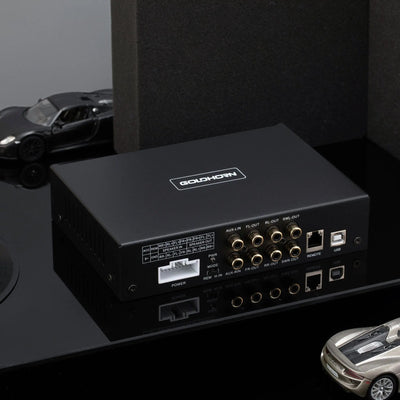
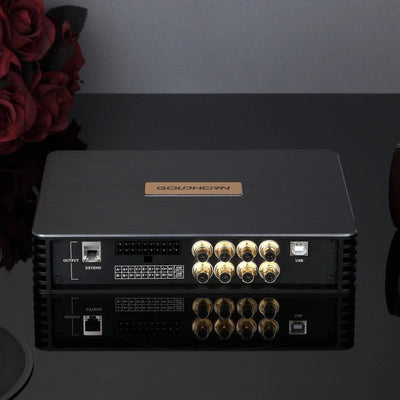
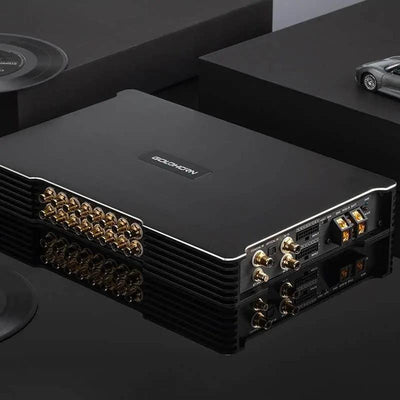
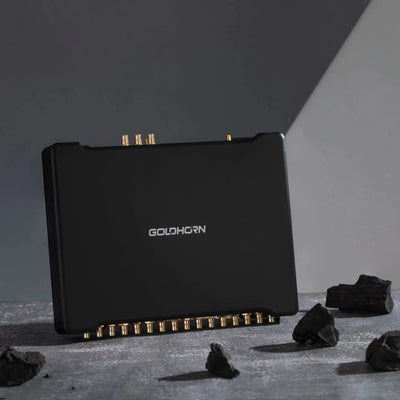
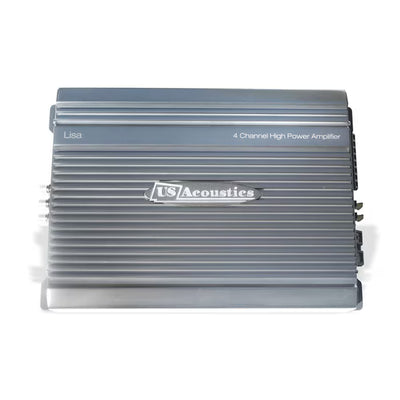
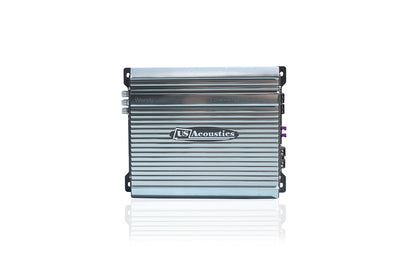
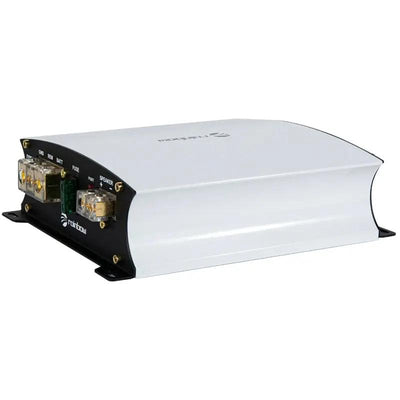
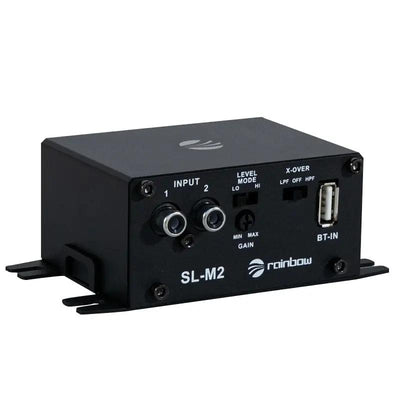
Standalone processors and DSP-amplifiers that tune your system to the car. Time alignment, parametric EQ, and active crossovers from 6 to 24 channels.
A car audio DSP is the highest-value upgrade for sound quality. A digital sound processor corrects time alignment, equalization, and crossover settings for your vehicle's acoustics, so your speakers and subwoofer finally play as one coherent stage. This collection spans standalone processors that pair with your existing amplifiers and all-in-one DSP-amplifiers that combine processing and power, in channel counts from 6 for a factory-retain build up to 24 for a full active competition system. Whether you keep a factory stereo or run an aftermarket source, the right processor is what turns separate components into a tuned system.
Authorized dealer. Full manufacturer warranty. Expert SQ-judge tuning support. Shipped from Tullahoma, TN.
Manufacturer Warranty
Every Goldhorn product carries full coverage. We handle warranty claims directly with the factory.
DSP Tuning Expertise
Factory-trained on DSD playback, channel configuration, and complex crossover setup. Real technical guidance, not sales scripts.
Fast Shipping from TN
In-stock orders ship within 1-2 business days from our Tullahoma, Tennessee warehouse.
Why a DSP Is the Highest-Value Upgrade in Car Audio
Every car is a hostile acoustic environment. Speakers sit at different distances from your ears, reflective glass and plastic skew the response, and factory head units often roll off or pre-equalize the signal. A digital sound processor fixes all three. It applies per-channel time alignment so sound arrives at your ears together, parametric EQ to flatten the cabin response, and active crossovers to send each driver only the frequencies it should reproduce. The result is a centered, accurate stage that no amount of speaker spending can buy on its own.
Audio Intensity stocks standalone processors and all-in-one DSP-amplifiers across the full channel range, every unit new with factory warranty and direct tuning support. Browse the full lineup below, or use the guidance here to match a unit to your system.
Standalone Processors vs DSP-Amplifiers
Standalone DSP
A standalone processor sits between your source and your existing amplifiers. Choose this path when you already run amps you are happy with and only need processing. A standalone unit (typically 8 to 12 channels) drops into an amplified system without replacing your power.
DSP-Amplifier
A DSP-amplifier combines processing and amplification in one chassis. This is the cleaner install for most builds: fewer boxes, less wiring, and a single tuning interface. All-in-one units span 6-channel processors for a factory-retain build up to 24-channel platforms with over 1000 watts on tap for multi-way active systems.
Matching Channel Count to Your System
Channel count determines how many speakers and subwoofers you can control independently. Buy for the system you are building toward, not just the one you have today, because extra channels are what let you go active later without replacing the processor.
If you are retaining a factory stereo, look for high-level (speaker-level) inputs and signal summing, which reassemble a factory-processed signal into a clean full-range source. If you run an aftermarket head unit, low-level RCA or digital inputs are the better path. Pair the processor with the multi-channel amplifiers and component speakers it will tune, and the subwoofer it will time-align, for a fully resolved system.
Frequently Asked Car Audio DSP Questions
What does a DSP do in a car?
A DSP applies time alignment, equalization, and active crossovers to your audio signal. Time alignment delays each channel so sound from every speaker reaches your ears at the same moment, EQ flattens the cabin's frequency response, and crossovers route the correct frequency band to each driver. Together these correct the acoustic problems that limit every car audio system.
Do I need a DSP if I have an aftermarket head unit?
An aftermarket head unit gives you basic EQ and crossovers, but a dedicated DSP offers far finer control: per-channel time alignment, parametric EQ with many more bands, and steeper crossover slopes. If you have invested in good speakers and amplifiers, a DSP is what lets them perform to their potential.
Should I get a standalone DSP or one with a built-in amplifier?
Choose a standalone DSP if you already run amplifiers you want to keep. Choose a DSP-amplifier if you want fewer components, simpler wiring, and a single tuning interface. For most new builds the combined unit is the cleaner and more cost-effective path.
How many channels do I need?
Count the speakers and subwoofers you want to control independently. A factory system plus a sub needs 6 channels, an active 2-way front plus a sub needs 8, an active 3-way front plus a sub needs 10 to 12, and multi-amp competition builds use 16 to 24. Buying a higher channel count leaves room to expand without replacing the processor.
Can I keep my factory stereo and add a DSP?
Yes. Choose a DSP with high-level inputs and signal summing. These take the speaker-level output of a factory amplifier, recombine any split frequency bands into a full-range signal, and give the processor a clean source to work from. It is one of the most common DSP install paths.
Related Collections
Pairs Well With This Collection
Browse curated picks that work with the products above.
Multi-channel and monoblock amplifiers spec'd to receive a processed DSP signal. Clean input stage, configurable gain, and full compatibility with line-level outputs.