A 12 inch subwoofer box is not a passive container. It's an acoustic instrument. The internal volume, port dimensions, baffle thickness, and bracing pattern all determine how the driver performs. Get the enclosure wrong and even a high-end 12 inch subwoofer will underperform. Get it right and the same driver sounds like it cost twice as much.
Audio Intensity manufactures CNC-cut 12 inch subwoofer enclosures in our Tullahoma, Tennessee facility using ShopSabre CNC routers on Langboard Elite MDF (48.5 lb/ft³ density, 200 psi internal bond strength), the highest-grade MDF available for enclosure construction. Every dimension is calculated from the specific driver's Thiele-Small parameters: internal net volume after bracing and baffle displacement, port area, port length, and tuning frequency are all derived from measurement, not approximation. These are not generic "fits most 12 inch subs" boxes. They are built for specific drivers and tuned to perform.
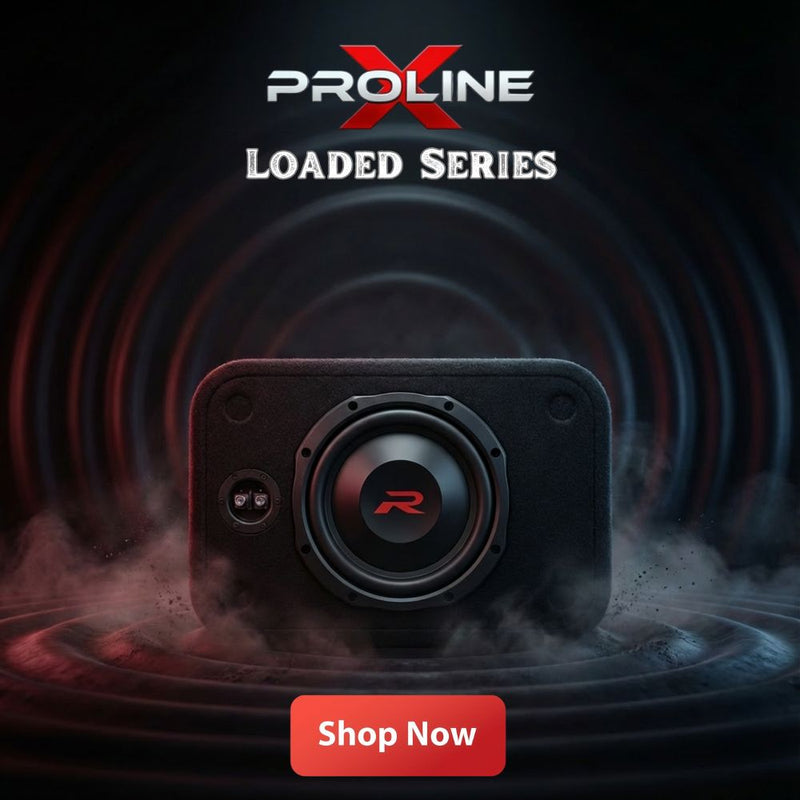
Sealed and ported designs are both available. Loaded enclosures, pre-fitted with a matched subwoofer, are also in this collection for buyers who want a complete, tuned solution without sourcing driver and box separately.
Every Proline X enclosure is manufactured in our Tullahoma, Tennessee facility using materials and construction methods that most enclosure brands don't touch.
Langboard Elite MDF
48.5 lb/ft³ density and 200 psi internal bond strength, the highest-grade MDF available for enclosure construction.
1-Year Warranty
Full coverage on materials and construction defects. We stand behind every enclosure we build.
Driver-Matched Tuning
Internal volume, port tuning, and cabinet dimensions are spec'd to each driver diameter, not a universal fit applied across sizes.
Made in Tullahoma, TN
CNC-manufactured in our Tennessee facility on ShopSabre routers. Not imported. Not outsourced.
The car audio industry has a persistent myth that subwoofer performance is primarily about the driver. The myth says a more expensive subwoofer in any enclosure will sound better than a less expensive one. The reality is more nuanced and, for buyers who understand it, more useful. A correctly tuned enclosure for a mid-tier driver will outperform an incorrectly tuned enclosure for a premium driver almost every time. The box is half the system.
This is why generic enclosures consistently disappoint. A box marketed as "universal fit for 12 inch subwoofers" is built to a price point and a dimensional approximation. It has internal volume somewhere in the range that works for most drivers, port dimensions that produce acceptable output across a range of tuning frequencies, and construction quality adequate for the price. It is not built for any specific driver, which means it is not optimized for any specific driver.
Audio Intensity's approach starts with the driver's Thiele-Small parameters, specifically Fs (free-air resonance), Qts (total Q factor), and Vas (equivalent compliance volume). These three measurements, combined with the driver's Xmax and power handling, define the enclosure parameters that will produce the best performance. Internal net volume is calculated to spec. Port area and length are derived from the target tuning frequency. The baffle is cut to the driver's actual mounting dimensions with a CNC router, not approximated with a jigsaw. The result is an enclosure that performs the way the driver was designed to perform.
Sealed 12 Inch Subwoofer Boxes
A sealed enclosure for a 12 inch subwoofer uses an airtight internal volume to control the driver's rear cone movement. The trapped air acts as a pneumatic spring, increasing the driver's effective stiffness and producing a controlled, accurate bass response with a gradual 12dB per octave roll-off below the system's resonant frequency.
The acoustic result is tight, musical bass that integrates naturally with the front stage. A sealed 12 inch enclosure doesn't call attention to itself. The bass sounds like a natural extension of the music rather than a separate event happening in the trunk. For sound quality builds, daily drivers, and systems where bass accuracy matters more than maximum output, sealed is the right design.
Sealed enclosures are also more forgiving of moderate volume mismatches than ported designs. A box that's slightly larger or smaller than the ideal spec still produces acceptable results with most drivers, which is why sealed is the safer choice when exact Thiele-Small parameters aren't available. That said, Audio Intensity always builds to spec. The forgiving nature of sealed design doesn't mean precision isn't worth pursuing.
Ported 12 Inch Subwoofer Boxes
A ported enclosure adds a tuned port, which is a length of pipe or slot opening, that reinforces output at a specific frequency. At and near the port tuning frequency, the port itself contributes to acoustic output alongside the cone, producing significantly higher SPL than a sealed design at the same power input. Below the tuning frequency, the port unloads the cone and output drops sharply, which is why port tuning frequency is one of the most important design decisions in a ported enclosure.
For a typical 12 inch subwoofer in a daily-use or high-output build, port tuning frequencies between 32Hz and 42Hz produce the best balance of deep extension and output efficiency. Tuning higher, toward 45-50Hz, sacrifices low-frequency extension for more output in the upper bass range, which can sound impressive in a parking lot but thin and hollow in a musical context. Tuning lower, toward 28-32Hz, maximizes sub-bass extension at the cost of upper bass output, which suits SQL competition builds where score is measured at specific low frequencies.
Audio Intensity's ported enclosures for 12 inch subwoofers use large-diameter or slot ports designed to minimize port noise at high excursion. A port that's too small in cross-sectional area produces audible chuffing, which is turbulent airflow through the port, at high volume levels. This is a construction detail that generic enclosures frequently get wrong. Port area is calculated from the driver's maximum excursion and the port velocity limits that produce laminar rather than turbulent flow.
Loaded Enclosures: Driver and Box Together
Several entries in this collection are loaded enclosures, which are specific 12 inch subwoofers pre-mounted in matched enclosures, tuned and ready to install. This format removes the matching process entirely. The driver and enclosure have been selected and tuned together, which means the system performs as designed from the moment it's installed.
Loaded enclosures make sense for buyers who want a complete solution without building a system component by component, for installations where the target driver is already known and the enclosure spec is confirmed, and for competition builds where the driver-enclosure combination has been optimized for specific scoring frequencies. Every loaded enclosure from Audio Intensity uses the same CNC-manufactured construction standards as our standalone boxes. The driver pairing doesn't change the build quality.
Construction Standards
All Audio Intensity enclosures are built from Langboard Elite MDF (48.5 lb/ft³ density, 200 psi internal bond strength), the highest-grade MDF available for enclosure construction. MDF is dimensionally stable, acoustically inert, and dense enough to resist flexing under high excursion at competition power levels. Particle board and thin-wall MDF are not used regardless of cost pressure. Internal bracing is placed at calculated intervals to prevent panel resonance. All joints are glued and fastened. Terminal cups use quality binding posts that accept up to 8 AWG wire for high-current applications.
The CNC manufacturing process means every dimension is repeatable to within 0.005 inches. There is no variation between units of the same model, which means the tuning is consistent and the performance is predictable. This is the difference between manufactured and built. It's the reason Audio Intensity enclosures perform differently than anything assembled by hand to approximate dimensions.
Frequently Asked 12 Inch Subwoofer Box Questions
Is a 12 inch subwoofer box better sealed or ported?
It depends on your priorities. Sealed produces tight, accurate bass with predictable transient response and the smaller cabinet footprint. Ported produces 3 dB more output on average, deeper extension, and more efficient use of amplifier power. For SQ-focused builds and music with detailed bass content, sealed is the right pick. For output-priority builds and bass-heavy content, ported is better. The choice isn't about which is better; it's about which fits your build goals.
What's the right internal volume for a 12 inch subwoofer box?
Volume requirements vary by driver. Most 12 inch sealed enclosures run 1.0 to 1.75 cubic feet net (after displacement of the driver and internal bracing). Most 12 inch ported enclosures run 1.5 to 2.5 cubic feet net plus port volume. Each Audio Intensity 12 inch enclosure product page lists the specific internal volume for that model. The driver manufacturer publishes a recommended sealed and ported volume; matching the enclosure to that recommendation is the most important sizing decision.
Can I run dual 12 inch subs in one enclosure?
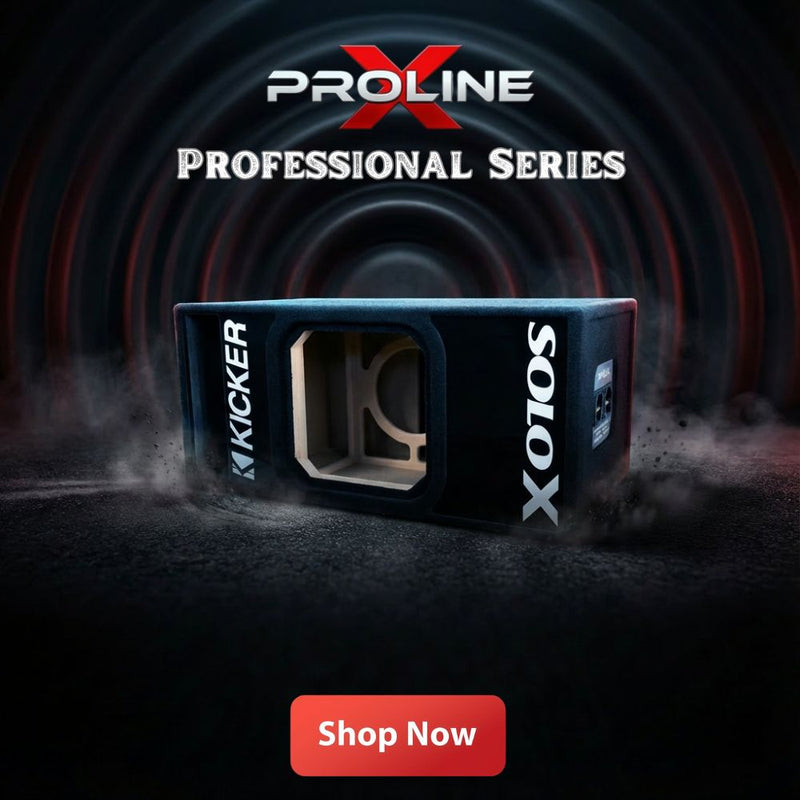
Yes. The dual 12 inch enclosures (E12D-S, P12D-S III-G, P12D-S AX2 Arc Audio matched, P12D-P III-G ported, M12D-S Wav N for Wavtech thinPRO12 loaded) accept two drivers wired in series or parallel depending on amplifier impedance requirements. Two dual 4 ohm 12 inch subs in parallel present a 1 ohm load. Two dual 2 ohm subs in parallel present a 0.5 ohm load (most amps won't handle this). Confirm your amplifier's stable impedance specification before wiring.
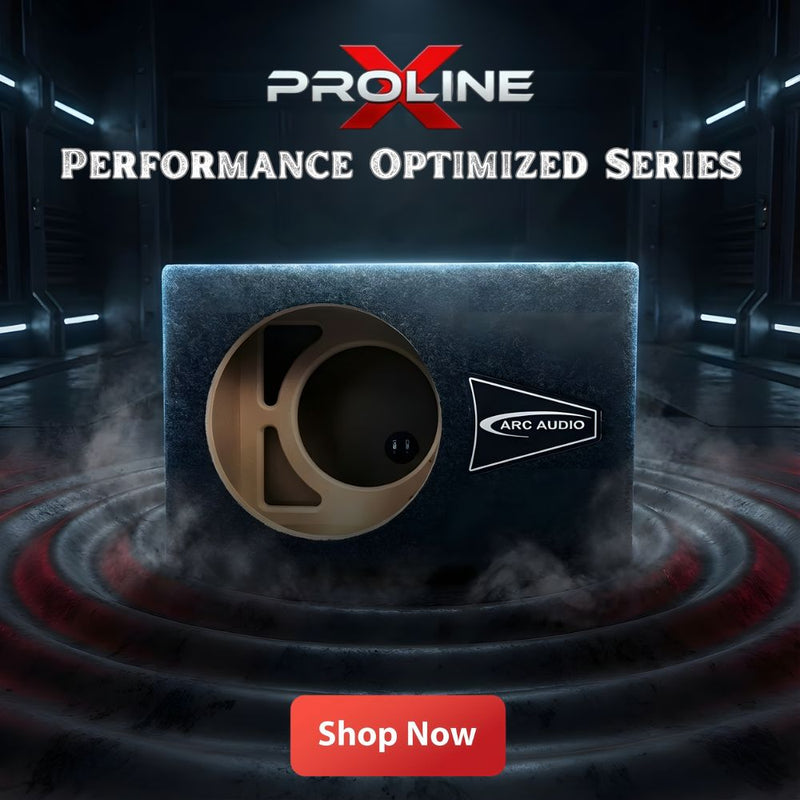
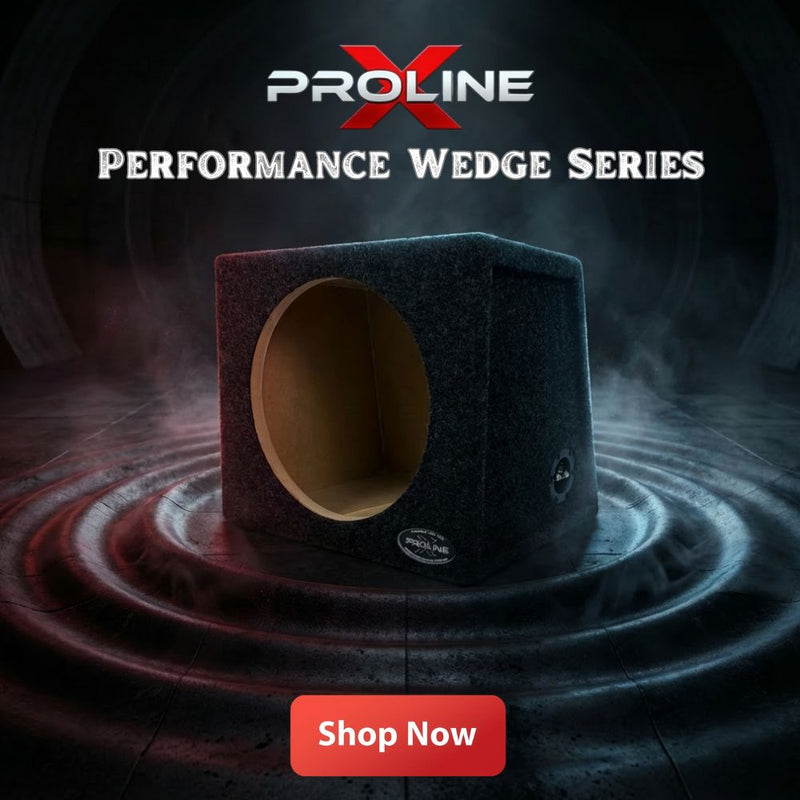
What's the difference between Performance and Performance Optimized 12 inch?
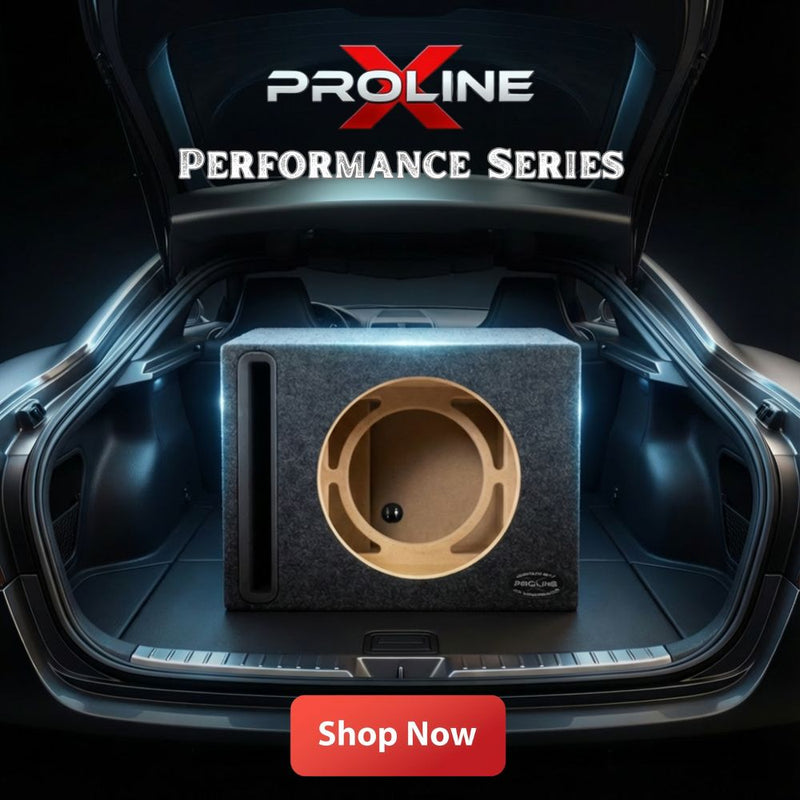
Performance Series 12 inch enclosures are universal-fit, with internal volume calculated for the typical 12 inch driver in the standard Qts range. Performance Optimized 12 inch enclosures are tuned to specific driver models (Arc Audio, JL Audio W0/W1/W3) using the driver's published Thiele-Small parameters. The Performance Optimized series produces more output and tighter alignment with the matched driver. The Performance Series gives flexibility to use any driver in the size class.
What port tuning frequency should I use for a 12 inch ported box?
For daily-use musical builds, port tuning between 32Hz and 38Hz produces the best balance of deep extension and upper bass output. For SQL competition builds, tuning shifts toward 38-45Hz to maximize output in the scored frequency range. For extreme sub-bass builds with content below 30Hz, tuning below 30Hz extends reach but requires careful subsonic filtering. The tuning frequency should be driven by the driver's characteristics and listening goals, not a generic default.
What amplifier do I need for a 12 inch sub?
Match the amplifier's RMS output at your wired impedance to the driver's RMS rating. Most 12 inch subs run 500-1500W RMS depending on the model. A monoblock amplifier matched to the driver at the final wired impedance is the standard approach. Sealed alignments need slightly more power than ported to reach the same SPL. Always include a subsonic filter set 10Hz below t
Drivers Built to Match
Subwoofers Spec'd for These Enclosures
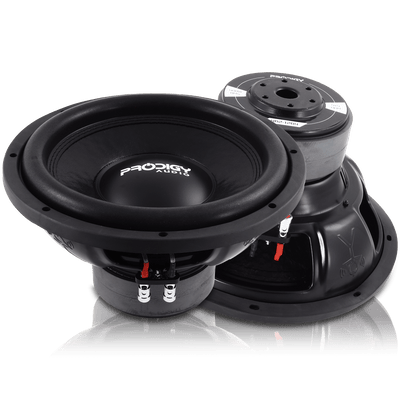
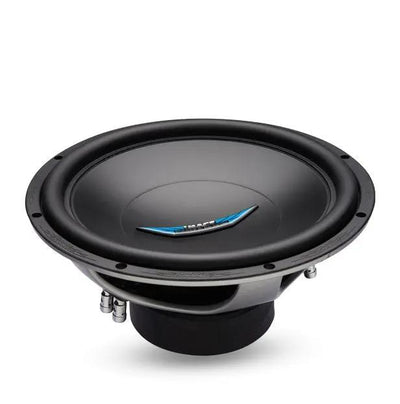
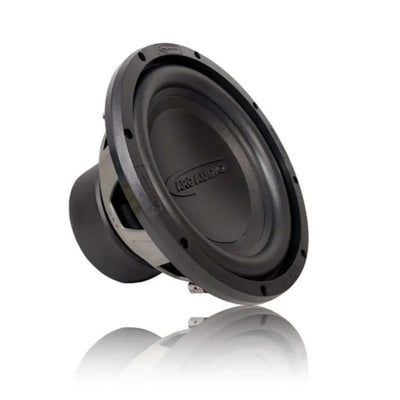
The drivers below are matched to the enclosures above by Thiele-Small parameters. Buying together guarantees the alignment, port tuning, and damping work the way the engineering intended.
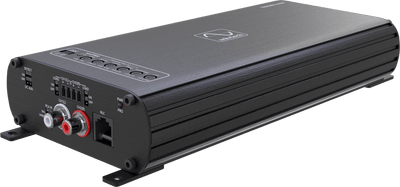
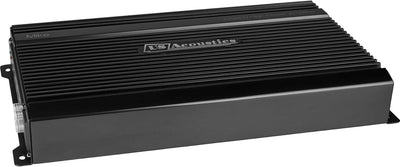
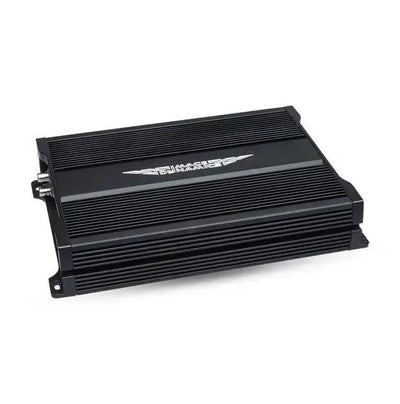
Monoblock amplifiers matched to the power requirements of the drivers these enclosures are built for. Buy the enclosure, match the driver, pick the right amplifier.