

Key Takeaways
- One channel per independently amplified speaker. A passive component set takes one channel per side. An active two-way takes two.
- A 2 channel amp runs a front stage, or bridges to one subwoofer. A 4 channel runs front and rear, or a front stage plus a bridged sub on channels 3 and 4.
- Four speakers is not automatically better than two. On nearly every sound quality build we tune, a front stage plus a sub beats front-and-rear.
- Monoblock is subwoofer only. A 5 channel is a whole system in one chassis. 6 and 8 channel amps exist for fully active front stages.
- Two amps beat one when the speaker side and the sub side want different power tiers, different mounting, or separate upgrade paths.
A 2 channel amp and a 4 channel amp do the same thing to a speaker. The difference, across every car amplifier we stock, is how many speakers each one can do it to independently, and that number is not a matter of taste. It is arithmetic, and it takes about thirty seconds.
Almost every page comparing these two treats it as a preference question, then lists pros and cons until you are no closer to an answer. Count the speaker positions you want amplified separately, add one for the subwoofer, and the channel count reads itself off the list. Here is how to run that count, and where monoblock, 5 channel and 6/8 channel amps land once you have. When you are ready to buy, browse 2 channel amplifiers and 4 channel amplifiers.
What is actually different between a 2 channel and a 4 channel amp?
Per channel, nothing meaningful. Same amplifier class, same output topology, same gain structure, same crossover section. A single channel of a good 4 channel amp behaves like a single channel of the same maker's 2 channel amp.
What changes is the number of independent outputs, and that changes which configurations are open to you. A 2 channel amp gives you two speaker positions, or one bridged mono output. A 4 channel gives you four positions, two bridged outputs, or the split that most people should actually be using: two channels on the front stage and channels 3 and 4 bridged to a sub.
Bridging is the part worth understanding, because it is what makes channel count flexible rather than fixed. Bridging ties two channels together in opposing phase to drive one load, and it halves the amplifier's minimum stable impedance in the process. A 2 ohm stable stereo amp is 4 ohm stable bridged. That constraint is why you cannot simply bridge your way out of every channel shortage.
| Configuration | 2 channel | 4 channel |
|---|---|---|
| Two speakers, stereo | Yes | Yes, two channels unused |
| Four speakers, front and rear | No | Yes |
| One subwoofer, bridged | Yes | Yes |
| Front stage plus bridged sub | No | Yes |
| Active two-way front stage | No | Yes |
Read that table and the answer to the headline question is already visible. A 4 channel does everything a 2 channel does and three things it cannot. The only arguments left for a 2 channel are cost, physical size, and the fact that a 2 channel at a given price usually delivers more watts per channel than a 4 channel at the same price.
How many channels do you need? Count the zones.
One channel per speaker you want to control independently. That is the entire rule, and everything below is just applying it honestly to your own build.
Start with the front stage, because that is where the sound quality lives. A passive component set, where the crossover box splits the signal between tweeter and woofer, needs one channel per side. Two channels total. An active two-way, where a DSP handles the split and each driver gets its own amplifier channel, needs two per side. Four channels total.
That single decision is worth more than any other on this page. Passive versus active is what moves a build from a 4 channel to a 6 channel, and it has nothing to do with how many speakers are in the car. If you are still deciding, our guide to component versus coaxial speakers and our car audio crossover guide cover the split properly.
Then add the subwoofer. One channel, always, whether that is a dedicated monoblock or a bridged pair on a multi-channel amp. Subwoofer content below roughly 80 Hz is not directional enough for stereo to buy you anything, which is why subs run mono.
Rear speakers are last, and they are optional in a way most buying guides refuse to say out loud. Rear fill should reproduce front content at a reduced level to soften the back wall. It is not a second front stage. If you are chasing imaging, rear fill often works against you, and the two channels are better spent going active up front.
Run your own build through that list. Most people who arrive at this question thinking they need four channels are describing a three-zone system, and a three-zone system is a 4 channel amp with two of its channels bridged, not a 4 channel amp running four speakers.
When is a 2 channel amp the right call?
Two situations, and both are more common than the internet suggests. The first is a front stage and nothing else. The second is one subwoofer running off a bridged pair.
The front-stage-only build is the one people underrate. Two channels on a good passive component set, factory rears left on head unit power or disconnected entirely, no sub yet. That is a real system, and it images better than the same money spread across four doors. Everything you hear as soundstage is happening in front of you.
The second case is the add-a-sub build. Bridge a 2 channel amp into one subwoofer and you get roughly double the per-channel power into a single mono load, which is the standard way to power one sub without buying a dedicated monoblock. The wiring is straightforward, and our step-by-step guide to bridging a 2 channel amp covers the terminal pairs and the impedance math.
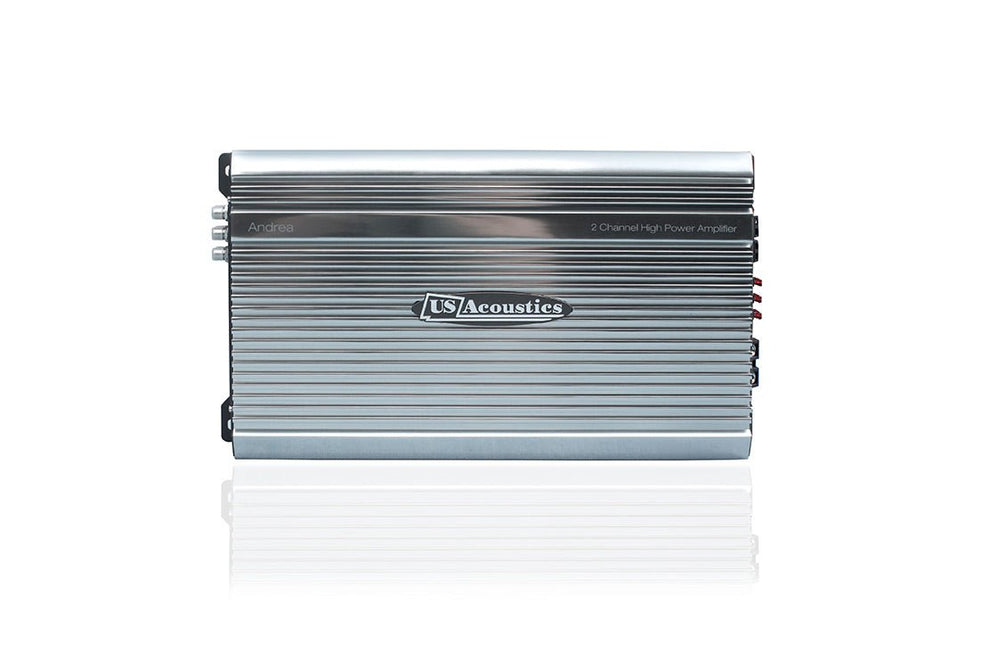
There is a genuine spec advantage here too. At a given price point, a 2 channel usually delivers more CTA-2006 rated watts per channel than a 4 channel, because the same power supply is feeding half the outputs. Compare the two on rated RMS at the same impedance and the gap is real. Compare them on peak numbers and you are comparing marketing. Our 2 channel amplifiers run from the US Acoustics Wendy at 2 x 75 watts for $159.99 up through the Andrea at 2 x 150 watts, and the Class D Arc Audio Nighthawk when you want the output in a smaller chassis.
When is a 4 channel amp the right call?
Three configurations justify a 4 channel, and only one of them involves four speakers.
Front stage plus a bridged sub
Channels 1 and 2 run the front components, channels 3 and 4 bridge into one subwoofer. This is the single most useful thing a 4 channel amp does, it covers a complete three-zone system on one chassis, and it is what most people asking this question actually want. Our guide to bridging a 4 channel amp walks the terminals and the stable impedance.
An active two-way front stage
Channels 1 and 2 drive the tweeters, channels 3 and 4 drive the midbass, and a DSP handles the crossover instead of a passive network. More tuning control, more output, and a hard prerequisite: you need a processor. Our guide to what a DSP does explains whether your source can support it.
Four full-range speakers
Front and rear, all four doors amplified. This is the configuration everyone assumes a 4 channel is for, and it is the weakest of the three for sound quality. It earns its place in a truck or a family SUV where the back seats are occupied and everyone should hear something.
A word on heat, because it comes up. Bridging works the output stage harder than stereo operation, and a 4 channel with two channels bridged into a low impedance load runs warmer than the same amp in four-channel stereo. Give it airflow, do not bolt it face down under a carpeted floor, and confirm the bridged minimum impedance in the manual before you wire it. Arc Audio and Wavtech both publish bridged power and minimum bridged impedance in their datasheets rather than leaving you to guess.
Our 4 channel amplifiers start with the US Acoustics Lisa at 4 x 50 watts for $159.99, step up to the Barbara Ann at 4 x 100 watts, and top out with the Crescendo Revolution series for builds where the front stage is the whole point.
Where do monoblock, 5 channel and 6/8 channel amps fit?
Once you are counting zones rather than comparing spec sheets, the rest of the ladder is obvious. Each channel count exists to serve a specific system shape, not to be a better or worse version of the one below it.
| Amp | What it is for | Typical build |
|---|---|---|
| Monoblock | Subwoofer only, one channel, low impedance stable | Any build with a sub that is not sharing an amp |
| 2 channel | Front stage, or bridged to one sub | Front stage only, or add-a-sub |
| 4 channel | Front and rear, or front plus bridged sub, or active two-way | The default for a complete first system |
| 5 channel | Four speakers plus a dedicated sub channel, one chassis | Front, rear and sub with one power run |
| 6 and 8 channel | Fully active front stages, three-way and up | Competition and serious sound quality builds |
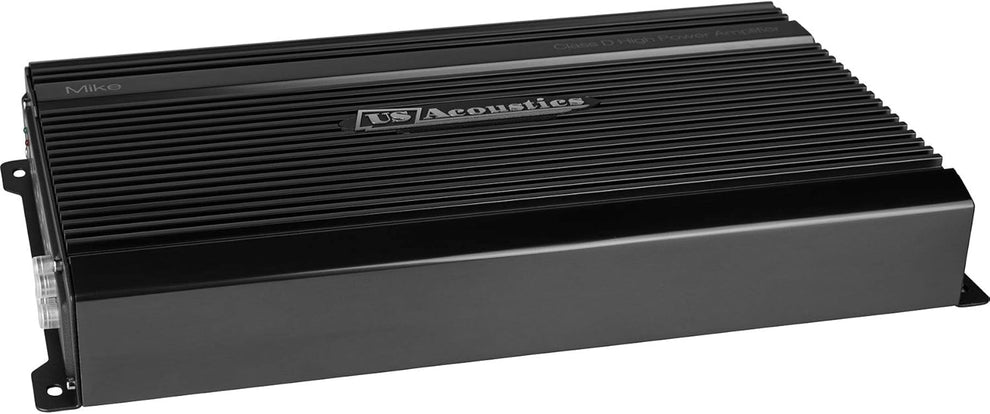
The monoblock deserves its own line because it is the only amp on the list that is not a compromise at what it does. It is built for one load, it is stable to impedances a full-range amp will not touch, and its filter section assumes low-pass duty. Our monoblock range spans the US Acoustics Mike through the Image Dynamics SQ1200.1D and the Arc Audio X2 650.1.
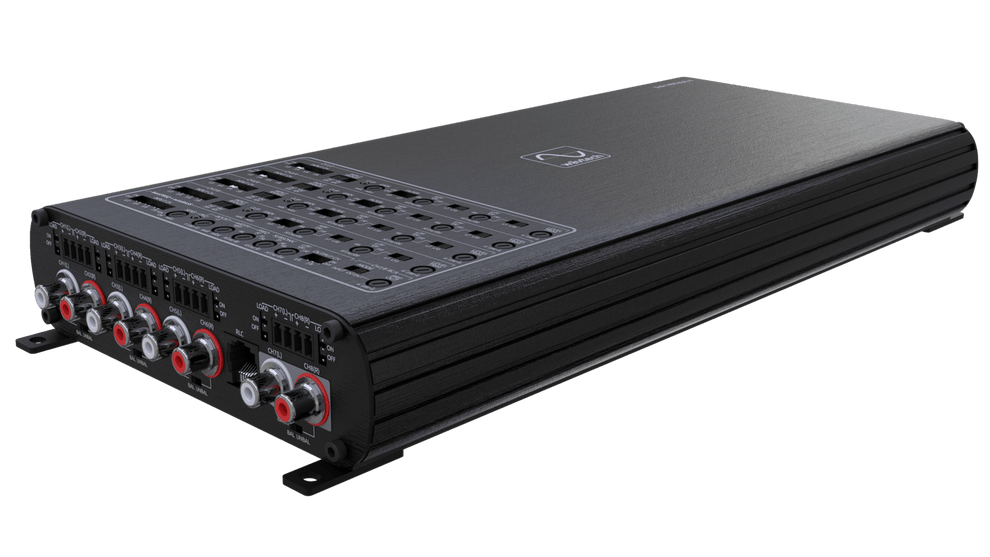
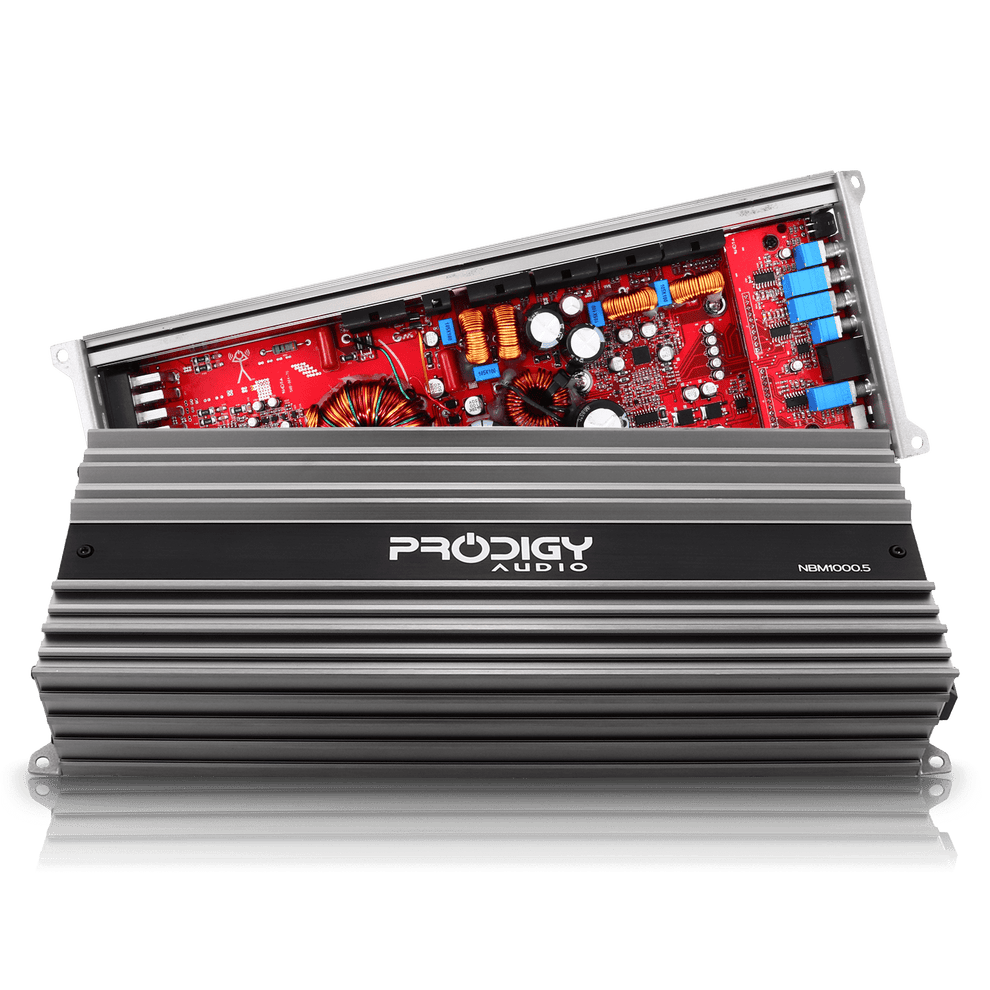
The 5 channel is the packaging answer. Four speaker channels and a dedicated sub channel in one box, one power run, one ground, one remote wire. The Prodigy Audio NBM1000.5 at $387.99 and the Wavtech link1000.5plus both do exactly that job.
Six and eight channel amps are the fully active tier. A three-way active front stage is six channels before the sub is even connected, which is why a 6 channel like the US Acoustics Lanna at 6 x 150 watts exists, and why an eight channel exists past that.
Worth knowing before you shop this tier: many 6 and 8 channel units are DSP amplifiers, with the processing built in. The Goldhorn DSPA 206 pairs a 6 channel DSP with four amplified outputs, which is a different product from a 6 channel power amp even though the channel count matches. Audio Intensity is the original US importer for Goldhorn, and we tune these in the shop.
5 channel amp vs 2 amps: when does two beat one?
One 5 channel amp and a 4 channel plus a monoblock cover the same five zones for roughly the same money. The honest answer is that the split wins on flexibility and the single chassis wins on install, and which matters more depends entirely on what you plan to do next.
Two amps win in four situations. When the speaker side and the sub side want different power tiers, and a 5 channel forces you to buy both at whatever ratio the manufacturer chose. When the install needs physical separation, because a hot subwoofer amp and a full-range amp sharing a sealed false floor is a thermal problem. When you want to upgrade one zone later without replacing the other. And when a failure in one zone should not silence the whole system.
There is a power supply argument too, and it is real but smaller than forum threads make it. A 5 channel shares one supply across all five outputs, so a heavy bass passage and a loud front stage are drawing from the same rail at the same moment. Two amps have two supplies and two fuses. On a modest system you will not hear it. On a system running the sub hard, you may.
The single chassis wins on everything install-related. One power run, one ground, one remote lead, one place to mount, one set of gains to reference against each other. If you have ever tried to find mounting space in a modern sedan trunk with a spare tire well and no flat panel, that matters more than it sounds. Our multi-amp system configuration guide covers distribution blocks, shared grounds and gain matching when you go the two-amp route.
The version of this question we get most often at the shop is someone who already owns a monoblock and is deciding what to add. In that case it is settled. Buy the 4 channel, keep the sub amp you have, and skip the 5 channel entirely.
So which one should you buy?
Match your build to the row and stop reading. The count you did earlier is the answer, and no amount of spec comparison changes it.
| Your build | Buy this |
|---|---|
| Adding a subwoofer to an otherwise stock system | Monoblock, or a bridged 2 channel |
| Front components only, no sub yet | 2 channel |
| Front components and one subwoofer | 4 channel, channels 3 and 4 bridged |
| All four doors, no sub | 4 channel |
| All four doors and a subwoofer | 5 channel, or a 4 channel plus a monoblock |
| Active two-way front and a subwoofer | 4 channel plus monoblock, with a DSP |
| Active three-way front and a subwoofer | 6 or 8 channel plus a monoblock |
If two rows fit and you cannot decide, buy the higher channel count. An unused channel costs you nothing and leaves the next upgrade open. Discovering you are two channels short after the carpet is back down costs you a weekend.
One caution in the other direction. Do not buy a 4 channel to run four speakers when what you actually wanted was a better front stage. Two good channels into a good component set will beat four channels into four average speakers every time, and it is the mistake we correct most often when someone brings in a system that measures fine and still does not sound right.
Frequently Asked Questions
Which is better, a 2 channel or a 4 channel amp?
How do I compare power between a 2 channel and a 4 channel amp?
Can I run 4 speakers off a 2 channel amp?
What is a 2 channel amp good for?
Is a monoblock better than a 2 channel amp for a subwoofer?
How many channel amp do I need for 4 speakers?
Should I buy a 5 channel amp or two separate amps?
Do I need a 6 or 8 channel amp?
Get the channel count right the first time
We spec amplifiers the same way we cut enclosures: working from what you already own and what the vehicle allows, not from a category page. Send us your speaker model numbers, whether you are running passive or active, what your subwoofer situation is, and what head unit you are keeping.
We will tell you the channel count, whether one chassis or two makes more sense for your install, and what to run for power and ground. Contact us or call 931-563-5151 and talk to an SQ-judge tech. Browse the full range of car amplifiers, or start with the complete car audio amplifier guide if you are still working out power and gain.
About the Author
Scott Welch is a Multi Time IASCA National and MECA World Sound Quality Champion, an active SQ judge since 2019, and the owner of Audio Intensity in Tullahoma, Tennessee. He cuts every Proline X enclosure on the shop's CNCs and tunes every customer system before it leaves. Audio Intensity is the original US importer for Goldhorn DSP and an authorized dealer for Prodigy, Crescendo, Image Dynamics, Wavtech, Tru Technology, and more.


