
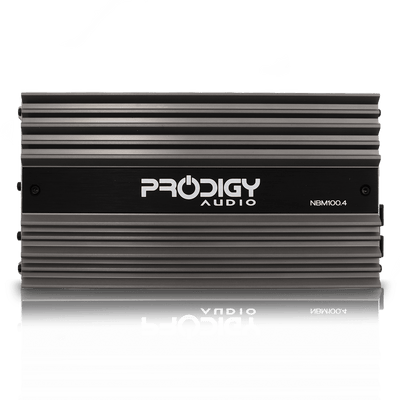

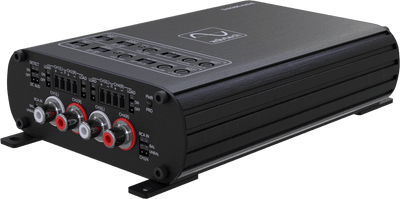
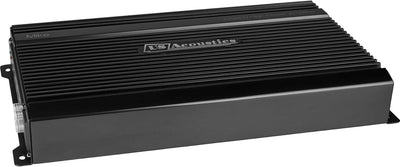

Class A Car Amplifiers: The Gold Standard in Sound Quality
Class A amplifiers are known for excellent sound quality, providing clear and detailed audio. The...
Read Article →

Class AB car amplifiers across monoblock, 2-channel, 4-channel, and 6-channel configurations from $159 to $39,999.99. The working topology for SQ-focused builds.
Authorized Dealer
Every amplifier is brand new with the full manufacturer warranty.
Power Matching
Send us your subwoofer or speaker specs. We'll recommend the right amplifier at the right impedance before you buy.
Hands-On Expertise
Direct support from staff who designs, builds, and competes with these systems. Honest recommendations, not upsells.
Fast Shipping from TN
In-stock orders ship within 1-2 business days from our Tullahoma, Tennessee warehouse.
Decision Shortcut
Curated picks matched to common build goals
Best Entry Class AB
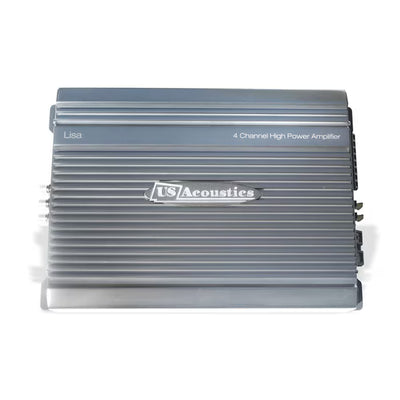
US Acoustics
4-channel 4x50W Class AB at $159.99. The accessible entry into Class AB amplification.
$ 159.99
View DetailsBest SQ Mid-Tier
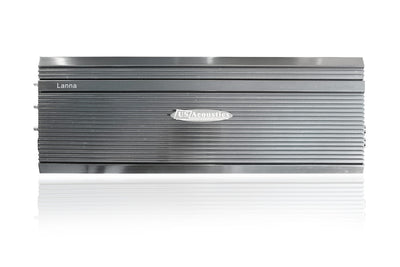
US Acoustics
6-channel 6x150W Class AB at $695. The practical 6-channel for active 3-way builds at an accessible price tier.
$ 695.00
View DetailsBest US-Built Audiophile
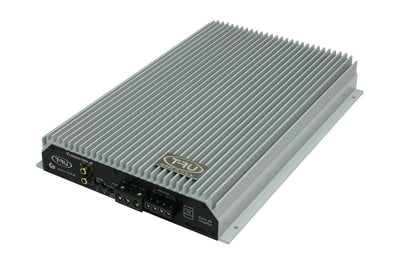
Tru Technology
US-built reference Class AB 2-channel at $2,399.99. The audiophile front-stage choice with no topology compromise.
$ 2,399.99
View DetailsBest Audiophile Monoblock
Tru Technology
Class AB monoblock at $1,999.99. The reference Class AB sub-channel amp at the practical audiophile tier.
$ 1,999.99
View DetailsBest Reference 2-Channel
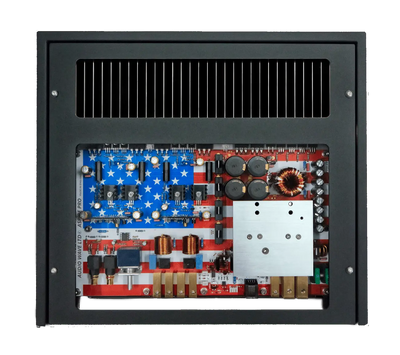
Audio Wave
Class AB 2-channel at $7,999.99 on sale from $8,999.99. The audiophile reference for dedicated front-stage builds.
$ 7,999.99 $ 8,999.99
View DetailsBest Reference Flagship
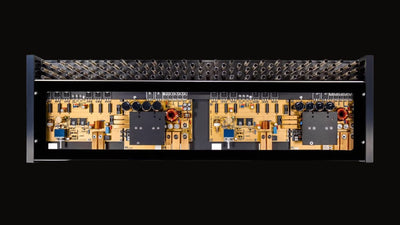
Audio Wave
Dual Mono Class AB at $39,999.99. The absolute top of car audio amplification across any topology.
$ 39,999.99
View DetailsAll products loaded
Class AB runs two output stages that hand off between the positive and negative halves of the waveform, with a bias current holding both partially conducting at all times. That bias is the whole point: it removes the crossover distortion a pure Class B design produces at the handoff, without paying Class A's price of conducting continuously whether there is signal or not.
What it costs is efficiency. Class AB runs at roughly 50% to 65%, so a third to a half of what it draws leaves as heat. That means a bigger chassis, real ventilation, and more current from the alternator than a Class D amp of the same rated power. What it buys is the linearity that sound-quality builders keep coming back to on a front stage.
This is not a good-versus-bad question, and anyone telling you Class D is a compromise has not listened to a modern one. They are different trades.
| Class AB | Class D | |
|---|---|---|
| Efficiency | Roughly 50% to 65% | Roughly 80% to 90% |
| Heat | Real. Plan ventilation and chassis space | Low |
| Size at equal power | Larger | Smaller |
| Alternator draw | Higher | Lower |
| Where it earns its keep | Full range, front stage, critical listening | Subwoofer duty and installs with no room |
| Pick it when | The front stage is the point of the build | Space, heat or alternator headroom decides it |
Plenty of good systems run both: Class AB on the front stage, Class D on the sub. See Class D amplifiers, the reference tier in Class A amplifiers, or the full amplifier lineup.
Reference builds where Class A is impractical. Class A conducts continuously, which is why it measures the cleanest and why it needs a high-output alternator, battery capacity and dedicated cooling to live in a car. Class AB gets you linear amplification without redesigning the electrical system around it. The Audio Wave Aspire Pro USA and CR 401 Dual Mono sit at that ceiling.
Matched topology across a multi-amp system. Running one topology from front stage to sub keeps the character consistent end to end. Tru Technology is the line that makes this easy: Tungsten and Tungsten Grande both come as monoblock, 2-channel and 4-channel, so the whole rack can match.
Full-range speaker duty. A subwoofer works a narrow band. A front stage works 80Hz to 20kHz, through the midrange and treble where the ear is least forgiving. That is where topology choice actually shows up, and it is why the common SQ layout is Class AB on the components and Class D on the sub.
Competition. We judge IASCA and MECA and we compete in our own truck. The front stages that score at the top run Class AB or Class A.
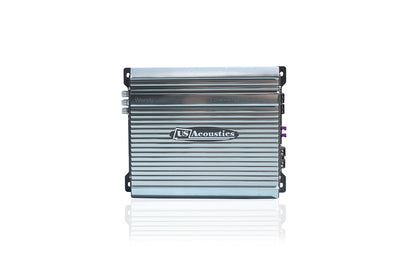
US Acoustics Lisa, 4-channel at 4 x 50W ($159.99). The accessible way into 4-channel Class AB, and the right answer for putting proper power on factory speakers. Wendy, 2-channel at 2 x 75W ($159.99), does the same job for a dedicated front stage. Andrea, 2-channel at 2 x 150W ($289.99), steps the per-channel power up for higher-output components. Barbara Ann, 4-channel at 4 x 100W ($399.99), handles most aftermarket component sets cleanly. See the full US Acoustics lineup.
Crescendo Revolution 3A4, 4-channel ($499.00) and 5A4, 4-channel ($779.99). US Acoustics Lanna, 6-channel at 6 x 150W ($695.00), is the practical entry to an active three-way, which normally costs a lot more to get into. Crescendo Revolution 5A1 ($749.99) is the odd one and the interesting one: a Class AB full-range monoblock holding 450W at 4, 2 or 1 ohm, where nearly every other monoblock on the market is Class D. See Crescendo amplifiers and 6-channel amps.
Tru Technology Tungsten in 2-channel and 4-channel (both $1,399.99), then Tungsten Grande as monoblock ($1,999.99), 4-channel ($2,399.99) and 2-channel ($2,399.99). US-built, and the reason to buy into the line is that it covers every channel count at one topology. Crescendo Revolution 7A4, 4-channel ($1,699.99), is the SQ pick of the Revolution line. See Tru Technology.
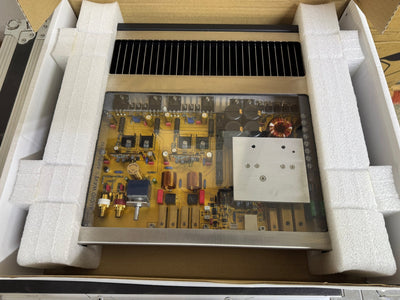
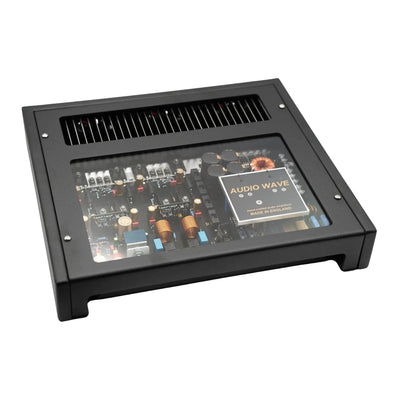
Active 250, full-range monoblock ($2,499.99). Excel, 2-channel ($2,600), and Excel Monoblock, full-range ($3,099.99). Aspire Pro USA, 2-channel ($7,999.99, marked down from $8,999.99), and the Aspire Pro USA Monoblock ($8,999.99) for a matched pair. The Aspire Pro 6 Channel is a previous demo at $21,999.99 against $29,999.99, and it is the last one. At the top, the CR 401 Dual Mono ($39,999.99). See Audio Wave amplifiers.
If you are running an active front stage, the DSP lineup does the crossover work these amps would otherwise be guessing at. And whatever you buy, gain is what protects it: how we set amplifier gain.
Class AB is linear amplification with a bias current that eliminates crossover distortion, and it runs at roughly 50% to 65% efficiency. Class D uses a switching output stage to reach roughly 80% to 90%, which means less heat, a smaller chassis and less draw on the alternator. Modern Class D from a good manufacturer is transparent and appropriate for any application, including critical listening. The practical split most SQ builds land on is Class AB on the front stage and Class D on the subwoofer, where the narrow band and the current demand favor it.
Class A conducts continuously across the whole waveform, which produces the lowest distortion available and roughly 20% to 25% efficiency. In a car that means serious heat, serious current draw, and usually an alternator and battery to match. Class AB uses bias current to get linear behavior through the handoff while letting the idle stage draw far less, which is what makes it livable in a vehicle. If your install cannot support Class A, Class AB is the architecturally correct choice.
Match the amplifier's RMS per channel to your speakers' RMS rating, ideally 75% to 150% of it. Components rated 75W to 100W RMS are well matched by 75 to 150 watts per channel. Audiophile-tier drivers with higher ratings want 150 to 250 watts per channel. Underpowering causes clipping at volume, and clipping is what damages speakers.
More than Class D, less than Class A. At 50% to 65% efficiency, roughly a third to a half of what the amp draws leaves as heat, which is why Class AB chassis are larger than Class D equivalents at the same rated power. Normal install practice with real ventilation handles it. Unlike Class A, it does not usually force an electrical system rebuild, though anything over about 500W RMS total still wants the Big 3 done.
Yes, most 2-channel and 4-channel Class AB amps bridge. For a permanent subwoofer a purpose-built Class AB monoblock does it better, because the circuit is built for the high-current low-impedance load a sub presents. The Tru Technology Tungsten Grande Monoblock, Audio Wave Excel Monoblock and Crescendo Revolution 5A1 are the Class AB monoblocks here.
Yes, with one exception. The Audio Wave Aspire Pro 6 Channel is a previous demo unit at closeout pricing and is labeled as such on its product page. Every other amplifier in this collection is brand new, sold by an authorized dealer, and carries the full manufacturer warranty. We handle warranty claims directly with the brand.
Yes. Send us your speaker specs (RMS power, impedance) and your build layout and we will recommend the right Class AB amp for it. Pre-purchase consultation is free. We would rather spend 15 minutes confirming the match than have you return a mismatched amplifier.
Related Collections
Browse curated picks that work with the products above.

Audio Wave
$ 3,499.99
Audio Wave
$ 6,999.99 $ 11,999.99

Tru Technology
$ 8,500.00
Audio Wave
$ 10,999.99
Related Collections
Browse curated picks that work with the products above.
Related Collections
Browse curated picks that work with the products above.
US Acoustics
$ 159.99
US Acoustics
$ 159.99
Rainbow
$ 197.50 $ 399.99
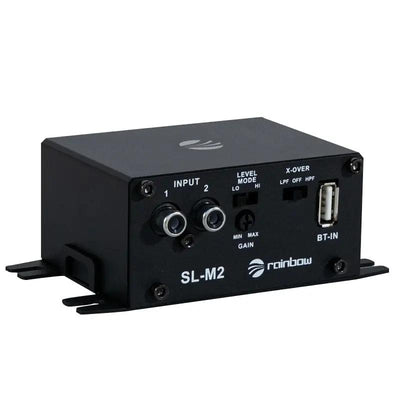
Rainbow
$ 199.99 $ 549.99
Speakers Worth Amping
Speaker systems that respond to clean amplifier power. The amplifiers above have the headroom; these components have the resolution to use it.


