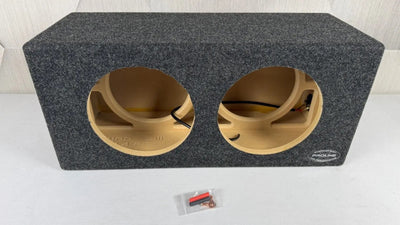
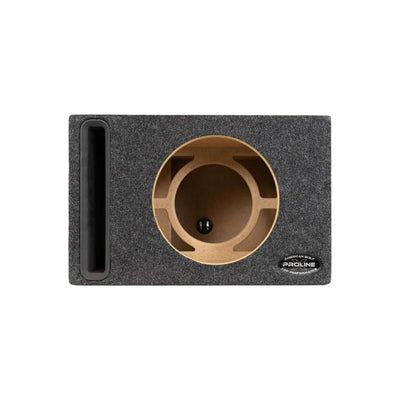
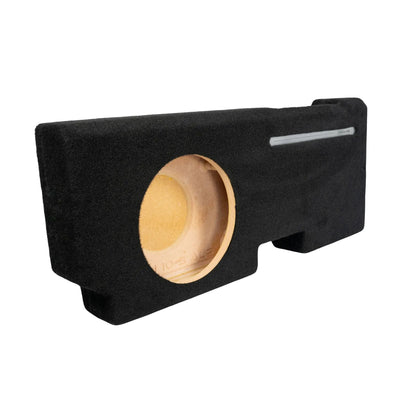
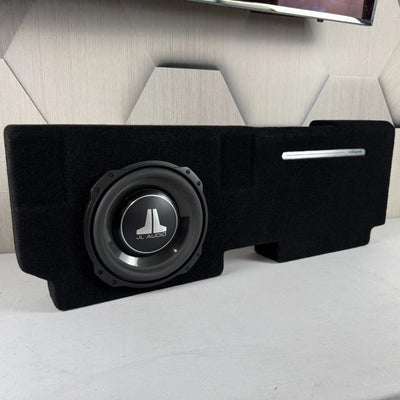
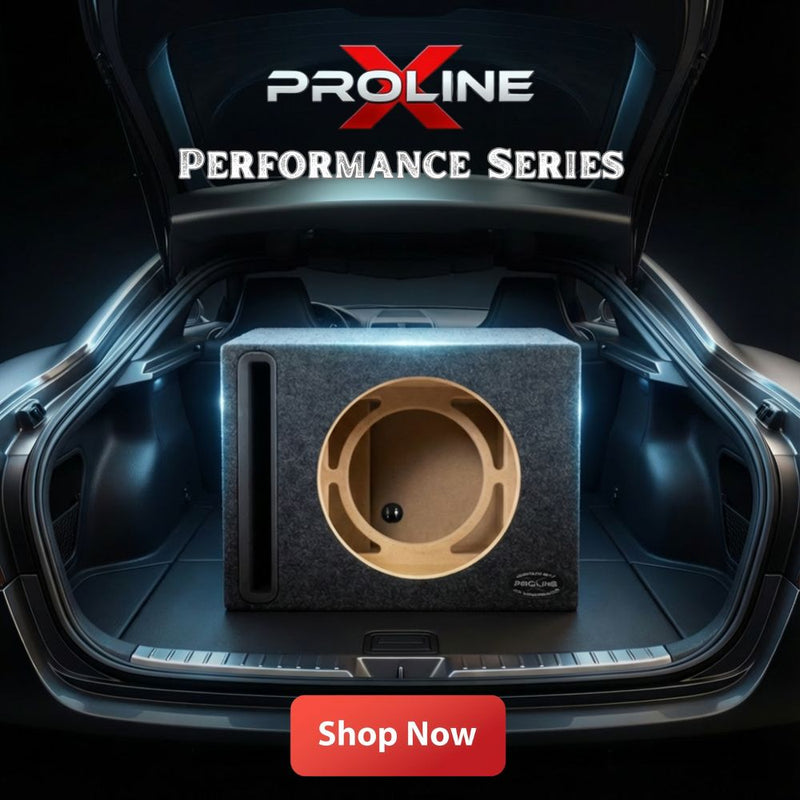
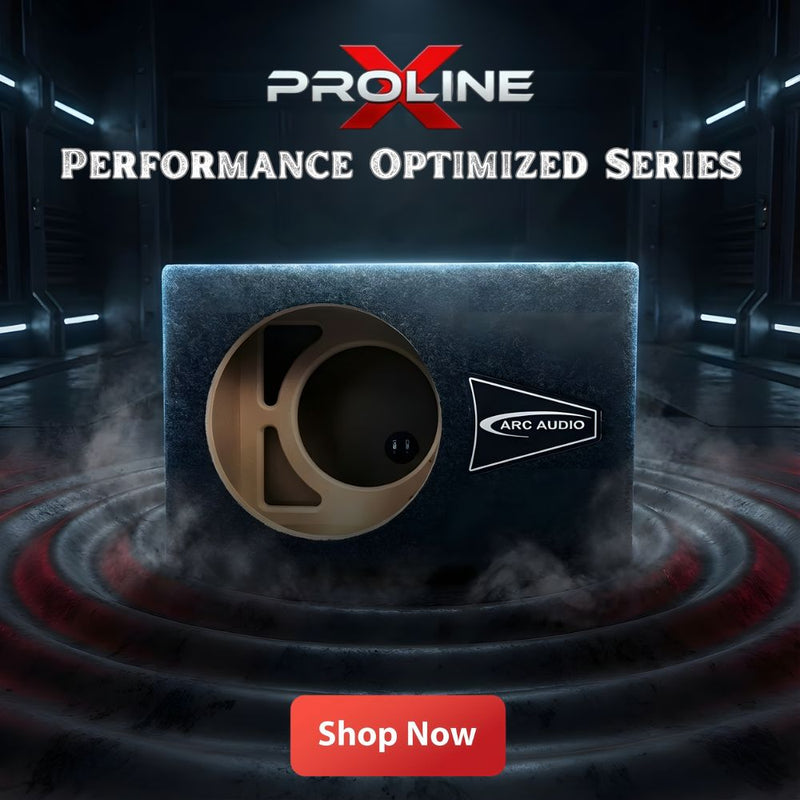
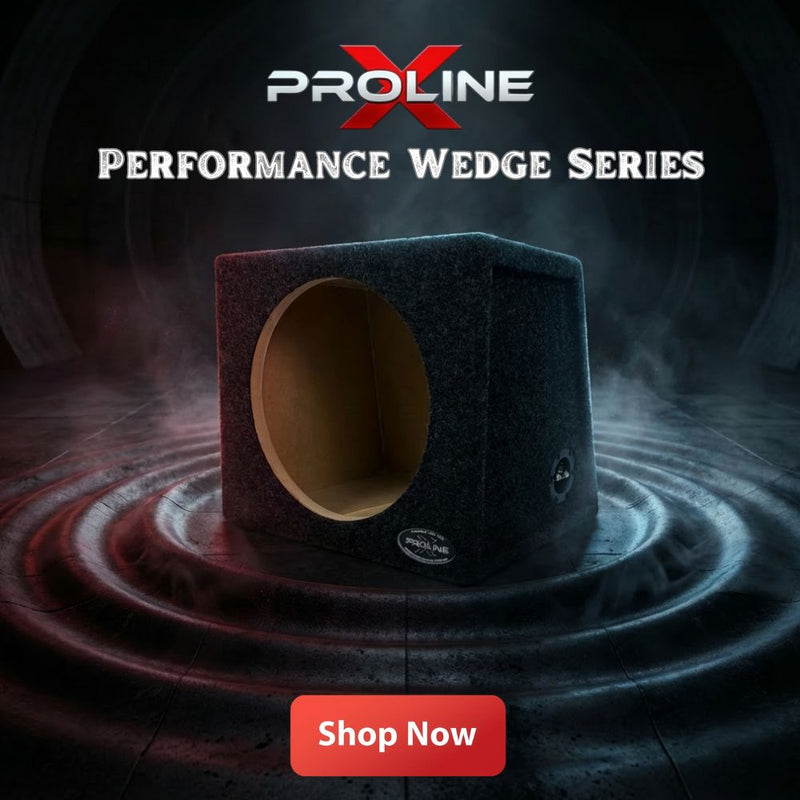
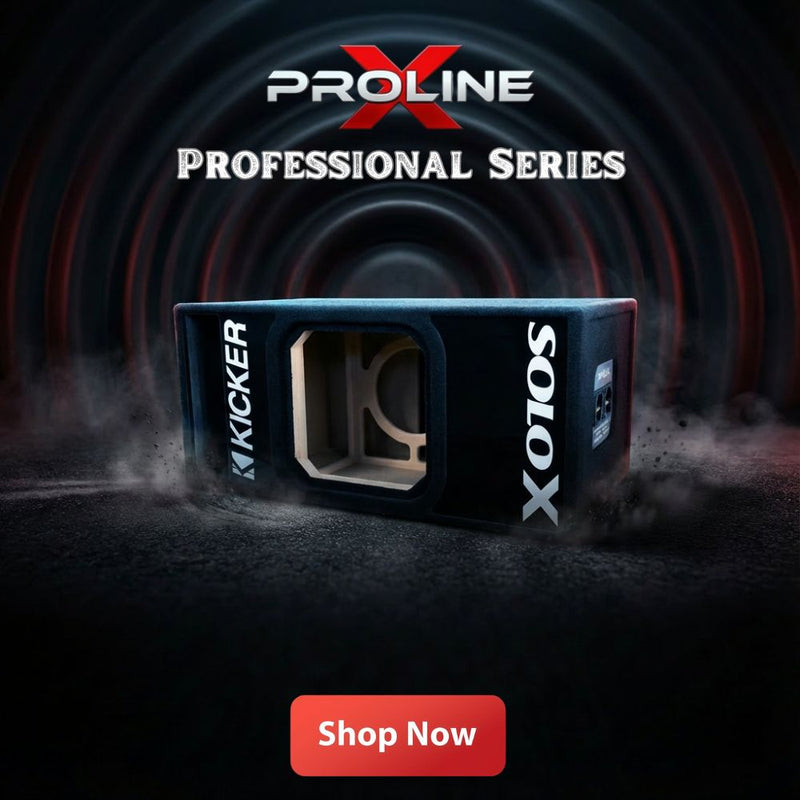
The 10 inch subwoofer box is the most-shopped enclosure size in vehicle audio for one reason: it produces deep bass with usable output in a cabinet that fits where larger enclosures don't. Audio Intensity 10 inch subwoofer enclosures are CNC-cut from Langboard Elite MDF in our Tullahoma, Tennessee facility, available in sealed and ported configurations across single and dual driver layouts. The collection includes universal-fit 10 inch boxes (Performance Series), driver-matched options for JL Audio, Arc Audio, Ground Zero, and Audiomobile, and Vehicle Specific 10 inch fitments for Ford F-150, F-250, Maverick, and Toyota Tacoma.
Every Proline X enclosure is manufactured in our Tullahoma, Tennessee facility using materials and construction methods that most enclosure brands don't touch.
Langboard Elite MDF
48.5 lb/ft³ density and 200 psi internal bond strength, the highest-grade MDF available for enclosure construction.
1-Year Warranty
Full coverage on materials and construction defects. We stand behind every enclosure we build.
Driver-Matched Tuning
Internal volume, port tuning, and cabinet dimensions are spec'd to each driver diameter, not a universal fit applied across sizes.
Made in Tullahoma, TN
CNC-manufactured in our Tennessee facility on ShopSabre routers. Not imported. Not outsourced.
Why the 10 Inch Subwoofer Box Is the Goldilocks Size
The 10 inch sub strikes the right balance: enough cone area to produce deep bass with real impact, small enough that the enclosure fits in install locations a 12 or 15 inch box can't reach. For most vehicle audio buyers, the 10 inch subwoofer box is the practical choice, delivering the sub-bass extension and SPL output that justify the install without dominating the trunk or cargo area.
The 10 inch driver typically produces usable output to 30-35Hz in a sealed alignment and 28-32Hz in a ported alignment, which covers the entire fundamental frequency range of musical bass content. Cone area is sufficient for SPL levels that produce real cabin pressure (115-125 dB depending on driver and alignment) without requiring the cabinet volume that 12 inch and 15 inch drivers demand. For sedans, hatchbacks, behind-seat truck installs, and any build where cabinet footprint matters, the 10 inch enclosure is the size class that works.
Sealed vs Ported 10 Inch: The Choice That Defines Your Bass
The single biggest decision for a 10 inch subwoofer box is whether to run sealed or ported. The choice changes the bass character fundamentally, and there is no wrong answer; only the right answer for your priorities.
Sealed 10 inch enclosures: Tight, accurate, fast bass with smooth roll-off below resonance. The right pick for SQ-focused builds, music with detailed bass content (rock, jazz, acoustic, electronic with complex bass programming), and any system where the sub needs to integrate seamlessly with the front speakers without producing a backward-biased bass image. Sealed 10 inch boxes are also the most compact 10 inch option, fitting in install locations where ported won't.
Ported 10 inch enclosures: Significantly more output (typically 3 dB more on average and meaningfully more at the port tuning frequency), deeper extension below sealed roll-off, and higher efficiency from your amplifier power. The right pick for output-priority builds, bass-heavy musical content (hip-hop, EDM, modern pop), and SPL-focused systems. Ported 10 inch boxes need more cabinet volume than sealed, but the output gain is substantial.
For most builds, the choice is sealed if you prioritize accuracy and fit, ported if you prioritize output and deep bass extension.
Universal-Fit vs Driver-Matched 10 Inch Enclosures
Within both sealed and ported alignments, you have two paths: a universal-fit 10 inch enclosure that works with any standard 10 inch driver, or a driver-matched enclosure tuned specifically to one driver model.
Universal-fit 10 inch enclosures (Performance Series): P10-P III-G ported and P10D-S III-G dual sealed are the universal Performance Series options. Internal volume and port tuning are calculated for the typical 10 inch driver in the standard Qts range. Use these when running a mainstream 10 inch driver and when you want flexibility to swap drivers later.
Driver-matched 10 inch enclosures (Performance Optimized): P10-P JL is built specifically for JL Audio W0/W1/W3 10 inch drivers. P10-P GZ is built specifically for Ground Zero Radioactive and Iridium 10 inch drivers. Pro Arc 10-S is the Arc Audio A10 loaded system. Each uses internal volume and port dimensions calculated from the specific driver's published Thiele-Small parameters. The matched enclosure extracts more output and accuracy than a universal box could with the same driver.
10 Inch Subwoofer Box for Trucks
Truck installs are the most common 10 inch enclosure use case, and Audio Intensity builds Vehicle Specific 10 inch enclosures for the most popular truck platforms. The Vehicle Specific 10 inch lineup includes Ford F-150 and F-250 behind-seat fitments (2015-2023 and 2024-2025 generations, in single and dual configurations), the Ford Maverick 10 inch behind-seat enclosure, and the Toyota Tacoma 10 inch fitment for 2015-2023 trucks.
Vehicle Specific 10 inch enclosures install without cutting, drilling, or modifying the vehicle. The cabinet is dimensioned to fit the factory behind-seat cavity, and the enclosure mounts using the existing factory anchor points. The Passive Radiator (PR) Edition for the F-150 adds a passive radiator for additional low-frequency extension in the same physical footprint as the standard enclosure.
10 Inch Subwoofer Box Dimensions and Internal Volume
The internal volume of a 10 inch subwoofer box determines whether the driver performs as designed. Too small and the bass sounds lean and over-controlled. Too large and the bass loses control and risks driver damage at high excursion. The right internal volume is calculated from the driver's published Thiele-Small parameters, specifically Qts and Vas.
For sealed 10 inch enclosures, typical internal volume ranges from 0.6 to 1.0 cubic feet net (after displacement of the driver and any internal bracing). For ported 10 inch enclosures, typical internal volume ranges from 0.9 to 1.5 cubic feet net, plus the port volume itself. Each Audio Intensity 10 inch enclosure product page lists the specific internal volume for that model. If you have a specific driver and want to verify the enclosure matches its parameters, contact our tech team with the driver model.
Construction
Every Audio Intensity 10 inch enclosure is built from Langboard Elite MDF (48.5 lb/ft³ density, 200 psi internal bond strength), the highest-grade MDF available for enclosure construction. Cabinet panels are joined using Dado and V-Groove cuts that mechanically interlock at each panel intersection before bonding. Every enclosure is CNC-cut on ShopSabre routers in our Tullahoma, Tennessee facility, with panel dimensions repeatable to within 0.005 inches. There is no variation between units of the same model.
For ported 10 inch enclosures, port dimensions are calculated from the target tuning frequency and the driver's Xmax to produce laminar airflow at maximum excursion. Internal bracing is placed at intervals calculated to prevent panel resonance at the frequencies the enclosure operates in. Terminal cups accept up to 8 AWG wire for high-current applications.
Frequently Asked 10 Inch Subwoofer Box Questions
What's the ideal size for a 10 inch subwoofer box?
The ideal internal volume depends on the specific driver. Most 10 inch sealed enclosures fall in the 0.6 to 1.0 cubic feet range. Most 10 inch ported enclosures fall in the 0.9 to 1.5 cubic feet range plus port volume. The driver manufacturer publishes a recommended sealed and ported volume; matching the enclosure to that recommendation is the most important sizing decision. Each Audio Intensity 10 inch enclosure product page lists the internal volume for that specific model.
Is a sealed or ported 10 inch sub enclosure better?
Better depends on your priorities. Sealed produces tighter, more accurate bass with better transient response and seamless integration with front speakers. Ported produces more output (typically 3 dB more on average), deeper extension, and more efficient use of amplifier power. Choose sealed for SQ-focused builds and tight install spaces. Choose ported for output-priority builds and deep-bass-heavy musical content.
Will a 10 inch subwoofer box fit in my truck?
For most modern trucks, yes. Audio Intensity builds Vehicle Specific 10 inch behind-seat enclosures for Ford F-150, F-250, Maverick, and Toyota Tacoma that install in the factory cavity without affecting seat travel or interior trim. Universal-fit 10 inch boxes also work in many truck applications, sized to fit truck-specific install locations. For the cleanest fit, the Vehicle Specific lineup is the right starting point.
Can I run dual 10 inch subs in one enclosure?
Yes. The dual 10 inch enclosures (P10D-S III-G sealed, P10D-P III-G ported, P10D-S AX2 Arc Audio matched) accept two drivers wired in series or parallel depending on amplifier impedance requirements. Two dual 4 ohm 10 inch subs in parallel present a 1 ohm load. Two dual 2 ohm subs in parallel present a 0.5 ohm load (most amps won't handle this). Confirm your amplifier's stable impedance specification before wiring.
What's the difference between Performance Series and Performance Optimized 10 inch?
Performance Series 10 inch enclosures are universal-fit, with internal volume and port tuning calculated for the typical 10 inch driver. Performance Optimized 10 inch enclosures are tuned to specific driver models (Arc Audio, JL Audio W0/W1/W3, Ground Zero) using the driver's published Thiele-Small parameters. The Performance Optimized series produces more output and tighter alignment with the matched driver. The Performance Series gives flexibility to use any driver in the size class.
What amplifier do I need for a 10 inch sub?
Match the amplifier's RMS output at your wired impedance to the driver's RMS rating. Most 10 inch subs run 300-1000W RMS depending on the model. A monoblock amplifier matched to the driver at the final wired impedance is the standard approach. Sealed alignments need slightly more power than ported to reach the same SPL because ported is more efficient. Don't underpower; underpowering and clipping is the most common cause of voice coil failure.
Drivers Built to Match
Subwoofers Spec'd for These Enclosures
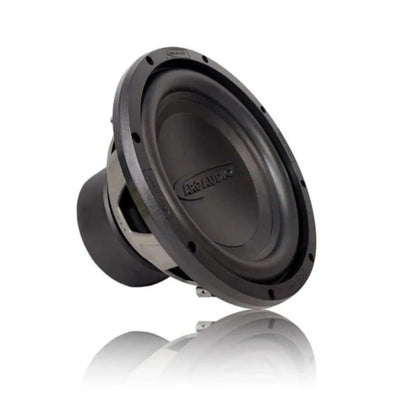
The drivers below are matched to the enclosures above by Thiele-Small parameters. Buying together guarantees the alignment, port tuning, and damping work the way the engineering intended.
Monoblock amplifiers matched to the power requirements of the drivers these enclosures are built for. Buy the enclosure, match the driver, pick the right amplifier.