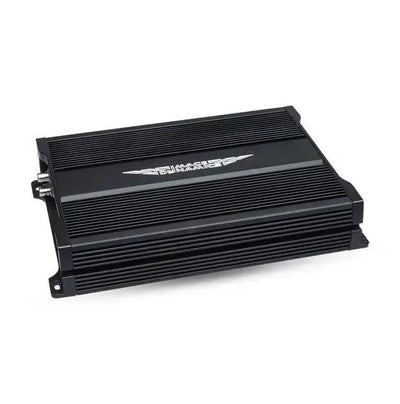
4-channel amplifiers for front + rear builds or 3-channel mode (front stereo plus bridged subwoofer). Class AB and Class D options.
A 4-channel amplifier is the most practical single-unit solution for powering a complete car audio front stage. Four channels means dedicated power for left and right front speakers plus left and right rear, or in a more focused build, two channels driving a front component system while the remaining two are bridged to mono for a subwoofer. That flexibility is what makes the 4-channel amplifier the most common starting point for anyone upgrading beyond a factory system.
The core advantage over running speakers off a head unit isn't just volume. It's clean power. A factory head unit's internal amplifier clips at moderate volume, sending a distorted signal to the speakers that sounds harsh and over time damages tweeters. A dedicated 4-channel amplifier with properly set gain delivers a clean signal at any volume level, which is what lets good speakers actually perform the way they were designed to.
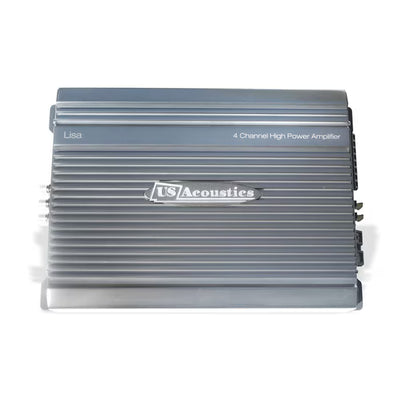
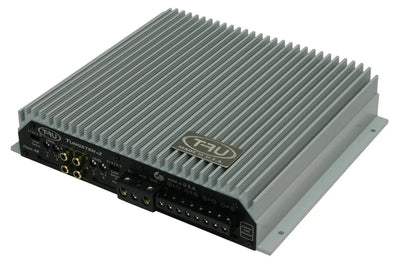
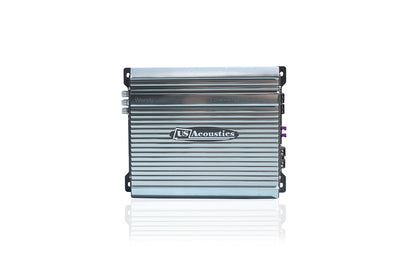
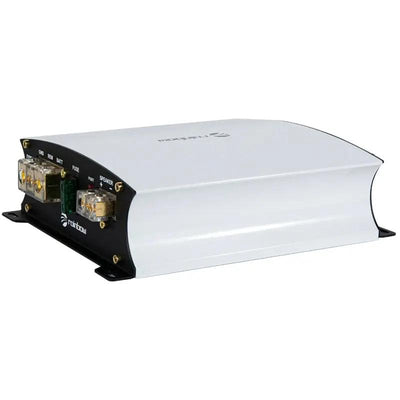
Audio Intensity stocks 4-channel amplifiers from Arc Audio, Crescendo, Image Dynamics, Prodigy, Rainbow, Tru Technology, US Acoustics, and Wavtech. The catalog spans daily-driver entry tier (US Acoustics Lisa at $159.99) through reference-grade Class AB (Tru Technology Tungsten Grande at $2,399.99), covering Class D efficiency and Class AB sound quality across the entire price range.
Not sure which 4-channel amp fits your speakers and head unit? Send us your component specs and we'll confirm the right match before you buy.
Authorized Dealer
Every amplifier is brand new with the full manufacturer warranty.
Power Matching
Send us your subwoofer or speaker specs. We'll recommend the right amplifier at the right impedance before you buy.
Hands-On Expertise
Direct support from staff who designs, builds, and competes with these systems. Honest recommendations, not upsells.
Fast Shipping from TN
In-stock orders ship within 1-2 business days from our Tullahoma, Tennessee warehouse.
There are more 4-channel car amplifiers on the market than any other amplifier type, and the spec sheets are designed to confuse rather than inform. Peak power ratings, inflated channel counts, and vague efficiency claims make it genuinely difficult to compare products across brands without understanding what the numbers actually mean. Here's what to focus on.
RMS Power: The Only Number That Matters
Ignore peak power. It's a marketing figure with no relationship to real-world performance. RMS power (also called continuous power) is the amount of power the amplifier can deliver cleanly and continuously without distortion or thermal shutdown. This is the number you match to your speakers' RMS power handling.
Most quality 4-channel amplifiers in this collection are rated between 50W and 150W RMS per channel at 4 ohms. Most aftermarket component speakers have RMS ratings in the 75-150W range, which means a 4-channel amp delivering 75-150W RMS per channel is the correct match for the majority of front-stage builds. More power than the speaker can handle is a problem. Less power than the speaker needs causes clipping. The goal is a clean match, not the biggest number on the box.
Amplifier Class: Class D vs Class AB for Full-Range Speakers
This is where 4-channel amplifier selection gets more nuanced than monoblock selection. For subwoofer duty, Class D is universally accepted and sonically transparent because subwoofers reproduce a narrow frequency range where amplifier distortion characteristics matter less. For full-range speaker amplification (covering everything from 80Hz up through 20kHz including the critical midrange and high frequencies where the ear is most sensitive), amplifier class has a more audible effect.
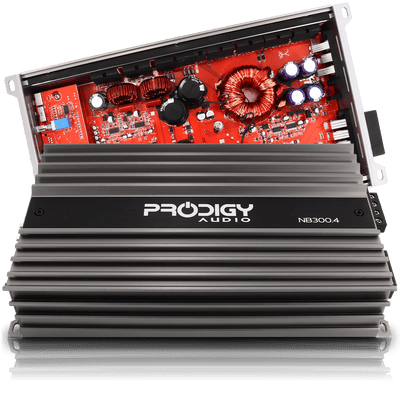
Modern Class D 4-channel designs from quality manufacturers like Crescendo (REVOLUTION series), Image Dynamics (SQ800.4), Wavtech (link.4 series), and Prodigy (NB300.4) are genuinely transparent at full-range frequencies and appropriate for demanding speaker systems. Class D efficiency makes these the practical choice for compact installs and high-power builds.
Class AB 4-channel amplifiers like the Tru Technology Tungsten T4, Tru Technology Tungsten Grande, and US Acoustics Class AB lineup operate at lower efficiency and generate more heat, but maintain a bias current that eliminates crossover distortion entirely. For listeners building around absolute sound quality (high-end component speakers, active crossover systems, competition SQ builds), Class AB remains the reference standard for full-range amplification. The larger physical footprint and higher current draw are the tradeoffs.
Bridging: Running 3 Channels from a 4-Channel Amp
Most 4-channel amplifiers support bridged operation, which combines two channels into one for higher mono output. The most common application is running the front two channels in stereo for front speakers while bridging the rear two channels to drive a subwoofer. This gives you a complete system from a single amplifier (front stage and bass) without requiring a separate monoblock.
The limitation is impedance. Bridging two channels effectively halves the load each channel sees, so a 4-channel amplifier that's stable at 2 ohms per channel becomes stable at 4 ohms bridged. Most subwoofers present a 2-ohm load when wired for maximum power output from a monoblock, but a 4-ohm load works fine with many single subwoofer configurations. Before bridging, confirm the amplifier's bridged minimum impedance rating and make sure your subwoofer's wiring configuration matches.
Brands in This Collection
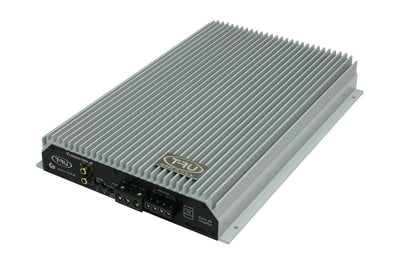
Tru Technology: Tungsten T4 (TS-4 HV v2.5) at $1,399.99 and Tungsten Grande T4 (TG-RS4 HV v2) at $2,399.99. US-built reference-grade Class AB 4-channel amplification for SQ-focused builds. The audiophile tier in this collection.
Crescendo: REVOLUTION 3A4 ($499.00), REVOLUTION 5A4 ($779.99), and REVOLUTION 7A4 ($1,699.99) Class D 4-channel amplifiers. Built for high-resolution car audio with output ratings and distortion specs that compete with amplifiers at significantly higher price points.
Arc Audio: Moto 720 Class AB 4-channel amplifier at $606.40. Arc Audio brings a long heritage of car audio engineering to a 4-channel design that splits the difference between SQ purity and daily-driver efficiency.
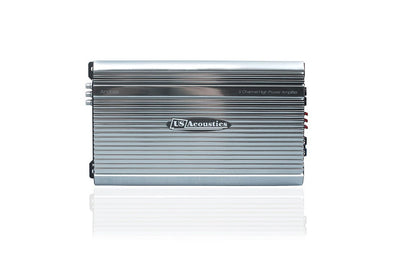
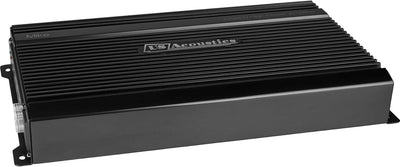
US Acoustics: Lisa (4x50W Class AB at $159.99) and Barbara Ann (4x100W Class AB at $399.99). The accessible Class AB tier for daily-driver builds where SQ matters but the price point is reasonable.
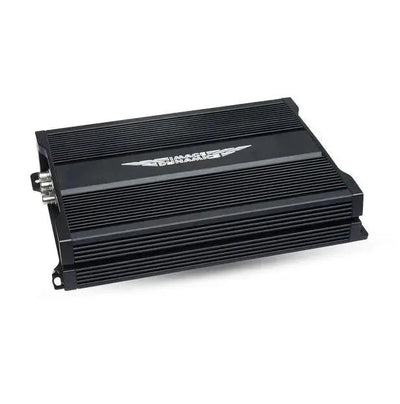
Image Dynamics: SQ800.4 (800W full-range Class D at $469.99). Engineered specifically for SQ-focused builds with Image Dynamics' own driver lineup.
Wavtech: link300.4mini ($329.99) and link500.4mini ($449.99). Compact-chassis Class D for installs where physical size matters as much as power output.
Prodigy Audio: NBM100.4 (600W at $225.99) and NB300.4 (1200W at $416.99). Value-tier Class D with strong power-to-price ratios.
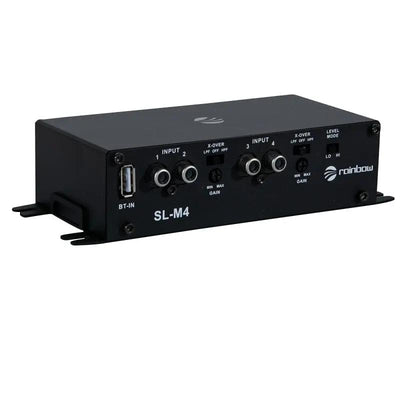
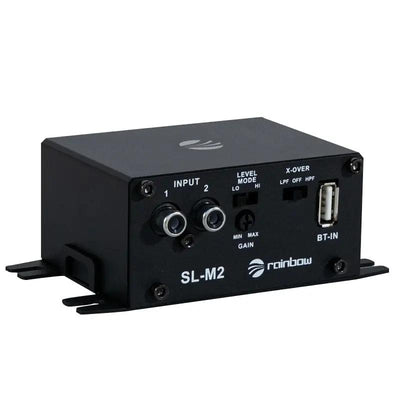
Rainbow: SL-M4 micro 4-channel on closeout pricing at $199.99 (regularly $425). Compact for tight installs.
Frequently Asked 4-Channel Amplifier Questions
What's a 4-channel amplifier used for?
The most common configurations are front+rear (left and right pair for front, left and right pair for rear) or 3-channel mode (front stereo pair plus bridged rear channels driving a subwoofer). Some installs use 4-channel amps in active bi-amp configuration with a DSP for tweeter pair and midrange pair from one chassis. The flexibility is the reason 4-channel is the most common single-amp upgrade for car audio.
Can I bridge a 4-channel amp for a subwoofer?
Yes, almost all 4-channel amps support bridging. The most common configuration is running the front two channels in stereo for front speakers, then bridging the rear two channels to mono to drive a subwoofer. This gives you a complete system from one amplifier. Confirm the amplifier's bridged minimum impedance rating (typically 4 ohms bridged) and match your subwoofer's wiring configuration to that load.
What's the difference between Class D and Class AB?
Class D is the most efficient topology, generating less heat and drawing less current. Best suited for compact installs and high-power builds. Class AB operates at lower efficiency with more heat output, but eliminates crossover distortion entirely through continuous bias current. For full-range speaker amplification (especially high-end component speakers in SQ-focused builds), Class AB remains the reference standard. For daily-driver builds, modern Class D 4-channel designs from quality manufacturers are genuinely transparent.
How much power do I need per channel?
Match the amplifier's RMS power per channel to your speakers' RMS rating, ideally at 75 to 150% of the speaker's RMS. For most aftermarket components rated at 75-100W RMS, a 4-channel amp delivering 75-100W per channel is well-matched. For higher-power components (Image Dynamics CTX, IDQ series, audiophile-tier components), 100-150W per channel handles them properly.
How do I set the crossover on a 4-channel amp?
For the channels driving your speakers, engage the high-pass filter (HPF) at 80 Hz to block deep bass that would distort the speakers. For bridged channels driving a subwoofer, engage the low-pass filter (LPF) at 80 Hz so it plays only bass content. Both filters should be set at the same crossover point to create a clean handoff between speakers and subwoofer. If you're using a DSP, set the amplifier's crossovers to "off" or "full range" and let the DSP handle the crossover work.
Are these new with manufacturer warranty?
Yes. Every amplifier in this collection is brand new, sold by an authorized dealer, and carries the full manufacturer warranty. We handle warranty claims directly with the brand.
Do you offer power-matching consultation before purchase?
Yes. Send us your speaker specs (RMS power, impedance) and your build configuration (front+rear, front+bridged-sub, active bi-amp). We'll recommend the right 4-channel amp for your specific build. Pre-purchase consultation is free.
Related Collections
Pairs Well With This Collection
Browse curated picks that work with the products above.