Tru Tech Desktop Banner

TRU Technology Line Conditioners

4.8/5 Average Rating
QUICK DEFINITION
A TRU Technology Line Conditioner (often called a Line Driver or Pre-Amp) is an active device designed to optimize the audio signal between your source unit and your amplifiers. By boosting the signal voltage (often up to 10V RMS) and lowering the output impedance, these devices allow you to turn your amplifier gains down. This drastically lowers the system's noise floor (hiss) while improving dynamic range and transient response.

All products loaded

TRU Technology Line Conditioners Buying Guide

In high-end car audio, the "Source" is everything. No matter how expensive your amplifiers or speakers are, they can only reproduce the signal they are fed. If your head unit or DSP outputs a weak 2-volt or 4-volt signal, your amplifiers must work harder to boost that signal, introducing "hiss" and raising the noise floor. TRU Technology Line Conditioners solve this fundamental problem. Hand-built in California, these units act as studio-grade pre-amplifiers, taking a standard signal and boosting it to a massive, clean voltage (up to 12V peak in some configurations) with low impedance.

The Class A Advantage: LINE-2CA

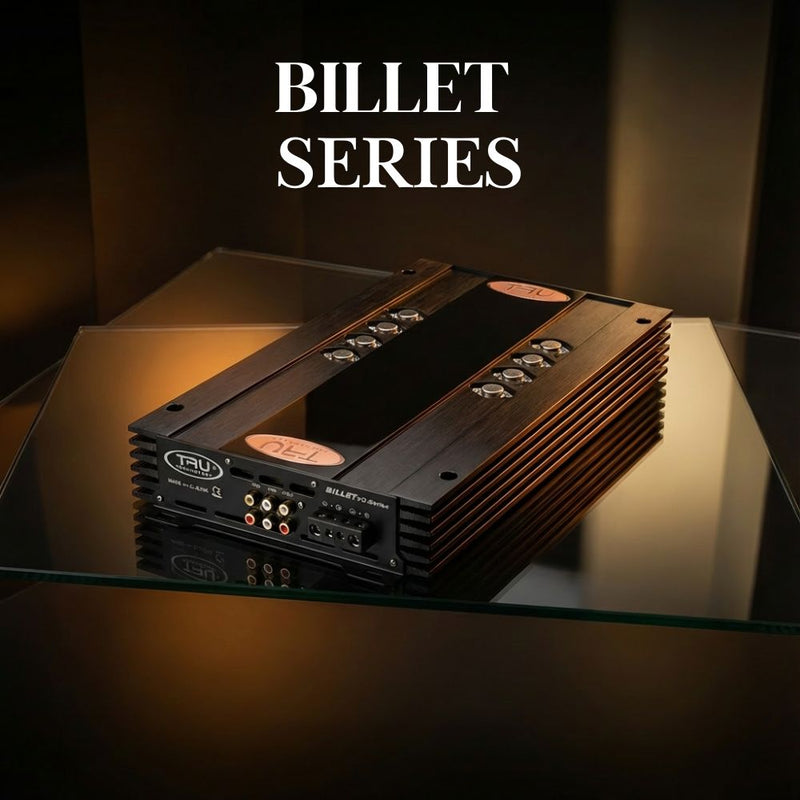
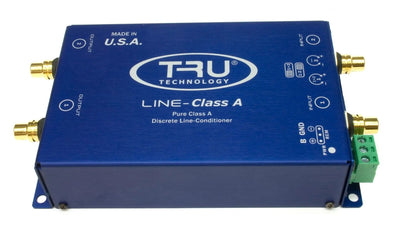
For the 2-channel purist, the LINE-2CA is the industry reference. The "CA" stands for Class A, referring to its internal circuit topology. Unlike standard line drivers that use cheap op-amps, the LINE-2CA uses high-bias Class A circuitry to impart a level of warmth, body, and three-dimensionality to the music. It is designed to be placed between a high-end source and a reference amplifier (like the Billet series), ensuring the amplifier receives a signal so strong and clean that its gain pot can be set to the absolute minimum.

System Integration: LINE-6 v2 and LINE-8 v2

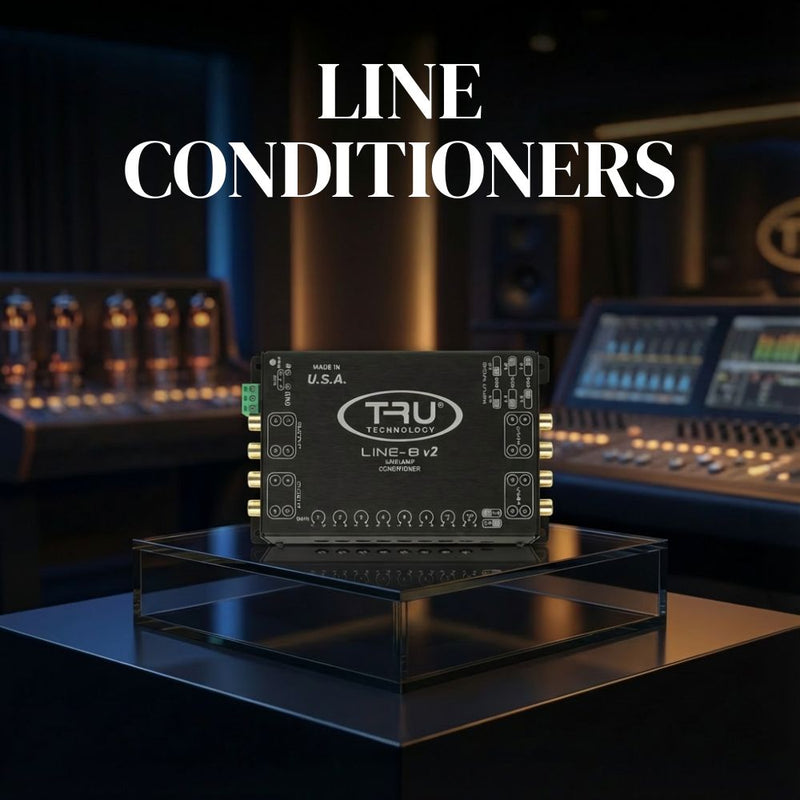
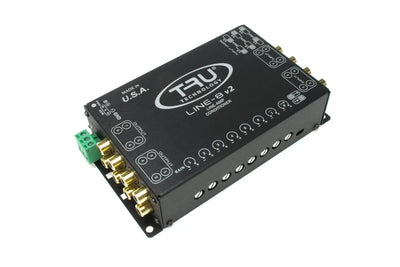
Modern active systems require multiple channels of control. The LINE-6 v2 and LINE-8 v2 are the workhorses for complex installs. If you are running a 3-way active front stage plus a subwoofer, the LINE-8 v2 allows you to boost every channel individually. This is critical when using a DSP; by placing the Line Conditioner *after* the DSP but *before* the amplifiers, you ensure the signal traveling through your RCA cables is robust enough to reject induced noise from the vehicle's electronics.

Installation and Gain Staging

Installing a Line Conditioner is not just about "making it louder." It is about Gain Staging. The goal is to maximize the output of the Line Conditioner (without clipping) so you can minimize the input sensitivity (gain) of your power amplifiers. This ratio maximizes the Signal-to-Noise (S/N) ratio. Because these units are active pre-amps, they require clean 12V power and a solid ground, just like an amplifier. We recommend installing them as close to the source (Head Unit or DSP) as possible to drive the signal strongly through the long RCA runs to the trunk.

COMPARING MODELS
Model Channels Topology Primary Application
LINE-2CA 2-Channel Discrete Class A Audiophile Stereo / Purist Front Stage
LINE-6 v2 6-Channel High-Current Op-Amp Active 3-Way Systems
LINE-8 v2 8-Channel High-Current Op-Amp Complex Active Systems + Sub / DSP Integration
INSTALLER'S TAKE

When tuning a system with a TRU Line Amp, turn your amplifier gains all the way down (counter-clockwise) first, then increase the Line Amp level until you reach your desired maximum volume; this ensures the lowest possible noise floor.

Frequently Asked Questions

Do I really need a line driver if my radio has 4V outputs?

While 4V is decent, it is rarely a "clean" 4V at all frequencies. A TRU Technology Line Conditioner can boost that to 8V or 9V RMS cleanly. This allows you to turn your amplifier gains down significantly. Since amplifier gain adds noise (hiss), keeping it low results in a blacker background and more dynamic sound.

Where should I install the Line Conditioner?

Technically, a line driver is best placed as close to the source (Head Unit) as possible. This allows it to boost the signal *before* it travels through long RCA cables, making the signal strong enough to reject noise interference. However, in DSP systems, it is often placed immediately after the DSP.

What makes the LINE-2CA special?

The LINE-2CA utilizes Class A topology. Most line drivers use standard Class A/B chips. Class A circuitry is less efficient but offers superior linearity and eliminates crossover distortion, resulting in a "warmer," more natural sound that audiophiles prefer for critical listening.

Can I use the LINE-8 v2 as a Master Volume control?

Yes, but typically it is a "Set and Forget" device. While some users have customized setups with a remote pot, the LINE-8 v2 is designed to be calibrated once during installation to optimize gain structure, using your head unit or DSP controller for daily volume adjustments.

Will this fix alternator whine?

It can be a powerful tool to fix noise, yes. Alternator whine is often caused by a difference in ground potential or a weak signal picking up interference. By boosting the signal voltage relative to the noise floor (improving S/N Ratio), the music becomes much louder than the noise, effectively burying the whine.

Related Articles

A toolbox open with car audio tools like wire strippers, multimeter, crimping tool, and a power cable coil. Alt: Gather car audio installation tools and equipment

Step‑by‑Step Guide on How to Install Amplifier in Car

Ever walked into your garage, stared at that sleek new amplifier you just bought, and felt that m...

Read Article →
A close‑up of a car audio amplifier’s input terminals and RCA cables, showing a multimeter probe measuring voltage. Alt: "measuring amp input signal voltage for gain setting"

How to Set Amplifier Gain: A Practical Step-by-Step Guide

Ever plugged in a fresh amp and wondered why the music sounds either tinny or on the verge of blo...

Read Article →
Class-AB-vs-Class-D-Amplifiers-Which-One-Should-You-Choose Audio Intensity

Class AB vs Class D Amplifiers: Which One Should You Choose?

When you want a strong and clear car audio system, picking the right amplifier is key. The kind o...

Read Article →
The Best Class A Amplifier: Key Features and Benefits Explained - Audio Intensity

The Best Class A Amplifier: Key Features and Benefits Exp...

A Class A amplifier is known for its high sound fidelity and low distortion. It keeps output tran...

Read Article →