12 inch Subwoofers
Why Buy From Audio Intensity
CNC-Matched Enclosures
Spec-built to your driver's Thiele-Small parameters
Advanced Support
Real techs answer your install questions
Includes Shipping
Shipping included from our Tennessee location
Decision Shortcut
Find Your Match
Curated picks matched to common build goals
Best 12" Value
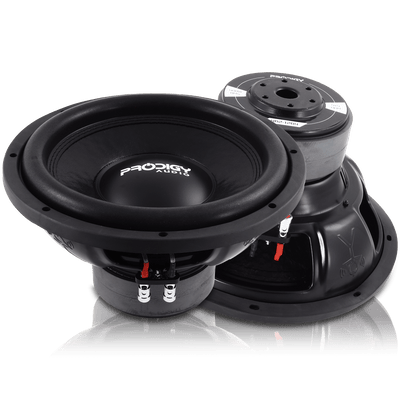
Prodigy
Prodigy Audio 12 inch Subwoofer | NB2 Series
Punches above its price point. Strong motor, clean output for sealed and small ported builds at $151.
$ 150.99 $ 161.99
View DetailsBest 12" for Trucks
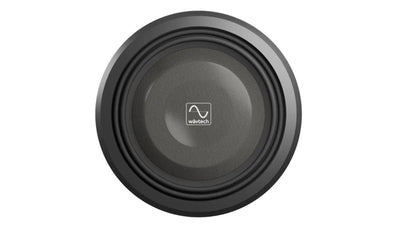
Wavtech
Wāvtech thinPRO12 – Shallow-Mount 12 inch Subwoofer
750W RMS in 3 inch mounting depth. Purpose-built for under-seat truck installs.
$ 799.99 $ 899.99
View DetailsBest 12" for SQ

Image Dynamics
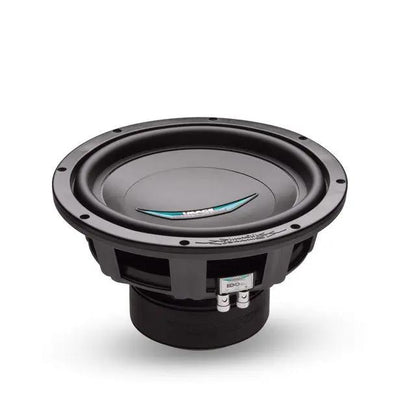
Image Dynamics IDQ12 V4 12 inch Subwoofer
The reference standard for SQ competition builds. Field-replaceable cone, mica-polypropylene cone, low distortion.
$ 280.99
View DetailsBest 12" High-Output
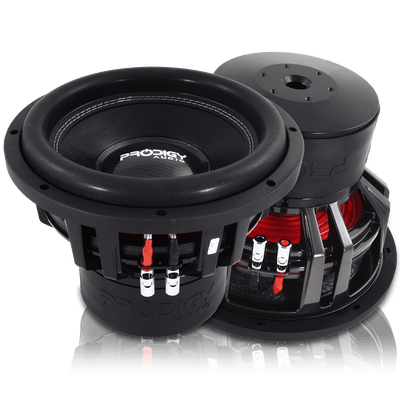
Prodigy
Prodigy Audio 1200 watt 12 inch Subwoofer | NB5 Series
Competes with 15 inch drivers in absolute output. T-shaped magnetic gap motor, low distortion at high excursion.
$ 406.99 $ 487.99
View DetailsBest 12" Premium
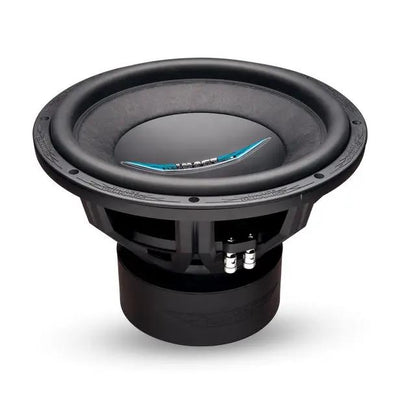
Image Dynamics
Image Dynamics IDMAX12 V4 12 inch Subwoofer
IDQ tonal accuracy with substantially more output headroom. Field-replaceable cone, glass fiber/pulp construction.
$ 469.99
View DetailsShop the Lineup
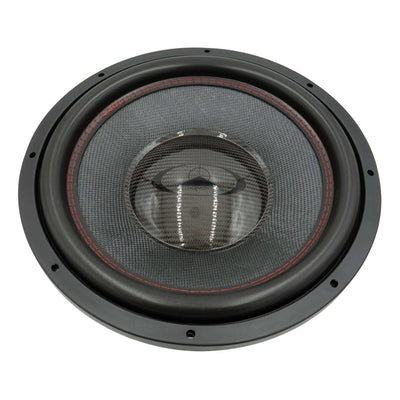
All products loaded
Why the 12 Inch Subwoofer Dominates Car Audio
There's a reason the 12 inch subwoofer accounts for more installations than any other size. It's not a compromise, it's the sweet spot. A 12 inch cone has roughly 30% more surface area than a 10 inch driver, which translates directly into more air displacement, lower frequency extension, and higher output potential. Compared to a 15 inch driver, it requires less enclosure volume, installs in more vehicles, and responds faster to transient bass notes.
For sound quality builds, that transient speed is everything. The difference between a bass note that sounds precise and one that sounds bloated often comes down to how quickly the cone stops moving after the signal ends. A well-built 12 inch subwoofer in a properly tuned sealed enclosure can resolve bass detail that larger drivers at the same price point simply can't match.
For high-output and competition builds, modern 12 inch drivers at the upper end of the market have closed the gap with 15 inch designs significantly. Drivers like the Audiomobile Encore 4412 and Image Dynamics IDMAX12 are built around motor structures that produce output levels that would have required a 15 inch driver ten years ago, in a package that fits more builds and installs more cleanly.
The Collection at a Glance
The lineup spans three price tiers, each suited to a different build goal.
Entry tier ($150 to $200): Prodigy NB2 and NB3, Image Dynamics ID12 V4. Clean, well-engineered drivers for daily-driver builds where the priority is bass integration over maximum output. Sealed enclosures and moderate amplification get the most out of these.
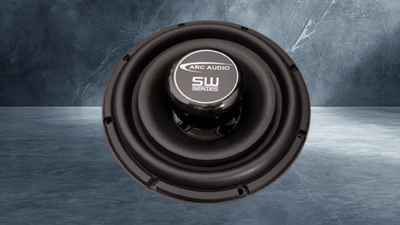
Mid-range tier ($200 to $475): Image Dynamics IDQ12 V4, Arc Audio X2V2 / ARC12 / A12, Audiomobile GTS 2112 and EVO 2412, Prodigy NB5-12D2, Image Dynamics IDMAX12 V4, Audio Dynamics AD1412. The serious SQ and high-output options most builders should evaluate first. This tier covers everything from reference-grade SQ (IDQ12) to high-output competition capability (NB5, IDMAX) without stepping into flagship pricing.
Reference tier ($475 to $800): Audiomobile Encore 4412. The Encore competes with 15 inch drivers in absolute output while maintaining transient accuracy. For builds where the driver needs to be the system's anchor, not just a contributor.
Sealed vs Ported for a 12 Inch Subwoofer
Sealed enclosures are the first choice for sound quality and daily use. An airtight box controls the cone's rearward movement with trapped air pressure, producing tight, accurate bass with a natural roll-off below the tuning point. The result is a subwoofer that integrates with the rest of the system. You hear bass as part of the music, not as a separate event happening in your trunk. Sealed boxes are also more forgiving of imprecise tuning, which makes them the safer choice if you're not working with measured Thiele-Small parameters.
Ported enclosures trade some of that control for output. The port is tuned to a specific frequency (typically between 32 and 42Hz for a 12 inch sub) and at that frequency, the port itself contributes to output alongside the cone. The result is higher SPL and deeper extension at the tuning point, with a sharper roll-off below it. For bass-heavy music, high-volume listening, and competition use, ported is the direction. The tradeoff is that ported boxes are larger, more sensitive to tuning accuracy, and less forgiving if the port frequency doesn't match the driver's characteristics.
This is where enclosure matching matters more than most buyers realize. A 12 inch subwoofer spec'd for a 1.5 cubic foot ported enclosure tuned to 35Hz will sound completely different (and significantly worse) in a generic universal-fit box with different internal volume and port dimensions. Audio Intensity builds CNC-cut Proline X enclosures calculated to each specific driver's Thiele-Small parameters. The internal volume, port area, port length, and baffle thickness are all derived from measurement, not approximation. If you're buying a 12 inch sub from this collection, we can build the enclosure it was actually designed for.
Voice Coil Configuration: Single vs Dual
Most of the 12 inch subwoofers in this collection are available in dual voice coil configurations. A dual voice coil (DVC) subwoofer gives you wiring flexibility that a single voice coil driver doesn't. You can wire the two coils in series or parallel to present different impedance loads to your amplifier, which lets you optimize the amp's output for your specific driver.
For example, a DVC 4 ohm subwoofer can be wired to present a 2 ohm load (parallel) for maximum power output, or an 8 ohm load (series) for a cleaner signal with less demand on the amplifier. This flexibility is particularly useful when you're building a system around a specific amplifier and need to dial in the impedance match precisely. If you're unsure which configuration works for your setup, contact us before purchasing. It's a five-minute conversation that saves a lot of frustration.
Amplifier Matching for 12 Inch Subwoofers
The single most common mistake in car audio is underpowering a subwoofer. An amplifier that can't cleanly deliver the driver's rated RMS power will clip the signal at high volume, which sounds bad and generates heat that damages voice coils over time. More voice coils are killed by clipped underpowered signals than by overpowered ones.
Match your amplifier's RMS output, at the impedance your wiring configuration presents, to the subwoofer's RMS power rating. A monoblock amplifier is the standard for a single 12 inch sub. For dual subwoofer setups, either a two-channel amp bridged to mono or a high-output monoblock with sufficient headroom for both drivers will work depending on the impedance load.
How 12 Inch Compares to Other Sizes
If you have room for a properly sized 12 inch enclosure and want a balance of output, extension, and accuracy, the 12 is the most versatile choice in car audio. It outperforms a 10 inch in absolute output and extension while staying compact enough to fit most installations. Compared to a 15 inch, the 12 inch responds faster, requires less enclosure volume, and works in more vehicles. The 15 inch wins for raw SPL and extreme low-end extension. The 12 wins for everything else.
For installs where space is genuinely limited, an 8 inch may be the better fit. For SPL-focused competition builds, a 15 inch or 18 inch is the right tool. For everything in between (and that's most builds), the 12 inch is the answer.
Frequently Asked 12 Inch Subwoofer Questions
What's the best 12 inch subwoofer?
The best 12 inch sub depends on the build. For SQ-focused listening, the Image Dynamics IDQ12 V4 is the reference standard. For a balance of sound quality and output, the Image Dynamics IDMAX12 V4 or Audiomobile Encore 4412 are both serious competitors. For high-output and competition use, the Audiomobile Encore 4412 and the Arc Audio A12 deliver real capability. For value-tier builds, the Prodigy NB3-12D4 punches above its price point. There's no universal best. Match the driver to the build's goals.
How much enclosure space does a 12 inch sub need?
Sealed: typically 1.0 to 1.75 cubic feet depending on the driver. Ported: typically 1.5 to 2.5 cubic feet, depending on tuning frequency. Always check the manufacturer's published Thiele-Small parameters and recommended enclosure volumes before building or buying a box. Generic recommendations don't account for individual driver behavior. Use the EBP Calculator with the driver's specs to determine which enclosure type will perform best.
What are the benefits of dual voice coil (DVC) 12 inch subwoofers?
DVC subwoofers give you wiring flexibility that single voice coil drivers don't. You can wire the two coils in series or parallel to present different impedance loads to your amplifier. A DVC 4 ohm driver wired in parallel presents a 2 ohm load (maximum power output); wired in series, an 8 ohm load (cleaner signal, less amplifier demand). This flexibility lets you optimize the amplifier's output for your specific driver and build goals.
Sealed or ported for a 12 inch sub?
Sealed is the default for SQ-focused builds and most music genres. Tighter, more accurate, smaller box, more forgiving of imprecise tuning. Ported is the right choice when output is the priority, particularly for genres with sustained low-frequency content. A properly tuned ported 12 will produce noticeably more SPL than the same driver sealed, but requires more enclosure volume and rolls off steeply below the port tuning frequency.
How does a 12 inch compare to a 10 inch or 15 inch?
A 12 inch has roughly 30% more cone area than a 10 inch, producing more output and lower extension. Compared to a 15 inch, the 12 responds faster and requires less enclosure volume, but the 15 wins in absolute SPL and bottom-octave extension. The 12 is the most versatile size in car audio because it balances output, extension, accuracy, and installation footprint better than any other. For most builds, it's the right choice.
Will a 12 inch sub fit in my car?
Almost certainly, yes, if you have trunk or rear cargo space available. A sealed 12 inch enclosure is roughly 1.0 to 1.75 cubic feet of internal volume, which translates to a box around 14 to 18 inches per side externally. Most sedans, hatchbacks, SUVs, and trucks accommodate this without issue. For tight installs (sport coupes, single-cab trucks), a sealed enclosure with the smallest manufacturer-recommended volume often fits where a ported won't.
Spec-Matched Enclosures
Built for the Drivers in This Collection
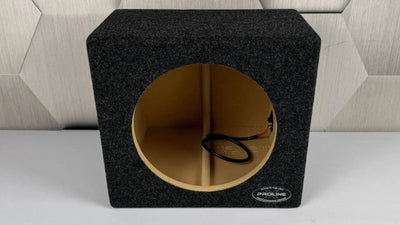
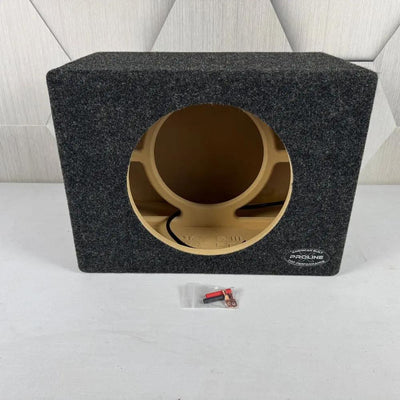
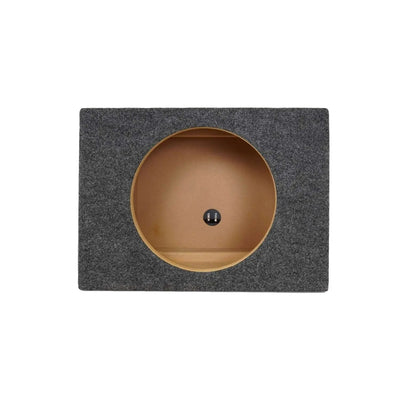
Every Proline X enclosure is CNC-cut to the Thiele-Small parameters of a specific driver. Internal volume, port tuning, baffle thickness, and bracing calculated from measured driver data. Built and shipped from Tullahoma, TN.
Proline X
Proline X E12-S Sealed Enclosure
$ 129.99 $ 159.99

Proline X
Proline X Performance Wedge P12-WS III Sealed Enclosure for 12" Subwoofers
$ 159.99 $ 179.99

Proline X
Proline X P12-S | Single 12" Sealed Subwoofer Enclosure | V3
$ 179.99

Proline X
Proline X Performance Optimized Sealed Enclosure for Single 12" Arc Audio Subwoofers
$ 179.99