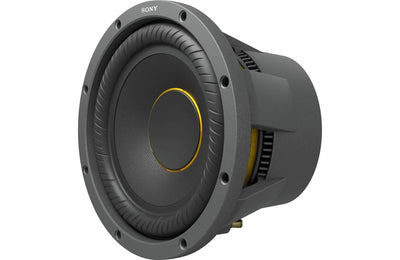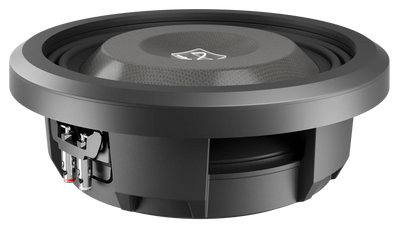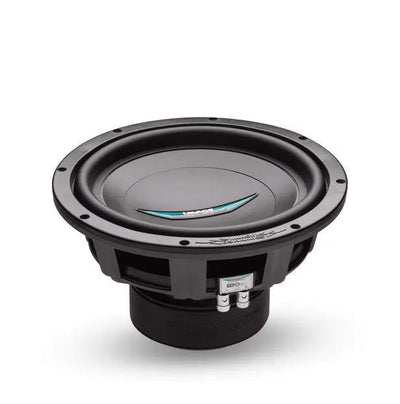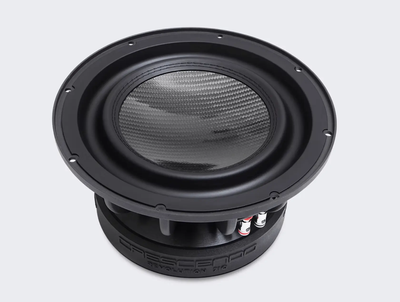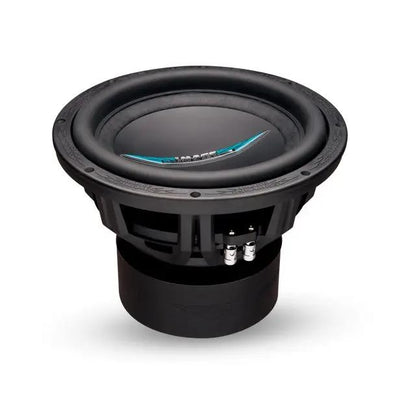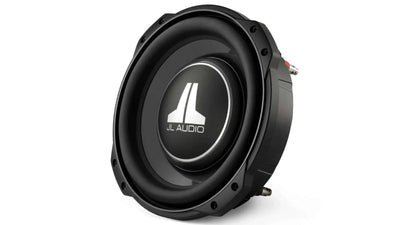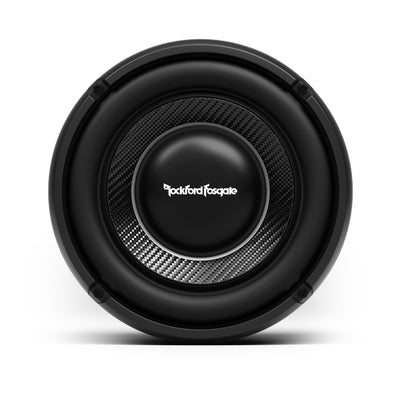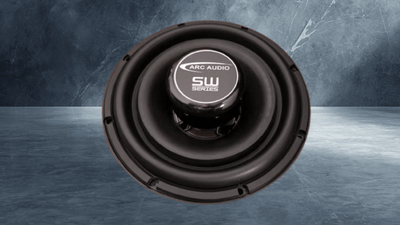
explosive bass car subwoofer collection image

10 inch Subwoofers

The 10 inch subwoofer is the right choice when installation space is limited but you're not willing to compromise on bass quality. It moves more air than an 8 inch driver with noticeably better low-frequency extension, while staying compact enough for behind-seat enclosures, underseat installs, and tight trunk builds where a 12 inch driver won't fit. This collection includes drivers from Image Dynamics, Prodigy, Arc Audio, Audiomobile, Crescendo, Wavtech, and Sony. Series breakdown, fitment notes, and enclosure recommendations below the lineup.

Why Buy From Audio Intensity

CNC-Matched Enclosures

Spec-built to your driver's Thiele-Small parameters

Advanced Support

Real techs answer your install questions

Includes Shipping

Shipping included from our Tennessee location

Shop the Lineup

JL Audio car subwoofer on a white background
JL Audio JL10TW3-D4

JL Audio 10TW3-D4

$ 519.99 $ 549.99 5% OFF
In stock and ready to ship!

All products loaded

}

Where the 10 Inch Subwoofer Wins

The car audio market tends to treat 10 inch subwoofers as an entry-level option. Something you buy when you can't fit a 12. That framing misses the point. In the right application, a 10 inch driver is the correct choice regardless of available space, because its physical characteristics suit the listening goals better than a larger driver would.

Cone Mass and Transient Response

A 10 inch driver moves less cone material than a 12 or 15 inch driver, which means it responds faster to the input signal. That speed shows up in the bass as articulation: the ability to resolve individual bass notes cleanly rather than blurring them together into a general low-frequency presence. For acoustic music, jazz, classic rock, and any genre where the bass line is a distinct musical voice, that articulation matters more than raw output level.

Output Capability

Modern 10 inch drivers at the upper end of the market handle substantial power and produce SPL levels that would have required a 12 inch driver a generation ago. The Audiomobile GT2 2010 and the Image Dynamics IDMAX10 V4 are both built around motor structures that compete with 12 inch drivers in output while maintaining the transient response advantage of the smaller cone. The tradeoff isn't output versus quality. It's output versus installation footprint.

The Collection at a Glance

The lineup spans four price tiers, each suited to a different build goal.

Entry tier ($138 to $200): Prodigy NB2 and NB3, Image Dynamics ID10 V4, Arc Audio X2V2, Sony XS-W104ES Mobile ES (closeout). Clean, well-engineered drivers for daily-driver builds where the priority is bass integration over maximum output. Sealed enclosures and moderate amplification get the most out of these. The Sony XS-W104ES at 33% off retail is the bargain pick of the lineup.

Mid-range tier ($200 to $330): Image Dynamics IDQ10 V4, Audiomobile GT2 2010, Arc Audio ARC10 and A10, Prodigy NB5-10D4. The serious SQ and high-output options most builders should evaluate first. The IDQ10 V4 is the reference standard for SQ competition. The GT2 2010 and NB5 deliver high-output capability without stepping into flagship pricing.

Reference tier ($330 to $500): Image Dynamics IDMAX10 V4. The IDMAX combines IDQ tonal accuracy with substantially more output headroom. The right choice when you want SQ character with room-pressurizing output to match.

Specialty / Premium ($500 to $1000): Crescendo Revolution 710 (reference-tier underhung motor, carbon fiber cone, measurably lower distortion across the full excursion range) and Wavtech thinPRO 10 (750W RMS in a 2.9 inch mounting depth, purpose-built for under-seat truck installs). These two drivers solve specific problems no other 10 inch in the lineup addresses.

Sealed vs Ported for 10 Inch Subwoofers

Sealed enclosures are the natural partner for a 10 inch driver in most builds. The controlled rear pressure of a sealed box reinforces the cone's natural tendency toward accuracy and tightness, producing bass that integrates cleanly with the front stage. Sealed boxes for 10 inch drivers are also compact. A well-designed sealed enclosure can fit in spaces that a ported 12 inch box couldn't approach.

Ported enclosures are a legitimate option when maximum output is the priority. A properly tuned ported box extracts significantly more SPL from a 10 inch driver than a sealed design at the same power level, particularly in the 35 to 50Hz range where most bass-heavy music carries its energy. The tradeoff is a larger enclosure and a sharper roll-off below the port tuning frequency.

Tuning a ported enclosure correctly requires working from the driver's Thiele-Small parameters (specifically Fs, Qts, and Vas) rather than guessing at internal volume and port dimensions. Use the EBP Calculator to determine the right enclosure type for a given driver before committing to a build.

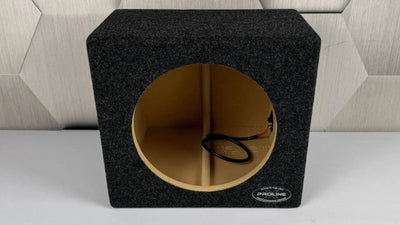
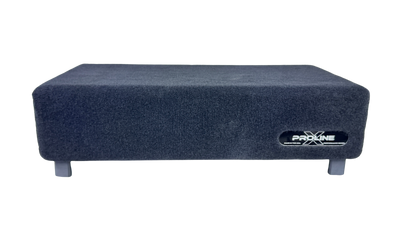
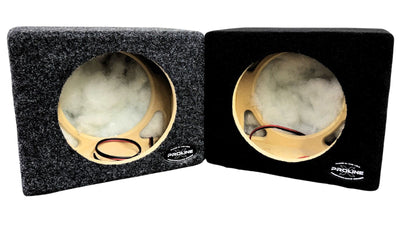
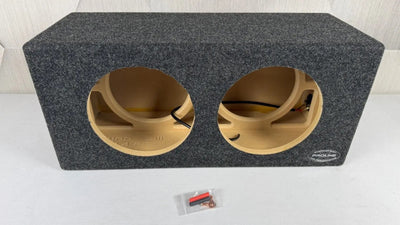
Proline X CNC enclosures are available in 10 inch sealed and ported configurations, built in-house in Tullahoma, Tennessee on ShopSabre routers and spec-matched to the specific drivers they're sold alongside.

Behind-Seat and Underseat Installations

The 10 inch subwoofer is the most common driver size for behind-seat truck enclosures. Extended cab and crew cab trucks offer a natural enclosure location behind the rear seat that suits a 10 inch driver well. Enough airspace for a small sealed or ported enclosure, with the seat providing some acoustic loading that reinforces low-frequency output.

Underseat installations require a shallow-mount driver. True underseat depth in most vehicles is 3 to 4 inches, which rules out standard-mount subwoofers. The Wavtech thinPRO 10 at 2.9 inches is purpose-built for exactly this constraint. For other shallow-mount options, browse the shallow mount subwoofer collection.

If you're unsure whether a specific driver will fit your vehicle, contact us with your make, model, and install location before ordering. Mounting depth, cutout diameter, and enclosure volume all need to be confirmed for the specific cab configuration.

How 10 Inch Compares to Other Sizes

If you have room for a properly sized 12 inch enclosure and output is the priority, a 12 inch will outperform the 10 in raw output and bottom-octave extension. The 10 inch wins where transient accuracy matters more than maximum output, and where installation space is constrained. For installs where space is genuinely limited, an 8 inch may be the right call. For SPL-focused competition builds, a 15 inch or 18 inch driver is the correct tool.

The 10 inch is most often the right choice for SQ builds, behind-seat truck installs, and music-focused systems where the driver complements the front stage rather than dominating it.

Frequently Asked 10 Inch Subwoofer Questions

Will a 10 inch sub hit hard enough?

For SQ builds, music listening, and most builds where the sub complements the front stage rather than dominates it, yes. A modern 10 inch from the upper end of the market (IDMAX10, Audiomobile GT2 2010, Prodigy NB5-10) handles 500 to 1000W RMS and delivers output levels that competed with 12 inch drivers a generation ago. For competition SPL, a larger driver still has the advantage. For musical listening at high but reasonable volume, a 10 inch is often the better choice.

What enclosure size does a 10 inch sub need?

Sealed: typically 0.6 to 1.25 cubic feet depending on the driver. Ported: typically 1.0 to 1.75 cubic feet, depending on tuning frequency. Always check the manufacturer's published Thiele-Small parameters and recommended enclosure volumes before building or buying a box. Generic recommendations don't account for individual driver behavior. Use the EBP Calculator with the driver's specs to determine which enclosure type will perform best.

Sealed or ported for a 10 inch sub?

Sealed is the default for SQ-focused builds and most music genres. Tighter, more accurate, smaller box. Ported is the right choice when output is the priority, particularly for genres with sustained low-frequency content (hip-hop, EDM, electronic). A properly tuned ported 10 will produce noticeably more SPL than the same driver sealed, but requires more enclosure volume and rolls off steeply below the port tuning frequency.

How does a 10 inch compare to a 12 inch subwoofer?

A 12 inch driver moves more air, handles more power, and reaches lower frequencies than a 10 inch in absolute terms. The 10 inch responds faster, sounds tighter, and fits in spaces a 12 won't. For installs where you have room for a properly sized 12 inch ported box and output is the priority, the 12 will outperform the 10. For SQ builds, behind-seat truck installs, and music-focused systems, the 10 is often the better tool.

Can I run two 10 inch subs in a single enclosure?

Yes, and it's one of the most popular dual-sub configurations. Two 10 inch drivers in a properly sized sealed or ported enclosure deliver more output and a smoother low-end response than a single sub, with cone area roughly equivalent to a single 12 inch in sealed and exceeding it in ported. Confirm the enclosure volume matches the manufacturer's spec for two drivers and wire to the impedance your amplifier prefers. Most builders use dual 4 ohm drivers wired to a 1 ohm or 2 ohm load depending on amplifier stability.

What's the most popular 10 inch sub for trucks?

For behind-seat installs, the Wavtech thinPRO 10 (2.9 inch mounting depth, 750W RMS) is purpose-built for the constraint and outperforms most shallow-mount competitors. For standard-mount behind-seat enclosures with more depth available, the Image Dynamics IDQ10 V4 and the Audiomobile GT2 2010 are both strong choices. Send vehicle and depth measurements to our tech team if you're unsure which fits.

Spec-Matched Enclosures

Built for the Drivers in This Collection

Every Proline X enclosure is CNC-cut to the Thiele-Small parameters of a specific driver. Internal volume, port tuning, baffle thickness, and bracing calculated from measured driver data. Built and shipped from Tullahoma, TN.