Digital Signal Processors for Car Audio
Professional-grade audio processing technology imported exclusively from leading manufacturers by Audio Intensity
Digital Signal Processors for Car Audio
A digital signal processor (DSP) is the most powerful tuning tool in any car audio system. Where a head unit or amplifier gives you basic tone controls, a DSP gives you surgical precision — parametric EQ, time alignment, active crossovers, and input/output channel control, all in one unit.
Whether you're integrating a high-power aftermarket system into a factory head unit, correcting the acoustic problems of your vehicle's interior, or building a competition-grade SQL setup from scratch, a DSP is what separates a system that sounds good from one that sounds right.
What a Car Audio DSP Does
Every vehicle has acoustic challenges — reflective surfaces, off-axis speaker placement, and delayed arrival times between drivers. A digital signal processor solves these problems before the signal ever hits your amplifier. With time alignment, you can position the soundstage exactly where you want it. With parametric EQ, you can correct frequency response peaks and dips specific to your car's cabin. With active crossover control, each driver gets only the frequencies it's designed to reproduce — nothing wasted, nothing distorted.
Who Needs a DSP
If you're running an OEM source unit with high-level outputs, a DSP with speaker-level inputs lets you tap into that signal cleanly and rebuild it. If you're running a dedicated aftermarket head unit, a DSP gives you processing capability that goes far beyond any built-in EQ. And if you're building for competition, a DSP isn't optional — it's the foundation.
Brands We Carry
Audio Intensity stocks DSP units from manufacturers we've personally vetted for sound quality, tuning flexibility, and real-world reliability — Goldhorn and Wavtech. Each unit is sold with full support. We're not just a parts warehouse, we're car audio builders who use this equipment ourselves.
Find Your Perfect DSP Solution
Not sure which digital sound processor fits your car audio goals? Our curated DSP categories make it easy to find the perfect solution for your specific needs, budget, and technical requirements. Whether you're integrating with a factory system, building a custom competition setup, or seeking audiophile-grade sound processing, we guide you to the right choice.
From simple plug-and-play solutions to advanced multi-channel processors, each category below represents different approaches to digital sound processing. Explore our imported DSP technologies and discover why Audio Intensity customers achieve superior audio results with the right processor for their unique setup.
Need guidance? Our DSP experts have configured thousands of systems and can help you select the perfect digital sound processor for your vehicle and listening preferences.
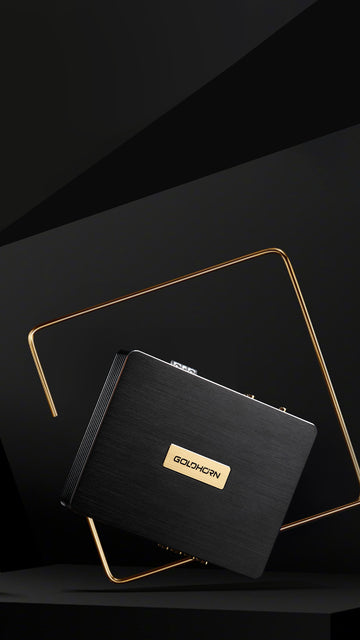

Hi-Res Players
3 items

Car DSP Amplifiers
8 items

Standalone DSP
4 items


Competition Level DSP
2 items
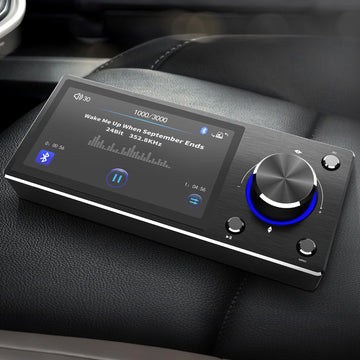
DSP Accessories
3 items
Car Audio Digital Signal Processors
A digital signal processor is the most powerful tuning tool in any car audio system. Where a head unit gives you tone controls and an amplifier gives you basic gain and crossover settings, a DSP gives you surgical precision over every output channel: parametric EQ, microsecond-accurate time alignment, active crossovers, and clean OEM integration in a single unit.
Audio Intensity is the exclusive US importer for Goldhorn DSP, and we also carry Wavtech for OEM integration. Every unit in this collection has been evaluated by Scott Welch, an IASCA Finals Judge with 40 years in car audio. If it's listed here, it performs.
Why Audio Intensity: Exclusive US Importer for Goldhorn DSP · IASCA Finals Judge curated · Direct manufacturer support · Made-to-spec technical advice from Tullahoma, TN
What a Car Audio DSP Actually Does
Every vehicle has acoustic problems the factory can't solve. Reflective glass, off-axis speaker placement, and unequal arrival times between drivers create the soundstage that comes out of most cars: muddy, off-center, and lower in detail than the speakers and amplifiers are physically capable of producing. A DSP corrects all of that before the signal ever reaches your amplifier. Three capabilities make it possible.
Time Alignment: The Feature Most Builds Are Missing
In a car, your ears are never equidistant from all speakers. The driver's left ear might sit 18 inches from the door tweeter and 6 feet from the passenger door mid. Without time alignment, those arrival differences blur the stereo image and collapse the soundstage into the door panels. With a DSP, you measure the distance to each driver and the processor delays the closer speakers by exactly the right number of microseconds, so every wavefront arrives at your ears simultaneously.
The result is a soundstage that sounds like it's in front of you, not coming from the doors. This is the single biggest sonic improvement most car audio systems are missing, and it requires a DSP to do it correctly.
Parametric EQ: Why It Beats Graphic EQ Every Time
A factory head unit gives you bass, mid, and treble. An aftermarket head unit might give you a 13-band graphic EQ with fixed center frequencies. A DSP gives you parametric EQ on every output channel independently, with adjustable center frequency, adjustable bandwidth (Q), and adjustable gain.
The difference becomes obvious the moment you measure a car's frequency response. No vehicle is flat from the factory. Every cabin has room modes, reflections, and cancellations that create peaks and dips at specific frequencies. A graphic EQ can approximate a correction at the band closest to the problem. A parametric DSP can target the exact frequency, set the exact bandwidth, and apply the exact amount of cut needed. That's not an incremental improvement. It's a fundamentally different level of control.
Active Crossovers: Cleaner Output, Lower Distortion
Passive crossovers split frequencies using capacitors and inductors after the amplifier, which means the amplifier is still working to produce frequencies the speaker will never reproduce. Active crossovers inside a DSP split the signal before amplification, so each amplifier channel only produces the band its assigned driver will handle. Lower distortion, better thermal efficiency, and far more precise crossover slopes.
For a three-way component system (tweeter, midrange, midbass), active crossover control through a DSP is the only way to achieve the kind of driver protection and acoustic precision that separates a strong build from a reference-grade one.
How to Pick the Right DSP for Your Build
The right DSP depends on three things: what your source unit is, how many output channels you need, and whether you're tuning by ear or with measurement gear. Use this decision framework.
If You're Keeping Your Factory Head Unit
You need a DSP with high-level (speaker-level) inputs, signal summing, and OEM EQ-curve removal. Modern factory amplifiers bake EQ curves into their output. A DSP with proper signal summing accepts the factory speaker-level signal, flattens the OEM curve, and outputs a clean low-level signal to your aftermarket amplifier. This is how you build a serious aftermarket system around a factory radio without losing steering wheel controls, backup camera integration, or infotainment functionality.
Wavtech's DSP lineup is purpose-built for this scenario. Goldhorn's DSPA series also handles OEM integration well and adds high-resolution playback to the same chassis.
If You're Running an Aftermarket Head Unit
Channel count and EQ depth matter more than input flexibility. A 6-channel DSP works for a basic active 2-way plus sub. An 8-channel covers active 3-way plus sub. Twelve channels and up open the door to multi-amp competition builds. Match channel count to your driver layout, then prioritize EQ resolution and time-alignment precision.
If You're Building for Competition
Look at processing resolution, tuning software depth, and time-alignment granularity. The Goldhorn Ultra series sits at the top of the competition tier — flagship DAC chips, native DSD playback support, and tuning software with the depth professional installers and IASCA-class competitors actually need. If you're building a vehicle to be measured by trained ears against a written technical standard, this is where the DSP conversation starts.
Brands We Carry and Why
Goldhorn DSP — Exclusive US Importer
Audio Intensity is the sole authorized US importer for Goldhorn. We work directly with the manufacturer, which means tech support, firmware updates, and product roadmap conversations happen at the source. The Goldhorn lineup spans standalone DSPs, integrated DSP-amplifier units, hi-res players, and the Ultra competition tier. Every unit ships with full support and direct access to the team that built it.
Wavtech — OEM Integration Specialists
Wavtech focuses on the factory-radio integration problem. If your build keeps the OEM source unit and you need a clean, no-compromise signal handoff to an aftermarket amplifier, Wavtech belongs in your signal chain. We carry the lineup that fits modern OEM amplifier topologies, including units with high-level inputs and signal summing.
Browse the Full DSP Lineup Below
The product grid below covers every DSP we carry, organized by category: standalone DSPs, integrated DSP amplifiers, hi-res players, competition-level units, and accessories. For deeper guidance on DSP architecture, tuning workflow, and software comparisons, read our complete DSP guide. Still not sure which unit fits your build? Contact us and we'll work through your system architecture together.
Frequently Asked Questions
What does a digital sound processor do?
A digital sound processor (DSP) is the brain of a high-performance car audio system. It takes your audio signal and applies precise digital processing including equalization, time alignment, crossover management, and phase correction. DSPs eliminate the acoustic limitations of your vehicle's interior, creating a perfectly balanced soundstage with studio-quality clarity. Audio Intensity's imported DSP units transform ordinary car audio into competition-level sound quality.
What is a digital sound processor?
A digital sound processor is an advanced electronic component that converts analog audio signals into digital data for precise manipulation and enhancement. Unlike basic equalizers, DSPs provide comprehensive control over every aspect of your audio signal including frequency response, timing, and routing. Our competition team relies on professional-grade DSPs to achieve the precise sound staging and tonal accuracy required for sound quality competition success.
How do I tune a digital sound processor?
DSP tuning involves several critical steps: setting proper input levels, configuring crossover points, adjusting time alignment for your listening position, and fine-tuning the parametric EQ to address your vehicle's acoustic issues. Audio Intensity provides comprehensive tuning support for all DSP products we import, and our competition-experienced technicians can guide you through the process or provide professional tuning services.
Do I need a digital sound processor?
If you're serious about achieving exceptional sound quality in your vehicle, a DSP is essential. DSPs are particularly beneficial for factory system integration, multi-amplifier setups, and any installation where precise control over frequency response and sound staging is desired. Our competition team considers DSPs mandatory for any serious audio system - they're the difference between good sound and championship-level performance.
Can I install a DSP myself or do I need professional installation?
Many DSP installations can be DIY projects, especially with plug-and-play integration harnesses. However, complex factory integrations, multi-amplifier systems, or installations requiring custom tuning benefit from professional installation. Audio Intensity partners with certified installers nationwide who understand our imported DSP products and competition-level installation techniques. We can connect you with qualified professionals in your area.
What's the difference between a DSP and an equalizer?
While both process audio signals, DSPs offer far more comprehensive control than traditional equalizers. Basic EQs only adjust frequency response, while DSPs provide time alignment, advanced crossover management, phase correction, signal routing, and sophisticated processing algorithms. DSPs also offer digital precision that analog equalizers cannot match. Our competition team uses DSPs specifically because they provide the level of control needed for world-class sound quality.
Will a DSP work with my factory stereo system?
Yes, modern DSPs are designed to integrate seamlessly with factory audio systems. High-level input DSPs accept speaker-level signals and often include signal summing capabilities to work with factory amplifiers. Many of our imported DSP solutions include vehicle-specific integration harnesses that maintain factory functionality while adding professional-level sound processing. Audio Intensity's technical team can recommend the perfect DSP for your specific vehicle.
How many channels do I need in a DSP?
Channel requirements depend on your system complexity and goals. A 4-channel DSP suits basic front/rear speaker systems, while 8-channel units accommodate custom component installations with separate tweeters and mid-range drivers. Competition-level systems often require 12+ channels for full active crossover control. Audio Intensity carries DSPs from 4 channels to 36 channels, and our competition team can help determine the optimal configuration for your goals.
What's the difference between standalone DSPs and DSP amplifiers?
Standalone DSPs focus purely on signal processing and require separate amplifiers, offering maximum flexibility and the ability to choose optimal amplifiers for each application. DSP amplifiers combine processing and amplification in one unit, providing convenience and space savings but with some limitations in power and flexibility. Our competition team typically uses standalone DSPs for maximum control, but DSP amplifiers work well for many applications.
Why should I choose Audio Intensity for my DSP purchase?
Audio Intensity offers unique advantages: we're direct importers of premium DSP brands, our competition team actively competes at sound quality events nationwide, and we provide ongoing technical support throughout your ownership. Our DSP specialists have real-world competition experience and can guide you to the perfect solution for your goals and budget. We don't just sell DSPs - we use them at the highest competitive levels and back every sale with expert support.
Related Articles

Discover the Best DSP Settings for Sound Quality
Goldhorn DSP Buyer’s Guide 2025
AI Driven DSP