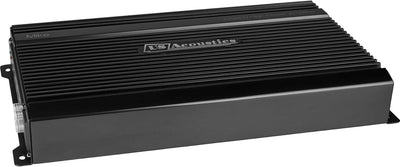
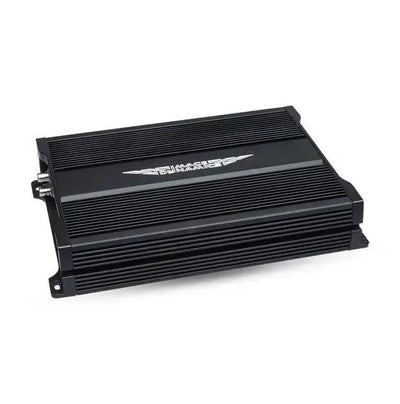
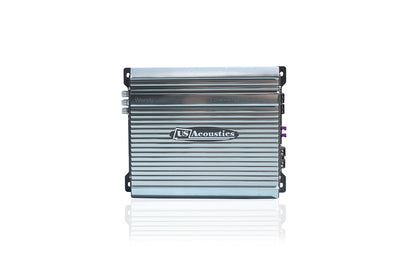
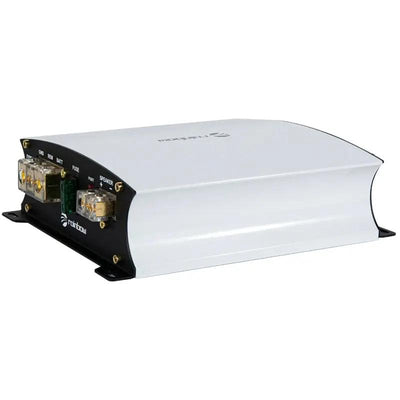
5-channel amplifiers driving four full-range speakers plus a subwoofer from one chassis. The architectural alternative to running a 4-channel plus monoblock.
A 5-channel amplifier combines four full-range channels (front pair plus rear pair) with one dedicated subwoofer channel in a single chassis. This is the architectural alternative to running a 4-channel amp for speakers plus a separate monoblock for the sub: one chassis instead of two, one power feed, one ground, and one set of tuning controls in one location.
The trade-off is build-time flexibility. With separate amplifiers, you can upgrade the front-stage amp or the sub amp independently as your build evolves. With a 5-channel, the entire system shares one component. For buyers who want simplicity, save space, and don't plan to upgrade per-component, the 5-channel architecture is the more practical choice. For buyers building toward a competition-grade or audiophile-reference system over time, separates remain the preferred path.
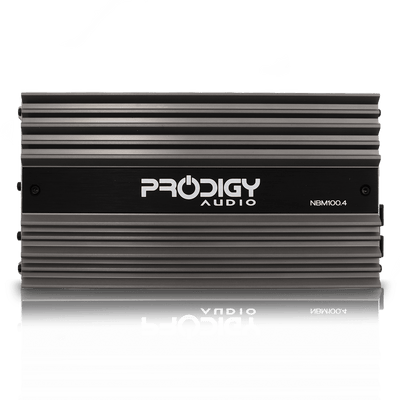
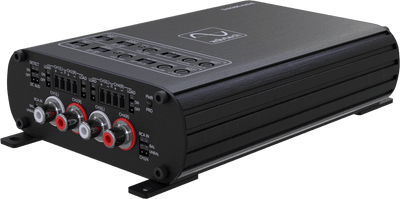
This collection covers two SKUs spanning the value and mid-tier price points: the Prodigy Audio NBM1000.5 (1000W total at $387.99) and the Wavtech link1000.5plus (1000W total at $649.99). Need help deciding between a 5-channel and a 4-channel-plus-monoblock approach? Contact us before you buy.
Authorized Dealer
Every amplifier is brand new with the full manufacturer warranty.
Power Matching
Send us your subwoofer or speaker specs. We'll recommend the right amplifier at the right impedance before you buy.
Hands-On Expertise
Direct support from staff who designs, builds, and competes with these systems. Honest recommendations, not upsells.
Fast Shipping from TN
In-stock orders ship within 1-2 business days from our Tullahoma, Tennessee warehouse.
The decision between a 5-channel amplifier and a 4-channel-plus-monoblock pair comes down to three factors: install complexity, build flexibility over time, and total cost.
Choose a 5-channel if you want:
One chassis to mount instead of two. Significantly less wiring complexity (one power feed, one ground, one remote turn-on). All tuning controls in one location. Total cost lower than buying a quality 4-channel plus a quality monoblock separately. A complete system in one purchase rather than staging two amplifier purchases.
Choose a 4-channel plus monoblock if you want:
The ability to upgrade the front-stage amp or the sub amp independently as the build evolves. Higher total power output (a dedicated monoblock typically produces more sub-channel power than a 5-channel's sub section). Architecturally cleaner separation between the front-stage signal path and the subwoofer signal path. The flexibility to choose Class AB or Class A for the front stage and Class D for the sub.
For most daily-driver upgrades and SQ-focused builds that don't require maximum sub output, the 5-channel approach is the practical choice. For high-power SPL builds, competition systems, or reference audiophile installs, separates are the architecturally correct path.
Architecture of a 5-Channel Amplifier
A 5-channel amplifier internally is a 4-channel full-range amp combined with a 1-channel subwoofer amp on the same circuit board, sharing one power supply, one cooling system, and one chassis. The four full-range channels typically deliver 50W to 100W RMS per channel at 4 ohms. The fifth channel (the subwoofer channel) typically delivers 300W to 500W RMS at 2 ohms or 1 ohm, depending on the amp's stability rating.
Most modern 5-channel amps use a hybrid architecture: Class AB or Class D for the full-range channels and Class D for the high-current subwoofer channel. This combines the sonic character of the chosen full-range topology with the efficiency required to drive a subwoofer cleanly without overheating the chassis.
The Two SKUs in This Collection
Prodigy Audio NBM1000.5 ($387.99)
1000W total output across the five channels. Class D efficient design with full crossover capability per channel. The value-tier 5-channel pick for daily-driver builds where the entire system upgrade happens at one accessible price point. Currently on sale from $464.99.
Wavtech link1000.5plus ($649.99)
1000W total output in a compact chassis. Wavtech's Link series is engineered for installs where physical size matters as much as power output. The mid-tier 5-channel pick where chassis compactness is a priority. Currently on sale from $749.99.
Power Matching for 5-Channel Builds
The four full-range channels feed your front and rear speakers. The fifth channel feeds your subwoofer. Each section needs to be matched to its load.
Speaker channels: Match the per-channel RMS power to your speakers' RMS rating, ideally at 75 to 150% of the speaker's rating. For most aftermarket components or coaxials rated at 50-100W RMS, the 50-100W per channel range on these amps is well-matched.
Subwoofer channel: Match the sub channel's RMS rating to your subwoofer's RMS rating. The NBM1000.5 and link1000.5plus both put roughly 500W to the sub channel, which is well-matched to a single 500W RMS subwoofer or two 250W RMS subs wired in parallel.
The honest scope: 5-channel amplifiers are not the right architecture for buyers running large subwoofers (1000W+ RMS) or multiple high-power sub configurations. For those builds, a dedicated monoblock plus a separate 4-channel is the correct path.
Frequently Asked 5-Channel Amplifier Questions
What's a 5-channel amplifier used for?
A 5-channel amp powers four speakers (front pair plus rear pair) and a subwoofer from one chassis. It's the architectural alternative to running a 4-channel amplifier for the speakers plus a separate monoblock for the subwoofer. The advantage is install simplicity (one chassis, one power feed, one ground) and lower total cost. The trade-off is reduced flexibility for future per-component upgrades.
How does this compare to a 4-channel plus monoblock setup?
The 5-channel approach is simpler to install and lower in total cost. The 4-channel plus monoblock approach offers more sub-channel power, the ability to upgrade each amp independently, and architecturally cleaner separation between front-stage and subwoofer signal paths. For most daily-driver and SQ-focused builds without massive sub requirements, the 5-channel is the practical choice. For high-power SPL or competition builds, separates remain the correct path.
How much power do I need from each section?
Match the per-channel speaker RMS to your speakers' RMS rating (ideally 75-150% of the speaker rating). For aftermarket components rated 50-100W RMS, 50-100W per channel is well-matched. For the subwoofer channel, match the rated power to your sub's RMS. The 5-channel amps in this collection deliver roughly 500W to the sub channel, which suits a single 500W RMS subwoofer or two 250W RMS subs in parallel. For larger subwoofers (1000W+ RMS), a dedicated monoblock is the better architecture.
Can I bridge the speaker channels for more power?
Some 5-channel amps allow bridging the front or rear channel pair, but doing so typically eliminates the dedicated sub channel functionality or requires reconfiguring the amp's mode setting. Check the specific amp's spec sheet for bridging configurations. For most users, the standard 4-channels-plus-sub-channel layout is the intended use case, and bridging changes the entire architecture.
What's the difference between Class AB and Class D in 5-channel amps?
Class AB on the speaker channels delivers smoother high-frequency reproduction with the trade-off of more heat output. Class D is more efficient and runs cooler, with modern Class D 5-channel designs delivering transparent sound for full-range speakers. The subwoofer channel is virtually always Class D regardless of the speaker channel topology, because Class D efficiency is required for the high-current sub output without overheating the chassis.
Are these new with manufacturer warranty?
Yes. Every amplifier in this collection is brand new, sold by an authorized dealer, and carries the full manufacturer warranty. We handle warranty claims directly with the brand.
Do you offer power-matching consultation before purchase?
Yes. Send us your speaker specs (RMS power, impedance) and subwoofer specs and we'll recommend the right architecture (single 5-channel or 4-channel-plus-monoblock) for your specific build. Pre-purchase consultation is free.
Related Collections
Pairs Well With This Collection
Browse curated picks that work with the products above.