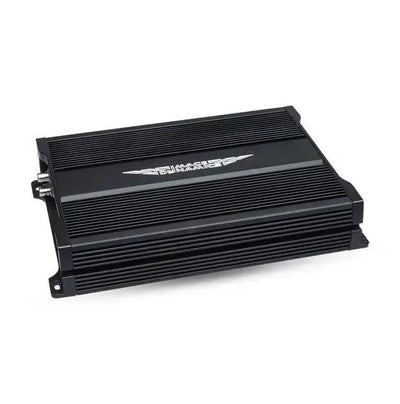
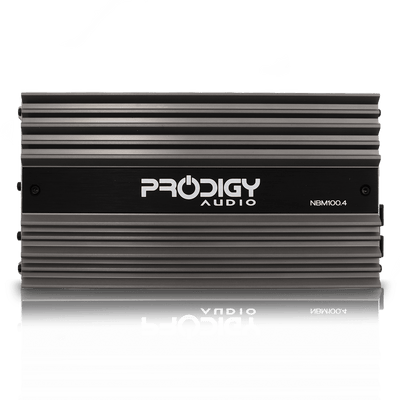
2-channel amplifiers for component speaker pairs and reference front-stage builds. Class D efficiency to Class A audiophile reference.
A 2-channel amplifier drives the most important pair of speakers in your car: the front-stage left and right components or coaxials that create the stereo image and define the listening experience. This is the architecture of choice for serious car audio builds because dedicating a stereo amp to the front stage isolates that critical signal path from rear-fill, sub duty, or other amplifier loads.
This collection spans $159 to $39,999 across four brands. The catalog covers daily-driver upgrades (US Acoustics Wendy at $159.99, US Acoustics Andrea at $289.99), SQ-focused mid-tier Class AB (Tru Technology Tungsten Grande at $2,399.99), audiophile reference Class A (Audio Wave Excel CA at $3,499.99, TRU Technology Billet B22-A at $8,500), and the absolute reference flagship (Audio Wave CR 401 Dual Mono at $39,999.99).
Need help matching a 2-channel amp to your front-stage components? Send us your speaker specs (RMS power, impedance) and we'll recommend the right amp before you buy.
Authorized Dealer
Every amplifier is brand new with the full manufacturer warranty.
Power Matching
Send us your subwoofer or speaker specs. We'll recommend the right amplifier at the right impedance before you buy.
Hands-On Expertise
Direct support from staff who designs, builds, and competes with these systems. Honest recommendations, not upsells.
Fast Shipping from TN
In-stock orders ship within 1-2 business days from our Tullahoma, Tennessee warehouse.
A 2-channel amplifier produces two independent channels of amplified output, typically dedicated to a stereo pair of speakers (left and right). In car audio, this is the architecture of choice for front-stage amplification where the front pair of components or coaxials is the primary listening source.
The reasoning is signal-chain isolation. When you dedicate a 2-channel amp to the front stage and run separate amplification for rear-fill and subwoofer, the front-stage signal path doesn't share power supply demands, ground paths, or thermal load with other amplifier sections. For SQ-focused builds, this isolation matters because the front-stage components are doing the imaging and tonal balance work — the foundation of every other tuning decision.
Beyond the standard front-stage role, 2-channel amps serve several other scenarios:
Active bi-amp configurations: Running separate 2-channel amps for tweeters and mid-range drivers (with active crossover from a DSP) gives you driver-specific amplification with no passive crossover network in the speaker path. Two 2-channel amps replace what would otherwise be one 4-channel amp, with the benefit of full power per driver.
Reference SQ flagship amps: The audiophile market gravitates toward 2-channel reference amplifiers for the absolute cleanest front-stage signal path. Class A 2-channel amps (Audio Wave Aspire Pro CA, TRU Technology Billet B22-A) and reference dual-mono designs (Audio Wave CR 401) deliver SQ that simply isn't available from multi-channel amps at any price.
Bridged mono for sub duty: Most 2-channel amps can be bridged to produce a single high-power mono output, suitable for driving a single subwoofer. This is a flexible option for builds where one amp handles both front pair and (when bridged) sub duty during different listening configurations. However, for dedicated sub amplification, a purpose-built monoblock is the architecturally correct choice.
Matching a 2-Channel Amp to Your Front Components
Power Matching
Match the amplifier's RMS power output to your speaker's continuous power rating. For most component speakers, this means 75 to 150 watts RMS per channel. Going under-powered creates clipping issues at high volume (which damages the speakers). Going over-powered with proper gain setup is fine; the speakers use only what they need.
Examples from this catalog:
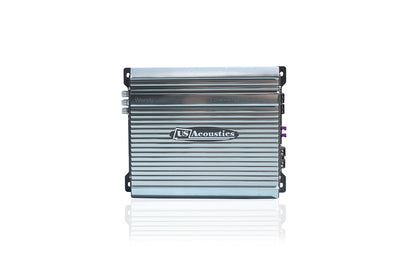
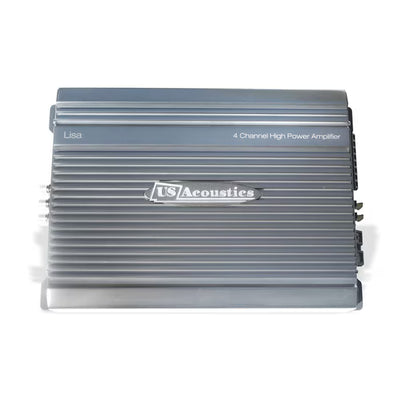
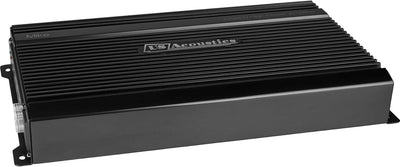
The US Acoustics Wendy (2x75W) is well-matched to most aftermarket coax and entry-tier component sets. The US Acoustics Andrea (2x150W) handles higher-power component sets without strain. The Tru Technology Tungsten Grande 2-channel is reference Class AB at the SQ-focused tier. The Audio Wave Aspire Pro USA and Aspire Pro CA serve audiophile builds where the front-stage amp deserves the same caliber as the components it drives.
Class Topology
This catalog spans three amplifier classes:
Class AB: The traditional audiophile architecture. Smoother high-frequency reproduction and stronger transient response than Class D, at the cost of efficiency and chassis size. US Acoustics Wendy and Andrea (entry/mid-tier), Tru Technology Tungsten Grande (SQ-focused), Audio Wave Excel (premium), Audiowave Aspire Pro USA (flagship), Audio Wave CR 401 Dual Mono (reference flagship at $39,999.99).
Class A: The audiophile reference tier. Continuous current draw, highest heat output, lowest distortion. Audio Wave Excel CA, Audio Wave Aspire Pro CA, TRU Technology Billet B22-A. Class A 2-channel amplification is the architectural ceiling for car audio front-stage SQ.
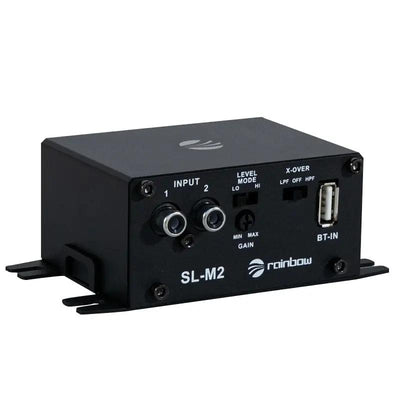
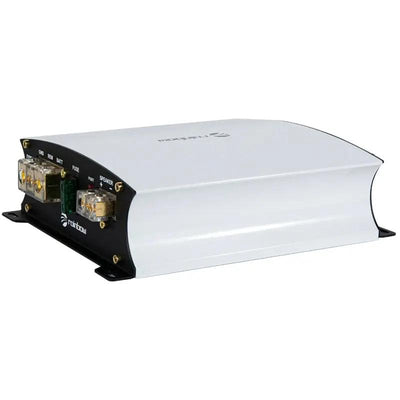
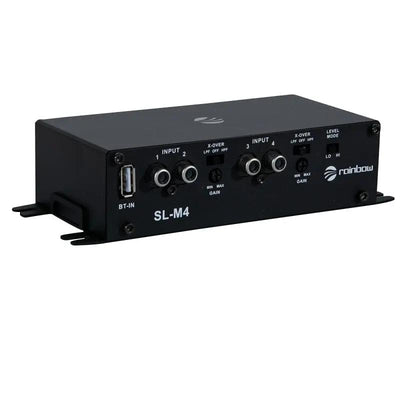
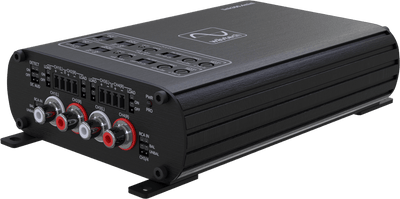
Compact / Micro: Rainbow Audio SL-M2 is a micro-chassis 2-channel for installs where space matters as much as power. Class D-style efficiency in a compact form factor.
Brands in This Collection
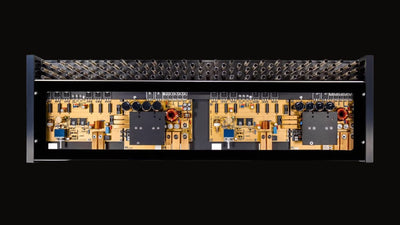
Audio Wave: The audiophile reference brand. Excel ($2,600), Excel CA Class A ($3,499.99), Aspire Pro USA ($7,999.99 to $8,999.99), Aspire Pro CA V2 Class A ($10,999.99), and CR 401 Dual Mono Class AB ($39,999.99). The CR 401 represents the absolute top of car audio 2-channel amplification.
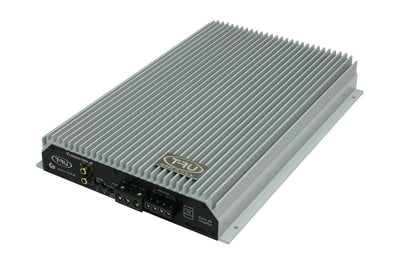
Tru Technology: Tungsten Grande Class AB 2-Channel ($2,399.99) and Billet B22-A v2.5 Class A ($8,500). Reference audiophile circuit topology with no compromise on component quality.
US Acoustics: Wendy ($159.99) and Andrea ($289.99). The accessible-tier 2-channel options with strong power-to-price ratios for daily-driver builds and stock-replacement upgrades.
Rainbow: SL-M2 micro amplifier on closeout pricing at $199.99 (regularly $549.99). Compact 2-channel for space-constrained installs.
Frequently Asked 2-Channel Amplifier Questions
What is a 2-channel amplifier used for?
The most common use is driving the front-stage pair of speakers (left and right components or coaxials) with dedicated amplification. This isolates the critical front-stage signal path from rear-fill, sub duty, or other amplifier loads, which matters for SQ-focused builds because the front-stage components do the imaging and tonal balance work. Beyond that primary use, 2-channel amps also serve active bi-amp configurations (separate amps for tweeters and midrange), reference audiophile front-stage builds, and bridged mono sub amplification.
What's the difference between Class A, Class AB, and Class D 2-channel amps?
Class A produces the cleanest amplification possible with continuous current draw, highest heat output, and lowest distortion. It's the audiophile reference tier. Class AB is the traditional audiophile architecture with smoother high-frequency reproduction than Class D, at the cost of efficiency. Class D is the most efficient with the smallest chassis, suitable for compact installs and high-power builds. For SQ-focused front-stage amplification, Class A or Class AB is the preferred choice. The Audio Wave Excel CA, Aspire Pro CA, and TRU Billet B22-A represent the Class A reference tier in this catalog.
Can I bridge a 2-channel amp for a subwoofer?
Yes, most 2-channel amps can be bridged to produce a single high-power mono output for sub duty. However, dedicated subwoofer amplification is the architecturally correct choice for permanent sub installations. A purpose-built monoblock at the same rated power delivers more efficient current output at low impedance loads (1 ohm or 2 ohm) than a bridged 2-channel amp. For dedicated sub duty, see our monoblock amplifier collection.
How much power do I need for my component speakers?
Match the amplifier's RMS power output to your speakers' continuous RMS rating, ideally at 75 to 150% of the speaker's RMS. For most aftermarket components rated at 100W RMS, a 2-channel amp delivering 100-150 watts per channel is well-matched. Going under-powered causes clipping at high volume which damages the speakers. Going over-powered with proper gain setup is fine because the speakers use only what they need.
What's the difference between a 2-channel amp and a 4-channel amp?
A 2-channel amp produces two amplified output channels (dedicated to a stereo pair). A 4-channel amp produces four amplified output channels (typically front pair plus rear pair, or front pair plus bridged sub duty). For a front-stage-only build where you want maximum power and SQ on the front pair, a 2-channel dedicated amp is preferred. For a front-plus-rear build where one amp handles both, a 4-channel is more efficient. Multi-amp builds often use a 2-channel for front, a separate 2-channel or 4-channel for rear, and a monoblock for sub.
Are these new with manufacturer warranty?
Yes. Every amplifier in this collection is brand new, sold by an authorized dealer, and carries the full manufacturer warranty. We handle warranty claims directly with the brand.
Do you offer power-matching consultation before purchase?
Yes. Send us your component speaker specs (RMS power, impedance) and we'll recommend the right 2-channel amp for your specific build. Pre-purchase consultation is free.
Related Collections
Pairs Well With This Collection
Browse curated picks that work with the products above.