

Most builders think the highest wattage wins the competition. It doesn't. I've judged and competed in IASCA Sound Quality events where a modest, carefully integrated 3-way front stage beat systems with triple the power budget — because the rules reward accuracy, not volume. Knowing what those rules actually evaluate changes everything about how you choose your components.
This guide walks through the real decision framework for selecting a competition-grade 3-way component set: what the rulebooks require, which specs separate competition-grade drivers from consumer fare, how to fit a 3-way system into a real vehicle, and how to manage the thermal stress that high-SPL competition use places on voice coils.
- IASCA Sound Quality competition judges systems on 6 criteria — Tonal Accuracy, Sound Stage, Imaging, Noise, System Safety, and System Control — with no amplifier power cap in the SQ format (IASCA, 2025)
- USACi SQ competition splits into two divisions: 0–600W RMS and 600W+ RMS — know which your system falls into before selecting drivers (USACi, 2025)
- Speaker sensitivity of 90 dB SPL at 1W/1m is the threshold for an efficient competition driver — every 3 dB increase in sensitivity cuts your required amplifier power in half for the same volume (Crutchfield)
- For competition midrange and tweeter drivers, target THD below 0.5% — this is the threshold at which human hearing can detect distortion in the midrange band (Monacor)
- Over 90% of electrical energy input to a speaker converts to heat — thermal management is not optional at competition power levels (MISCO Speakers)
What Competition Rules Actually Govern Your Speaker Choice?
The answer depends entirely on which format you're entering — and the two major US sanctioning bodies, IASCA and USACi, structure their rules very differently. Getting this wrong before purchase is expensive. The speaker set that qualifies you in one format may place you in a disadvantaged class in another.
IASCA Sound Quality: Judged on Accuracy, Not Power
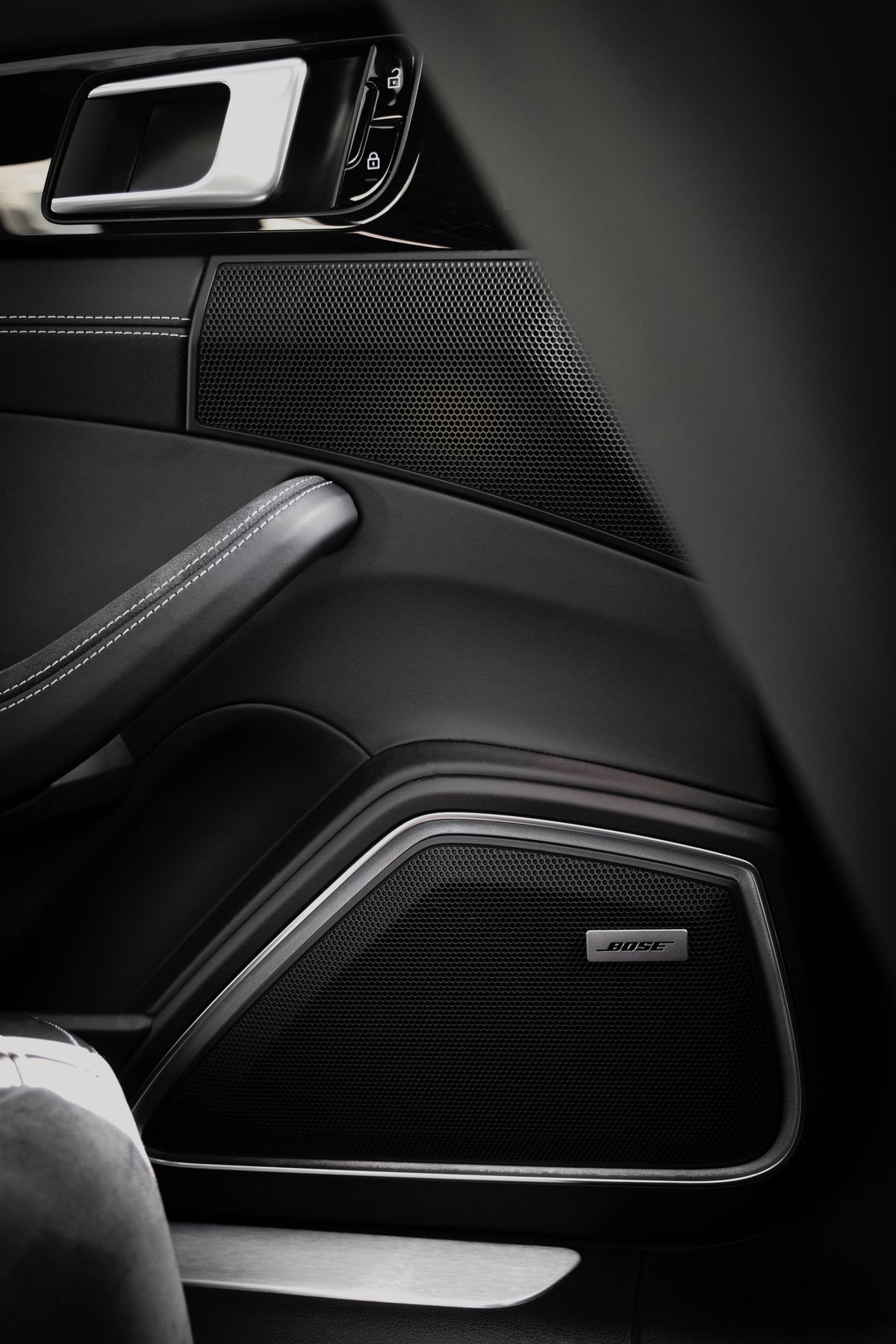
IASCA's Sound Quality Challenge evaluates vehicles on six criteria: System Safety, Tonal Accuracy, Sound Stage, Imaging, Noise, and System Control Operation (IASCA, 2025). There is no amplifier power cap in the SQ format. What matters is how accurately and cleanly your system reproduces music, how well it images, and how quiet the noise floor is. A lower-powered system with exceptional tonal accuracy will beat a loud, powerful system with poor imaging every time in a properly judged SQ event. IASCA is now in its 36th annual competition season and expanded to the AXPONA audiophile show in 2026 — the format is growing, and judging standards are tightening.
For SQ competition, your 3-way component selection should prioritize: flat frequency response across each driver's operating range, low THD in the midrange (where judges focus most heavily), and precise imaging capability from the tweeter. Power handling is secondary — adequacy matters, excess is irrelevant.
USACi Sound Quality: Power Class Matters
USACi Sound Quality divides competitors into two primary power divisions: 0–600W RMS and 600W+ (USACi Worldwide, 2025). Know your system's total RMS power before selecting drivers — this determines your class placement. A 3-way active system with three amplifier channels will need accurate total RMS measurement across all channels combined. Verify current class structures at the USACi website before your first event, as class boundaries are subject to annual revision.
Pre-Purchase Checklist: Before You Buy Any Drivers
- Which sanctioning body's events will you enter (IASCA, USACi, or both)?
- Download the current-year rulebook — verify power class thresholds and any vehicle modification restrictions
- Measure your vehicle's mounting depth for each driver location (woofer, midrange, tweeter)
- Determine: passive crossover (one amplifier channel per side) or active crossover (one channel per driver)?
- Set your amplifier total RMS budget and confirm class placement before buying
Which Electrical Specs Define a Competition-Grade Driver?
The spec sheet tells you what a driver is capable of. Reading it correctly tells you whether it belongs in a competition system. Four specifications matter for competition-grade evaluation — and sensitivity is the one most builders underweight.
Sensitivity: The Competition Multiplier
Sensitivity, measured in dB SPL at 1 watt at 1 meter, tells you how loud a driver gets per watt. The relationship is logarithmic: every 3 dB increase in sensitivity cuts your required amplifier power in half for the same output level (Crutchfield). Crutchfield classifies 88 dB at 1W/1m as average; 90 dB+ as efficient for car audio. Competition-grade drivers for IASCA SQ typically target 90–93 dB to leave power budget headroom for clean amplification without pushing amps toward clipping.
THD: The Distortion Line Competition Judges Will Hear
Total Harmonic Distortion quantifies non-linear distortion added by the driver to the original signal. For competition SQ, this matters most in the midrange band — where the human ear is most sensitive. According to Monacor's technical documentation, human hearing can detect non-linear distortion down to approximately 0.5% THD in the midrange band. Their threshold scale: above 1% is acceptable only for subwoofers; below 0.5% is clean for mids and highs; below 0.1% is reference grade. Competition-grade midrange and tweeter drivers should target below 0.5% THD. If a driver's spec sheet doesn't list THD — or lists it only at low frequencies — treat that as a red flag.
RMS Power Rating
RMS power is the continuous power the driver handles without distortion. For competition use, the question isn't just whether the driver can handle your amplifier's output — it's whether it can do so cleanly, repeatedly, over the duration of a competition day. A driver with 50W RMS that stays below 0.5% THD at 50W is more valuable for SQ competition than a 100W driver that crosses 1% THD at 60W. Read both the power rating and the THD-versus-power curve if the manufacturer publishes it.
Impedance
Most competition-grade component drivers operate at 4 ohms nominal. Some manufacturers offer 2-ohm variants for higher current draw scenarios. Verify your amplifier's stable impedance range matches your final wired load — especially if you're running multiple drivers in parallel on an active system. Check your DSP guide and our full DSP selection guide for active vs. passive crossover implications on impedance loading.
How Do You Set Crossover Points for a Competition 3-Way System?
Crossover points determine which frequencies each driver reproduces. Get them wrong and you get frequency gaps (areas where no driver covers the range), overlap distortion (two drivers fighting over the same frequencies), or driver damage from out-of-range excursion. Crutchfield's general starting-point recommendation for a 3-way system: woofer low-pass at 80 Hz, tweeter high-pass at 3,000 Hz, with the midrange operating as a bandpass between those two points (Crutchfield). Treat these as starting points, not fixed values — your actual crossover frequencies must be tuned to match your specific drivers' characteristics and your vehicle's acoustics.
Active vs. Passive Crossovers for Competition
Passive crossovers — networks of capacitors, inductors, and resistors — split the signal after amplification. They're convenient but fixed, and they introduce insertion loss. Most competition SQ builders running 3-way systems go active: each driver gets its own dedicated amplifier channel, with the crossover handled digitally by a DSP before amplification. Active crossovers give you complete control over crossover frequency, slope, phase alignment, and time delay on every channel. For IASCA SQ judging categories like Imaging and Sound Stage, that level of precision is what separates mid-pack finishes from podium placements.
Going active requires one amplifier channel per driver — at minimum 3 channels for a 3-way front stage (tweeter, midrange, woofer) plus a separate sub channel. If you're considering that route, our DSP selection guide covers channel count planning, time alignment, and parametric EQ in detail.
How Does Your Vehicle Shape Which Components You Can Use?
A driver that measures perfectly in a test baffle may be physically impossible to install in your actual door. Vehicle fit is a constraint that eliminates candidates before any spec comparison happens. Measure your mounting locations first — then shop within those constraints, not the other way around.
Mounting Depth: The Hard Limit
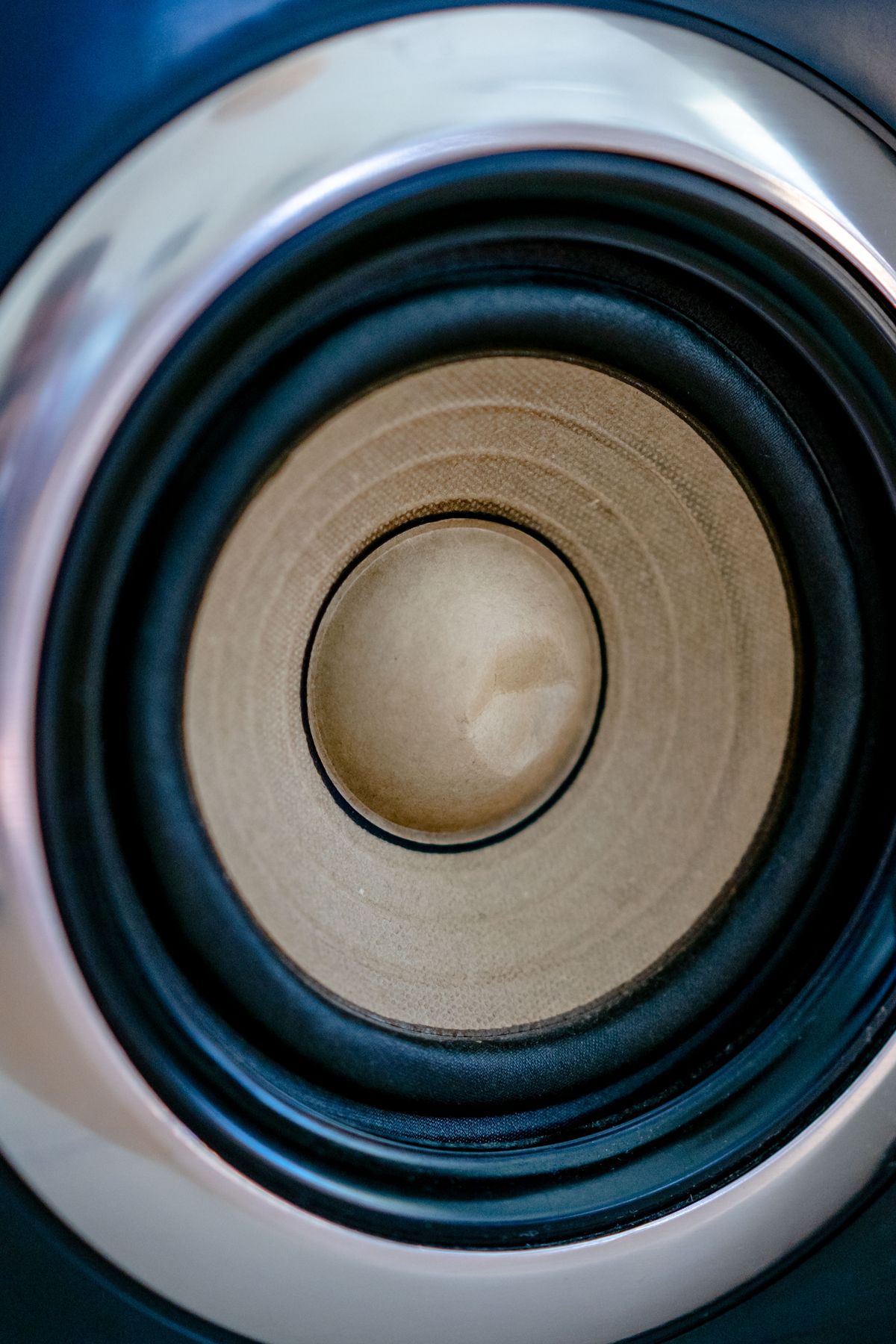
Mounting depth is the minimum clearance from the mounting flange face to the rear of the magnet assembly. A compact sedan door panel may offer only 1 inch of depth for a midrange driver, while a truck door can accommodate a deeper woofer. These aren't approximate guidelines — they're pass/fail criteria. A driver 2 mm too deep will either contact the window glass regulator or be physically impossible to mount. Measure with a depth gauge, not a tape measure, and account for wiring clearance — generally add 0.25 inches beyond the driver's published mounting depth for harness routing.
Enclosure for the Mid-Bass Woofer
In a 3-way system, the woofer or mid-bass driver typically handles 80–350 Hz. In competition builds, this driver is often mounted in a sealed or bandpass enclosure in the door panel or a custom fabricated enclosure in the kick panel, rather than relying on free-air mounting. Enclosure volume directly affects the frequency response of the mid-bass driver — too small and low-end extension suffers; too large and the response becomes loose and uncontrolled. Check the driver manufacturer's recommended sealed enclosure volume (Vas/Qt ratio) before committing to a mounting location.
Tweeter Placement and Imaging
Tweeter position has an outsized effect on staging and imaging — two of the six IASCA SQ judging criteria. On-axis listening (tweeter aimed directly at the listener) produces the sharpest image but can cause listening fatigue from high-frequency directivity. Off-axis mounting reduces brightness but widens the soundstage. Most competition SQ builders experiment with angle and position before finalizing the install. Plan for adjustability in your tweeter mount if you're serious about competitive results.
What Does Thermal Management Mean for Competition Drivers?
Speakers are inefficient by design. More than 90% of the electrical energy input to a speaker converts to heat, with less than 10% converting to acoustic sound (MISCO Speakers). Under competition use — sustained high-SPL playback through a full competition day — voice coil temperature management becomes a durability and performance concern, not just a theoretical one.
Voice Coil Temperature Thresholds
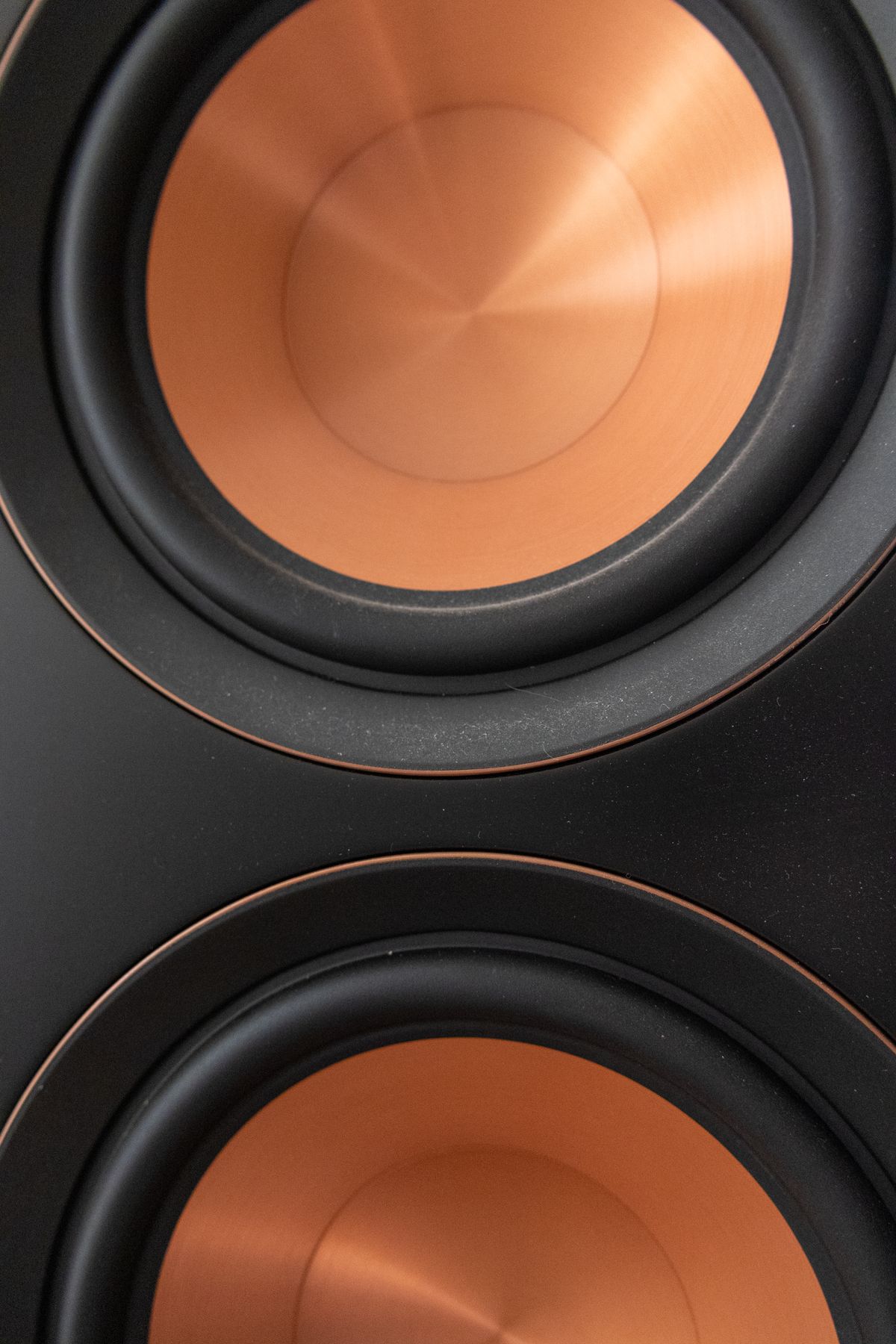
According to MISCO Speakers' thermal engineering documentation and corroborated by Klippel GmbH measurement data, sustained voice coil temperatures above 150°C for 30+ minutes risk permanent damage. Under high-volume music playback, voice coils in woofers can reach 200°C within minutes (MISCO Speakers). The coil itself doesn't fail first — the adhesive bonding the coil to the former does. Once that bond weakens, coil geometry changes and THD rises sharply, exactly the kind of distortion an IASCA judge will score against you.
Practical Thermal Testing Before the Show
Don't wait until competition day to discover a thermal problem. Test your system under realistic competition conditions before the event: play a high-bass test track at 80% volume for 5 full minutes, then measure the driver's surface temperature with an infrared thermometer. Surface temperature isn't the same as voice coil temperature — but a surface reading above 120°F (49°C) after 5 minutes indicates the voice coil is running significantly hotter and warrants investigation. If you see that reading, check your enclosure ventilation, reduce bass boost, or verify amplifier gain staging isn't causing the driver to work harder than necessary.
Thermal Solutions for Competition Builds
- Vented pole piece: Drivers with a center vent in the pole piece allow air to circulate through the gap during excursion, cooling the voice coil directly. This is the most effective passive cooling solution.
- Aluminum basket: Steel baskets conduct heat poorly; cast aluminum baskets transfer heat from the coil through the basket to the mounting surface, extending safe operating time.
- Enclosure ventilation: A sealed door panel trap with no airflow becomes an oven. A 10 mm ventilation gap at the rear of the mounting cavity improves ambient temperature significantly during extended playback.
- Gain staging discipline: The cleanest thermal management is not over-driving the driver. Properly calibrated gain staging — where the amplifier clips before the driver reaches its thermal limit — protects both the driver and your competition score.
How to Score and Select Your Final 3-Way Component Set
Once you've confirmed fit, class compliance, and amplifier compatibility, the final selection comes down to a structured comparison across the factors that determine competition results. A weighted scoring approach prevents spec-sheet fixation on any single number at the expense of the full picture.
| Selection Factor | Weight | What to Evaluate |
|---|---|---|
| Sensitivity (dB at 1W/1m) | 25% | 90 dB+ preferred; higher = more power headroom for clean operation |
| THD at rated power | 25% | <0.5% for mids/highs; <0.1% is reference grade |
| Physical fit (mounting depth + diameter) | 20% | Must physically fit your measured mounting locations — pass/fail |
| Thermal design | 15% | Vented pole piece, aluminum basket, heat-sink provisions |
| Cost and availability | 15% | Within budget; replacement parts available if a driver fails at competition |
Score each candidate set on a 0–5 scale per factor, multiply by the weight, and total the results. This surfaces the set that best matches your specific vehicle and competition format — not just the set with the highest sensitivity or lowest THD in isolation. Browse our competition and performance audio page and the component selection guide for additional pairing guidance.
Frequently Asked Questions
What is the most important spec to check when picking a competition grade 3-way component set?
Sensitivity and THD together determine competition performance more than RMS power alone. A driver with 91 dB sensitivity at 1W/1m needs half the amplifier power of an 88 dB driver for the same volume — giving you headroom for cleaner operation. Pair that with THD below 0.5% in the midrange band (where IASCA judges focus) and you have the two specs that matter most for SQ scoring.
How do I know if my vehicle can fit a larger driver?
Measure the mounting depth and diameter of your mounting location before shopping. Use a depth gauge from the flush mounting surface to any obstruction behind the baffle (window regulator, inner door panel). Add 0.25 inches beyond the driver's published mounting depth for wiring clearance. A cardboard mock-up cut to the driver's flange diameter confirms fit before purchase and prevents expensive return shipping.
Can I use a higher-power driver in a low-power class if I add a limiter?
Yes, a DSP-based limiter or manual gain reduction can cap output below a class threshold. However, the driver will still see full current spikes in the voice coil gap during dynamic transients. Thermal rise remains a concern regardless of the limiter setting. Verify with your rulebook — some competitions verify power at the amplifier output, not at the DSP input, which changes the compliance calculation entirely.
Why does sensitivity matter for competition builds?
In IASCA Sound Quality competition, there's no power cap — but judges score tonal accuracy, which degrades sharply near a driver's power limit. A high-sensitivity driver reaches competition SPL levels with lower amplifier output, keeping the system further from its distortion threshold throughout the judged playback. In USACi's 0–600W class, sensitivity determines how much of that 600W budget you actually need to use, leaving the rest as clean headroom.
What crossover settings work best for a typical 3-way set?
Crutchfield recommends starting at 80 Hz for the woofer low-pass and 3,000 Hz for the tweeter high-pass, with the midrange operating as a bandpass between those points. These are starting values — tune from there using RTA measurement and listening evaluation specific to your drivers and vehicle. Active crossovers through a DSP give you the resolution to refine these points precisely, which is why most serious competition builders go active for 3-way systems.
How do I test thermal performance before the show?
Play a sustained high-bass track at 80% system volume for 5 full minutes, then immediately measure the driver's front face with an infrared thermometer. A surface reading above 120°F after this test indicates the voice coil is running in a range where sustained competition use could cause adhesive bond degradation. Address through enclosure ventilation improvements, gain reduction, or upgrading to a driver with vented pole piece design.
Do I need a professional installer for a competition grade 3-way component set?
For the install itself, an experienced competition installer is worth the cost — proper baffle construction, sealed enclosure dimensions, and wire routing directly affect competition scores. For the tuning, IASCA and USACi both allow competitors to tune and adjust their own systems at the event. Many top competitors do their own DSP tuning, iterating at practice events before the competition season. Get the mechanical installation done properly, then own the tuning yourself.
The Bottom Line
Choosing a competition-grade 3-way component set starts with knowing which rulebook governs your event, not which driver has the biggest number on the box. IASCA SQ rewards tonal accuracy and imaging — specs like THD and sensitivity matter more than peak power. USACi SQ places you in a power class before you compete, so system RMS total is your first checkpoint.
Beyond the rules: measure your vehicle before you shop, plan for thermal management at competition power levels, and verify crossover compatibility with your DSP or amplifier's crossover section. The driver that wins is usually not the loudest one — it's the one that integrates cleanest with the vehicle it's installed in.
Questions about building a competition front stage? Reach us at 707-999-3071 or visit our performance and competition page for system design resources. Our system design guide and the amplifier selection guide are useful next steps if you're building the full front stage from scratch.


