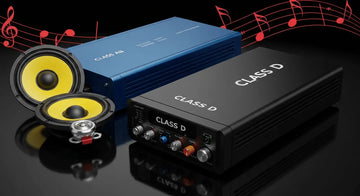
Unleash Your Car's Sound: The Ultimate Guide to 4-Channel Car Amplifiers
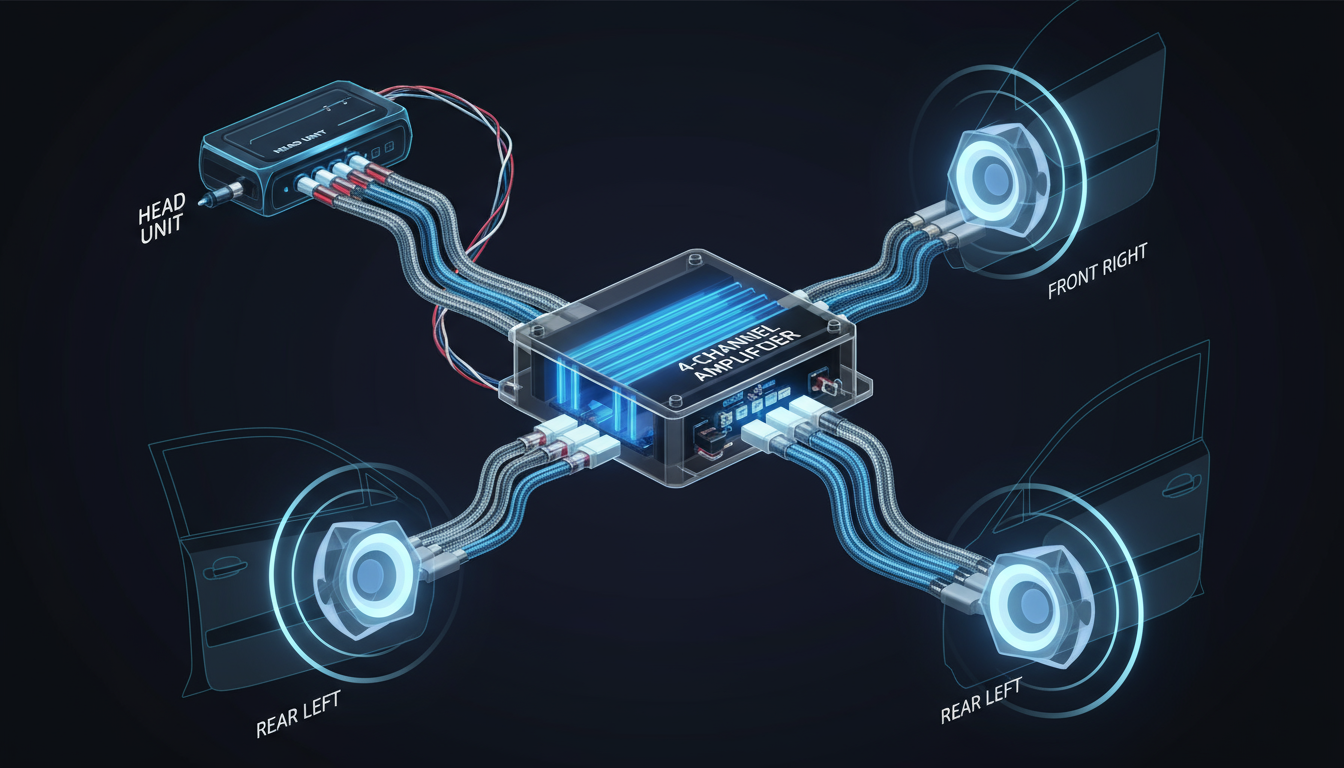
If you've ever turned up the volume on your car stereo only to be met with flat, distorted, or underwhelming sound, you've experienced the limitations of a factory-installed audio system. The secret to unlocking vibrant, detailed sound isn't just in the speakers—it's in the power source. A dedicated multi-channel amplifier is the heart of any serious upgrade, providing the muscle needed to drive your speakers without strain.
Why You Need Dedicated Power
At its core, this component is designed to boost the audio signal for separate speaker channels. Your car's head unit typically produces only 15-22 watts of power. While this makes sound, it isn't enough to drive high-quality aftermarket speakers to their potential.
The benefits of adding amplification are immediate:
-
Clarity: With ample clean power, speakers reproduce music with greater accuracy. You'll hear subtle details and crisp highs that were previously lost.
-
Headroom: An amplifier provides the raw power to get loud without sacrificing quality.
-
Dynamics: It allows your system to reproduce the difference between quiet and loud passages faithfully, making music feel alive.
Key Specifications to Consider
-
RMS Power: Ignore "Peak Power." Focus on RMS (Root Mean Square), which measures continuous, clean power. Match this number to your speakers' power handling.
-
Signal-to-Noise Ratio (SNR): A higher number (in dB) means less background hiss and more music.
-
Total Harmonic Distortion (THD): A lower percentage means cleaner sound. Look for 0.1% or less.
-
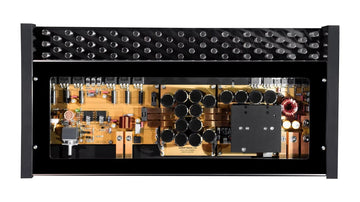
Class A/B vs. Class D: Class A/B is the traditional choice for fidelity but runs hotter. Class D is the modern standard—highly efficient, compact, and cool-running.
Flexible System Configurations
One of the greatest strengths of a 4-channel design is its flexibility.
-
Standard Stereo: Power front and rear speakers for a balanced sound field.
-
Bridged 3-Channel Mode: Power your front speakers with channels 1 & 2, and bridge channels 3 & 4 to drive a subwoofer. This powers an entire system with one chassis.
-
Active Front Stage: Use discrete channels for tweeters and midbass drivers, giving you total control over crossover points and time alignment.
Installation Essentials
Proper installation is just as important as the hardware itself.
-
Power Wiring: Use a high-quality wiring kit with the correct gauge for your amp's current draw.
-
Grounding: Keep the ground wire short (under 3 feet) and connected to bare metal on the chassis to prevent noise.
-
Crossovers: Set your High-Pass Filter (HPF) around 80Hz for door speakers to block damaging bass frequencies they can't reproduce.
Finding the Right Match
Choosing the right model involves matching specs to your specific needs. Whether you need a compact amp to hide under a seat, a marine-grade unit for your Jeep, or a DSP-enabled powerhouse for competition tuning, we have the selection to meet your goals. Explore our range and find the perfect power source for your ride.