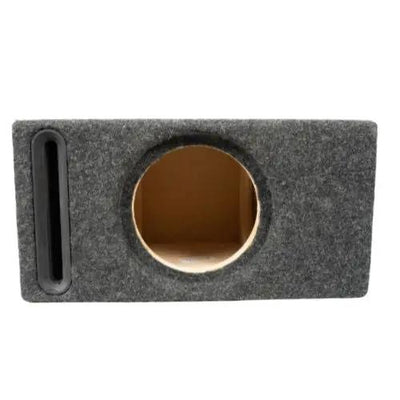
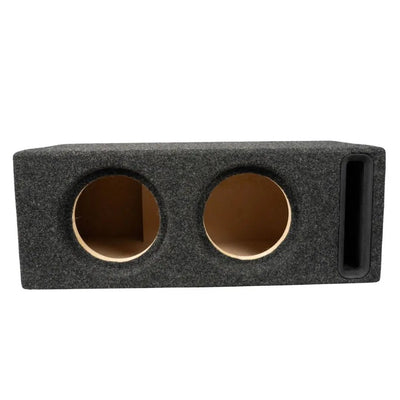
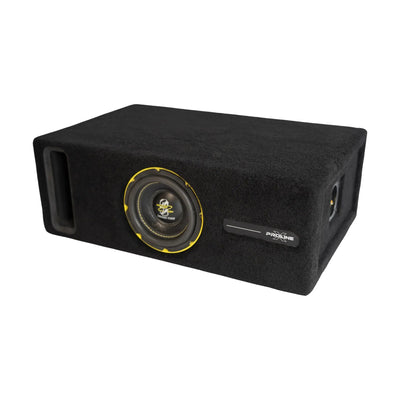
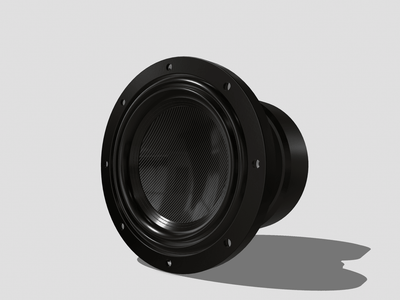
6 inch subwoofers (sometimes specified as 6.5 inch depending on the manufacturer's frame measurement) are built for installations where enclosure volume is limited but bass performance still matters. The smaller cone and shorter excursion requirement means they work well in tight sealed boxes, under-seat enclosures, and custom builds where a 10 or 12 inch driver won't fit. This collection includes the Proline X Driv 650 and the Triton SX6D4. Series breakdown, fitment notes, and enclosure recommendations below the lineup.
Why Buy From Audio Intensity
CNC-Matched Enclosures
Spec-built to your driver's Thiele-Small parameters
6 inch subwoofers are the right tool when enclosure volume is the limiting factor. Sports cars, single-cab trucks, motorcycles, and under-seat builds all present situations where a 10 or 12 inch driver and the enclosure it needs won't fit. A 6 inch sub in a properly sized sealed box can solve the bass gap without compromising the build or the available space.
SQ and Midbass Applications
Smaller drivers respond faster. In a sound quality build where accuracy matters more than raw output, a 6 inch sub handles the lower midbass frequencies (the kick drum fundamental, the weight of a standup bass, the low-end body of acoustic instruments) with a speed and precision that larger drivers at higher excursion levels can struggle to match.
Supplementing a Full-Range System
In a system with strong midbass from door speakers, a 6 inch sub fills in the octave below without creating overlap or cancellation issues. It blends cleanly at higher crossover points and works well in smaller sealed enclosures where a larger driver would require more volume to perform correctly.
The Collection at a Glance
Two drivers in this collection, each suited to a slightly different priority.
Proline X Driv 650 ($199.99): A 6.5 inch dual 4 ohm driver spec-matched to Proline X CNC enclosures. The driver and enclosure are engineered as a system, with Thiele-Small parameters measured and matched to the box dimensions. Buy them together for guaranteed alignment and no enclosure guesswork.
Triton SX6D4 ($249.99): A 6.5 inch dual 4 ohm driver built specifically for SQ-focused builds. Tight transient response, low distortion, designed to disappear into the music rather than draw attention. The right pick when sound quality is the priority over flagship pricing.
What to Know Before You Buy
Enclosure Volume
6 inch subwoofers are generally designed for small sealed enclosures, typically in the 0.1 to 0.35 cubic foot range depending on the driver. Check the manufacturer's recommended sealed volume before building or buying an enclosure. Too much airspace and the driver loses control. Too little and you restrict excursion. The Thiele-Small parameters tell you everything. Use the EBP Calculator to determine the right enclosure type for a given driver. Proline X CNC enclosures are available in 6 inch fitments, built in-house to spec.
Power Matching
Match your amplifier's RMS output to the driver's RMS power handling. 6 inch subwoofers typically run in the 150 to 300W RMS range. Underpowering causes clipping at high volume; overpowering stresses the voice coil. RMS to RMS is the goal.
Impedance and Wiring
Both the Triton SX6D4 and the Proline X Driv 650 are dual 4 ohm drivers. Wired in parallel each presents a 2 ohm load; wired in series each presents an 8 ohm load. Most monoblock amplifiers are most efficient at 2 ohms. Confirm your amplifier's stable impedance before wiring.
Crossover Setting
Set your low-pass crossover between 60 and 80Hz for a dedicated subwoofer role in a full-range system, or up to 100Hz if the 6 inch is handling lower midbass duties. The right crossover point depends on where your main speakers roll off. Use your DSP or amplifier's built-in crossover to dial in the blend. If you're running a DSP, you have full control over the slope and frequency for a clean handoff.
How 6 Inch Compares to Other Sizes
A 6 inch sub operates in a specific part of the frequency range. It won't reproduce the deep low-end extension of a 12 inch or 15 inch driver in a ported enclosure, and it won't produce the output levels of a larger driver at the same power. What it does well is speed, accuracy, and integration in small-enclosure applications where larger drivers aren't practical.
If you have slightly more room available, an 8 inch subwoofer extends the low-end response and handles more power while still fitting in compact sealed enclosures. For builds where output and extension are the priority over footprint, 10 inch and 12 inch drivers in properly tuned enclosures will outperform a 6 inch in absolute terms.
The right size depends on the installation. If space is genuinely limited, a well-chosen 6 inch in the right box will outperform a larger driver crammed into an undersized enclosure every time.
Frequently Asked 6 Inch Subwoofer Questions
What's the difference between a 6 inch and 6.5 inch subwoofer?
Manufacturers measure differently. Some publish the cone diameter, others the frame outer diameter, and others the cutout dimension. A driver labeled 6 inch and a driver labeled 6.5 inch often have the same actual cone area within a small margin. Check the cutout dimension and overall outer diameter on the spec sheet, not just the marketing label.
Will a 6 inch subwoofer make a real difference?
Yes, when used correctly. A 6 inch sub in a properly sized sealed enclosure will fill in the lower midbass and upper subwoofer range cleanly. It won't compete with a 12 inch sub in a ported box for raw output, but it will dramatically improve the bottom end of a system where a larger sub isn't an option, and it will outperform a misapplied larger driver in a too-small enclosure.
What enclosure size does a 6 inch sub need?
Most 6 inch subs are designed for sealed enclosures in the 0.1 to 0.35 cubic foot range. The exact volume depends on the driver's Thiele-Small parameters. Use the published manufacturer specs and the EBP Calculator to determine the right enclosure type and volume for a specific driver. Don't guess.
How much power does a 6 inch subwoofer need?
Most 6 inch drivers run in the 150 to 300W RMS range. Match the amplifier's RMS output at the final wired impedance to the driver's RMS rating. Underpowering causes clipping when you push the volume; overpowering stresses the voice coil and shortens the driver's life. RMS to RMS is the goal.
Can I use a 6 inch subwoofer for midbass instead of a true sub?
Yes, and it's a strong application. With the low-pass crossover set higher (around 100Hz instead of 80Hz), a 6 inch sub handles the lower midbass region that door speakers can't reproduce. This works especially well in SQ-focused builds where accuracy in the 60 to 100Hz range matters more than chest-thumping output.
How do I wire a dual 4 ohm 6 inch subwoofer?
Wired in parallel a dual 4 ohm driver presents a 2 ohm load to the amplifier, which is the most efficient configuration for most monoblock amplifiers. Wired in series it presents an 8 ohm load. Confirm your amplifier's stable impedance specifications before final wiring.
Spec-Matched Enclosures
Built for the Drivers in This Collection
Every Proline X enclosure is CNC-cut to the Thiele-Small parameters of a specific driver. Internal volume, port tuning, baffle thickness, and bracing calculated from measured driver data. Built and shipped from Tullahoma, TN.