6-channel amplifiers for active 3-way front stage builds with dedicated amplification per driver tier (tweeter, midrange, woofer).
A 6-channel amplifier provides six independent channels of amplified output, most commonly used for active 3-way front stage builds in car audio. The architecture: two channels for the tweeter pair, two channels for the midrange pair, and two channels for the midbass or woofer pair, with the DSP handling active crossover between driver tiers. The result is each driver receiving its own dedicated power without passive crossover networks in the speaker path.
Beyond active 3-way builds, 6-channel amps serve front pair plus rear pair plus bridged subwoofer configurations (4 full-range channels plus 2 bridged sub channels), or multi-zone installs. The 6-channel architecture is the working tier for SQ-focused multi-driver systems where dedicated amplification per channel matters more than chassis count.
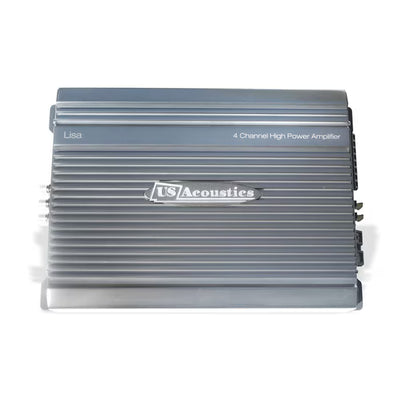
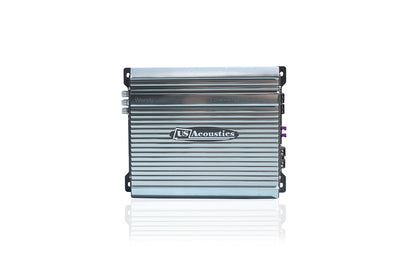
This collection covers two SKUs at very different price points: the US Acoustics Lanna (6x150W Class AB at $695) for active 3-way builds at a practical price tier, and the Audio Wave Aspire Pro 6-Channel (currently on sale at $21,999.99, regularly $29,999.99) for reference-grade audiophile builds at the absolute top of the 6-channel category.
Authorized Dealer
Every amplifier is brand new with the full manufacturer warranty.
Power Matching
Send us your subwoofer or speaker specs. We'll recommend the right amplifier at the right impedance before you buy.
Hands-On Expertise
Direct support from staff who designs, builds, and competes with these systems. Honest recommendations, not upsells.
Fast Shipping from TN
In-stock orders ship within 1-2 business days from our Tullahoma, Tennessee warehouse.
An active 3-way front stage is the SQ-focused architecture where each driver in a 3-way component set (tweeter, midrange, midbass) is amplified by its own dedicated channel pair, with active crossover happening in the DSP rather than in passive crossover networks at the speakers. The result is precise crossover slope control, channel-specific time alignment, and the elimination of passive component coloration in the signal path.
An active 3-way build requires 6 channels of amplification minimum:
Channels 1-2: Driving the tweeter pair, typically high-passed at 2,500-5,000 Hz with steep slopes (24-48 dB/oct) to protect the tweeters.
Channels 3-4: Driving the midrange pair, band-passed between the tweeter crossover and the midbass crossover (typically 250-2,500 Hz).
Channels 5-6: Driving the midbass pair, low-passed at 250-500 Hz to hand off to the subwoofer signal chain.
A 6-channel amplifier delivers all three driver tiers from one chassis. The alternative (three separate 2-channel amps) gives you brand and class flexibility per driver tier but adds chassis count, wiring complexity, and total install footprint. For SQ-focused builds where chassis consolidation matters, the 6-channel approach is the practical choice.
Other 6-Channel Configurations
Front + Rear + Bridged Sub: 4 channels driving front and rear speakers in stereo pairs, with channels 5 and 6 bridged to a single mono output for a subwoofer. This is the alternative to a 5-channel amplifier (front + rear + sub all in one chassis), with the advantage that the sub channels can be reconfigured to provide bridged or stereo output depending on the build.
Active 2-way Front + Rear + Sub: 2 channels for tweeter pair (active high-pass), 2 channels for midrange pair (band-pass), and 2 channels for rear or sub. The DSP-active 2-way front stage gives you the precision benefits of active crossover for the most critical driver pair while still powering rear-fill or a sub from the same chassis.
Multi-Zone Audio: Front pair, rear pair, and a third pair for utility zones (rear bench area, exterior accessory speakers, marine secondary zone). Less common in car audio specifically but a real use case for some vehicle types.
The Two SKUs in This Collection
US Acoustics Lanna (6x150W Class AB, $695)
900W total Class AB output across 6 channels (150W per channel at 4 ohms). The practical-tier 6-channel choice for active 3-way builds where Class AB sound quality matters but the price point needs to stay reasonable. Active SQ build territory without requiring a five-figure investment in amplification.
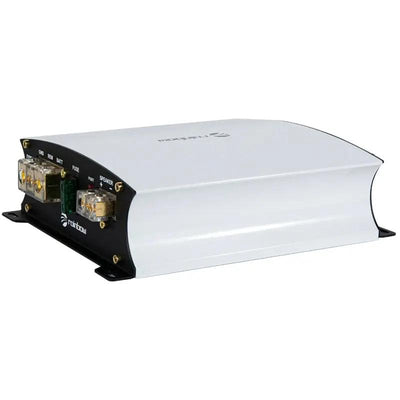
Audio Wave Aspire Pro 6-Channel ($21,999.99)
Reference-grade Class A 6-channel amplification. Audio Wave's Aspire Pro lineup represents the absolute top of car audio amplification, with no compromise on circuit topology, component selection, or build quality. The Aspire Pro 6-Channel is engineered for active 3-way builds where the amplification deserves the same caliber as the audiophile drivers it powers. Currently on closeout pricing from $29,999.99 as a previous demo unit, last one available.
Power Matching for Active 3-Way Builds
The three driver tiers in an active 3-way build have different power requirements:
Tweeters: Typically 30-75W RMS per channel. The lowest power demand of the three tiers because tweeters reproduce a narrow high-frequency band. The 150W per channel of the US Acoustics Lanna is overpowered for tweeter duty, which is fine because gain control handles the volume matching.
Midrange: Typically 75-150W RMS per channel. The midrange driver handles the most critical frequency band (vocals, guitars, instruments) so amplifier quality matters here more than maximum power. 75-100W per channel from a quality amp produces better results than 200W per channel from a lower-tier amp.
Midbass / Woofer: Typically 100-200W RMS per channel. The midbass driver moves significant air volume and benefits from amplifier headroom. 150W per channel is the practical tier; 200W+ enters audiophile reference territory.
Frequently Asked 6-Channel Amplifier Questions
What is a 6-channel amplifier used for?
The primary use is active 3-way front stage amplification, where each driver pair in a 3-way component set (tweeter, midrange, midbass) gets dedicated amplification with active crossover in a DSP. The 6-channel architecture also serves front-plus-rear-plus-bridged-sub configurations and multi-zone audio installs. For SQ-focused builds that require dedicated amplification per driver tier, 6 channels is the practical minimum.
What's the difference between a 6-channel amplifier and a 4-channel plus separate amps?
A 6-channel amp delivers all three driver tiers from one chassis. The alternative (three separate 2-channel amps, or one 4-channel plus one 2-channel) gives you brand and class flexibility per driver tier but adds chassis count, wiring complexity, and total install footprint. For SQ-focused builds where chassis consolidation matters and the same amplifier brand serves all driver tiers, the 6-channel approach is the practical choice.
Can I run an active 3-way build without a 6-channel amp?
Yes, but you need at least 6 amplifier channels total from any combination. Common alternatives: three 2-channel amps (one per driver tier), one 4-channel plus one 2-channel, or two 3-channel amps if available. A single 6-channel amp consolidates the entire amplification stack into one chassis but isn't the only path.
Do I need a DSP for active 3-way?
Yes. Active 3-way requires precise crossover slopes and channel-specific time alignment, which a DSP provides. Without a DSP, you can't implement the active crossovers that route each frequency band to its dedicated amplifier channel. The DSP is what makes active 3-way actually work; without it, you have a 6-channel amp with no crossover routing.
How much power per channel do I need for active 3-way?
It depends on the driver tier. Tweeters typically need 30-75W RMS per channel. Midrange needs 75-150W RMS per channel. Midbass needs 100-200W RMS per channel. A 6-channel amp providing 100-150W per channel handles all three tiers without strain for most aftermarket 3-way component sets. For reference audiophile builds with high-power drivers, 150-250W per channel enters the right territory.
Can I bridge a 6-channel amp for a subwoofer?
Most 6-channel amps support bridging the last channel pair (5-6) to mono for a subwoofer. This converts the amp from 6 full channels into 4 full channels plus 1 bridged sub channel. Confirm the amp's bridged minimum impedance rating and match your subwoofer's wiring configuration to that load.
Are these new with manufacturer warranty?
The US Acoustics Lanna is brand new with full manufacturer warranty. The Audio Wave Aspire Pro 6-Channel listed here is a previous demo unit at closeout pricing; contact us for warranty details specific to the demo unit before purchase.
Related Collections
Pairs Well With This Collection
Browse curated picks that work with the products above.
A DSP gives you crossovers, EQ, time alignment, and signal routing in a single unit. The amplifier delivers the power; the DSP makes the system actually sound right.