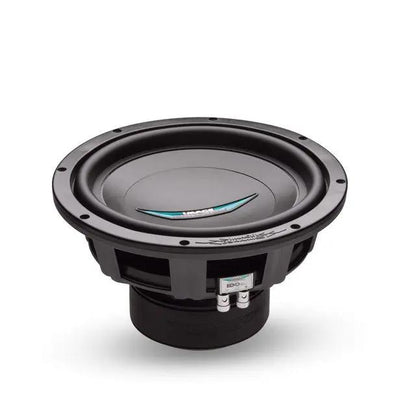
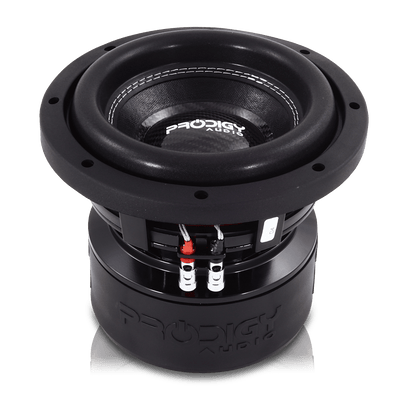
8 inch subwoofers occupy a specific position in the subwoofer lineup. More low-end extension and output capability than a 6 inch, without the enclosure volume requirements of a 10 or 12 inch driver. The lighter cone mass means faster transient response, which translates to bass that stays locked to the beat rather than lagging behind it. For SQ builds, under-seat installs, and compact enclosures where a larger driver isn't practical, an 8 inch in the right box punches well above its size. This collection carries drivers from Image Dynamics, Prodigy, Arc Audio, Audiomobile, and Proline X. Series breakdown, fitment notes, and enclosure recommendations below the lineup.
Why Buy From Audio Intensity
CNC-Matched Enclosures
Spec-built to your driver's Thiele-Small parameters
A subwoofer has to start moving the instant a bass note hits and stop just as fast when it ends. An 8 inch cone is significantly lighter than a 10 or 12 inch equivalent, which means the motor has less mass to control. In practice this shows up as tighter, more articulate bass. The kick drum has a defined attack rather than a smear, and bass lines stay rhythmically accurate at higher volume levels. For listeners who prioritize accuracy over raw output, that responsiveness matters more than cone area.
Enclosure Flexibility
8 inch drivers work in sealed enclosures as small as 0.35 to 0.5 cubic feet depending on the driver's parameters. That's small enough to fit under most truck bench seats, inside a rear quarter panel, or in a custom console build. For installs where preserving cargo space or maintaining a stock appearance is the goal, the enclosure size requirement of an 8 inch sub is a real advantage over larger drivers.
The Collection at a Glance
The lineup spans three tiers, each suited to a different build goal.
Entry tier ($99 to $120): Image Dynamics ID8 V4, Prodigy NB2-8D4. Clean, accurate drivers for sealed builds where the priority is bass integration over maximum output. The ID8 V4 at $99.99 is one of the most accessible ways into the Image Dynamics lineup.
Mid-range tier ($190 to $270): Image Dynamics IDQ8 V4, Arc Audio ARC8, Prodigy NB5-8D4, Proline X Driv 850. The serious SQ and high-output options most builders should evaluate first. The IDQ8 V4 is the SQ reference for the size. The NB5-8D4 at 800W RMS delivers output levels more typical of a 10 inch driver in the right ported enclosure. The Proline X Driv 850 is spec-matched to Proline X enclosures for guaranteed alignment.
High-output tier ($350+): Audiomobile EVO 2408. Tightly controlled mid-bass and SPL capability in a compact 8 inch form factor. Currently sold out; contact us for restock notifications or alternative options.
Sealed vs Ported for 8 Inch Subwoofers
Sealed enclosures are the default recommendation for 8 inch drivers in SQ builds. The alignment is predictable, the enclosure is compact, and the roll-off below the tuning frequency is gradual enough that the sub still contributes usable output below its -3dB point. For most music genres and most front-stage builds, sealed is the right choice.
Ported enclosures are worth considering when output is the priority. A properly tuned ported box will extend the low-end response of an 8 inch driver and increase efficiency in the bass region, producing noticeably more output from the same amplifier power. The tradeoff is a larger enclosure and a steeper roll-off below the port tuning frequency. Use the EBP Calculator with the driver's published Thiele-Small parameters to determine which alignment makes more sense for a given driver and space constraint.
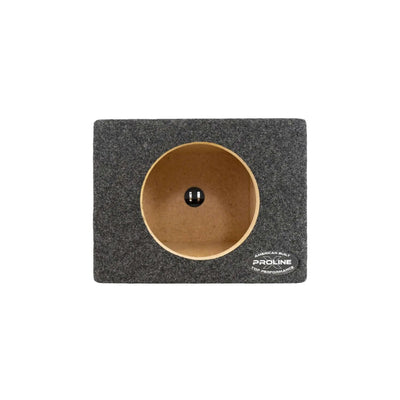
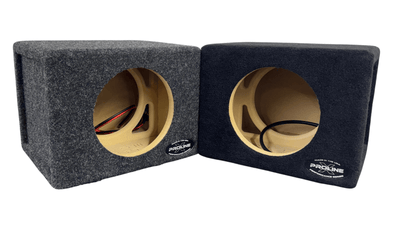
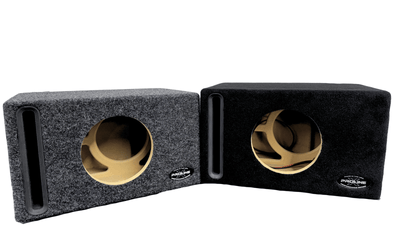
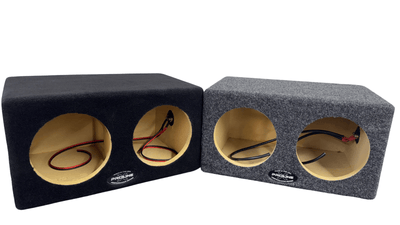
Proline X CNC enclosures are available in 8 inch sealed and ported configurations, built in-house in Tullahoma, Tennessee on ShopSabre routers to the specific parameters of the drivers they're matched to.
How 8 Inch Compares to Other Sizes
If enclosure space is genuinely constrained and accurate bass matters more than output, an 8 inch is often a better choice than a 6 inch. It handles more power, reaches lower frequencies, and gives you the option of a ported alignment if you need the extension. For installs where you have room for a larger box and output is the priority, a 10 inch or 12 inch driver will outperform an 8 inch in absolute terms.
The 8 inch is the right choice when the install dictates it: under a seat, in a tight custom enclosure, or in a system where speed and accuracy matter more than volume. In those applications it's not a compromise. It's the correct tool for the job.
Frequently Asked 8 Inch Subwoofer Questions
Do I need an amplifier for an 8 inch subwoofer?
Yes. A head unit's internal amplifier doesn't have the power or current capability to properly drive an 8 inch sub. Use an external monoblock or 2-channel amplifier with RMS output matched to the subwoofer's RMS rating at the final wired impedance. Match RMS to RMS, set gain correctly to prevent clipping, and use a low-pass crossover around 80Hz as a starting point.
Will an 8 inch subwoofer hit hard enough?
For SQ builds, music listening, and most applications outside competition SPL, yes. An 8 inch in the right enclosure delivers tight, controlled bass that integrates cleanly with the rest of a system. It won't compete with a pair of 12s in a ported box for raw output, but for clean, accurate bass that complements the front stage rather than dominating it, an 8 inch is often the better choice.
What's the ideal frequency range for an 8 inch sub?
Most 8 inch drivers operate cleanly from around 30Hz at the low end up to 200Hz or higher. The usable subwoofer range depends on the enclosure type and tuning. Sealed alignments roll off gradually below the box resonance, ported alignments extend lower but roll off steeply below tuning. For a dedicated subwoofer role, set the low-pass crossover between 60 and 80Hz and let the driver work in its strongest range.
What enclosure size does an 8 inch sub need?
Sealed: typically 0.35 to 0.6 cubic feet depending on the driver. Ported: typically 0.6 to 1.0 cubic feet, depending on tuning frequency. Always check the manufacturer's published Thiele-Small parameters before building or buying a box. Generic recommendations don't account for individual driver behavior.
How does an 8 inch compare to a 10 inch subwoofer?
A 10 inch driver moves more air, handles more power on average, and reaches lower frequencies than an 8 inch in absolute terms. The 8 inch responds faster, fits in tighter enclosures, and integrates more cleanly with a front-stage-focused system. For SQ builds and tight-space installs, the 8 inch is often the better choice. For installs with enclosure room and output as the priority, the 10 inch wins.
Spec-Matched Enclosures
Built for the Drivers in This Collection
Every Proline X enclosure is CNC-cut to the Thiele-Small parameters of a specific driver. Internal volume, port tuning, baffle thickness, and bracing calculated from measured driver data. Built and shipped from Tullahoma, TN.