

In IASCA Street Bass competition, a ported enclosure tuned to 35 Hz can outpace an equivalent sealed build by 4–6 dB in a scored run at the same amplifier power — the difference between placing and not placing. In a daily driver trunk, that same gap means a 250-watt amplifier on a ported 12-inch hitting the same output as a 700-watt amplifier on sealed (PowersOf10, 2026). The efficiency gap below 30 Hz is the single biggest variable in a car audio subwoofer build. The physics behind it are measurable and predictable — not opinion.
But SPL doesn't settle the argument. Sealed enclosures produce measurably less harmonic distortion at ultra-low frequencies, lower group delay than the audibility thresholds at every frequency tested, and a rolloff slope that naturally cancels car cabin gain without equalization. This comparison works through each category with measured data so you can make the right call for your specific build.
- Ported produces ~10 dB more output below 30 Hz with the same driver and amplifier power — equivalent to needing three sealed enclosures to match one ported at that frequency (PowersOf10, 2026; DIYMobileAudio)
- Sealed produces roughly half the THD of ported at 20 Hz/100 dB — ported's lower excursion advantage reverses below tuning frequency (AVS Forum)
- Group delay audibility thresholds are frequency-dependent: 18.5ms at 30 Hz, 25ms at 20 Hz — well-designed ported boxes often stay within these limits (Subwoofer.Tools, March 2024)
- A 12-inch ported enclosure is 75% larger than its sealed equivalent: 59.1 L vs 33.8 L for the same JL Audio driver (Audio Judgement, 2023)
- Ported costs $8–12 per dB of output; sealed costs $15–20 per dB (PowersOf10, 2026)
Building from scratch? Our subwoofer enclosure design guide covers all four enclosure types. For ported specifics, see our ported box port length and tuning guide.
Real Measurement Data: The Output Gap Below 30 Hz
The output difference between enclosure types isn't uniform across the frequency range — it's concentrated in the deep bass octave where it matters most for car audio. For the same driver, same amplifier, and same cabinet volume, a ported alignment gains output progressively below 80 Hz and peaks the advantage at the tuning frequency. Below Fb, ported falls off harder. The table below maps common car audio build goals to enclosure type, tuning frequency, and the real-world trade-offs at each setting (DIYMobileAudio; PowersOf10, 2026):
| Build Goal | Enclosure Type | Typical Tuning | SPL at 30 Hz (relative) | Group Delay at Fb |
|---|---|---|---|---|
| Daily Driver — SQ | Sealed | N/A | Baseline | ~9ms flat |
| Daily Driver — Bass | Ported | 32–38 Hz | +6–8 dB | 20–35ms |
| SQL Build | Ported (low tuning) | 26–32 Hz | +8–10 dB | 15–22ms |
| SPL Competition | Ported (high tuning) | 40–55 Hz | +10–14 dB at Fb | 25–45ms |
Sources: DIYMobileAudio; PowersOf10 (2026) — output difference measured relative to same driver/box volume in sealed alignment
The SQL row is where most serious daily driver builds land: tuning below 32 Hz keeps the group delay peak under or near the 18.5ms perceptibility threshold at 30 Hz while still capturing a meaningful 8–10 dB output advantage over sealed. SPL competition builds push tuning higher to maximize peak output at the scored frequency — group delay becomes irrelevant because the scoring mic doesn't measure it.
Which Delivers More Output Per Watt?
Ported wins decisively on output efficiency. Achieving 105 dB at 30 Hz requires 500–800 watts from a sealed enclosure; a ported design reaches the same level on 200–300 watts. At 25 Hz the gap widens further: 700 watts sealed vs 250 watts ported for 105 dB (PowersOf10, 2026). Ported designs deliver 2–4 times more peak dynamic output across the 18–36 Hz octave at identical power levels — which is why every serious IASCA and dB Drag Racing competitor runs ported regardless of bracket class (DIYMobileAudio; PowersOf10, 2026).
The mechanism is a fourth-order Helmholtz resonator. At and above the tuning frequency (Fb), the port moves large volumes of air while simultaneously unloading the cone — two radiating surfaces instead of one. Sealed boxes operate as second-order systems; the cone works alone, fighting the air spring behind it with each stroke. Cone excursion quadruples with each successive octave deeper in a sealed design just to maintain equivalent SPL — the reason sealed car audio builds exhaust amplifier headroom and driver Xmax well before ported builds reach the same SPL target (DIYMobileAudio). That quadrupling means exponentially more mechanical work per note.
Chart 1: Amplifier Power Required to Hit 105 dB SPL — Two Target Frequencies
The power gap is larger at lower frequencies. At 30 Hz a ported design needs roughly 2–3× less amplifier power than sealed for the same SPL. At 25 Hz the gap reaches nearly 3× (250W vs 700W).
What does that power gap mean financially? Ported systems cost approximately $8–12 per dB of output. Sealed systems cost $15–20 per dB to the same target (PowersOf10, 2026). A comparable ported system — $500 sub plus $250 amplifier — can reach the same acoustic output as a $400 sub plus $600 amplifier sealed rig, saving roughly $250 on the amplifier alone.
Verdict: Ported wins on SPL efficiency and cost per dB. If output is the priority, sealed cannot compete watt-for-watt below 40 Hz.
Which Produces Less Distortion at Ultra-Low Frequencies?
The answer flips depending on whether you're above or below the tuning frequency. Above Fb, ported produces markedly less distortion — because the port is moving air and the cone's excursion drops near zero at the tuning point. Below Fb, the port provides zero acoustic output and the cone swings freely with no loading, causing excursion to increase exponentially until Xmax is exceeded. Sealed enclosures maintain controlled, progressive excursion across their entire range (DIYMobileAudio).
Measured THD comparisons confirm this split behavior. In side-by-side testing of a 12-inch car audio driver in sealed vs ported alignment at 20 Hz and 100 dB, the ported box measured approximately 6% THD while the sealed version measured roughly 12% at the same output level (AVS Forum). The ported design's lower excursion above Fb drives that advantage — at 20 Hz, sitting just above a low-tuned ported alignment's Fb, the cone barely moves while the port handles the load. The sealed cone is fighting its own air spring at near-Xmax excursion.
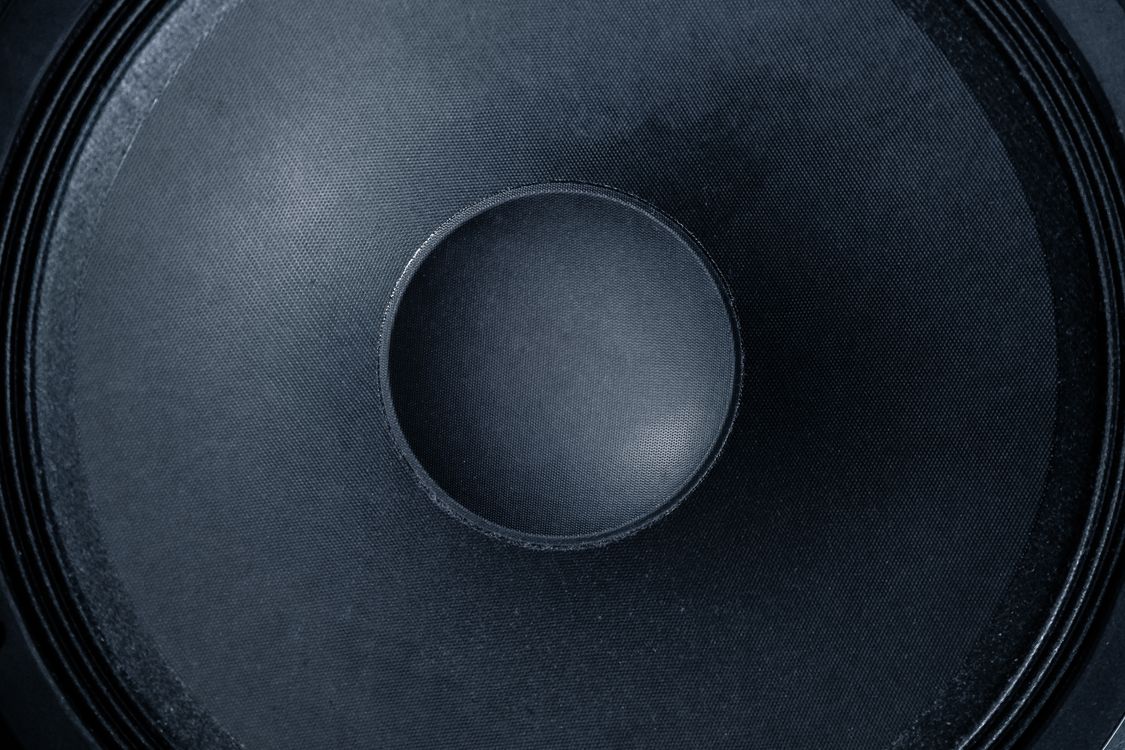
That advantage only holds above Fb. Play a signal 5–10 Hz below the port's tuning frequency and the cone becomes unloaded — it "flaps about" with no damping from either the air spring (that's sealed) or the port resonator (that's spent). At those frequencies, sealed's gradual –12 dB/octave rolloff actually limits excursion damage better than ported's abrupt unloading. This is why every properly designed ported system requires a subsonic filter set 3–5 Hz below Fb to prevent mechanical damage during heavy use (DIYMobileAudio; AVS Forum).
Verdict: Ported wins on distortion above Fb. Sealed wins on distortion safety below Fb and on protection against excursion overload without active filtering.
Does Ported Bass Actually Sound Slower? The Group Delay Data
Ported does produce more group delay — but whether that delay is audible depends entirely on the tuning frequency. The critical insight from a March 2024 analysis at Subwoofer.Tools: audibility thresholds for group delay are frequency-dependent. At 30 Hz, the threshold at which group delay becomes perceptible is 18.5ms. At 20 Hz, it's 25ms (Subwoofer.Tools, March 2024). A well-designed ported sub tuned to 20–25 Hz can keep its delay profile within or close to these thresholds across the music bandwidth.
Sealed enclosures have an inherent advantage here. The sealed design's lower filter order means less phase rotation and more consistent group delay across all frequencies — typically 8–10ms at 30 Hz with minimal variation above that (PowersOf10, 2026). WinISD simulation data for a typical car audio 12-inch driver (Fs ≈ 30 Hz, Qts ≈ 0.45) confirms the pattern: the sealed curve holds within 10ms from 30–120 Hz, while the same driver in a 35 Hz-tuned ported box peaks at 30–35ms near Fb before converging with sealed above 60 Hz (DIYMobileAudio).
Chart 2: Ported Group Delay vs Audibility Thresholds by Frequency
The ported line peaks at 34ms near 30 Hz — well above the 18.5ms audibility threshold at that frequency. The orange threshold line shows the delay rises more slowly as frequency drops, which is why a ported box tuned to 16–20 Hz can push its peak delay below the perceptibility window. Sealed stays at ~9ms throughout: always below threshold.
There's an important design variable here. Raising the tuning frequency pushes ported group delay higher and into the critical music bandwidth. Lowering it — as SVS does in its PB series — moves the peak delay down to 16–20 Hz, where the audibility threshold is 25ms and most music has little content. A 30 Hz tuning is the worst case for ported group delay audibility. A 20 Hz tuning can keep the peak delay within the inaudible range for the vast majority of program material.
The conventional wisdom — "sealed sounds tighter because less group delay" — is only definitively true when the ported box is tuned in the 35–45 Hz range, which is common in car audio SPL builds chasing peak output. Tune ported to 26–30 Hz (SQL alignment) and the group delay peak drops below the bass guitar fundamental (41 Hz), below kick drum fundamentals (50–80 Hz), and below the bandwidth where delay audibility matters. WinISD simulation data for any standard 12-inch car audio driver confirms: sealed and ported group delay curves converge from 120 Hz down to 30 Hz when the ported box is tuned at 28–30 Hz. The "flabby bass" reputation comes from high-Fb daily driver builds tuned for kick drum impact, not from low-tuned SQL enclosures.
Verdict: Sealed wins categorically on group delay. Ported can match sealed in perceived tightness when tuned below 25 Hz — but most real-world builds are tuned between 30–45 Hz, where the delay penalty is measurable and potentially audible on transient-rich program material.
Which Is Smaller and Easier to Build?
Sealed wins significantly on both counts. For the same JL Audio 12W3v3-4 driver, a properly aligned sealed enclosure measures 33.8 liters. The optimally tuned bass reflex version requires 59.1 liters — 75% more internal volume (Audio Judgement, 2023). In trunk terms: a 33.8-liter sealed box for a 12-inch driver fits in a roughly 16″ × 13″ × 12″ package — achievable in most mid-size sedan trunks with room to spare. The 59.1-liter ported equivalent needs approximately 20″ × 18″ × 14″ minimum — that's your entire trunk floor and then some in a compact vehicle.
The volume gap varies by driver size. For an 8-inch driver (JL 8W3v3-4), the sealed box needs only 9.35 liters vs 10.28 liters for the ported equivalent — just a 10% difference. At small driver sizes the port volume premium nearly disappears. It's 12-inch and larger builds where the 50–75% size penalty becomes a real constraint on trunk real estate — especially in sedans where every cubic inch competes with the spare tire and daily cargo (Audio Judgement, 2023).
Chart 3: Measured Enclosure Volumes by Driver Size (JL Audio drivers)
The 10% volume premium for 8-inch ported is trivial. The 75% premium for 12-inch ported is not — it's the difference between fitting in a trunk and taking over one.
Build complexity compounds the size issue. Sealed enclosures require accurate dimensions, solid joints, and an airtight seal. Ported designs add port diameter selection, port length calculation, net volume accounting after subtracting port tube displacement, port velocity verification, and the need for a subsonic filter in the signal chain. DIY ported designs have a roughly 60% beginner success rate vs ~90% for sealed — and ported failures are more often silent (wrong tuning sounds like thin, peaky bass) than sealed failures (obvious air leaks or mechanical noise) (PowersOf10, 2026).
Verdict: Sealed wins on size and build simplicity. The volume gap is modest at 8 inches but substantial at 12 inches and above. First-time builders have a 30-percentage-point higher success rate with sealed.
Which Wins for Car Audio Specifically?
Sealed has a unique advantage in vehicle acoustics that ported cannot replicate without equalization. A car cabin generates bass gain starting around 60 Hz and rising at approximately 12 dB/octave below that threshold — caused by the room resonance of the enclosed vehicle interior (CarAudioHelp.com, 2015). A sealed subwoofer rolls off at exactly 12 dB/octave. The two slopes cancel, producing a perceptually flat in-car bass response without any DSP intervention.
In measurements, ported subwoofers in car cabins exhibit 7–8 dB additional lift at 40–50 Hz from cabin resonance, and up to 20 dB of boost at 20 Hz in a 110 cubic foot vehicle interior. Ported's –24 dB/octave slope doesn't pair cleanly with the cabin's +12 dB/octave gain — you get a large bass hump below 80 Hz that typically requires active DSP correction to sound balanced in the vehicle (AVS Forum).
Ported's SPL advantage still applies in car audio for competition builds and SQL setups where a DSP processor (Helix DSP.3, Audison Bit One, JL Audio TwK) is already in the signal chain. If you're running active equalization anyway, you can correct the bass hump and keep ported's output advantage. It's the unprocessed daily driver install — no DSP, no measurement mic, just sub + amp + crossover — where sealed's natural cabin gain cancellation makes a meaningful real-world difference.
"SPL-constraints aside, we believe that a better performance is achieved with a sealed box sub."
— Otto Jørgensen, acoustic engineer (Dynaudio, April 2024)
That assessment holds in car audio as well. When the build is a daily driver and the goal is a balanced, musical bass response without calibration overhead, sealed's predictable rolloff behavior and automatic cabin gain compensation make it the technically cleaner choice. Car audio SPL competitors — where the constraint is always maximum output — reach the opposite conclusion for exactly the same reason.
Verdict: Sealed wins for daily driver installs (cabin gain cancellation, no DSP needed). Ported wins for SPL competition and any build already running an active DSP processor.
Does Car Audio DSP Change the Equation?
A legitimate counter-argument from the DSP-heavy car audio community: with a tuned active processor in the signal chain, the frequency-domain differences between sealed and ported largely disappear. An Audison Bit One, Helix DSP.3, or JL Audio TwK can flatten the ported bass hump from cabin gain interaction, apply a subsonic filter, and time-align the subwoofer to the mids — at which point ported's output advantage is the only remaining difference, and it's substantial. If you're already running a full active system, the enclosure type mainly determines how much headroom you have before the amp clips or the driver bottoms out.
This is true as far as it goes. DSP can correct frequency response. It can't correct group delay — phase response isn't equalizable without adding more phase rotation elsewhere. It can't protect a ported driver from cone unloading below Fb if a subsonic filter isn't set correctly. And it requires that the installer actually measures the system with a microphone and applies the calibration, which the majority of weekend DIY builders skip.
The best car audio builds I've seen are ported with a tuned DSP processor behind them — they get the output advantage of ported with the bass hump corrected and the subsonic rolloff precisely set. But those builds also require a measurement mic, signal analyzer software like REW or OmniMic, a quality DSP unit, and the patience to iterate the calibration. If you're not adding that layer, sealed gives you a result that's closer to correct by default, no calibration required.
Sealed or Ported: Decision by Builder Profile
Choose sealed if you are:
- Building for a vehicle — cabin gain cancellation produces a naturally flat response that ported can't achieve without DSP
- A first-time builder — ~90% vs ~60% success rate; sealed failures are obvious, ported failures are subtle and hard to diagnose
- Daily driving with music as the priority — sealed's lower group delay preserves kick drum and bass guitar transient information; cabin gain cancellation means a naturally balanced response without touching a DSP (PowersOf10, 2026)
- Space-constrained — sealed boxes are typically 50–75% smaller for 12-inch and larger drivers
- Using a driver with Qts above 0.5 — high-Qts drivers are designed for sealed alignment and underperform in ported boxes
Choose ported if you are:
- Competing in SPL events — every serious bracket at IASCA and dB Drag Racing runs ported; the efficiency gap is the competition gap
- Building a dedicated SQL or heavy bass daily — 8–10 dB more output below 30 Hz with low tuning transforms the listening experience without burning through amplifier headroom
- Running 500W or more — ported extracts dramatically more SPL per watt at high power levels, changing the cost-per-dB equation in your favor
- Using a confirmed ported driver (Qts 0.3–0.4) — purpose-spec'd vented drivers perform poorly in sealed alignment; you're fighting the driver's design intent
- Running an active DSP processor — a Helix DSP, Audison Bit, or JL TwK corrects ported's cabin gain hump while keeping its full output advantage
Building ported? See our ported box port length and tuning guide for the Helmholtz formula and worked examples. Building sealed? Our sealed box guide covers Qtc calculations, polyfill, and box volume optimization.
Frequently Asked Questions
How much louder is a ported subwoofer than sealed?
Approximately 10 dB louder below 30 Hz with the same driver and amplifier power — a gap consistent across measured comparisons of sealed vs ported alignments using standard 12-inch car audio subwoofers (PowersOf10, 2026; DIYMobileAudio). In amplifier terms, ported needs 200–300 watts to hit 105 dB at 30 Hz; sealed requires 500–800 watts for the same level. The gap narrows significantly above 60 Hz where both enclosure types perform comparably.
Does a ported subwoofer have more distortion than sealed?
Above the tuning frequency, ported produces less distortion because reduced cone excursion keeps the driver in its linear operating range. A ported reference sub measured ~6% THD at 20 Hz/100 dB vs ~12% for a comparable sealed design at the same output level (AVS Forum). Below tuning frequency, ported distortion climbs steeply as the cone unloads — this is why a subsonic filter is required in every ported design.
Is the "ported bass sounds slow and loose" reputation accurate?
It's tuning-dependent. Ported boxes tuned to 35–45 Hz — common in car audio builds optimizing for kick drum punch — produce group delay that exceeds the 18.5ms perceptibility threshold at 30 Hz (Subwoofer.Tools, March 2024). SQL builds tuned to 26–30 Hz push that delay peak well below the kick drum and bass guitar bandwidth — below 30 Hz, the perceptibility threshold rises to 25ms, which most low-tuned ported boxes stay within. The loose bass reputation comes from high-Fb car audio builds optimized for output, not from low-tuned SQL enclosures.
Why is a sealed box better for car audio than ported?
Car cabins generate approximately +12 dB/octave of bass gain below 60 Hz due to room resonance effects (CarAudioHelp.com, 2015). A sealed subwoofer's –12 dB/octave rolloff mirrors this gain and cancels it, producing a naturally flat in-car response. Ported's –24 dB/octave rolloff doesn't cancel the cabin gain — it creates a large bass hump below 80 Hz that typically requires active DSP to correct. Sealed gives you a natural match without equalization.
Can I fix the differences between sealed and ported with EQ?
Frequency response differences, yes — a car audio DSP processor (Helix, Audison, JL Audio TwK) with a measurement mic can flatten the bass hump that ported creates when combined with cabin gain. Phase response (group delay) is not correctable with EQ without adding more phase rotation elsewhere. Excursion behavior below tuning frequency doesn't change. The short answer: DSP makes ported a much stronger daily driver choice but adds installation complexity and cost. Without DSP, sealed's natural cabin gain cancellation gives you a flatter response with zero calibration.
Verdict: Category-by-Category Summary
| Category | Winner | Key Data |
|---|---|---|
| SPL Output Efficiency | Ported | ~10 dB advantage below 30 Hz; 250W vs 700W at 25 Hz |
| Distortion (above Fb) | Ported | ~6% vs ~12% THD at 20 Hz/100 dB |
| Distortion (below Fb) | Sealed | Sealed: controlled excursion. Ported: cone unloads, requires subsonic filter |
| Group Delay | Sealed | ~9ms flat vs 34ms peak (ported at 30 Hz tuning) — threshold is 18.5ms |
| Frequency Extension | Ported | Same 12" car audio driver extends 4–6 Hz deeper at –3 dB in ported vs sealed alignment |
| Enclosure Size | Sealed | 33.8L vs 59.1L for same 12" driver — 75% smaller |
| Build Complexity | Sealed | ~90% vs ~60% beginner success rate |
| Car Audio (daily driver) | Sealed | –12 dB/oct rolloff cancels +12 dB/oct cabin gain naturally |
| Cost per dB of Output | Ported | $8–12/dB ported vs $15–20/dB sealed |
| Daily Driver Music Listening | Sealed | Lower group delay, natural cabin gain cancellation, no DSP calibration required |
| Overall: First Build / Car | Sealed | More forgiving, correct default for car audio, good for music |
| Overall: SPL Competition / SQL Build | Ported | Output advantage is decisive; ~10 dB lead below 30 Hz — especially with DSP in the chain |
Sources: PowersOf10 (2026); DIYMobileAudio; Audio Judgement (2023); Subwoofer.Tools (March 2024); CarAudioHelp.com (2015); Dynaudio (April 2024)
The data produces a clean decision framework: ported dominates on output, extension, and cost-per-dB. That's the entire story for SPL competition and SQL builds, especially when a DSP processor is already in the system. Sealed dominates on accuracy, integration simplicity, and distortion safety below its rolloff. That's the story for daily driver installs, first builds, and music-critical setups without active calibration. Check your driver Qts, measure your available trunk space, and decide which category of constraints applies to your build. The numbers will point you in the right direction.
What's your build? Drop your driver specs, available trunk dimensions, and amp power in the comments and we'll help nail down which alignment makes sense for your setup.


