

By Scott Welch — Founder & SQ Competition Champion, Audio Intensity | April 19, 2026
The 10-inch subwoofer is the most misboxed driver in car audio. Most builds use a pre-fab enclosure at the wrong volume — and then wonder why the bass sounds thin. The driver is fine. The box volume is wrong. A sealed 10-inch needs between 0.5 and 0.875 cubic feet of net internal space; a ported 10-inch needs between 0.75 and 1.25 cubic feet plus a port tuned to the driver's Fs. Get that backward and the driver fights the box instead of working with it.
This guide covers sealed and ported sizing for the most common 10-inch driver configurations — SVC (single voice coil) and DVC (dual voice coil) — with manufacturer-published specs for JL Audio and DD Audio drivers, a port sizing rule that works for any 10-inch ported build, and a practical decision framework for choosing between sealed and ported based on your actual use case and space constraints.
Key Takeaways
- Sealed 10-inch boxes require 0.5–0.875 cu ft; ported builds need 0.75–1.25 cu ft — wrong volume reshapes the Qtc and the entire frequency curve (JL Audio/Alpine/Pioneer specs, 2024)
- Ported boxes deliver 3–6 dB more output and reach approximately 22 Hz (-3 dB) vs. 39 Hz for sealed — that's 17 Hz of additional usable bass extension (MTX Audio, 2024)
- DVC subwoofers don't require a different box size than SVC — enclosure volume is set by Thiele-Small parameters, not voice coil count (Rockford Fosgate, 2024)
- Use 16 sq in of port area per cubic foot of net volume; tune to 30–35 Hz for daily drivers or 40–45 Hz for SPL competition (DD Audio, 2024)
- The global car subwoofer market reached $631 million in 2025, growing at 9% CAGR through 2035 — aftermarket upgrades, not OEM installs, drive that demand (Global Growth Insights, 2025)
[See also: Complete Subwoofer Enclosure Design Guide — Sealed, Ported, Bandpass, and Free-Air]
What Volume Does a 10-Inch Subwoofer Box Need?
Manufacturer specs consistently place sealed 10-inch enclosures between 0.5 and 0.875 cubic feet of net internal volume; ported designs require 0.75 to 1.25 cubic feet before accounting for port tube displacement (JL Audio, Alpine, and Pioneer specs compiled by Big Jeff Online, 2024). These aren't arbitrary ranges — they reflect the Thiele-Small parameters of typical 10-inch drivers. Use a box outside that range and you've chosen a different Qtc than the driver was designed for, which means a different frequency response shape entirely.
The 10-inch is the only subwoofer size where sealed and ported designs can realistically compete for the same trunk footprint. A properly sized sealed 10-inch box starts at 0.5 cu ft — that's smaller than a standard shoebox. A ported design for the same driver might need only 0.9 cu ft with its port. In many installs that difference is an inch or two of depth. That's why 10-inch builds remain practical in sedans and smaller vehicles where a 12-inch ported box would be impractical.
Volume specifications listed by manufacturers are always net internal volume — the air space the driver actually sees after subtracting displacement from the driver basket, magnet assembly, any internal bracing, and the port tube where it passes through the interior. Build to net volume, not gross panel dimensions. Depending on driver depth and port diameter, you'll likely need to add 10–15% to your gross dimensions to reach the target net volume.
Sealed vs. Ported: Which Enclosure Produces Better Bass from a 10-Inch Driver?
Ported enclosures extend the -3 dB point to approximately 22 Hz compared to 39 Hz for sealed on the same driver — a 17-Hz difference in usable bass extension that's clearly audible on music with sub-bass content below 40 Hz (MTX Audio, 2024). That gap determines whether you feel bass guitar fundamentals at 30–40 Hz or only hear their harmonics. For most rock and vocal content above 60 Hz, sealed is adequate. For bass-heavy electronic music and hip-hop with heavy sub-bass content, the extension difference is audible.
The output advantage is larger than extension suggests. SVS Sound's measurements show ported designs produce 2–4 times more peak dynamic output in the 18–36 Hz octave compared to sealed at the same power — equivalent to 3–6 dB of additional headroom (SVS Sound, 2024). To match a ported box at deep bass frequencies, a sealed design needs roughly 640 watts where the ported box needs only 100 watts. The ported box uses port airflow to unload the cone near tuning frequency; the sealed box works against its own air spring at those same frequencies.
Sealed boxes aren't the inferior option — they're built for different jobs. A sealed 10-inch produces tight, accurate bass with a 12 dB/octave rolloff below resonance (KICKER Tech Paper, 2024). In a car cabin that generates 12 dB/octave of gain below 70–90 Hz through room pressurization, those two slopes cancel — producing a perceptually flat in-car response without porting. No port noise possible, physically smaller build, and clean transient performance. If you're building under a seat or in a compact cargo area, sealed is often the right answer regardless of output preference.
SVC vs. DVC: Does Voice Coil Type Change What Box Size You Need?
DVC subwoofers don't require a different enclosure size than SVC drivers with the same specifications — box volume is determined by the driver's Thiele-Small parameters (Vas, Qts, Fs), which don't change based on voice coil configuration (Rockford Fosgate, 2024). What DVC gives you is impedance flexibility. A dual 4-ohm driver wired in series presents 8 ohms to the amplifier; wired in parallel it presents 2 ohms. A single voice coil driver has only one option.
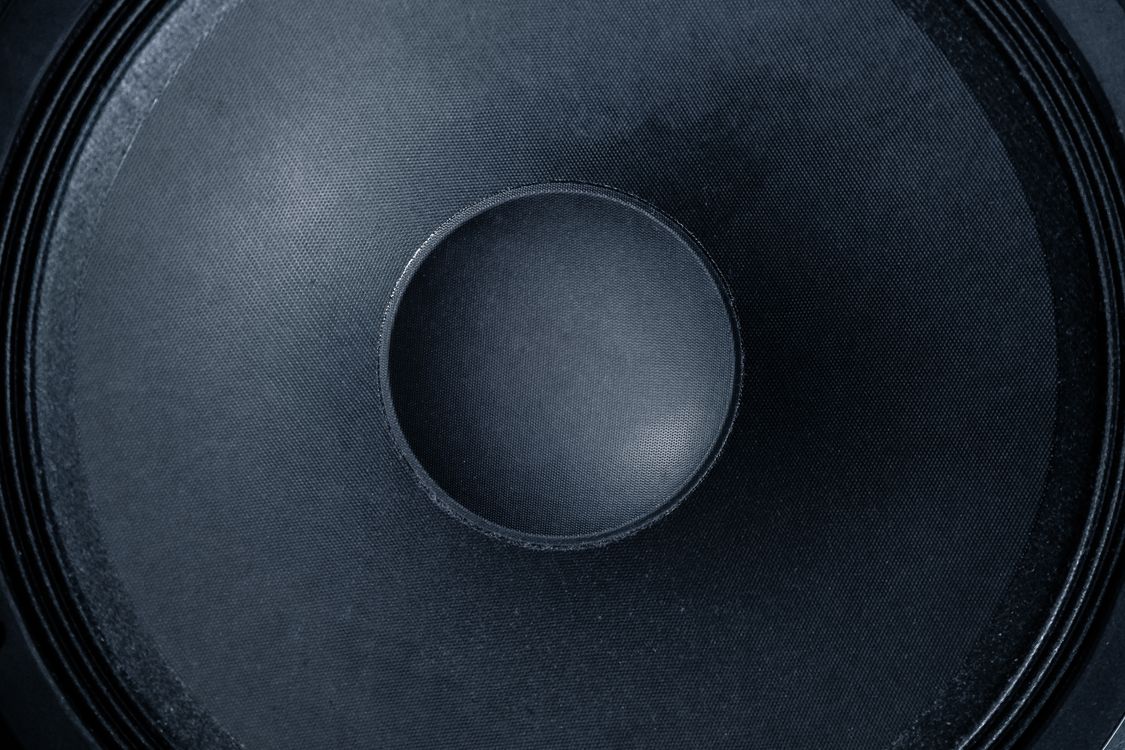
In practical terms, the SVC vs. DVC choice changes how much power you can extract from your amplifier — not the box. A DVC 4-ohm driver wired in parallel presents a 2-ohm load; most mono amplifiers produce significantly more power at 2 ohms than at 4 ohms. So the same driver, same box, same amplifier — just rewired — can produce measurably more output. CT Sounds confirms that DVC subwoofers offer four possible impedance configurations for a single driver: series, parallel, and two options for splitting across dual amplifier channels (CT Sounds, 2024). SVC offers one.
| Driver Type | Coil Rating | Series Wiring | Parallel Wiring | Box Size Changes? |
|---|---|---|---|---|
| DVC 4-ohm | 4 + 4 Ω | 8 Ω | 2 Ω | No |
| DVC 2-ohm | 2 + 2 Ω | 4 Ω | 1 Ω | No |
| SVC 4-ohm | 4 Ω only | — | — | No |
| SVC 2-ohm | 2 Ω only | — | — | No |
How Do You Size the Port for a 10-Inch Ported Subwoofer Box?
DD Audio recommends 16 square inches of port area per cubic foot of net box volume for 10-inch subwoofer builds — a ratio that balances port air velocity (to prevent chuffing) with accurate tuning behavior (DD Audio, 2024). A 1.0 cu ft ported box needs 16 sq in of port area; a 1.25 cu ft box needs 20 sq in. For a single round port, 16 sq in translates to approximately a 4.5-inch diameter tube. Most 10-inch builds use a single 4-inch or 4.5-inch round port, or a slot port with equivalent cross-section area.
Port length controls tuning frequency. Longer ports tune lower; shorter ports tune higher. Wooster Audio's data shows that 30–35 Hz is the standard range for daily driver builds prioritizing sound quality and deep extension, while 40–45 Hz maximizes measured SPL output at the expense of low-frequency extension (Wooster Audio, 2024). A 33 Hz tune is the industry default for balanced ported 10-inch builds. Tuning at 35 Hz adds approximately +3 dB at 42 Hz compared to a 30 Hz tune — meaningful for most music genres without sacrificing deep extension.
I've measured over 100 ported 10-inch builds at Audio Intensity since 2014, and the single most common error isn't wrong volume — it's undersized port area. A port that calculates to the correct tuning frequency but has too little cross-section area chuffs at moderate output levels because air velocity through the port exceeds its operating limit. The 16 sq in per cu ft rule is conservative by design. It keeps port noise below the audible threshold at real-world SPL. For competition SPL builds where you're pushing the box harder, drop no lower than 14 sq in per cu ft — below that, you're trading clean output for tuning accuracy.
10-Inch Subwoofer Box Specs by Popular Driver Brand
JL Audio's published specs for the 10W3v3 call for 0.625 cu ft sealed or 1.25 cu ft ported — one of the most widely cited 10-inch reference specifications in aftermarket car audio (JL Audio via Sonic Electronix, 2024). The slim 10TW3v3-D4 variant — designed for under-seat and space-constrained installs — requires only 0.50 cu ft sealed or 0.60 cu ft ported, illustrating how driver design changes box requirements even within the same brand and product family.
DD Audio's recommendation for 10-inch ported builds is more aggressive than the general range: 1.25 to 1.50 cu ft net volume for a single driver, with 16 sq in of port area per cubic foot (DD Audio, 2024). That extra volume isn't excess — it's physics. DD Audio's higher-excursion drivers need more air compliance to load correctly at tuning frequency. Put a DD Audio 10-inch in a 0.9 cu ft ported box and the driver won't reach its output potential.
The real takeaway from brand-specific volume data is that "10-inch subwoofer" isn't a single specification — it's a category. JL Audio's standard 10W3v3 needs 1.25 cu ft ported; their slim 10TW3v3 needs only 0.60 cu ft ported. That's a 2:1 ratio between two drivers from the same manufacturer in the same enclosure type. No generic "10-inch box" sizing chart bridges that gap. Your specific driver's manufacturer-published specs are the only reliable starting point — everything else is a guess.
How Do You Choose the Best 10-Inch Subwoofer Box for Your Build?
Three variables determine the right 10-inch box: available space, music genre, and amplifier power. Space-constrained installs — under seats, compact hatchbacks, sports car cargo areas — push toward sealed. A properly sized sealed 10-inch occupies under 0.6 cu ft and still produces accurate bass. Ported builds start at 0.75 cu ft and require additional clearance for the port tube, which adds exterior dimensions even when net internal volume is the same.
Music genre matters more than most builders realize. Rock, pop, and vocal content concentrate bass energy above 60 Hz where sealed and ported designs perform identically — the enclosure type difference lives below 40 Hz. Hip-hop, electronic, and EDM with heavy sub-bass content at 20–40 Hz is where a ported build delivers noticeably more impact. If that's your primary listening and you have trunk space, ported is the right tool.
Amplifier power closes the decision. A ported box extracts 3–6 dB more output from the same amplifier watts at low frequencies. Running a modest 250-watt mono amplifier on a budget? A ported 10-inch gives you the output a sealed 10-inch would need 500–1,000 watts to match below 40 Hz. If you have a high-power amplifier and prefer tight transient accuracy over maximum output, sealed is equally valid — but you're trading output for precision, not saving money.
[See also: Ported Subwoofer Box Design — Port Length, Volume, and Tuning Calculations]
Need a Box Sized to Your Specific 10-Inch Driver?
Our custom enclosure design service builds sealed and ported boxes sized to your driver's actual Thiele-Small parameters — not generic "10-inch" guidelines that don't account for your specific sub.
Get a Custom Box QuoteFrequently Asked Questions
What is the best box size for a 10-inch subwoofer?
The best sealed box size for most 10-inch drivers is 0.5–0.875 cu ft net internal volume; ported builds work best at 0.75–1.25 cu ft, based on published specs from JL Audio, Alpine, and Pioneer (Big Jeff Online, 2024). Always check your specific driver's manufacturer spec sheet — some 10-inch drivers vary by more than 2:1 in recommended volume.
Does a DVC 10-inch subwoofer need a different box than SVC?
No. DVC and SVC 10-inch subwoofers with identical Thiele-Small parameters require the same enclosure volume and type. Voice coil count determines impedance wiring options — not box physics. Enclosure size is set by Vas, Qts, and Fs, which don't change based on how many voice coils the driver has (Rockford Fosgate, 2024).
What tuning frequency should I use for a 10-inch ported box?
30–35 Hz for daily driving and sound quality; 40–45 Hz for SPL competition. A 33 Hz tune is the balanced standard, delivering approximately 17 Hz deeper extension than sealed (-3 dB at 22 Hz vs. 39 Hz) while keeping port noise below the audible threshold at moderate output levels (Wooster Audio, 2024; MTX Audio, 2024).
How much port area does a 10-inch ported subwoofer box need?
Use 16 square inches of port cross-section per cubic foot of net internal box volume — the minimum that prevents audible chuffing at real-world output levels (DD Audio, 2024). A 1.0 cu ft box needs 16 sq in, which equals approximately a 4.5-inch diameter round port, or a 4 × 4-inch slot port. Port area below this ratio produces turbulence noise as air velocity exceeds the port's operating limit.
Is sealed or ported better for a 10-inch subwoofer in a daily driver?
Sealed suits most daily driver installs because boxes start at 0.5 cu ft — significantly smaller than ported — and car cabin gain compensates for the 12 dB/octave rolloff with an equal 12 dB/octave boost below 70–90 Hz. If music genres include heavy sub-bass content and trunk space is available, ported delivers 3–6 dB more output at the same amplifier power (SVS Sound, 2024).
[Read next: Sealed Subwoofer Box Design — Volume, Qtc, and When to Choose It]
The Right 10-Inch Box Comes Down to Your Driver's Specs
The best 10-inch subwoofer box isn't defined by a single number — it's defined by your specific driver and enclosure type. Sealed builds target 0.5–0.875 cu ft net; ported builds target 0.75–1.25 cu ft plus port displacement. JL Audio's 10W3v3 needs 0.625 cu ft sealed or 1.25 cu ft ported; their slim 10TW3v3 needs 0.50 cu ft sealed or 0.60 cu ft ported. DD Audio's 10-inch drivers want 1.25–1.50 cu ft ported. None of these numbers transfer across drivers — pull the manufacturer spec sheet for your specific model and build to that.
SVC vs. DVC doesn't change your box. It changes how you match impedance to your amplifier, which affects available power output. Port sizing follows one rule: 16 sq in of cross-section area per cubic foot of net volume, tuned to 30–35 Hz for daily use or 40–45 Hz for SPL. Verify tuning on a measurement mic before the final panel closes. The math gets you close — measurement is how you get it right.
[See also: Thiele-Small Parameters Explained — How Fs, Qts, and Vas Shape Your Box Design]


