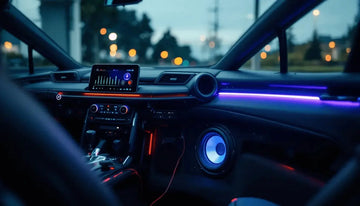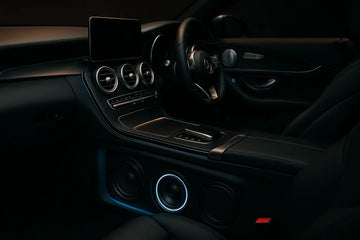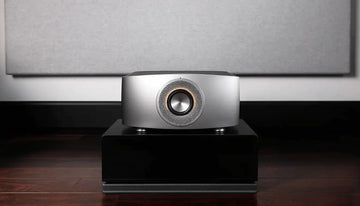

The best loudspeaker for your car is the one matched to how the system is driven, how much depth the door allows, and how much install time you will spend. Sensitivity decides how loud it plays on a given amp, RMS rating decides how much power it can take, and mounting depth decides whether it physically fits. Brand comes after those three. Get the specs right and a $150 coaxial in the right install beats a $600 component set in the wrong one.
- Match speaker RMS to amp RMS in the 80% to 150% window. A 50W RMS coaxial wants 40 to 75W per channel (CTA-2031 rating method)
- Sensitivity above 90 dB matters most on a stock head unit, where you only have 15 to 25W per channel to work with (Crutchfield)
- Mounting depth is the spec that kills the most upgrades. Many late-model doors give you 2.0 to 2.5 inches before the window mechanism, and bolt circle is always larger than cutout
- 4-ohm is the car audio standard. It draws more current and produces more power than 8-ohm at the same voltage, which is why amps and head units are built for it
- Component sets win when you can mount the tweeter near ear level and have an amp to drive them. Coaxials win on drop-in installs, tight depth, and stock head units
Building the whole system? Start with the complete car audio amplifier guide for power and channel matching, and the component vs full-range breakdown if you are stuck between the two formats.
What Makes One Car Speaker Better Than Another?
Four specs decide it: sensitivity, RMS power handling, mounting depth, and impedance. Everything else, including the brand on the basket, sits downstream of those numbers. A speaker is better for your car when its specs match your source unit, your amp, and your door, not when its marketing copy is louder.
Sensitivity is rated in dB at 1 watt, 1 meter. A speaker at 92 dB plays roughly twice as loud as a speaker at 89 dB on the same power, because every 3 dB is a doubling of acoustic output. On a factory head unit pushing 18W per channel, that difference is the gap between a usable upgrade and a speaker that never wakes up.
RMS power handling is the continuous power the speaker can take without cooking the voice coil. It is the number that matters. Peak or "max" power ratings are a marketing figure and tell you almost nothing about how the speaker lives day to day. Match RMS to your amp, not peak.
Mounting depth and impedance are the two that get skipped and then ruin the install. Mounting depth has to clear the door panel, the window glass at full travel, and any intrusion bar. Impedance has to match what the amp wants to see. Both are printed on the datasheet, and both are non-negotiable.
Should You Buy Component or Coaxial Speakers?
Buy a component set when you can mount the tweeter near ear level and you have an amp to drive it. Buy a coaxial when the install has to be quick, the door depth is tight, or the head unit is stock. Both can sound excellent. They are not the same install and they do not want the same conditions.
A coaxial, or full-range, puts the tweeter on a post above the woofer as one chassis. You drop it into the factory cutout, run two wires, and reinstall the panel. The woofer covers everything up to about 3 kHz, the tweeter takes over above that, and a small built-in capacitor is the only crossover work the speaker does.
A component set splits the woofer, tweeter, and an external crossover into separate pieces. The woofer mounts in the factory door location, the tweeter goes in the A-pillar or sail panel near ear level, and the crossover mounts behind a panel. That separation is the entire point: putting the tweeter up high is what raises the soundstage onto the dash instead of leaving it down at your knees.
| Priority | Best format | Install | Typical front-stage budget |
|---|---|---|---|
| Best sound quality / staging | Component | Complex (tweeter pods, crossover) | $300 to $1,500+ |
| Quick factory upgrade | Coaxial | Drop-in, two wires | $80 to $400 |
| Tight door depth | Coaxial | Drop-in | $80 to $300 |
| Stock head unit, no amp | High-sensitivity coaxial | Drop-in | $80 to $250 |
How Much Power Do Car Speakers Actually Need?
Feed a speaker between 80% and 150% of its RMS rating. A 50W RMS coaxial wants 40 to 75W per channel. An 80W RMS 2-way component set wants 65 to 120W per channel. Underpowering causes more blown speakers than overpowering does, because a clipped amplifier sends a square wave to the voice coil and that distortion dissipates as heat the coil cannot shed.
This is why the head unit you are running matters more than the speaker's headline wattage. A stock radio puts out 15 to 22W per channel. A budget aftermarket head unit puts out 18 to 25W. Hang an 80W RMS component set off either one and the speaker never reaches its operating point. It will sound thinner than a 50W coaxial that the same head unit can actually drive.
Chart: Match Amp RMS to Speaker RMS (80% to 150% window)
Source: 80% to 150% RMS matching window, common installer practice aligned with the CTA-2031 mobile loudspeaker rating method.
What's the Difference Between 4-Ohm and 8-Ohm Car Speakers?
4-ohm is the car audio standard, and 8-ohm is mostly a home audio spec. At the same voltage, a 4-ohm speaker draws more current and therefore produces more power than an 8-ohm speaker, which is exactly why car amplifiers and head units are built around a 4-ohm load. Run the impedance the amp is rated for and you get its rated power. Run a higher impedance and you leave output on the table.
This matters when you start wiring multiples or bridging channels. Wiring affects the load the amp sees, and the amp's power rating changes with that load. If you are wiring more than one driver per channel, the impedance math is the part to get right before you buy. For the full breakdown of series, parallel, and bridged loads, the amplifier guide walks every configuration.
How Do You Know a Speaker Will Physically Fit?
Three measurements decide fit: cutout diameter, mounting depth, and bolt circle diameter. All three are printed on the speaker's datasheet, and the bolt circle is always larger than the cutout. Reverse those two in your head and you will order a speaker whose mounting tabs land inside the hole.
Mounting depth is the one that ends builds. Many late-model trucks and SUVs leave 2.0 to 2.5 inches of usable depth in the door before the window glass or intrusion bar gets in the way. A 6.5-inch coaxial usually needs 2.0 to 2.4 inches. A 6.5-inch component woofer with a larger motor can need 2.2 to 3.0 inches. If the door gives you 2.1 inches, the coaxial fits and the deep component woofer does not, regardless of how good it sounds on a bench.
Match the cutout to the door's existing opening, or to a baffle adapter that brings a non-standard opening up to size. Match the bolt circle to the screws that thread into the door's structural panel. Then confirm mounting depth with the panel reinstalled, not with the panel off. A speaker that clears with the door open and fouls the glass with the door shut is a measurement that was taken in the wrong state.
Which Speaker Brands Do We Stock and Why?
We carry speakers across a range of price and performance, and we spec them by the install rather than by the logo. The brands below are the ones we reach for most often out of the Tullahoma shop, grouped by what they do well.
Image Dynamics
Image Dynamics builds component and coaxial sets that have a long track record in Sound Quality builds. They are the brand we reach for when the front stage has to image well and the customer has the amp and the tweeter location to do it justice. Browse the car speakers collection for current Image Dynamics stock.
Crescendo
Crescendo is one of the lines we lean on when a build wants output without giving up the front stage. The same brand that drives a lot of high-output systems makes speakers that take real power, so a Crescendo set holds up when the amp behind it is sized for SPL as well as SQ. If you are running a bigger amplifier and want the speakers to keep pace rather than become the weak link, this is a line to spec. We pick the model against your power and door depth rather than recommending one blind.
Audiocircle
Audiocircle rounds out the lineup for builders who want a specific voicing in the front stage. As with every set we sell, the right pick depends on your source unit and the power you are feeding it, so we spec it against your amp rather than recommending a single model blind.
Audiomobile
Audiomobile is best known on the low end, but the same motor and cone engineering that makes their subwoofers work shows up in their higher-output drivers. If your build leans toward output and you want the speaker side to keep up with a serious sub, this is the line to look at.
JL Audio, Alpine, Kicker, and Rockford Fosgate
These are the mainstream brands that cover the bulk of drop-in coaxial and entry component work. JL Audio leans toward sound quality, Alpine offers wide model coverage, Kicker leans toward output, and Rockford Fosgate sits in between. For a factory-location upgrade off a stock or budget head unit, a high-sensitivity coaxial from any of these is a real improvement over a decade-old factory speaker (JL Audio).

How Should You Pick the Speaker for Your Specific Build?
The choice falls out of three questions: how is the system driven, what does the door allow, and how much install time will you spend. Work through these and the speaker picks itself.
- Stock head unit, no amp: high-sensitivity coaxial (90 dB+) in the 35 to 50W RMS range. The radio cannot drive more, and sensitivity is doing the work.
- Stock head unit plus a 4-channel amp: a 2-way component set run passive. Tweeter in the A-pillar if the vehicle has the geometry, sail panel if it does not.
- Aftermarket head unit with active outputs or a DSP: run the component set active, cross the tweeter at the published frequency, time-align, and tune. This is the front-stage build that leaves our shop.
- Door depth under 2.2 inches: coaxials only. The component woofer will not fit without reworking the door panel.
- Front-stage budget under $300: coaxials plus a clean install beat a component set crammed into factory locations because the budget did not cover the tweeter pods.
One more variable ties it together: the rest of the system. Front-stage speakers, component or coaxial, cut off around 60 Hz. Both formats assume a subwoofer is covering the bottom octave. If you are not adding a sub, pick whichever speaker reaches lowest in your install location, and do not expect a 3-way set to replace the bottom end. It will not. For matching the sub side, see the DSP tuning guide for setting the crossover between your speakers and sub.
Frequently Asked Questions
What is the best loudspeaker for a car?
How do I know if I need to upgrade my car speakers?
Should I choose component or coaxial speakers?
How much power do my car speakers need?
What is the difference between 4-ohm and 8-ohm car speakers?
How important is speaker sensitivity for car audio?
Can I mix different brands of speakers in my car?
Will aftermarket speakers fit my factory locations?
Want Speakers Spec'd for Your Vehicle and Source Unit?
We CNC every Proline X enclosure we ship out of our Tullahoma, Tennessee shop, and we spec the speaker side of a build the same way: from your vehicle, your head unit, the amp you have or want, and what you want the system to do.
Send us your vehicle, your factory door measurements, your head unit model, and what you are listening for. We will spec the front-stage speakers, the crossover path, and the integration DSP if your factory radio needs one. Contact us with the details, or browse the car speakers collection to start.
About the Author
Scott Welch is a Multi Time IASCA National and MECA World Sound Quality Champion, an active SQ judge since 2019, and the owner of Audio Intensity in Tullahoma, Tennessee. He cuts every Proline X enclosure on the shop's CNCs and tunes every customer system before it leaves. Audio Intensity is the original US importer for Goldhorn DSP and an authorized dealer for Prodigy, Crescendo, Image Dynamics, Wavtech, Tru Technology, and more.